Showing posts with label kid lit. Show all posts

Saturday, May 24, 2014

BEA 2014 Anticipation!

It’s summertime, and that means fun! (And also constant sunscreen and AC, in my case. Fun, right? Come visit the glorious American Southwest!) Much like last year, early summer means some exciting doings in RTET-land—Susan will be attending Book Expo America in NYC again, while I will be covering the book and author track at Phoenix Comicon. Susan is planning her galley-grabs and author visits for BEA, and it looks like there will be the standard convention problem of so much to do, so little time! We’ve been following the info coming out of various publish-y sources to keep up-to-date on what will be available there. Looks like there will be a lot of highly anticipated books up for grabs! Here are some of the ones I’ve been eagerly awaiting or recently had brought to my attention and think sound cool:

“Fifteen years from now, a new virus sweeps the globe. 95% of those afflicted experience nothing worse than fever and headaches. Four percent suffer acute meningitis, creating the largest medical crisis in history. And one percent find themselves “locked in”—fully awake and aware, but unable to move or respond to stimulus.

One per cent doesn't seem like a lot. But in the United States, that's 1.7 million people ‘locked in’...including the President's wife and daughter.

Spurred by grief and the sheer magnitude of the suffering, America undertakes a massive scientific initiative. Nothing can restore the ability to control their own bodies to the locked in. But then two new technologies emerge. One is a virtual-reality environment, ‘The Agora,’ in which the locked-in can interact with other humans, both locked-in and not. The other is the discovery that a few rare individuals have brains that are receptive to being controlled by others, meaning that from time to time, those who are locked in can ‘ride’ these people and use their bodies as if they were their own.

This skill is quickly regulated, licensed, bonded, and controlled. Nothing can go wrong. Certainly nobody would be tempted to misuse it, for murder, for political power, or worse….”

I enjoy John Scalzi very much, so I’m looking forward to his newest. It sounds a little claustrophobic, but also like an interesting change up from his other stuff I’ve read (the Old Man’s War series and Redshirts). I’m looking forward to giving it a go!


“ ‘Miss Rook, I am not an occultist,’ Jackaby said. ‘I have a gift that allows me to see truth where others see the illusion--and there are many illusions. All the world’s a stage, as they say, and I seem to have the only seat in the house with a view behind the curtain.’

Newly arrived in New Fiddleham, New England, 1892, and in need of a job, Abigail Rook meets R. F. Jackaby, an investigator of the unexplained with a keen eye for the extraordinary--including the ability to see supernatural beings. Abigail has a gift for noticing ordinary but important details, which makes her perfect for the position of Jackaby’s assistant. On her first day, Abigail finds herself in the midst of a thrilling case: A serial killer is on the loose. The police are convinced it’s an ordinary villain, but Jackaby is certain it’s a nonhuman creature, whose existence the police--with the exception of a handsome young detective named Charlie Cane--deny.

Doctor Who meets Sherlock in William Ritter’s debut novel, which features a detective of the paranormal as seen through the eyes of his adventurous and intelligent assistant in a tale brimming with cheeky humor and a dose of the macabre.”

While “Doctor Who meets Sherlock” sounds like an awesome hook that is probably doomed to set the expectations bar much too high, I am most definitely interested. Historical supernatural is my jam! (Or one of my jams, at least.)
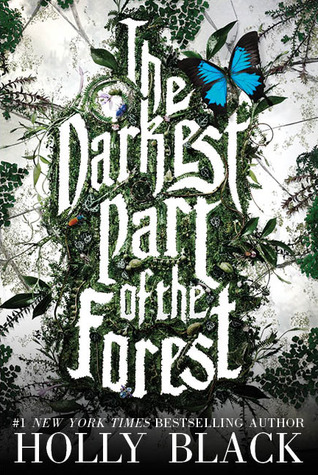

“Children can have a cruel, absolute sense of justice. Children can kill a monster and feel quite proud of themselves. A girl can look at her brother and believe they’re destined to be a knight and a bard who battle evil. She can believe she’s found the thing she’s been made for.

Hazel lives with her brother, Ben, in the strange town of Fairfold where humans and fae exist side by side. The faeries’ seemingly harmless magic attracts tourists, but Hazel knows how dangerous they can be, and she knows how to stop them. Or she did, once.

At the center of it all, there is a glass coffin in the woods. It rests right on the ground and in it sleeps a boy with horns on his head and ears as pointed as knives. Hazel and Ben were both in love with him as children. The boy has slept there for generations, never waking.

Until one day, he does…

As the world turns upside down, Hazel tries to remember her years pretending to be a knight. But swept up in new love, shifting loyalties, and the fresh sting of betrayal, will it be enough?”

The blurb for this one is both intriguing and cryptic, and you know what? It doesn’t matter. The blurb could just say Bobloblaw’slawblog and I would be down. Holly Black is always, ALWAYS an instabuy.


“THE ACCIDENTAL HIGHWAYMAN is the first swashbuckling adventure for young adults by talented author and illustrator, Ben Tripp. This thrilling tale of dark magic and true love is the perfect story for fans of William Goldman’s THE PRINCESS BRIDE.

In eighteenth-century England, young Christopher ‘Kit’ Bristol is the unwitting servant of notorious highwayman Whistling Jack. One dark night, Kit finds his master bleeding from a mortal wound, dons the man’s riding cloak to seek help, and changes the course of his life forever. Mistaken for Whistling Jack and on the run from redcoats, Kit is catapulted into a world of magic and wonders he thought the stuff of fairy tales.

Bound by magical law, Kit takes up his master’s quest to rescue a rebellious fairy princess from an arranged marriage to King George III of England. But his task is not an easy one, for Kit must contend with the feisty Princess Morgana, goblin attacks, and a magical map that portends his destiny: as a hanged man upon the gallows….

Fans of classic fairy-tale fantasies such as STARDUST by Neil Gaiman and will find much to love in this irresistible YA debut by Ben Tripp, the son of one of America’s most beloved illustrators, Wallace Tripp (AMELIA BEDELIA). Following in his father’s footsteps, Ben has woven illustrations throughout the story.”

Okay, again with the setting-expectations-way-too-high thing with that reference to The Princess Bride, but color me charmed by the cover and the title. I’ve been burned by Tor Teen books in the past that sounded awesome and ended up tepid, but this one sounds too fun to pass up.


“Finn Easton sees the world through miles instead of minutes. It’s how he makes sense of the world, and how he tries to convince himself that he’s a real boy and not just a character in his father’s bestselling cult-classic book. Finn has two things going for him: his best friend, the possibly-insane-but-definitely-excellent Cade Hernandez, and Julia Bishop, the first girl he’s ever loved.

Then Julia moves away, and Finn is heartbroken. Feeling restless and trapped in the book, Finn embarks on a road trip with Cade to visit their college of choice in Oklahoma. When an unexpected accident happens and the boys become unlikely heroes, they take an eye-opening detour away from everything they thought they had planned—and learn how to write their own destiny.”

I’ve never read any of Andrew Smith’s books before, but I’ve heard great things about both Winger and Grasshopper Jungle. I haven’t read much contemporary YA lately, but this sounds like it could be a good introduction to the author.
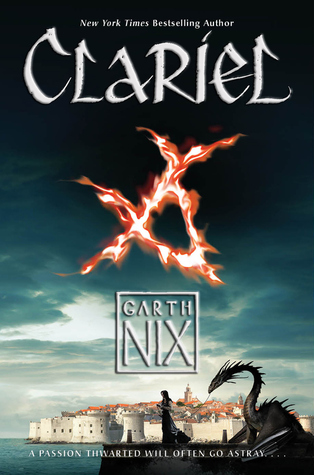

“Clariel is the daughter of the one of the most notable families in the Old Kingdom, with blood relations to the Abhorsen and, most importantly, to the King. When her family moves to the city of Belisaere, there are rumors that her mother is next in line for the throne. However, Clariel wants no part of it—a natural hunter, all she ever thinks about is escaping the city’s confining walls and journeying back to the quiet, green world of the Great Forest.

But many forces conspire against Clariel’s dream. A dangerous Free Magic creature is loose in the city, her parents want to marry her off to a killer, and there is a plot brewing against the old and withdrawn King Orrikan. When Clariel is drawn into the efforts to find and capture the creature, she discovers hidden sorcery within herself, yet it is magic that carries great dangers. Can she rise above the temptation of power, escape the unwanted marriage, and save the King?”

I’ve talked about this one before, and my excitement remains undiminished. If I had to choose only one book coming out of BEA to read, this might edge out Holly Black to take the prize. I am THAT psyched about it!
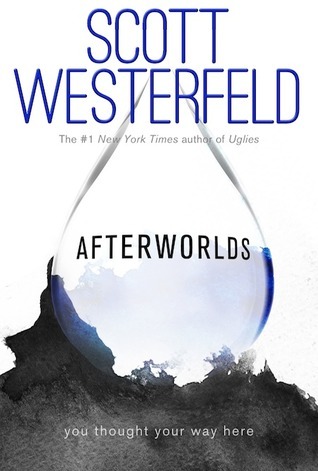

“From the #1 New York Times bestselling author Scott Westerfeld comes a smart, thought-provoking novel-within-a-novel that you won’t be able to put down.

Darcy Patel has put college on hold to publish her teen novel, Afterworlds. With a contract in hand, she arrives in New York City with no apartment, no friends, and all the wrong clothes. But lucky for Darcy, she’s taken under the wings of other seasoned and fledgling writers who help her navigate the city and the world of writing and publishing. Over the course of a year, Darcy finishes her book, faces critique, and falls in love. Woven into Darcy’s personal story is her novel, Afterworlds, a suspenseful thriller about a teen who slips into the ‘Afterworld’ to survive a terrorist attack. The Afterworld is a place between the living and the dead, and where many unsolved—and terrifying—stories need to be reconciled. Like Darcy, Lizzie too falls in love…until a new threat resurfaces, and her special gifts may not be enough to protect those she cares about most.”

Scott Westerfeld is another favorite author of mine, and this novel sounds really different and intriguing. Is it just me, or does anyone else get a whiff of foreboding from the blurb…? Eh, it’s late. I’m probably imagining it.
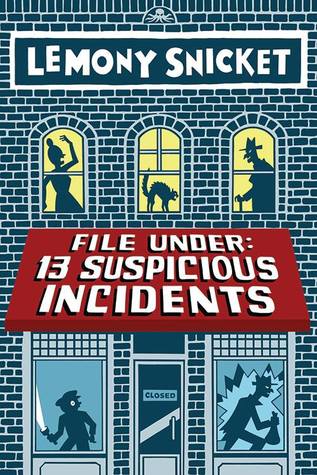

“Match wits with Lemony Snicket to solve thirteen mini-mysteries.

Paintings have been falling off of walls, a loud and loyal dog has gone missing, a specter has been seen walking the pier at midnight -- strange things are happening all over the town of Stain'd-By-The-Sea. Called upon to investigate thirteen suspicious incidents, young Lemony Snicket collects clues, questions witnesses, and cracks every case. Join the investigation and tackle the mysteries alongside Snicket, then turn to the back of the book to see the solution revealed.

A delicious read that welcomes readers into Lemony Snicket's world of deep mystery, mysterious depth, deductive reasoning, and reasonable deductions.”

This one technically already came out in April, but it’s being featured at BEA, too. It sounds like just the sort of thing my younger self would’ve loved, and I imagine my current self would have fun with it, too.


“Aaron Becker, creator of JOURNEY, a Caldecott Honor book, presents the next chapter in his stunning wordless fantasy.

A king emerges from a hidden door in a city park, startling two children sheltering from the rain. No sooner does he push a map and some strange objects into their hands than he is captured by hostile forces that whisk him back through the enchanted door. Just like that, the children are caught up in a quest to rescue the king and his kingdom from darkness, while illuminating the farthest reaches of their imagination. Colored markers in hand, they make their own way through the portal, under the sea, through a tropical paradise, over a perilous bridge, and high in the air with the help of a winged friend. Journey lovers will be thrilled to follow its characters on a new adventure threaded with familiar elements, while new fans will be swept into a visually captivating story that is even richer and more exhilarating than the first.”

Journey was a wonderful wordless picture book, and I think this next one will be just as lovely. I love Becker’s beautiful style of art, and how perfectly he can tell a story with fun, emotion, and humor with just pictures.

Hooray for BEA! Hopefully Susan will be able to snap up one or two of these while dashing around the Javits Center this coming week, and then we can read and chat about them. Any of these sound good to you? What are your most anticipated books at BEA?

Tuesday, February 25, 2014

The Haul: VNSA Book Sale Treasures

I have already covered my children’s book rescues and my sci-fi/fantasy adoptions from this year’s VNSA book sale, so all that remains is what I unearthed in the rare and unusual books section. It’s like the Department of Mysteries, only BETTER! (No fragile prophecies lying around that I saw, anyway.) It’s the only part of the sale that isn’t half off on Sunday, and there is usually some pretty interesting and/or weird stuff lurking there. Last year we found a book from the ‘60s or ‘70s about playing tennis. Normal, right? NO. All the models demonstrating the strokes and movement were naked. Who comes up with this stuff?? Though I can think of many people in my life who would appreciate receiving such a book mailed to them in an anonymous, unmarked package, I did not purchase it. I did, however, find an autographed copy of a book by famed Japan scholar Donald Keene, along with a program sheet from a presentation he made at Columbia University tucked inside. Completely unexpected, but a very cool surprise!

I hoped to find some similarly unexpected treasures this year, and I was not disappointed. My first discovery was this cute little book from 1966:

 photo photo_1_zpsf2fdee08.jpg

Wednesday, February 19, 2014

The Haul: VNSA Book Sale, Part the First

In Phoenix, on one weekend in February every year, the Volunteer Nonprofit Service Association has a huge book sale. There are drop boxes located around the city to collect donations of books for the sale throughout the year, and people can arrange to have donations picked up from their homes. The profits from the sale go to charities, so you can pick up a few new books and help out some worthy organizations at the same time! I’d heard about the sale a lot when I was growing up, but the timing was never right for me to attend until last year. Now that I’ve been, it will be something I always look forward to—used book heaven! The VNSA sale is truly massive (they hold it at the state fair grounds), and you never know what will turn up there. And if that’s not enough, it’s all dirt cheap! Like $.50 - $1 for paperbacks, $4 for hardbacks. VERY CHEAP. To sweeten the deal even further, on Sunday everything is half-price. Madness! The exhibition hall, still smelling faintly of farm animals from the fair, is full of tables labeled with any and all sorts of book topics, ranging from the general (“children”) to the strangely specific (“secret societies”). Last year I only managed to plumb the depths of the cookbook section before getting overloaded by all the books and people, but this year, I and my book-nerds-in-crime (my mom and a friend) had more strategy—we arrived right at the opening time of 8:00 a.m. on Sunday, hoping to beat the crowds and have a better selection, AND we brought a rolly cart for transporting our finds. Genius.

And boy did we adopt some homeless books! I didn’t spend much time in the cookbooks this year, as I’m still cooking my way through all the ones I picked up last year, but I did manage to trawl through WAY more sections than I did previously (but still probably not even 1/4 of what was on offer!). My mother and I have a bit of an obsession with old children’s books, so I spent an inordinate amount of time in that area. I love the funny titles, the cover design, the cool art inside…they just make me smile. Here are some of the ones we picked up as we burrowed through the kids’ book stacks this year:

 photo photo_3_zpsad9ac544.jpg  photo photo_4_zpsdfb7b987.jpg
Cute drawings!

Tuesday, October 22, 2013

The Docket: The Ocean at the End of the Lane

Hello, bookworms and moths! Our book club's next book has been decided, and we will be venturing into not-YA with Neil Gaiman's The Ocean at the End of the Lane. This one has been sitting on my shelf since its release, so I am glad to have an excuse to finally get into it! I've heard very good things about this one from pretty much all corners, so hopefully we'll continue the pattern after Code Name Verity and the group will enjoy it. Here's the blurb from Goodreads:

Sussex, England. A middle-aged man returns to his childhood home to attend a funeral. Although the house he lived in is long gone, he is drawn to the farm at the end of the road, where, when he was seven, he encountered a most remarkable girl, Lettie Hempstock, and her mother and grandmother. He hasn't thought of Lettie in decades, and yet as he sits by the pond (a pond that she'd claimed was an ocean) behind the ramshackle old farmhouse, the unremembered past comes flooding back. And it is a past too strange, too frightening, too dangerous to have happened to anyone, let alone a small boy.

Forty years earlier, a man committed suicide in a stolen car at this farm at the end of the road. Like a fuse on a firework, his death lit a touchpaper and resonated in unimaginable ways. The darkness was unleashed, something scary and thoroughly incomprehensible to a little boy. And Lettie—magical, comforting, wise beyond her years—promised to protect him, no matter what.

A groundbreaking work from a master, The Ocean at the End of the Lane is told with a rare understanding of all that makes us human, and shows the power of stories to reveal and shelter us from the darkness inside and out. It is a stirring, terrifying, and elegiac fable as delicate as a butterfly's wing and as menacing as a knife in the dark.

Yay Neil Gaiman!!! And as an added bonus, since Ocean is fairly short and will be for October/November rather than just one month, we decided to throw in his recent book for young readers, Fortunately, the Milk, too. Here's the blurb for that one:
"I bought the milk," said my father. "I walked out of the corner shop, and heard a noise like this: T h u m m t h u m m. I looked up and saw a huge silver disc hovering in the air above Marshall Road."

"Hullo," I said to myself. "That's not something you see every day. And then something odd happened."

Find out just how odd things get in this hilarious story of time travel and breakfast cereal, expertly told by Newbery Medalist and bestselling author Neil Gaiman and illustrated by Skottie Young.

Like with Code Name Verity, after we finish reading the books we'll have a post with our thoughts where we'd love for you to join in and discuss with us. Time for a visit to the library or bookstore to start tracking down some Neil Gaiman!

Monday, October 14, 2013

Book Review Times Two: The Pretty Pictures Edition

Hi all—it’s a twofer, it’s a twofer! Two reviews in one post, that is. Who doesn’t like a double dose of nice illustrations? First up is a very cool graphic novel, followed by a children’s picture book of a Scottish folktale. Keep reading for the rundown!

Title: The Unwritten: Tommy Taylor and the Ship That Sank Twice
Author: Mike Carey, Peter Gross, Kurt Huggins, & Zelda Devon
Publisher: Vertigo
Publication Date: September 24th, 2013
Read: October 2013
Where It Came From: eARC from publisher via NetGalley*
Genre: Fantasy Graphic Novel
Rating: 3.5 Sunken Ships

This lovely little graphic novel is billed as a standalone prequel to the author’s series, The Unwritten, which is (from what I gathered through a quick Amazon check) about a guy named Tom Taylor whose life is kind of ridiculous because his father named him after the main character of his insanely popular Harry Potter-like book series. And it’s about the power of literature and words and stuff. Although I have wanted to try out this series for some time, I have not yet done so, and thus I came to this graphic novel having no background on the story whatsoever, aside from the aforementioned basic ideas. I was a perfect candidate to test on and see if the book succeeds as a standalone! So now the question is, did it?

The answer is yes, for the most part. First things first: The art is really, really beautiful. It is all rendered in gorgeous full-color, and a treat to look at. As for the story itself, there are two different tales unfolding at the same time—that of the man writing and publishing the first Tommy Taylor book to coincide with the birth of his son, who he has decided to call Tom Taylor, and that of the actual story about Tommy Taylor’s adventures at a school for magic and his discovery of his own magic in his efforts to take down an evil vampire. The Tommy Taylor story was interesting enough, with a wink-wink-nudge-nudge to many fantasy tropes, and some very funny bits. I especially liked that when there was a sort of seriousness in the Tommy Taylor story, it would often have a humorous line to bring things back into perspective. In one of my favorite examples of this, a man and a sea monster are talking about the recent deaths of some people at sea. A man and a sea monster having a conversation is pretty amusing straight off, but what they’re talking about is pretty rough, right? People dying when a ship sinks is no fun at all. But when the monster insinuates that the man had a thing for a woman who went down with the ship, the man snarks back with, “Anyone can read a gossip column. Even without opposable thumbs.” Which gave me a really hilarious mental image of the big whale-looking leviathan reading a newspaper.

The really intriguing part, though, was the diary entries by the Tommy Taylor author, and trying to get a handle on what he’s seeking to accomplish by naming his son after the book character, timing the publication to his son’s birth, making it seem like the biological mother was not the actual mother… Is he just an egomaniac crazy douche-y monster willing to do anything for marketing, or is there something more to it? While this book does not tell you for a certainty if there is something more to it and, if so, what that something more may be, it definitely made me even more interested to read the actual The Unwritten series to see what was really going on and how it all plays out.

Overall, I think it was pretty successful as a standalone graphic novel. For me, as one uninitiated into the greater Unwritten universe, the fantasy meta-ness of the Tommy Taylor story added to its appeal, and the mysteriousness of the Tommy Taylor author’s storyline drew me in and made me want to know what the heck was going on. The writing was very good, and the art was awesome, too. I waffled between giving this a 3.5 or a 4, and settled on 3.5 because while it was good and definitely intriguing, I didn’t LOVE it. I think the people who would LOVE it and really get the most out of it are those who already have The Unwritten series under their belt—this sort of origin story would probably be most meaningful to those who already know what comes after. For the rest of us, we get a good story and good art, and with luck our interest is piqued enough to check out the graphic novels it spun off from. After we’ve read those, we can come back to this one and appreciate it on a different level.


Title: The Woman Who Flummoxed the Fairies
Author: Heather Forest
Illustrator: Susan Gaber
Publisher: August House, Inc.
Publication Date: October 7th, 2013 (Reprint Edition)
Read: October 2013
Where It Came From: eARC from publisher via NetGalley*
Genre: Children’s Folktale Picture Book
Rating: 4 Tasty Cake Crumbs

In this retelling of an old Scottish folktale, a bakerwoman famous for her delicious cakes is captured by the King of the Fairies, who wants her to bake for him and his kingdom. Knowing that she will never be allowed to leave if they taste her amazing cakes, the woman uses her wits to find a way out of the situation and get back home to her husband, baby, and baking. I thought this book was very cute and lots of fun. I’m a sucker for a good folktale, and this one was new to me! I like that it’s a story about a mother having an adventure, and that she’s a woman with skills who uses her head to rescue herself. And on top of that, she keeps her promise to the fairies at the end! All in all, this nameless bakerwoman is a pretty great role model.

The story is well-written, with repetition of certain lines that children can pick up on and join in reading or acting out with the story-reader (such as the Fairy King’s reaction to each of the bakerwoman’s requests: “He clapped his hands, he stamped his foot, and the ground split open”), and there’s funny stuff that will make kids giggle, such as a baby flinging porridge around at fairies. Though the Fair Folk from Celtic cultures and story traditions can sometimes be scary, these fairies aren’t at all, and the resolution of the story is happy for everyone. The last line is a good message for children, and well put for the enjoyment of grown-up readers, too: “For fairies’ gold, they say, is like love or knowledge—or a good story. It’s most valuable when it’s shared.” Awwwww! For added learning, there is also an author’s note at the end that talks about the story’s Scottish origins and the meaning of the word “flummox” (which is a very good word, I might add).

Equally important to the writing, where picture books are concerned, are the illustrations. I thought the art was very cute and pretty—it has a certain softness and plumpness, but still manages to be vaguely ethereal. The palate is colorful but muted, and it all blends together seamlessly with the story. Overall, I found this to be a very nice book for kids and kids-at-heart.

Are you as enticed by pretty pictures in books as I clearly am? What are some of your favorite graphic novels or kids’ books with great art? Hit us up and let us know!

*As ever, much as we are grateful for the copies, our reviews are uninfluenced by their source.

Saturday, October 12, 2013

Booktoberfest, or, Happy Halloween Reading!

I love Halloween. I always try to read at least one spooky and/or Halloween-themed book every October, so on a recent trip to my local independent bookstore I was very excited to see a display of the new Penguin Horror line of special editions of classic horror tales. Not that I’m actually a horror aficionado—more like I love great cover design, and Penguin has definitely cornered the market on that front. According to Penguin USA’s website, this is a six-volume series curated by filmmaker and horror lit fan Guillermo del Toro. I don’t think anyone would question this guy’s horror chops, but just in case you’d like extra proof that he’s a good man for the job, I’ll direct you to this nightmare-inducing creature from his excellent film, Pan’s Labyrinth:


SO TERRIFYING.

The cover art for these editions was created by Penguin Art Director Paul Buckley, and they are very nice hardcover copies that would make a festive eye-candy addition to any bookshelf. Seriously, I hold Penguin solely responsible for all the duplicate classics I have on my shelves, which I felt compelled to buy simply because of the awesome covers. Maybe some of these will join the ranks someday! Here’s a look-see at what’s on offer in this line:

I would probably be interested in trying out the Lovecraft (every year I mean to check out his books, but I never get around to it…) and The Haunting of Hill House. After actually reading Frankenstein in college it struck me as more sad than scary, but that is an awesome cover. The Poe one is, too. And all the rest of them. WHY MUST YOU DO THIS TO ME, PENGUIN?!?

I thought I’d follow up my fascination (obsession?) with the Penguin Horror line with a rundown of some of my favorite spooky or Halloween-y books throughout the ages. Maybe you’ve read some of these, and maybe some will be new to you. In no particular order, I present to you a smattering of my seasonal fall faves:


  1. The Hallo-Wiener, by Dave Pilkey. A super cute picture book about a dachshund who is made fun of by all the other dogs for being short, and humiliatingly has to dress up as a hot dog for Halloween. But when a monster attacks, he saves the day and the other dogs feel ashamed about their treatment of him. Back when I was in high school I used to read books to kids at a local Halloween event, and this was always a great favorite. Very cute and funny!


  2. House of Leaves, by Mark Z. Danielewski. In the interest of full disclosure, I have not actually finished reading this book. I started a couple years ago (in October, of course) and for one reason or another got distracted and haven’t gotten back to it yet. Even if I had finished it, I don’t think I’d be up to the task of blurbing it, so I will refer to GoodReads for this one:
    Years ago, when House of Leaves was first being passed around, it was nothing more than a badly bundled heap of paper, parts of which would occasionally surface on the Internet. No one could have anticipated the small but devoted following this terrifying story would soon command. Starting with an odd assortment of marginalized youth -- musicians, tattoo artists, programmers, strippers, environmentalists, and adrenaline junkies -- the book eventually made its way into the hands of older generations, who not only found themselves in those strangely arranged pages but also discovered a way back into the lives of their estranged children.

    Now, for the first time, this astonishing novel is made available in book form, complete with the original colored words, vertical footnotes, and newly added second and third appendices.

    The story remains unchanged, focusing on a young family that moves into a small home on Ash Tree Lane where they discover something is terribly wrong: their house is bigger on the inside than it is on the outside.

    Of course, neither Pulitzer Prize-winning photojournalist Will Navidson nor his companion Karen Green was prepared to face the consequences of that impossibility, until the day their two little children wandered off and their voices eerily began to return another story -- of creature darkness, of an ever-growing abyss behind a closet door, and of that unholy growl which soon enough would tear through their walls and consume all their dreams.

    I remember the story being layered, complexly structured, meandering, and very creepy. The whole bigger-on-the-inside thing is fun when it’s a TARDIS, but for the house in this book it was more ominously malevolent. Someday I will finish reading it!


  3. The Diviners, by Libba Bray. Having read other things by Libba Bray, I knew she was more than capable of scary (the poppy knights in A Great and Terrible Beauty, anyone?). Still, I was not prepared for the level of creepiness I found in The Diviners. The story revolves around a girl named Evie O’Neill and a cast of other bright young things living in New York in the 1920s. Sounds pretty normal, until things take a left turn into creepy territory when occult shenanigans and a serial killer enter into their lives, and Evie, with her secret ability to learn things from touching objects, tries to get to the bottom of it. I read this one quite accidentally last October, having no idea it would end up being so appropriate for the month. Parts of it were really, really scary. Actually, I think the book trailer probably does a better and more artful job explaining it than me. I normally find book trailers to be kind of ridiculous and hilarious and not my favorite thing, but this one really captures the feel of the book:


    Yeah. Terrifying, but awesome.


  4. “Nowhere is Safe,” by Libba Bray, from Vacations from Hell. While we’re on the subject of Libba Bray, this is the first thing I read from her that really made me go, “Wow. That was scary. And really, really good.” There were moments of creepiness in the Gemma Doyle trilogy, but nothing really scary for me. Then I read her short story in the Vacations from Hell YA anthology. Her story, “Nowhere is Safe,” was really the standout of the whole book. Here is my attempt to summarize it in one sentence without ruining any of the fun: Some young people are backpacking in Eastern Europe, and find themselves trapped in a town where the people have a contract with the Devil. Perhaps your brain might be thinking, “Hostel?”, but I assure you it’s not like that at all (I’m not into the slasher/torture-porn sort of stuff.) It’s so so SO worth tracking down a copy of this book—the story is scary good and good scary.


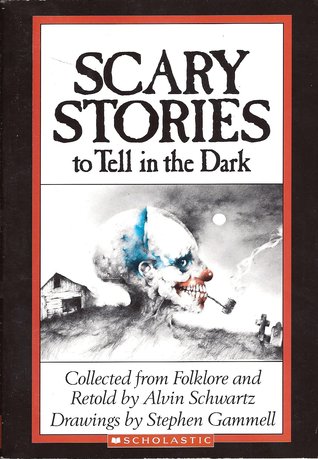
  5. Scary Stories to Tell in the Dark, by Alvin Schwartz. A classic collection of horror folktales for kids! I remember first reading this one when I was 10 or 11 at my aunt’s house on Cape Cod—I can’t remember whose book it was (probably belonged to one of my cousins), but I remember tentatively flipping through the pages and reading a couple of the tales before I got too creeped out and put it away, only to bring it back out a couple hours later and read some more. Stephen Gammell’s illustrations really add to the scare-factor. I get chills just thinking about them!


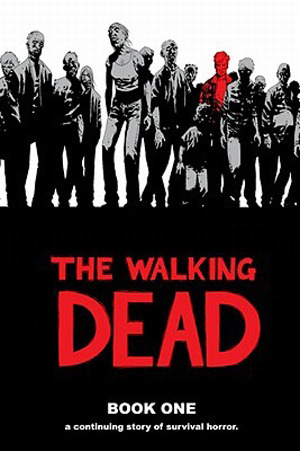
  6. The Walking Dead, by Robert Kirkman and Charlie Adlard (illus.). Okay, I guess this one is sort of a gimme these days, but I decided graphic novels needed some representation on this list. I enjoy both the TV and comic versions of The Walking Dead—they each have their own distinct personalities, and they’re different enough that I don’t find myself constantly comparing them. I really enjoy the character development in the show, but I think the graphic novels have more moments of true, stomach-flipping horror. (And it’s always the humans, rather than the zombies, who perpetrate it.)


  7. Baby-Sitters Club Super Mystery #3: Baby-sitters’ Fright Night, by Ann M. Martin. Like most young female readers of the ‘90s, I loved me some Baby-Sitters Club. The mysteries were always my favorites, and this was one of my most dog-eared ones. Sadly, it’s been a decade and a half since I read it and I don’t remember many details, but here’s what I managed to dredge up from the quagmire of my memory: The BSC goes to Salem, Massachusetts around Halloween. Can’t remember why. School trip? Maybe. Anyway, there is a famous diamond that gets stolen, and the BSC does their thing. Abby was super-cool, and I loved her narration. I wanted to be awesome like Abby! Who knows how this would hold up if I re-read it now, but at the time it was the perfect mix of spooky and fun for Halloween.

  8. And for my final offering, I present you not with a book, but with an internet-y virally-spread creepypasta-presented-as-reality type story called The Dionaea House. It’s about…a creepy house. And that’s all I’ll say, so as not to spoil anything. But it’s good. And veeeeery creepy. Click here to read it.

Now that I’ve thoroughly creeped myself out writing this post and am now jumping at noises and shadows, I don’t think I’ll be walking my dog after dark tonight. What are your favorite creepy or Halloween-y books? Anything in particular you like to read when the weather cools down and the leaves start to blow? Hit the comments and give me suggestions of things to read and add to my list!

Saturday, October 5, 2013

Book Review: Spending Spree, by Cynthia Overbeck Bix

Title: Spending Spree
Author: Cynthia Overbeck Bix
Publisher: Twenty-First Century Books (Lerner Publishing Group)
Publication Date: November 1st, 2013
Read: September 2013
Where It Came From: eARC from publisher via NetGalley*
Genre: Non-fiction
Rating: 3 Shopping Bags

I decided to request this book about the history of American shopping from NetGalley because I’d recently been watching the ITV/PBS show Mr Selfridge. I found the show fascinating, thanks to its depictions of both the advent of shopping as a pastime rather than a necessity and Harry Selfridge’s marketing techniques in a time when marketing hadn’t really be invented yet. (The soapy character drama was good, too.) I thought this book would be a fun way to get more of the same. And it was, for the most part—not an academic, exhaustive reference text sort of thing, but a book clearly researched and able to satisfy a casual interest in the topic.

The book appears to be geared to teenage girls, but barring the first page of text with talk of the reader heading to the mall with friends when they want to go shopping and desires for tablets and skinny jeans, there isn’t anything that’s really AHHH IN YOUR FACE TEENAGER. I had wondered if the book would be a simplistic treatment of the topic, but I was pleased to find a lot of interesting information. It covers the evolution of shopping in America from the time of general stores and traveling salesmen, up through the rise of big city department stores, five-and-dimes, big box stores, the birth of the mall, and internet shopping bursting onto the scene. A lot of basic stuff is covered (like, “What is a chain store?”) but there was a ton of trivia and info that was new to me. For example, did you know L. Frank Baum, author of The Wonderful Wizard of Oz was a window decorator in Chicago and founded the National Association of Window Trimmers? I did not! Now I will forever picture him in my head as the attractive French window trimmer from Mr Selfridge…

The book touched on a few topics related to the “dark side” of shopping, such as credit card debt, shopping addiction, and big box stores pushing the mom and pop shops out of business, but didn’t discuss things like sweatshops and environmental pollution that result from rampant consumerism. I guess I would’ve liked a bit about that, since I feel it’s an important thing to address with regards to shopping in this day and age, but I guess that topic could be a whole ‘nother book unto itself. I was also surprised that in the chapter about e-commerce the popularity of online flash sales didn’t come up!

Overall, an interesting book. I can see it being useful in libraries at school and elsewhere for kids writing papers, and for teenagers who enjoy their shopping. I don’t think it’s limited to that group, though. If you’re writing your dissertation on the history of shopping it might not be the one for you, but if you have some interest in the topic, I think this is a good bet— the tone is informative without being dry, it covers the basics and broad strokes while also delving into some interesting trivia, and at a slim 88 pages it’s a quick read. The quotes about shopping sometimes seemed a little random or haphazard in their placement in the text, but the black and white photos, etchings, and doodle-illustrations made up for them. A bibliography, index, and further reading section in the back are also useful additions for students and those readers interested in more information.

But my single favorite thing I took away from this book? DeadMalls.com. Just the existence of a website dedicated the topic delights me. I checked and am not familiar with any of the dead malls listed for my state, but there are definitely a few around here heading in that direction…

What are your tastes in non-fiction? Are you interested in the history of shopping enough to read a book about it? If not, have you watched Mr Selfridge yet?

*As ever, much as we are grateful for the copy, our review is uninfluenced by its source.

Saturday, September 14, 2013

Book Review: The Book of Lost Things (Mister Max #1), by Cynthia Voigt

Title: Mister Max: The Book of Lost Things
Author: Cynthia Voigt
Publisher: Alfred A. Knopf Books for Young Readers
Publication Year: September 10th, 2013
Read: September 2013
Where It Came From: eARC from publisher via NetGalley*
Genre: Middle-Grade-Historical-Mysteryish
Rating: 4 Delicious Pastries

The Quick and Dirty:


In the early 1900s, 12-year-old Max Starling’s actor parents are invited to a maharajah’s palace to start a new theatrical company, but when he arrives at the docks to sail away with them to India they are nowhere to be found. On top of that, there is no record of the ship they were meant to depart on ever being in port at all. Not knowing whether his admittedly flighty parents left him behind or were kidnapped, Max needs to strive to be independent and make enough money to live on until he can get to the bottom of the mystery. He is not alone in his endeavor, though, with his grandmother and a cast of other characters to help him along as he discovers that his talent may not be detecting, per se, but rather helping others solve their problems. This was a really fun middle-grade novel with perceptive, thoughtful, and humorous writing, and great illustrations.

The Wordy Version:


Sometimes, as an adult, the problem I run into when reading middle grade books is that they often feel, in a way, “dumbed down” for younger audiences. This might make sense—younger audiences at a lower reading level need books at their level, and as an adult it’s natural that the reading level and stories may not provide much challenge, and simpler writing and storylines might not hold one’s interest. Many times after reading a middle-grade book I find myself thinking things like, “That was a fun book—I would have loved it when I was 11,” or “I enjoyed it, but I probably would’ve enjoyed it more when I was younger,” or the dreaded and dismissive, “It was cute.” (“Cute” is not always a dismissive and diminishing descriptor, but I find it often can be.) And yet—there are middle grade books that are beloved by adults and kids alike, with no caveats or qualifiers to temper the adults’ esteem for these books. Harry Potter is the most obvious of this category. Good ol’ Mister Potter begins the series at 10 years old, and the book’s target audience is children in the same neck of the woods, age-wise. Of course there’s kind of a built in audience because as Harry and his friends grow up, the kids who started reading the books in their tween years grow along with them, but I think it’s safe to say that this is a series that is completely enjoyable regardless of the reader’s age. Another middle-grade series that seems to be quite popular across many age demographics is the Percy Jackson series by Rick Riordan. I’ve only read the first book and can’t speak to specifics, but from what I can tell it’s pretty popular with people of all ages as well (maybe not to the same extent as HP, but almost nothing compares with that juggernaut!).

There’s a fine line to walk between middle-grade enjoyable for mostly just the middle grades, and middle-grade that is genuinely enjoyable for everyone. This is something I ponder a lot (because I’m weird like that), and I haven’t yet been able to enumerate to my satisfaction what separates the two. Here are some of the qualities I’ve found that characterize the latter category:

  1. Good writing is good writing. No matter what audience an author is writing for, if the writing is good, people will respond to it. (Usually.) Less experienced readers can read and enjoy less skillful writing, but as you grow and read more and your tastes develop, you get a better sense of what good writing is. From that place, it is difficult to go back and enjoy things you may very well have loved if you read them when you were younger, and be able love them in the same way without any sort of qualifications. Really skillful writing, however, is enjoyable regardless of age.
  2. There is plot complexity without engendering confusion.
  3. Solid world building creates an implicit trust between author and reader.
  4. Writing isn’t shallow—it’s perceptive and insightful, and it can be those things without being overly deep and heavy.
  5. Kids can handle depth, though. When the writer handles it well, depth provides emotional resonance, and that’s a good thing.
  6. Readers can connect with characters besides the protagonist—characters are depicted as real people, not caricatures or tropes.
  7. Readers can empathize with the characters even though they may be in a situation the reader has never encountered. This usually comes part and parcel with the creation of realistic characters.

Pretty much all of those tie straight back into number one—good writing is good writing, and that applies to all books, not just middle-grade. Whew! All of this rambling and discussion just for me to finally get to the point and say I think Mister Max: The Book of Lost Things is on the “enjoyable for all ages” end of the spectrum.

I thought this was a well-written, entertaining book. I mean, duh, Cynthia Voigt, right? At the beginning of the book, though, I was a little skeptical. I was like, who are these flaky parents?! Poor Max, they don’t seem to care about him at all! But of course it’s not as simple as that. Through the course of the story, even though they are absent for most of it, the reader comes to see how much they really love Max. Moreover, while I was quick to judge his parents as flighty, the reader learns that Max, instead of feeling angry or bitter, admirably accepts them for who they are. Max is a precocious and wise 12-year-old, but at the same time he also manages to be realistic for that age.

Like Max’s parents, the other characters are more than their first impression would suggest—Baroness Barthold, Joachim the painting instructor, Ari the tutor—they are far from perfect people, but as more of each of their personalities is revealed, they become more compelling and sympathetic. (Refer to 5, 6, & 7 in the above list.)

The many mysteries Max is juggling throughout the story held my interest. The writing is perceptive, and Max in particular is a smart cookie. Topics of depth are explored without bogging the story down—my favorite of these is when Max takes a job to find a missing dog. When he finds her, he realizes that maybe her owners are not the best people to take care of her. He was paid to find the dog, but he doesn’t think it’s right to send a creature with no way to stand up for itself back to people who don’t care for her very well. What is right in that situation? The letter of the law vs. what’s right debate was handled an interesting way without straying into pedantic or heavy territory. I was hooked—I wanted to know what Max was going to do to solve the problem. (Refer to 2, 4, & 5 above.)

I also thoroughly enjoyed the style the book is written in. Max’s fascination with plays and acting, readily visible through the many characters he takes on to aid in his investigations and the way he thinks about his life as if it were a play, is also reflected through the set-up of the book. Chapters are titled in the “In Which Blahblahblah Happens” fashion, or alternatively, as if they were scenes in a play. For example, “The Lost Dog, Act 1” is the first chapter focusing on his search for the missing dog.

Overall, I liked this book a lot. The writing is intelligent and engaging, with enough going on to hold the interest of youngsters and grown-ups alike. Max is relatable—he wants to be an independent person and feels a sort of sense of adventure where that’s concerned, and I can remember feeling the same sorts of things at that age. The other characters are people you want to get to know better, and I always wanted to know how Max would end up solving the problems set before him. As an added bonus, the illustrations by Iacopo Bruno interspersed throughout the text are lovely and contributed to my enjoyment of the book. Bottom line: I liked spending time in this world with these people and would like to visit it again when the next book comes out.

What are some middle-grade books or series you have enjoyed, either when you were in the middle-grade demographic or later? Can you think of anything I should add to my running list of things that make a book targeted at younger readers appeal to people beyond that demographic?

*As ever, much as we are grateful for the copy, our review is uninfluenced by its source.

Wednesday, August 7, 2013

Book Review: The Solar System Through Infographics, by Nadia Higgins

Title: The Solar System Through Infographics
Author: Nadia Higgins
Illustrator: Lisa Waananen
Publisher: Lerner Publishing Group
Publication Date: August 2013*
* NetGalley states a pub. date of November 2013, but Amazon shows 1 August 2013
Read: August 2013
Where It Came From: ARC from Publisher via NetGalley*
Genre: Kid's Non-fiction
Rating: 4 Champagne Supernovas


What’s Shakin’, Bacon?


I requested this from the publisher on a whim because I. Love. Infographics. What is an infographic, you say? It’s a way of depicting information (be it statistics, facts, concepts, survey results, what have you) through a visual medium that helps it all make sense, often involving flowcharts, graphs, illustrations, and things like that. It’s info conveyed using graphics—info, graphic, INFOGRAPHIC! Makes sense, yes? Here, I will show you:


I did not make this infographic; it came from Goodreads. I wish I had the mad skillz to make infographics like this (or at all). You can click the image to read the whole original post, if you are interested.

If you find this sort of thing as intriguing as I do, you can find a few more lurking on one of our Pinterest boards. But on with the show! I thought a whole book of infographics sounded great, and this one did not disappoint. It covers all sorts of outer space-y topics, from the big bang theory (the actual theory, not the show), to black holes, to the different kinds of stars, and on and on. It’s meant for kids, but I think the format, humorous tone, and interesting info make it a book that’s fun for all ages. The straightforward, easy-to-comprehend explanations of some admittedly esoteric topics helped me learn all kinds of things I never knew before, and the engaging graphics and fun, informal voice kept me turning pages and thinking, “Oh, just one more infographic…” until the book was done.

Atoms take up only 3% of the universe, and the rest is all dark matter and dark energy?! Who knew! A chart with how much a dog would weigh on each of the planets, taking into account the different gravities? Awesome! An equation for measuring the possibility of intelligent life in our galaxy? Why didn’t I know about this before?! My absolute favorite, though, was the infographic explaining what would happen if one were to fall in a black hole. Remind me never to do that.

The info doesn’t go too deep, but I wouldn’t expect it to—this is an introduce-and-intrigue-type book, not a textbook. Rather, when a reader’s interest in a certain topic is piqued, it serves as a springboard for going off to the interwebs or the library in search of more information. It inspired lots of questions and discussion between Susan and me as we perused the pages and pondered theoretical astrophysics (and we are not often astrophysically inclined!). I thought it was a great book and the perfect format for opening up readers’ eyes to the wonder of the cosmos and the amazing science of studying it.

I especially like that near the end of the book it becomes interactive, with a guide to some interesting things beyond the usual constellations that readers can find in the night sky. It also has a “Further Information” section with a listing of books and websites, each accompanied by a mini description, for further investigation of topics introduced in the book. Best treasure found therein: This website is purported to have archived episodes of “Consider the Following” with Bill Nye, the Science Guy. BILL NYE!!!

I would’ve absolutely loved this book as a kid. Who am I kidding—I pretty much love it now! This would be great for school libraries and teachers’ classroom libraries, in addition to the personal libraries of children and their families. I’m confident that anyone at all curious about the universe (and multiverse! I about died of happiness when the book mentioned the concept) could find something to enjoy here, and I’d be happy to have a physical copy of it on my own shelf.

*As ever, much as we are grateful for the copy, our review is uninfluenced by its source.

Wednesday, July 31, 2013

Adventures in Literature: Mankato, Minnesota, USA

Who knew Minnesota had such a strong literary history? I certainly didn’t. (If you are a resident of Minnesota, I imagine you to be waving your hands at me saying, “I did, I did!”) But during my cousin’s and my internet explorations to find stuff to see and do near her new place of residence, we kept on coming across these sorts of things, as you saw with our previous report on Laura Ingalls Wilder’s home in Walnut Grove. During one of these searches, when my cousin drew up a page on the Betsy-Tacy houses, I knew I recognized the name although I myself had not read these books. It took a bit of reconnoitering before I confirmed that is was not a relative, but instead Susan who I must’ve heard talking about these books once in passing! She was very excited about the coincidence of me being so close to this book pilgrimage site, so excited in fact that she went on their website to explore and ultimately choose some items for me to pick up for her as her proxy at the gift shop. I knew I needed to take the opportunity to visit and report on this place even if I hadn’t read the books—when in Minnesota! (…do as the Minnesotans do? No, that’s not right…)


Not the first Betsy-Tacy book, but I like this cover, illustrated by the famous Lois Lenski.

So, since she is the authority at this blog on all things Betsy-Tacy, here is a blurb that Susan has so kindly provided for your edification regarding the substance of the books:

“O tempora! O mores!” groaned Betsy and Tacy, taking Cicero’s classic cry for their own. (Betsy Was a Junior, 182)

If anything can sum up the appeal of the Betsy-Tacy series by Maud Hart Lovelace, it is this quote. What times! What customs! Betsy and Tacy may have quoted Cicero to exaggerate their own misery in studying for midterms, but I don’t think Maud Hart Lovelace would be unhappy to hear the phrase in a nostalgic instead of disgusted sense.

Betsy-Tacy books are the largely autobiographical accounts of young girls playing make-believe and telling stories at the turn of the twentieth century, and later of young ladies navigating high school society and looking towards their futures. Reading them gives the impression that these were the best years to grow up, that things were never so rosy as they were in those decades in Minnesota. What times Betsy and Tacy have! They play in piano boxes, dress up in their mothers’ long gowns to pay calls on neighbors, meet opera stars, and have endless socials with their friends in high school. What customs! It is très chic to put your hair in a pompadour. A sure-fire way to have a successful party is for your girlfriends to come with their fathers’ old suits (!), and an equally safe bet for a good time is to have an unironic night of singing (very different from karaoke parties today).

Basically Betsy and Tacy have adolescences where imagination and friendship are the most important things. How can you not wish you lived in those times and with those customs?

Related Posts Plugin for WordPress, Blogger...