Showing posts with label genre-ally speaking. Show all posts

Tuesday, August 19, 2014

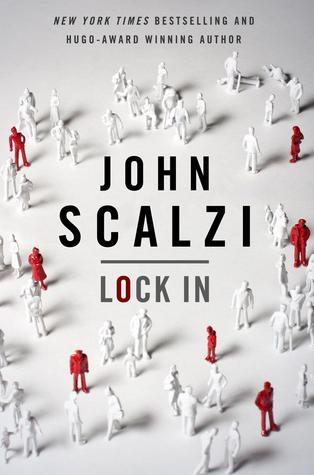
Genre-ally Speaking: Lock In, by John Scalzi

Title: Lock In
Author: John Scalzi
Publisher: Tor Books
Publication Date: August 26th, 2014
Read: June 2014
Where It Came From: Paper ARC from BEA*
Genre: Sci-Fi-Mystery-Thriller
Rating: 4 Threeps

It’s been over a month since I read Lock In (tore through it in a matter of days, in fact), so this review probably won’t go into specifics as much as I usually do. And I think that’s a good idea for this book—part of the joy of reading it is trying to puzzle out the threads of the mystery for yourself as the stakes for the characters increase and the tension ratchets up. But first, let’s talk plot!

Chris Shane is a new FBI agent, working a murder case in the D.C. area with his partner Leslie Vann. It sounds like the beginning of your usual crime thriller, but here’s the sci-fi twist: The world Shane and Vann live in is one that has been shaped by a flu-like virus that swept the globe 25 years previously. Most people who catch the disease just experience mild flu-y symptoms, but 1% of the infected—which doesn’t sound like much, but amounts to millions of people in the US alone—end up “locked in.” That means they are in their bodies and fully conscious, but are unable to move, respond, or make use of those bodies beyond just being, well, alive. The world has changed in many ways to deal with the situation and accommodate victims of Haden’s syndrome (they’re called Hadens for short), such as with the development of the Agora, an online space for Hadens, and the creation of robot-like devices their consciousness can inhabit to move around in and interact with the physical world. Another salient point—some non-Hadens have the ability to be an Integrator, or someone able to let a locked in individual inhabit their body for a time and experience the world as the non-locked in do.

So, back to Shane and Vann—they are working on a Haden-related murder case, and it looks like an Integrator is their prime suspect. This complicates the situation in ways I’m sure you can imagine. Was the Integrator himself the perpetrator? What if he was integrated with a Haden at the time? Surely there must be safeguards against that…? Hmmm… As they trace the trails leading out from the murder in many directions, the mystery expands to encompass politics and greed on a much larger scale, while also focusing down on those caught in the crossfire of the hidden players in the game.

I quite enjoyed Lock In. Shane is an engaging narrator, and his first-person voice propels us through the story. In typical Scalzi fashion, it is a very smooth, fast-paced reading experience, with writing that feels effortless and pages that fly by. The world is certainly different from the one we inhabit now, but it’s still similar enough as to be very recognizable—no flying cars and vacation jaunts to outer space here, but rather a vision of a near future that has been altered by something easily conceivable (like, y’know, a huge epidemic we are ill prepared for), but that humans are adapting to. People keep on keeping on, doing normal human things, both good and bad. I also love how the story conveys the far-reaching effects of the murder and the plotting behind it, since it is certainly something with consequences for the entire world, but also narrows in on the effects on a very personal level for the main characters and other people involved.

Some of the things that really stood out to me in Lock In:

  • The pacing. This is probably one of my top awesome things in the book. Scalzi really nailed it, creating a reading experience that is relaxed enough for you to be able to process all the information coming your way, but still be a page-turning thriller that keeps you guessing what lies beyond the next chapter. From reading the jacket copy you know Chris Shane is an FBI agent, but then on page two you find out he is a Haden—boom, first surprise (which may then cause you to consider your pre-conceived notions you didn’t realize you had about characters, as it did for me). Also wonderfully paced was the information about who Chris Shane is—he is the narrator, so it’s difficult for him to hide things from the reader, but since his background is so obvious to himself, he is able to sort of obliquely think around certain details of his life, with the result being that we know he is somehow famous, but we don’t know why. Scalzi teases us with it as we wonder why the heck everyone knows who Chris Shane is, and the suspense and anticipation that build leading to that reveal is pretty damn great.

  • The humor. The trademark Scalzi humor was definitely present in this book, but at the same time it didn’t seem like quite as much of a focus or its own character as it is in some of his other books. And that is in no way a criticism—just an observation. Like in Redshirts, or the funny bits in Old Man’s War--they have a style of writing and kind of witty, punchy humor that I have come to associate with Scalziness, and Lock In feels a little different. Humor is still very much present in it and very recognizably Scalzi, but it comes through the filter of Chris Shane and his situation in this world. For me, it’s a new facet of Scalzi funniness, and I like the versatility it demonstrates.

  • The twisty-turniness. The whole situation with Hadens, Integrators, and threeps (the machines Hadens can use to function in the physical world) quite brilliantly lends itself to all sorts of twists and surprises in the mystery as you try to figure out and predict who precisely is involved, and why, and with what motivations, and where they are, and WHO they are, and what are they doing, and—well, you get it.

  • The smooth-like-buttah reading experience. I already went into this a bit, but the ease and speed with which I tore through Lock In is really a testament to the skill behind the writing. To create an entertaining, suspenseful, and emotion-tugging mystery that’s this much fun and speed-inducing to read is an art.

The only part I had questions about involved some of the details of the climactic scene. Without getting into spoiler territory, there were some scientific-technological aspects that I, with my not super techno-savvy skills, tried to follow through mentally to their ends, and I wasn’t sure I was completely clear on it all by the time the scene wrapped up. But it didn’t have a negative effect on my enjoyment of the book as a whole—it merely gave me ideas of questions I could ask Scalzi if I ever see him at Phoenix Comicon again. :) Overall, I really enjoyed the book—it is both sweeping as a thriller on the grand scale, and also affecting on the micro scale of individual human interactions and emotions. It's a good one for Scalzi fans and sci-fi fans, of course, but I’d also recommend it to general thriller and mystery audiences; I think it’s definitely a book with crossover appeal. (…there may not be any semi-colons in Lock In, but I thought there needed to be at least one in this review!)

*As ever, much as we are grateful for the copy, our review is uninfluenced by its source.

Tuesday, June 24, 2014

Genre-ally Speaking: The Secret Diamond Sisters, by Michelle Madow

Title: The Secret Diamond Sisters
Author: Michelle Madow
Publisher: Harlequin Teen
Publication Date: February 25, 2014
Read: June 2014
Where It Came From: BEA
Genre: Teen Romance
Rating: 1.5 Diamonds

The Quick and Dirty:


Rich teens in Vegas have adventures in love and family over the course of a week. The characters may be the most selfish people ever to have have moved from a run down apartment to a penthouse suite. The book may be the most repetitive book I've read in a while. And to think, this is only the beginning of a series!

The Wordy Version:


There are quality reads, good reads, guilty pleasure reads, and then there’s whatever category this one falls into. To be perfectly fair I’m sure it could fall into many people’s guilty pleasure pile. Just not mine. This is a book that, like wearing a ruffled pinafore, belongs to girls younger than myself.

So why did I read it? Yeah, yeah, good question. (1) I picked up a complimentary copy at BEA. (2) It’s from the HarlequinTeen imprint, and I’ve been hearing that HarlequinTeen has more plot than traditional Harlequin. (3) I thought the story could be frothy fun.

Three teenage sisters have been living with their single mother in a small apartment until their mother’s alcoholism forces their father to reveal himself to his children. As it turns out, Daddy Diamond is a Vegas casino owning billionaire with no parenting experience to suggest that instantly handing them all limitless credit cards and access to parties on the Vegas Strip could be a bad idea. Within literally a night, all three girls have crushes on guys who range from off-limits to predatory. Over the course of one week they burst into tears, lock themselves into their condo from embarrassment, and see each other transforming into new (more selfish) people.

I never read Gossip Girl or Pretty Little Liars, but I am guessing the series The Secret Diamond Sisters is starting will be very similar. I also imagine that seeing attractive 20-somethings playing these teenagers will be a lot more fun than reading their repetitive and often vacuous thoughts in this 382-page book.

Trust me about the repetition. Here’s an example I found almost as soon as I opened my book to prove it to you. Within all of three pages, we get, “Peyton couldn’t believe it. What an arrogant jerk to say that” (256), “Peyton was amazed at how full of himself he was” (257), and, “His face twisted with arrogance” (258). I think the guy may be arrogant, don’t you?

Not that the other characters are substantially better than him. The first point of view character is Savannah, the youngest Diamond sister, who in her old life wants to fit in with her volleyball team and wishes she could be a pop star. Savannah pouts, stomps her feet, blinks away tears, and—in better moods—plays with her hair/clothes/accessories. My favorite Savannah moment is when she spends a paragraph worrying about how her family is a target for kidnapping, before we read, “But Savannah had other problems—like figuring out what to wear tonight.” LOL

Oldest Diamond sister, Peyton, is a punk rebel because when she was in ninth grade her boyfriend cheated on her by dirty dancing with some girl and an ice cube. Still angry at the ex-boyfriend she tries to have short-term sexual relationships with boys now. And resentful that her super-wealthy father abandoned the girls to live with an impoverished alcoholic, she refuses to dress like anything but a hooker. Best Peyton moment: she vows to keep track of Savannah and the predatory douchebag Savannah likes, and then two paragraphs later, she’s off to pursue her own guy. (Bonus fun: she LEAVES her sister at the club with the predatory douchebag within pages. That is taking sisterly responsibility seriously.)

Middle Diamond sister, Courtney, is meant to be very sympathetic. She’s the quiet good girl who, in their pre-Vegas life, was having trouble finishing her homework because she was so busy working a minimal wage job to pay the family’s bills. She does seem less self-absorbed than her sisters, but it’s not totally clear whether that is because the bar is pretty low or because she actually has stuff going for her. She spends much of the book wistfully thinking about her soon-to-be step-brother, Brett.

Brett may also be a sweet person, as his ideas of dates to have with Courtney are genuinely cute. Brett makes a big deal about how he doesn’t like to hang out with the wealthy kids at their private school, and how he’s still friends with his public school buddies from the time before his mother got engaged to Daddy Diamond. And yet Brett is driving a brand new Lamborghini, flashing his black AmEx around, and planning jaunts to Europe. I can’t help thinking that Brett is protesting a bit too much about how little use he has for the high society of Vegas.

The final point-of-view character, Madison, is the smart, beautiful, popular nemesis to the Diamond girls. We’re supposed to hate her because she can manipulate guys using her feminine wiles, but I don’t see how she’s actually worse than Diamonds 1 and 3. She appears to be smarter than all the Diamond sisters put together, and she’s managed to claw her way to the top of the social ladder in the private school despite having parents who earn only a small fraction of what the casino owners do. In fact, the only thing I really fault Madison on is explaining how few calories she can afford to eat in every one of her chapters, or how much exercise she must do to burn off the drinks she indulges in at night. Perhaps one of the later books involves a twist of a Diamond sister revealing to Madison’s parents just how starved their daughter is, thus removing Madison for a few months to go to rehab. Drama!

Specifically teen soap opera drama. I was expecting a more formulaic romance novel from any imprint within Harlequin, and I commend the book for going past that. But this series isn’t wish-fulfillment for me. Call me over for a drinking game if the CW starts airing it, and in the meantime help me find my way back to classic Pride and Prejudice fanfiction when I’m looking for fluff to bring to the pool.

Tuesday, May 13, 2014

Genre-ally Speaking: Manifest Destiny, Vol. 1

Title: Manifest Destiny
Author: Matthew Roberts, Owen Gieni, & Chris Dingess
Publisher: Image Comics
Publication Date: May 27th, 2014
Read: May 2014
Where It Came From: eARC from publisher via NetGalley*
Genre: Historical-supernatural-graphic-novel
Rating: 3.5 Sad Dead Herons

The Quick and Dirty:


Lewis and Clark lead an exploration of the United States’ new territory at the behest of President Jefferson, and encounter all sorts of supernatural monsters and other entities. Also, Sacagawea kicks some major ass.

The Wordy Version:


Lewis and Clark are on a mission from Jefferson to explore and document the Louisiana Purchase. At least, that’s the public face of the mission—Jefferson has actually tasked the two with leading the expedition to destroy the monsters inhabiting the interior of the continent and make way for westward expansion. L and C are naturally a little skeptical about this less-public aspect of the assignment, but carry on as their president has ordered. They've got a bunch of military men in the party, supplemented with freed criminals—expendable manpower for what horrors might be ahead. Their first stop is La Charette, the westernmost bastion of civilization.

It soon becomes clear that Prez Tommy J is not, in fact, losing his marbles, when they are attacked by a bison/minotaur/centaur creature while investigating a structure that looks mysteriously like the plant version of the St. Louis arch. Things go downhill from there—more murderous bison creatures, a naked lady with scary green eyes jumping off a cliff but leaving no body behind, an abandoned fort, moss zombies… They make it to La Charette and eventually find some of the village’s survivors. The original plan was to hook up with an Indian girl at the fort (wonder who that could be?), but they’re forced to make plans to leave without her. Said plans are derailed by various malevolent flora and fauna, and the awaited Indian girl swoops in to save their asses. More than once.

Lewis is a kind of happy-go-lucky-ish, scholarly type of individual, while Clark seems to be the harder, less forgiving military man. Their bromance could get pretty epic. Other prominent characters include a particularly slimy convict named Jensen, who suspects the real reason the criminals were brought along on the trip and has no qualms about the measures he may have to take to escape. Sacagawea is the strong, silent (and pregnant) type, and her husband/baby-daddy Toussaint Charbonneau seems a little creepy, especially when we find out he’s being paid by L and C for delivering her to them, with more money to come when the baby is born…

I didn’t have especially strong feelings about the art in general, but there were some really cool full-page panels. It’s actually a pretty gruesome graphic novel at times (bison creature dissection, anyone?), and the slime ball Jensen says some pretty offensive things (cannot WAIT until some creature gets him. Or Sacagawea!), but it didn’t make me squeamish enough to stop reading. Overall, I was feeling kind of in the middle about it—it was interesting enough, but maybe not so much that I would seek out the next installment. But some set up at the very end involving plant prophecies and demons from Clark’s past, as well as some loose ends, such as Sacagawea’s undisclosed role (both from L and C’s perspective and from her own) and the green-eyed cliff-jumper, convinced me the next volume is worth a place on my TBR. I’m looking forward to further development of some characters we only got a glimpse of, like Mrs. Boniface from La Charette, and York, Clark’s African-American companion (slave, freedman, servant—we don’t know yet).

Have you been reading this one in its comic book form, or do you plan to check out this graphic novel collection of issues #1-6? What other graphic novels have caught your eye lately?

*As ever, much as we are grateful for the copy, our review is uninfluenced by its source.

Monday, April 21, 2014

Genre-ally Speaking: The Thousand Dollar Tan Line

Title: The Thousand Dollar Tan Line (Veronica Mars #1)
Author: Rob Thomas and Jennifer Graham
Publisher: Vintage
Publication Date: March 25th, 2014
Read: April 2014
Where It Came From: Library
Genre: Mystery
Rating: 4 Quippy Comebacks

I was both excited and a bit apprehensive going into this one—tie-in novels can be a little iffy, but it’s got Rob Thomas’ name on it so it MUST be good, right? Right…? Now that I’ve finished it (in about a day, no less), I’m happy to say right once more, this time in firm agreement. Mysteries have been my drug of choice for most of my reading years, and though I haven’t read many lately, I still love a good one. And this one was! To be certain, if you haven’t watched the Veronica Mars TV series and movie you may be a little lost—background information on main characters and places isn’t covered too heavily, since, let’s face it: if you’re reading this book, you’re probably already a V-Mars fan. The mystery itself can be understood and followed by Marshmallow and civilian alike, but the nuances of character relationships and events preceding this book will probably be lost on those not already familiar with Neptune and its denizens.

But let’s assume you are a fan. All of our favorite (and not-so-favorite) characters make appearances and there are shout-outs to show-related things, but this book does not depend solely on nostalgia for its success. Instead, it firmly moves the V-Mars story forward, picking up shortly after the events of the recent movie. Veronica is still dealing with her dad’s disapproval of her choice to become a P.I. rather than a lawyer, and with the hardships of having a boyfriend overseas for the next six months. Just when she’s starting to worry about the electricity getting shut off at Mars Investigations HQ, she gets hired by the Neptune Chamber of Commerce to investigate the disappearance of a spring breaker co-ed (because the bad press is cramping the influx of tourist dollars, of course). The mystery deepens when another girl goes missing, some unexpected characters turn up, and Veronica finds herself in hot water before she gets her man (or woman. Or multiple people. Or bear. I’m not sayin’.).

I enjoyed the mystery—it held my interest, and kept me guessing about what was really going on. It was neither too outlandish nor too normal, containing the perfect blend of reality and crazy-shit-happens-don’t-it. I only called one tiny part of it, and tore through the pages to get to the bottom of the rest. (As it turns out, the only thing that ended up not making terribly much sense to me was the book’s title.) The trademark quippy snark is there is full force, which made me so happy! It was easy to hear the dialogue in the voices of the characters I’ve come to know and love from the show, and it was just as easy to picture them in the scenes described in the book. I’ve heard some people were a little bummed that there wasn’t much Logan, but I thought it worked and showed that the relationship is not without obstacles (because of course it isn’t!). I could’ve gone for a little more Weevil, especially considering where the movie left him, but I guess that can be picked up more in future novels. Overall, solid mystery, good writing, great characters we already know and love, just in a new format. When does the next one come out?

Oh, also, for those who may be missing Veronica’s first-person narration: Kristen Bell narrates the audiobook, and from the clip I listened to, it’s all a nerdy Marshmallow would dream it to be. If I had an Audible subscription, I would be on that like leather on a PCH-er. The series liiiiiives!

Friday, March 7, 2014

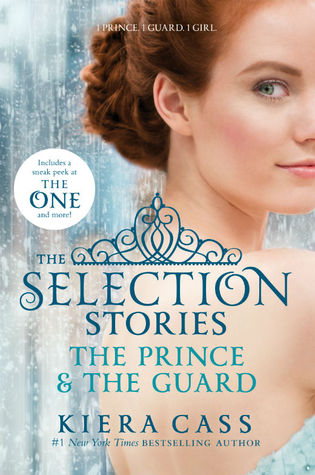
The Selection Stories: The Guard, by Kiera Cass

Title: The Selection Stories: The Guard
Author: Kiera Cass
Publisher: HarperTeen
Publication Year: 2014
Read: February 2014
Where It Came From: Barnes and Noble
Genre: YA-dystopian
Rating: 2 stars

The Quick and Dirty:


In a small tide-you-over novella in the Selection trilogy, Aspen, a palace guard, tries to convince the love of his life to forget about the prince with whom she may be in love. Largely a reprint of the Aspen-America chapters of The Elite, it's only meant for fans of the series. Possibly only fans of Aspen will truly be able to appreciate it, but the paperback book comes with some extra content and the first three chapters of spring's The One.

The Wordy Version:


Last year Alyssa, waiting eagerly for The Elite, discovered her library had an available digital copy of the companion novella, The Prince, and discovered that it had little merit aside from being something to read while waiting for the next part of the series. A little later, Alyssa caved into her craving and bought a hardcover Elite, and kindly sent it to me as soon as she was done. I wasn’t so impatient last year, but this year it seems I am VERY impatient for the rest of the story of America and Maxon (or Aspen, if the series takes a terrible turn), and when I saw The Selection Stories on a shelf in a Barnes and Noble, I barely tried to resist. I was sold as soon as I saw there were family trees for all three main characters, tracing them all back to the fascinating (if confusing) era of Gregory Illéa. (And now it’s on its way to A as a thank-you for lending The Elite.)

As a refresher, the Selection trilogy takes place in a post-WWIV North America, which is now the monarchial kingdom of Illéa. Tradition has it that the young crown prince of Illéa marries a commoner after winnowing down his options from a pool of 35 candidates. Seventeen-year-old America Singer, a musician of lower-middle caste, enters the draw at the behest of the love of her life, Aspen, whose caste and poverty is even less desirable than her own. Heartbroken by Aspen’s insistence that America try to find a better life than he can offer her, America enters the Selection in a decidedly unromantic mood that appeals to Crown Prince Maxon.

(Now come the spoilers) Maxon and America become friends despite some misunderstandings, and all seems on the track to True Love until America discovers that Aspen is now a guard at the palace (which has elevated his caste and given him both a great income and the confidence to pursue America’s love). When a more serious misunderstanding occurs between them (America believes Maxon is cold-hearted to allow a couple caught breaking the draconian law she herself often ignores to be punished), Aspen puts his life and America’s at risk to have secret meetings and agree that Maxon is not worthy of her love.

Author Kiera Cass has been rather vocal about her love for both of America’s love interests, especially as readers last spring began to complain that Aspen’s actions in The Elite were not so laudable. She was excited to give readers a better perspective of Aspen in the new novella included in this collection, and I was uncharacteristically optimistic that she could present Aspen, “The Guard,” as something other than an emotionally abusive ass in a story taking place during the timeline of The Elite.

And for the first 15-25 pages of the novella, things seemed to be pointing towards a sympathetic portrayal of Aspen. Following a dance between America and Maxon, Aspen seems to realize that the Amerispen ship sailed years ago, and it’s Maxerica that’s in port. He then shows some sense the morning of the punishment, sending America’s maids to comfort her and calming America’s family. Even when Aspen determines, “If Maxon truly was [sic] a decent man, America never would have been in this situation in the first place,” I’m kind of on his side. He’s jumping to conclusions about Maxon, but he’s nineteen and that’s as good a time as ever to jump to conclusions.

But then Aspen starts leaping to much more dangerous conclusions. Seeing that America has been crying, he declares, “I knew—I knew—she was supposed to be mine.” America thanks him for offering help, and “With her words, [he] knew without a doubt: she loved [him].” My margin notes suggest that Aspen could do with a lesson from Mr. Darcy about the difference between gratitude and love.

Roughly a third of the way through the story the parts I found most objectionable in The Elite return with no improvement. Aspen didactically tells America,

“The thing about Maxon is that he’s an actor. He’s always putting on this perfect face, like he’s so above everything. But he’s just a person, and he’s as messed up as anyone is. I know you cared about him or you wouldn’t have stayed here. But you have to know now that it’s not real.”
This is a line in The Elite and may be there just because it needed to follow the original story, but this line makes NO SENSE in the context of what Aspen has been witnessing in his duties in the palace. I can’t figure out why Kiera Cass dropped it in without showing Maxon doing something slightly duplicitous in front of Aspen in this novella. Without context all I can say about Aspen’s advice to America is that it is CREEPY. I can’t help assuming that he’s made up this whole side of Maxon’s character to serve his own purposes. And there would have been plenty of things Aspen COULD have said about Maxon that wouldn’t have come across so poorly. Like, “America, I hate that Maxon hasn’t been able to make you feel better about your friend, or even been able to explain how he could stand by and watch her suffer.” Instead we get Aspen’s next line from The Elite: “I know it’s hard to believe, but I’m really sorry Maxon turned out to be such a bad guy.”

Alyssa observed that The Prince didn’t add anything to The Selection by repeating the dialogue through a different character’s perspective, and this is entirely true for the sections of The Guard that come from The Elite. But there were a few things that were genuinely interesting and seem to offer tantalizing possibilities for the final volume of the trilogy. We learn a little more about the political situation in the south of Illéa, and that the guards at the palace are getting superpower injections.

And if all that weren’t enough to convince you to pick up the book, there are two more chapters to extend The Prince to Maxon’s decision to keep America around after she knees him on a date. PLUS the family trees and small backstories (some juicy murder in the royal past), and the first three chapters of The One.

Tuesday, November 19, 2013

Genre-ally Speaking: The Different Girl

Title: The Different Girl
Author: Gordon Dahlquist
Publisher: Dutton Books
Publication Date: February 21st, 2013
Read: November 2013
Where It Came From: Library
Genre: Sci-Fi
Rating: 4 Good Questions

The Quick and Dirty:


Veronika, Caroline, Isobel, and Eleanor are four girls living on a remote island with their two caretakers, Irene and Robbert. They spend their days taking walks, learning to analyze their surroundings, and napping, until one day Veronika comes across a new girl washed up on the shore. This first contact with the outside world will contrast the 4 girls’ lives in isolation with that of the different girl, and have consequences when other outsiders finally discover their island. It’s really hard to blurb this book without spoiling the fun in reading it, but I thought it was fantastic—steady, lulling reading with an unassuming depth and underlying tension that slowly builds to an affecting climax.

The Wordy Version:


Let me preface this by saying two things: First, that this wordy version will necessarily have things in it that could be deemed spoilery, and second, that this is not a book for everyone. I have been a huge fan of Gordon Dahlquist’s since reading the epic The Glass Books of the Dream Eaters (so much so that I ordered the final book of the trilogy from the UK when I learned they weren’t going to publish it in the US—who publishes 2 books of a trilogy and then backs out on the 3rd??), and while this is very, very different from that, it was so, so good. However, it is a book that requires some work on the part of the reader to get the most out of it. You have to read between the lines, look at what is going on beneath the surface, analyze things, and make some inferences if you want to piece together the greater picture. In short, you have to think like the girls in the book. If you like things laid out for you by the author to be easily understood and prefer your endings tied up in a neat bow with no remaining questions, this book might frustrate you. But it quite clearly advertises what it is. Here’s what’s printed on the back of the book: “You will have many questions. You will receive some answers. You will learn to think differently.” Big letters, bold font, easy to see. And so I was very frustrated by all the poor reviews this book has gotten on GoodReads, because in them were many complaints about the book being EXACTLY LIKE IT SAYS ON THE COVER! To my mind, those are the three perfect sentences to sum up the reading experience of this book. I had many questions. I received some answers. I had to come up with other ones myself. And I learned to think differently.

But let’s back up a bit. A self-contained YA volume with no romance?! How refreshing! And although this book is categorized as YA, I think it would be just as at home on the normal science fiction/fantasy shelf, too. The book opens with Veronika telling us this story from sometime in the future, starting with their former daily life on the island, before the different girl arrived. While Veronika, Isobel, Caroline, and Eleanor seem fairly normal for the first few pages, when it is revealed on page 17 that they go to sleep with a button click behind their ear, it becomes obvious that they are (highly advanced) androids or artificial intelligence of some sort. This early revelation resituates the reading of the book, and for me, altered conceptions that I was unaware I’d already formed. Veronika’s straightforward, almost stark narration makes more sense now. Robbert and Irene must be scientists of some type, not simply guardians. Their walks around the island and lessons are teaching the girls to analyze and think the way humans do. The girls know they are different from Robbert and Irene, but they do not see themselves as “robots”—can’t see themselves as robots since the word is never used—just a different type of people.

In their lessons they learn how to analyze, how to think, and I found this exploration of cognition and thought processes to be fascinating. For most people, how you look at the world and process things to arrive at conclusions is second nature, or first nature, really. You don’t actively think about it, you just do it. It happens in your brain without actively trying. But seeing the girls learn how to learn gave such a new, enlightening perspective. Watching them develop their thought processes in the lessons with their caretakers, and then extend that learning to things beyond what those caretakers intended and make decisions for themselves was compelling. As Caroline has dreams while she is “asleep,” and as Veronika starts making decisions to deviate from Robbert and Irene’s instructions, you see them coming closer and closer to what could be considered “human.” Some other readers seemed to find it “boring” or “slow,” but I did not.

And then comes May. Veronika finds a girl from the outside world washed up on the beach, and Robbert and Irene nurse this shipwreck survivor back to health. They don’t really know what to do about her, and worry about how she will react to the girls. When May does find out about them, she reacts with scorn and anger, in part from her grief at losing her uncle in the shipwreck, and also because of the outside world’s mistrust of technology. She sees the girls as “other,” but the girls just see her as a different and thus inherently interesting person, and as May spends time with them she learns to see them more as Robbert and Irene do.

The plot has rising action, a climax, and falling action, but it’s not the slam-bang save-the-world sort of plot that is found in a lot of dystopian fiction. It has a much more sedate, thoughtful pace, but there is a tension underlying everything that happens, and you know that it is building to something. When it gets to that something, I found the deaths to be affecting and a testament to how very real, how very person the android girls are. May goes on a similar journey, and seeing her evolving attitude toward the girls has an emotional payoff.

A lot of my enjoyment of the book came from watching things unfold as more information was revealed and pieces started to come together. My perceptions and conception of the characters, the world, and its elements were ever-changing. For example, the reader learns early in the book that the girls are some sort of advanced artificial intelligence, but as you continue reading you develop a more complete picture of them, perhaps different from your prior idea. The girls are described as one each brunette, blond, black haired, and redhead, but as you continue reading and pick up little things here and there you realize that it’s not hair like human hair, but a part of their design to convert solar energy into power. They initially seem capable of most action and movement that humans are (with the exception of swimming), but recurring mentions of the difficulty of walking in sand and holding the banister when climbing stairs show the limits of their mobility and the dangers of them falling. And it’s not until the final conflict of the book when you realize that their hands and feet are not only not capable of the dexterity and range of motion of their human versions, but also look very different, too.

This slowly unfolding and assimilation of different pieces of information also serves to fill in the background of the world. There is no infodump fully explaining the world, but here is the picture that I arrived at from all the clues and reading between the lines: Some time in the future, there is a rift in society concerning technology. Irene describes the two camps as the people who go to school and the people who “believe” (it’s been a couple weeks since I read the book, so forgive me if that wording is a little off). The people who believe have a problem with technology and, by extension, AI. The people who go to school seem to be the learned people of the world—scientists, inventors, the educated. The people-who-believe group distinction is a little murkier—it could be interpreted as the religious, or simply as anti-progress Luddite types. At any rate, the people who believe seem to have the upper hand in this conflict, as demonstrated by the fact that Irene and Robbert have to take such pains to keep the girls hidden on this remote island, and that May’s uncle seemed to be a smuggler of electronics. At one point someone mentions how the sea levels have risen, so it must be after global warming has had some effects. It may sound confusing out of context and the picture is certainly vague, but there’s enough there for the greater situation to take shape in your mind.

And yes, I did still have questions at the end, as the jacket copywriters so cleverly foresaw. Did May’s uncle and his friend die in the shipwreck? Why were Irene and Robbert the ones on the plane with the girls when they were taken to the island, and the other 16 scientists on a different plane? Were Caroline’s dreams a ghost-in-the-shell sort of occurrence, or was their prophetic nature related to her AI analytical capabilities? But these questions didn’t bother me—I enjoyed having thoughts to carry with me and ponder after the last page. I was okay with some things being left to mystery and imagination.

Overall, a really great book, and really different from most other things I’ve been reading lately. I’ve said things like exploration of cognition and the book requires work to get the most out of it, but it isn’t dense or difficult to read like that might suggest. It’s not like reading a textbook or some self-important specimen of literary fiction. I didn’t feel like it had an Agenda or anything like that. It explored the ideas of humanity and hatred-ignorance-intolerance vs. curiosity-acceptance in a microcosm of the greater world in which the story is situated, and did it in ways that I found compelling. The simplicity of the story and writing belie its depth and emotional resonance, and I thoroughly enjoyed it. I’ll go all in and recommend this book to everyone (especially sci-fi fans) to at least try, unless you know you don’t like vagueness or being left with unanswered questions at the end of a book. You may find it’s not your cup of tea, but then again, you may end up really enjoying it.

Tuesday, October 29, 2013

Genre-ally Speaking: The Madman’s Daughter

Title: The Madman’s Daughter
Author: Megan Shepherd
Publisher: Balzer + Bray
Publication Date: January 29th, 2013
Read: October 2013
Where It Came From: Library
Genre: YA-horror-science-fiction-historical
Rating: 4 H.G. Wellses

The Quick and Dirty:


Juliet Moreau has been living on her own in Victorian London, trying to scrape together a living in the shadow of her father’s disgrace. Once a prominent surgeon, Henri Moreau’s mysterious experiments led to scandal for his family, exile for him, and poverty and hardship for his daughter. As Juliet struggles on her own, she is left wondering whether her father is the warm man she remembers, or the monster that everyone says he is. So when she comes across Montgomery, her father’s old assistant, and discovers that he is still working for her father on an island in the Pacific, she convinces him to take her along on the ship back in order to finally get some answers. On the way they pick up a mysterious shipwreck survivor named Edward, who has no choice but to travel to the remote island with them. Things escalate after their arrival and less-than-welcome from her father when Juliet discovers that he has been experimenting on animals to make them more human-like, and that a killer is on the loose. Juliet knows she needs to escape the island, but doesn’t know if she will be able to escape the madness of her father’s blood in her veins. This novel, inspired by H.G. Wells’ The Island of Dr. Moreau, while probably not for the squeamish, is an absorbing gothic thriller that I quite enjoyed.

The Wordy Version:


When this book started off with a vivisection and a wrist-tendon-cutting in the first 50 or so pages, I wasn’t sure it was the book for me. Vivisection reminds me of a traumatic experience with a Mark Twain short story, and y’know, I just like animals too much to not get upset when I read about them being tortured. (You might judge me for finding that more upsetting than someone getting the tendons in their wrist severed, but that tendon-cuttee totally deserved it, so there.) I was feeling a little nauseous, but decided to stick with the book a bit longer because despite the grossness, there was something undeniably enticing about the writing. And I’m glad I did. When I tear through a 400+ page book in less than 36 hours, that says something! (Mostly that I should probably put more of a premium on sleep and social interaction, but hey, it happens.)

The amount of horror was just right for me, since I don’t like hardcore horror very much. If you’ve inhabited society and pop culture in the past century, you probably know what The Island of Dr. Moreau is about and thus have some idea of what Juliet’s dad is up to, but there is an air of mystery and suspense in Juliet getting around to discovering the extent of her father’s nuttiness and finding out how the other characters are involved that pulls you through the story. And then of course there’s the question of how she’s going to extricate herself from this remote island incubator of crazy, AND THEN how she might manage to reintegrate into society after experiencing all of that (although that second question might be best left for the next book). Juliet herself is very concerned with the possibility of having inherited a little bit of her father’s crazy, which adds an interesting psychological slant to the story, although from the reader’s perspective it’s pretty clear that Juliet isn’t as much like her father as she fears.

And yes, this book does have THE DREADED LOVE TRIANGLE. I’m not one of those knee-jerk reaction love-triangle-haters—it can be done well, and I try to give each a fair chance before passing judgment. The Montgomery-Juliet-Edward love triangle falls firmly in the middle of the spectrum. It’s definitely not an equilateral—maybe more of an isosceles? By which I mean that 2 sides of the triangle are well-developed, but one leg is less developed and left sort of flapping in the wind (although if any triangle had a leg flapping in the wind, I guess it wouldn’t really be a triangle, so there goes my metaphor). The attraction and romance between Juliet and Montgomery was convincing and made sense—they had a history, there was chemistry, and there was appropriate conflict. How would you feel if this nice-seeming guy suddenly reveals that he’s been complicit, if not an active participant, in horrifying medical experimentation with your nutso father? There was good internal conflict for both Montgomery and Juliet, and it built into realistic obstacles to their relationship. Now, castaway Edward on the other hand… I mostly just felt he was useless. Not really offensively so. I just…didn’t know what he was doing there. Juliet kept talking about being so drawn to him, and I just didn’t feel it. It didn’t feel real. There wasn’t much chemistry, neither the readers nor she knew much about him, and perhaps most importantly, he didn’t really have much personality. We are told that he is clever and educated, but it is never really shown to us in what he says or does. It wasn’t rage-inducing; I was more like Why are you here? Why aren’t you interesting? And why do you keep distracting Juliet from Montgomery? And yes, yes, Edward has a somewhat important part to play at the end of the story, but even that development failed to impress me with regards to his character. So, Montgomery and Juliet—fun to read about. Edward and Juliet? Less so.

Aside from my confusion about why Edward needed to be in the story, the only other thing that I had qualms about was the amount of time characters spent running around the jungle. And like with Edward, it was less, “This is stupid, I am angry at this writing!” and more, “Why are we doing this…? Oh, okay…” It may have bewildered me for a moment, but it didn’t disrupt my reading of the story and it was easy to forget about it and keep turning pages.

And that ending!! Oh man. Action right up until the last page, and then that cliffhanger. It was pretty awesome, and set up some promising conflict for the next book in the trilogy. (Yes, another YA trilogy. I thought with being inspired by The Island of Dr. Moreau it would be a standalone, but it looks like the next entry will take inspiration from Robert Louis Stevenson’s The Strange Case of Dr. Jekyll and Mr. Hyde.) Overall, I enjoyed this one a lot. More upfront, moderate horror than truly frightening, creep-down-into-your-bones, insidiously chilling horror, it drew me in and kept me reading, even with my worries about squeamishness and a limp-legged love triangle. I plan to read the sequel come January 2014, and would think about purchasing a copy of this for my shelf.

It turned out this was a good unplanned Halloween read! Have you read anything spooky this October? What’s next on your TBR?

Wednesday, October 23, 2013

Genre-ally Speaking: Romance and Regency

Can this be true? Has it been months without any read-in-bed-all-night romance novel reviews?

Evidently it is true. The closest I came was the “New Adult” Left Drowning, which was so problematic that I couldn’t pick up another pure romance for ages. That is, a few months. But I went to my library book sale this past weekend and found a Regency romance from 1987 among the mass-market paperbacks, and instantly snatched it from a pile of brittle Harlequins.

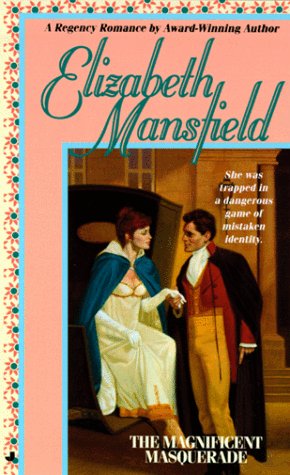
The Magnificent Masquerade

Title: The Magnificent Masquerade
Author: Elizabeth Mansfield
Publisher: Charter Books
Published: 1987
Read: October 2013
Genre: Regency
Where It Came From: Used book sale
Rating: 3.5 out of 5 Coach Rides

Years ago, in the midst of a much more time-consuming romance novel habit, I happened upon a novel by Fiona Hill, and when I searched for more of her books I found an article she wrote for the New York Times complaining about how tedious it was for an ambitious author like herself to spend her time writing fluffy Regency romances. Far more useful than her message of “I AM A SERIOUS WRITER” was her clarification of what makes a Regency novel different from the standard dime romance: in a Regency, the central characters agree to marry each other after falling in love over banter; consummation is a kiss.

Since the article’s publication in 1989 the Regency has died out as a separate genre, but seeing The Magnificent Masquerade at the book sale reminded me that there once was a time when there were many Regency writers, and many of these books presumably on the shelves of libraries.

I headed home eager to read, and you know what? It was as cute as I had expected. Not brilliant, but completely pleasant like the book equivalent of an ice cream cone.

Here’s our plot: Miss Kitty Jessup, on the verge of adulthood, is a charming jokester who cannot wait to enter society in a few months and dance and flirt with hundreds of eligible young men. Her father, Lord Birkinshaw, isn’t so sure that his daughter’s behavior outside of the schoolroom will be any better than it is inside, and when he hears the Earl of Edgerton complaining about his raucous younger brother, he hits on an excellent idea: Kitty should skip the parties and marry Edgerton’s younger brother because marriage will be a calming influence on both the young people. Kitty, upset that this will ruin all her fun, concocts a plan of her own: on the way to meet her prospective family, she will trade places with the young maid, Emily, who is supposed to be her abigail, and when her unwanted fiancé discover the deception, his family will quickly dissolve the arranged engagement. Having switched places, Kitty and Emily both start to change and desire new things, including husbands neither one of them initially planned to like.

One of the most enjoyable aspects of the book was that I couldn’t figure out which way the pairing was going to work until halfway through. Two young ladies, two brothers: is it opposites attract or like goes to like? Maybe you’re a better reader than I am, and wouldn’t have those pages of slight suspense, but I hope if you read it you have the same thought process as I did.

I also liked the characters, not for any complexity they may have had, but for their ability to fill their roles pleasantly. Basically they’re nice people (even if half are initially self-centered) discovering that they get along well with other nice people. There’s a little servant drama, which should amuse any Downton fan because (a) the butler has the same dialogue downstairs that you’d expect from Carson, and (b) a major confrontation is over the propriety of having a woman wait at the table upstairs.

In all the book is sweet, and makes me wish the fluffy Regency novel still flourished.


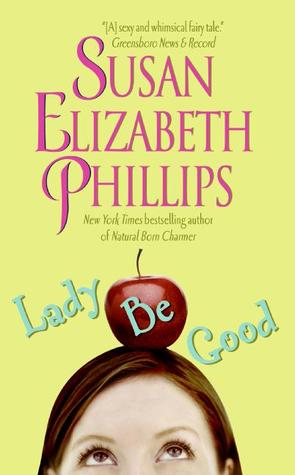
Lady Be Good

Title: Lady Be Good
Author: Susan Elizabeth Phillips
Publisher: Avon
Published: 1999
Read: October 2013
Genre: Romance
Where It Came From: Used book sale
Rating: 4 out of 5 Golf Balls

Because mass-market paperbacks were three for $1 (and no fraction for a single book), I scoured the rows until I could find two more. JACKPOT. A Susan Elizabeth Phillips romance not on my library’s shelves! Susan Elizabeth Phillips is probably my favorite contemporary romance author, but her work ranges from uncomfortable (the early Glitter Baby) to delightful (basically all the ones written between 2005-2011). Lady Be Good, fortunately, is one of her more enjoyable ones.

Lady Emma Wells-Finch is the devoted headmistress of a small English academy whose patron is a sleazy twice-married duke desperate for an heir, and willing to coerce Emma into marrying him. Claiming research obligations she travels to Texas, where she is met by a friend of a friend, Kenny Traveler, and promptly plans to sully her reputation enough to make the duke reconsider his choice of bride. Kenny, a suspended pro-golfer escorting Emma as a personal favor to get him back on the PGA tour, finds keeping Emma out of trouble is more amusing than he expected, but his real wish is to get back to the understandable world of golf.

Susan Elizabeth Phillips generally works this successful formula: spunky woman on a break from her life travels or lives with a pro-athlete or actor long enough for them to fall in love and heal their childhood scars and get past their insecurities. I think there’s usually a secondary romance as well; I remember a few with the hero’s mother getting some action. Lady Be Good completely fits into the formula, and that’s a good thing because that means that if you like any of her others that fit the formula, you’re guaranteed to like this one. Conversely, if you enjoy this one, there are more for you to read after!

More than variations of the same cheerful plot, Phillips is particularly good at hooking readers from the first chapter. Unlike Georgette Heyer (and her school of Regency writers), Phillips wastes no time on exposition. Literally we get three pages to establish that Kenny is a pro-golfer with an easy manner before he meets Emma and decides she’s a nuisance, but a nuisance he’d like to sleep with because it’s a romance novel and that’s how these things go. Once we know all that, all that’s left to do is keep flipping pages to figure out how two commitment-phobic people will persuade themselves to be in a serious relationship.

Along the way there are funny-awkward situations, awkward-awkward situations, a welcoming and supportive family (albeit with some issues from decades earlier), and the romance of Kenny’s sister with her father’s business rival’s son. (Everyone in Phillips’ world is related to someone else anyway, so don’t be put off by the multiple possessive apostrophes here.) Frothy fun.

To get to frothy fun you almost always have to have an inconceivable plot premise, and this one feels a little more unrealistic than usual. One arranged marriage with English nobility in 1999 raises eyebrows, a second arrangement in Texas in the same book is just silly. I think Phillips figured out a much more plausible way for modern arranged marriage to enter the plots of her more recent Natural Born Charmer and What I Did for Love, but as long as you can get past the set up here, it's hard to stop reading.

Monday, September 23, 2013

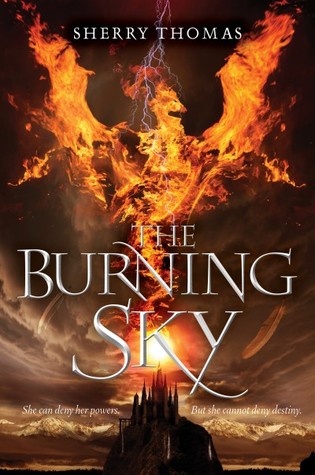
Genre-ally Speaking: The Burning Sky by Sherry Thomas

Title: The Burning Sky
Author: Sherry Thomas
Publisher: Balzer + Bray
Publication Date: September 17, 2013
Read: September 2013
Genre: YA Fantasy
Where It Came From: ARC from the BEA
Rating: 4 out of 5 Fairy Tale Training Stories

The Quick and Dirty:


Take one girl born to be the greatest elemental mage of her generation, add one crown prince determined to reclaim his governing powers, and mix them together in a magical Realm, 1883 Eton and a fantastic interactive fairy tale book. What you get is the charming beginning of a new trilogy.

The Wordy Version:


I was telling my mother about how interesting the fantasy author panel I attended at the Brooklyn Book Festival was, when she asked why I was even at the panel when I don’t read fantasy books. “But I DO read fantasy!” I protested, “Just not ADULT fantasy, for the most part.” The adult fantasy world seems so complex at times (and with such complex morality) that it’s difficult for me to start a book from those shelves. It doesn’t mean I don’t like having magical creatures and spells in my books, it just means I read six books at a time and have trouble juggling characters and terminology when they’re too intense. Enter YA fantasy, where magic comes with Right and Wrong and generally fewer plot threads; and enter, in particular, Sherry Thomas’s new Burning Sky.

Living in a magical Realm controlled by the Bane, a powerful and mysterious mage, Iolanthe has been in danger since her birth under a portentous meteor shower and her subsequent mastery of elemental magic. When, at sixteen, she summons lightning to fix an elixir, the secrecy measures her guardian has had in place are not enough to keep the Bane’s organization and the Realm’s nominative Crown Prince Titus from realizing that Iolanthe’s power can rival the Bane’s. Titus whisks Iolanthe to the nonmagical world of 1883 Eton, where she masquerades as a returning student and prepares to help Titus defeat the Bane and reclaim his rightful power over the Realm. The Bane’s Inquisitor suspects Titus is helping the mystery mage hide, and through spying, torture and might, she draws ever closer to finding Iolanthe, and destroying Titus’s chance for change.

It’s a relatively ordinary type of story—teenagers with exceptional abilities team up against a distasteful government, while discovering deeper feelings for each other—but with good main characters and enough details of its own to make the book charming. Character-wise, it’s all about Iolanthe and Titus. Titus is focused on his goal to the point that he is a jerk to Iolanthe without realizing how much his morals are in question. This rings true to me, as does Titus’s crush on Iolanthe, and the ways that his behavior changes to be more sensitive to her. Iolanthe keeps her motives for acting independent of the prince until she has gotten to know him as a friend and as a young man doomed to die young (more on this later). Her power (and Titus’s for that matter) is never so great that it overwhelms the world, but it is great enough that she can act meaningfully. It’s good that the main characters have so much going for them, because nobody else is developed enough for me to distinguish, though there are glimmers here and there that we may learn more about them in later books. Personally I’m hoping for more on Wintervale and his mother. (And a schoolmate who actually knows that a class on the Greek New Testament would NOT involve the long-gone locative case...)

As for fun fantasy details, the best is that Titus has inherited the Crucible, an enchanted book to help him learn magic, and he can go jumping through fairy tales in the Crucible as though he’s in a video game. I love the Crucible. Considering that Titus and Iolanthe come from a magical Realm and travel to high Victorian England, I was not expecting the stand-out setting of the The Burning Sky to be a not-quite-real world that shifts for each of its owners. But the Crucible is endlessly interesting. In addition to the training fairy tale modules (like defeating dragons to get to Sleeping Beauty), each reigning monarch of Titus’s line has created a classroom and an image of himself or herself to impart magical knowledge to the new user of the Crucible. As a way of explaining the history of the Realm and some of the limitations of the magic Iolanthe and Titus use, the Crucible’s classrooms are convenient, but when Iolanthe meets Titus’s image in his own tutorial, the Crucible becomes poignant. (As a slight spoiler, the Crucible’s training fairy tale grounds play a massive role in the plot in general. It’s only a slight spoiler because if you had created a fun magical type of video game, you would totally use it for the plot potential too.)

Also well done is Titus’s other inherited book, his late mother’s diary that magically shows him relevant prophetic visions she had before she died. I love prophecies in books, especially when someone has had a prophetic vision of death. There can be tension in characters doing dangerous things and risking their lives, but there is a beautiful urgency to characters moving towards their own envisioned deaths. Especially when the character is a teenage boy who hasn’t finished prep school or resolved his romantic longings yet.

On the subject of romance, this is one author who knows what she is doing. The pacing is not too fast book-page-wise (although within its world it is a little accelerated), and the details she uses to soften Titus’s character are excellent. I love that Titus’s favorite things to read in his leisure time are ladies’ advice columns on etiquette because they have solvable problems. And I love that he uses Iolanthe’s face for Sleeping Beauty’s so he can speak to her without real life rejection.

In all, The Burning Sky is a perfect example of why I don’t need to venture into the adult fantasy shelves. With a clear foe, a cute central romantic pairing, prophecies, a book world of fairy tale training, and the promise of two more volumes to finish the trilogy, my reading pile already has magic in it.

Tuesday, August 6, 2013

Not-a-Genre-ally Speaking: Left Drowning, by Jessica Park

Title: Left Drowning
Author: Jessica Park
Publisher: Amazon Skyscape
Release Date: July 16, 2013
Read: July 2013
Genre: "New Adult"
Where It Came From: ARC from the BEA
Rating: 2 out of 5 Bedrooms


The Quick and Dirty:


College senior Blythe McGuire meets Chris Shepherd and his fun-loving siblings as she begins to heal from the trauma of surviving the house fire that killed her parents. Blythe discovers that she loves running, sex and the Shepherd siblings (not necessarily in that order), but that love is complicated between emotionally damaged people. It's melodramatic erotica with a side plot of marathon running. The author tries to make more of a character-growing plot, but I am too distracted for this to resonate. I learn that this genre makes me feel somewhat uncomfortable and confused about human interaction.

The Wordy Version:


After this paragraph, this is a super-spoiling post. Sorry about that. I entirely agree with the New York Times critic A.O. Scott about genre stories and knowing the ending in advance. If a contemporary erotic late young adult novel is your type of book, you’ll like it no matter how much you hear from me ahead of reading it. As for me, the more frustrated I get while reading a book, the more I feel like telling you what crazy things happen in the story. Today I'm also in a life lesson mood.

Senior year of college is beginning, and Blythe realizes that she has been in a depressive and alcohol-fueled fog for the last four years, ever since her parents died in a house fire. Waking up one day, she decides to spend 24 hours without any booze, and within that time she independently meets Sabin, a junior who steals her coffee and decides in that second that they will be besties, and Chris, a senior who is built and can skip rocks. To make matters better, Sabin and Chris happen to be brothers, and their twin younger siblings go to the college too, and LOVE Blythe right away.

Romance book life lesson: when you think you are out of shape, wretched-looking and unused to social interaction, people will FALL IN LOVE WITH YOU. Also, when you make friends, make sure they come from the same family. Diversifying your friend group is needlessly complicated.

In Blythe’s relief about being sober, meeting friendly people, and having a sweet crying session that doesn’t weird anyone out, she starts to go running to deal with her flabby yet bony legs. (Life lesson: do not be content with being thin because EWWW celluloid.) Blythe has had no focus for however many years, but now she is ready to do a 45-minute run her first time out. As anyone who has ever exercised before may predict, she gets tired and does the normal thing of rushing to her brand new friend, Chris, to complain about her physical unfitness and her family problems. Chris can’t solve the aunt issue (although he is a great listener and affirmer of Blythe’s feelings), but he can make Blythe a new playlist. Blythe thanks him by pulling him close for a sweaty kiss. Chris eventually pries her off and Blythe is MORTIFIED.

Life lesson: Complain to new acquaintances about things. It’s a huge turn on.

Blythe avoids Chris for a little, even while she uses his playlist to get her through her full work-out. Things between the two get even more complicated when he shows up at her room one day to help her masturbate (Blythe’s second favorite thing to do after running). Meanwhile she continues to grow closer to Chris’s whole family. She even invites his little sister to move into her dorm room.

Life lesson: When you find the right guy, his whole family will adopt you as one of their own within weeks.

As Blythe and the Shepherd siblings celebrate Thanksgiving together, Blythe begins to see that the Shepherd family is kind of dysfunctional after Sabin drunkenly tries to ride a cafeteria tray off a third floor roof. In Sabin’s belligerency he makes fun of his sister’s religious beliefs and his brother’s unwillingness to hook up with Blythe within a month of meeting her, and then Sabin thrusts his tongue down Blythe’s throat. Blythe forgives him because he’s so drunk he’s just not himself. The boy Shepherd twin and his boyfriend dampen Chris’s mattress while they’re waiting to see if Sabin falls off the roof.

Life lesson: Belligerent drunks shouldn’t be held to high standards. And don’t trust people not to mess up your mattress in a life-or-death situation when you’d expect them to be too worried to be hooking up.

By Christmas, Blythe is doing great and starting to reconcile with her little brother (who has never followed the above life lesson, and has been pretty upset with Blythe for drunk dialing him at all hours). She and Chris manage to spend forty pages a week in bed together with no expectation of commitment. Blythe and Chris both realize they’re in love with each other, but that is too serious for Chris, who not only bails but gets engaged to the next girl he sees.

Life lesson: Guys don’t buy the cow if they can get the milk for free? Don’t date severely emotionally damaged guys.

There is more than another third of the book after this point, and I will stop plot summarizing so as to avoid any more major spoilers.

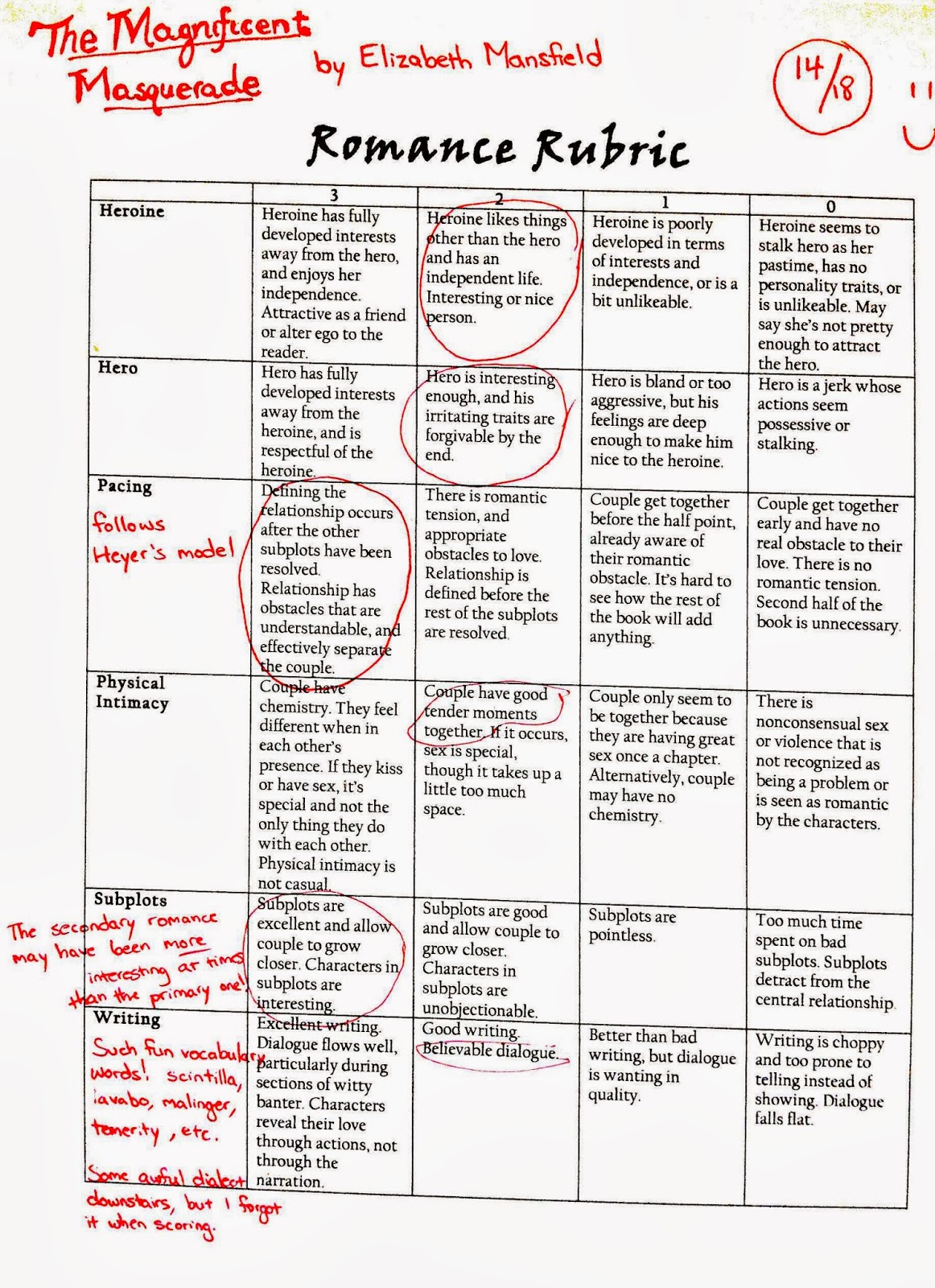
You may have guessed already that I was not swept away by this read. I had no wish to hang out with the Shepherd siblings (who sound horrible, taunting her for loving their brother, assaulting her drunk, and involving her in awkward sibling fights), and I stopped caring about Chris and Blythe in bed after her first orgasm (which doesn't even physically involve him). Credit to the author for making Blythe find herself before she settles down in a romance, and credit to her for mentioning a condom every few pages and sending characters with issues to therapy. Even with those credits, though, this left me dissatisfied and filling out a pretty harsh romance rubric:

Romance Rubric: Left Drowning

Sunday, August 4, 2013

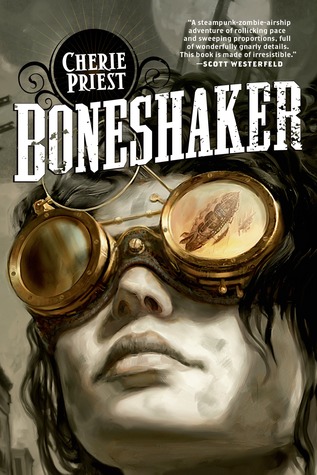
Genre-ally Speaking: Boneshaker, by Cherie Priest

Title: Boneshaker
Author: Cherie Priest
Publisher: Tor Books
Publication Year: 2009
Read: July 2013
Where It Came From: Bought It
Genre: Steampunk
Rating: 4 Gasmask Filters

The Quick and Dirty:


Briar Wilkes is scraping by in the outskirts of 1860s Seattle outside the walled up city, trying to raise her teenage son Zeke. Unfortunately, she is also living with the aftermath of her long-gone husband Leviticus Blue’s mining machine invention, the Boneshaker, tearing through downtown Seattle 15 years past and opening up a vein of gas that turns those who breathe it into zombies. People blame her and Zeke for Levi’s follies, but she’s never talked much about the past to her son, until one day he takes off with a gasmask and gun to break into downtown Seattle in search of the facts. He doesn’t know what he’s in for in there, so Briar will have to head in after him, relying on drug-running sky pirates and Seattle’s remaining living denizens to avoid the rotters and also a power-hungry inventor expanding his empire over the walled city, who sounds eerily similar to old Leviticus Blue… A bit slow for the first half of the book, but things really picked up in the second half, and it became an action-packed adventure full of great characters. I look forward to reading more books set in this world!

The Wordy Version:


I saw Cherie Priest back in May on various panels at Phoenix Comicon. Much like John Scalzi, her books had been on my mental TBR list for quite some time, and hearing her talk about this one and her other books was the push I needed to bump them up to the top of the list. I honestly don’t know why I didn’t read this one sooner—I’ve been on a mild steampunk kick since 2011, and this is one of the seminal classics of the genre.

So now here I am two months later, and I’ve read it! It was a really fun read, although I was a little apprehensive at the beginning. The first half of the book felt kind of slow to me, like not much was happening. Which was very confusing, because there was lots of stuff happening! I would say to myself, gee, I hope we get some action in this story soon. And then I would have to fire back, what do you mean? There’s plenty of action! Sons running away, Briar jumping down an air tube into Seattle, zombies attacking, people with guns in their walking sticks! How can this not be exciting? And I would miserably reply to myself, I don’t know. It just doesn’t make any sense. (To clarify, the me feeling like nothing was happening was what didn’t make sense—the story itself made perfect sense.) So I really can’t pinpoint why I felt that way—maybe it had something to do with that for the first half of the book it felt like Zeke and Briar were just bobbing around the city from people to people and place to place without really accomplishing anything or furthering the plot much? I don’t know. That’s just how it felt to me, and I was afraid the whole book would be like that and then I would be disappointed because I was so psyched to read this one…but happy to say, things picked up and I was able to forget I’d felt that way early in the book and have a lot of fun reading it.

I enjoyed the alternate history, prodded and nudged until it was able to not only accommodate this steampunk imagining of a world, but also make it almost seem like a natural progression of events. The Civil War has been drawn out longer due to a train line being built in a different direction than it was historically, the development of war machines, and I think Europe getting involved, if I’m remembering correctly. As for Seattle, Washington is just a territory at the time, but the Klondike Gold Rush being moved up in history allows Seattle to have a greater population than it truly did at the time. It all fits together very neatly, and it’s clear that the author put a lot of thought into the creation of a world where readers wouldn’t have to suspend their belief too much to make a steampunk 19th century America seem convincing. On a related note, I also appreciated how she created reasons for all the steampunk trappings, instead of just using them to give flavor to the world. Poisonous gas in the city? Of course they’ll need gas masks! Zombies attracted to the sound of guns being fired? Then someone will have invented a sort of sound wave gun to stun them! I remembered her talking about that a bit at Phoenix Comicon, and so I was able to appreciate it while I was reading.

As for characters, Briar was the one I connected with most, although at first it was a little difficult. That was mostly because she shields her thoughts regarding the past she so clearly wants to forget from even herself, and so it was difficult to get a read on what had really happened with her father Maynard, and her husband Leviticus Blue, and other important things that happened before the events of the book. But I can see the intention behind that, and I enjoyed the way these plot threads unfolded over the course of the book. Especially awesome was the skillful way Briar’s complex relationship with Leviticus was laid out bit by bit, feeling by feeling, until it coalesced into a whole that the reader was able to grasp, without explaining the heck out of it. Briar herself is great—tough, brave, a survivor. She may not be the type to…I don’t know, bake cookies and crochet booties for her son, but it’s clear how much she loves him. Zeke I didn’t connect with right away, but that’s probably because I’ve never been a 15 year old boy. He seemed to bounce around the city in a more hapless fashion than Briar did, but he was young, naïve, inexperienced…and by the end he’d done a lot of growing up.

The side characters were fantastic—the air pirates, Jeremiah Swakhammer, Lucy the mechanical armed woman…it would be easy to stray into caricature territory with characters like these, but she never does. They are always grounded, interesting, and real.

The writing was good—by turns humorous and suspenseful, and full of Western Territory flavor. Eminently readable! Which is unfortunately not always the case in published novel things these days, so I’m always happy to read a book where the writing is smooth and natural and good, with nothing sticking out that makes you feel like you’re reading a draft or need to suppress the urge to grab a red pen. When Briar finally meets Dr. Minnericht, the villainous inventor running the show in Seattle, the tension and suspense were thick enough to be sliced up like cheese. From about that point on I couldn’t put the book down until I’d finished.

On a final nerdy note, I enjoyed the framing device for the story. At the beginning I wasn’t sure how it was going to tie in, but when it did it was a nice and satisfying way to tie the story up.

Overall, a fun adventure that put checks in so many of my geek boxes it’s not even funny. Zombies, airships, mad scientists, history…it’s a veritable crock pot of geeky goodness! It will be joining my pantheon of steampunk favorites, along with Scott Westerfeld’s Leviathan trilogy, Cassandra Clare’s Infernal Devices trilogy, and Gordon Dahlquist’s Glass Books of the Dream Eaters trilogy (although that one may by more gas lamp fantasy, now that I know what that means). I’d recommend it for tried and true steampunk fans, those looking to test the genre waters, general SFF fans, Seattle fans, zombie fans…the list goes on and on.

Have you read anything by Cherie Priest before? What’s next on your to read list? As soon as I finished this one I had a strangely powerful hankering to read Catherynne Valente’s The Girl Who Circumnavigated Fairyland in a Ship of Her Own Making, and I couldn’t figure out the connection between the two in my brain that made me want to read that one next. Could it be genre? This one’s steampunk, and that one’s a sort of modernist fairy tale, so probably not. Time it takes place? This one’s Civil War era, and that one’s WWII/Fairyland, so dead end there, too. The writing styles are quite different as well, so I was stymied until I realized…it takes place in historical Seattle! And Cat Valente’s Six-Gun Snow White takes place in historical San Francisco. Does that count as the Pacific Northwest, too? I think it did, at least for connection purposes in my brain. Mystery solved, yay!

Tuesday, July 23, 2013

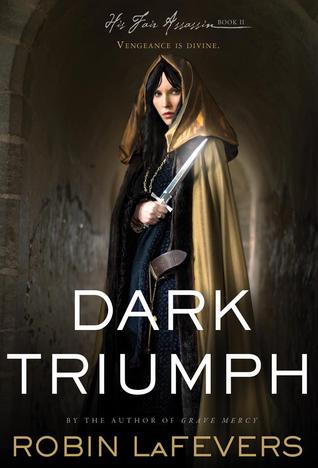
Genre-ally Speaking: Dark Triumph, by Robin LaFevers

Title: Dark Triumph (His Fair Assassin: Book II)
Author: Robin LaFevers
Publisher: Houghton Mifflin
Publication Year: 2013
Read: July 2013
Where It Came From: Library
Genre: YA-Historical Fantasy
Rating: 2.5 Daggers

The Quick and Dirty:

In a 1489 Brittany where Celtic-like gods are worshipped as saints, the Convent of Saint Mortain welcomes the daughters of Death, and sends them into the world on assassin/spying missions. In the first volume of the trilogy, initiate Sybella, seemed to be descending into madness from her mysterious mission. This volume picks up her story as she rescues one of the knights important to the Convent's work in preserving the independence of Brittany under its duchess, Anne. Sybella gradually learns to trust in love and to separate her tortured past from the promise of a brighter future. I fail to be emotionally invested in the plot. Probably because the character I wanted to read about was absent for 53% of the book. Or because there were three plots that couldn't all be fully developed in one book...

The Wordy Version:

“His Fair Assassin” is one of the oddest trilogies I can imagine: it sounds like a romance series, promises assassinations, yet is serious about its historical setting of the battles to keep Brittany independent of France at the close of the fifteenth century. The result is that I’m never quite sure whether to invest emotionally in the featured romance, the dark backstory of the main character, or the political intrigues in the setting. At least this is what I’ve come up with to explain why I haven’t completely enjoyed the series as a whole.

Because it doesn’t fully make sense that I don’t love these books. I imagine that Robin LaFevers composed a list of things that bother her in popular YA and made sure that she avoided them. Trilogies that drag out romances between couples that like each other from the middle of the first book? LaFevers has made a trilogy with different main characters so she can wrap her romances up before they need soapy disruptions! Teenage girl protagonists who need saving by paranormal boys? BAM! These girls are the ones with the powers, and they rescue boys! Love triangles between privileged and self-made suitors for the main character? Just one suitor!

But no matter how refreshing it is to see these deviations from the YA norm, the books don’t resonate with me, this failure being even stranger since I like the general premise. In case you missed the first volume, Grave Mercy, the trilogy tells the stories of three young women raised by the Convent of Saint Mortain to usher people to their true father, Death (i.e. be assassins).

Dark Triumph picks up the story with Sybella, who has been assigned to the household of the Breton Duchess’s traitorous noble suitor, D’Albret. Sybella’s latest mission is to free Anne’s loyal knight, the Beast of Waroch. Sybella’s mission goes awry, and as she and the Beast work together they fall in love with each other. The secrets that drove Sybella to the convent threaten to destroy Beast’s incipient love for her, and make her question her faith in Mortain.

Here’s the thing: this plot totally comes from a romance novel formula. Girl-too-damaged-for-love meets man who can break through her crusty personality and accept her for who she is. While they mutually kick some bad guys’ butts. Yet the romance is practically nonexistent. Since I am a nerd I made a spreadsheet of every page Beast appears in the book, and ranked the romance quotient of the page. It turns out that Beast is totally absent from the book 53% of the pages, and is merely present (but not furthering the romantic plot) another 28% of the pages. That means that all the romance of this romance plot is confined to 19% of the pages of the novel.

So what is the book ACTUALLY about, if not about the romance? It’s about Sybella separating her future from her seriously messed-up past, accepting love (in all forms), and killing people to keep Duchess Anne in charge of Brittany. For the first third of the book, Sybella’s convent-trained assassin skills are impressive and interesting. After that, they’re mostly used in battle settings instead of spy-work (not bad, but not quite as compelling as spying for me).

As for the historical setting, I’m obviously not the only confused reader. Things are so complicated that LaFevers has to provide a list of characters before the book begins (which would be much more helpful in the back, with page numbers to direct readers to the first description of the character). I could use a longer historical note reminding me about Anne’s suitors and wars. As it is, the story kind of jumps from Anne’s internal battles with D’Albret to welcoming the help of English troops for the fight against the French. But I think you’d be forgiven for being confused about this since it’s imbedded in the middle of Sybella’s own issues.

Which brings me to Sybella. Sybella was the coolest character in Grave Mercy —Ismae seemed like a fawn next to her, and Sybella seemed to be on the verge of going insane from her Serious Mission. Very interesting. By switching to Sybella’s point of view, the mysterious desperation around Sybella stops being so intriguing and starts getting tiresome. My notes on Sybella/Beast interactions are largely “S tells B a secret!” I realize now that it sounds like Gossip Girl, and if it does, it’s like what Gossip Girl would be if all the secrets were irrelevant to how the characters act. Beast is deeply in love within a few pages of interaction, and his position remains the same thereafter. Every secret that Sybella reveals makes her less mysterious and adds no tension to the S/B relationship.

So it turns out that my problem wasn’t that I wasn’t sure where to emotionally invest in the book; I was either too confused (historical wars) or too minimally involved (romantic lead absent for too long, Sybella’s dark backstory revealed to someone unconditionally in love with her) to be deeply invested.

Thursday, July 18, 2013

Genre-ally Speaking: Old Man’s War, by John Scalzi

Title: Old Man’s War
Author: John Scalzi
Publisher: Tor Books
Publication Year: 2005
Read: July 2013
Where It Came From: Bought It
Genre: Military Sci-Fi
Rating: 4 Empees

The Quick and Dirty:


In the future, humanity is colonizing the universe and going head-to-head with alien races to do so. Earth itself isn’t really part of the game, but her people are given the option of joining the Colonial Defense Forces when they turn 75—pledge 2 years of your life fighting for the CDF and humanity’s place in the universe, and in return you’ll be made fit to fight and given your very own plot of land on a colony when your tour of duty is up. John Perry, missing his dead wife and tired of growing older, decides to do it. He leaves Earth, never to return, and finds himself greatly altered in an intergalactic war much different than he ever could have imagined. This book was written with an easy, humorous voice that made the pages fly by, and the story itself was very gripping. The descriptions of battles and characters’ demises often made me queasy, but it wasn’t enough to turn me off from the book.

The Wordy Version:


Y’know, I’ve never been super into sci-fi. I don’t have anything against it, and I’ve read plenty of the sci-fi gateway drugs (Ender’s Game, A Wrinkle in Time, etc.) and enjoyed them, but for some reason I don’t often find myself reading it or seeking it out. So while I’d heard tell of Old Man’s War from friends and various podcasts I listen to, I didn’t know much about it beyond the title. It was on my radar and in my mental category of “someday” books, but it hadn’t been boosted up the list to be read in the immediate future.

And then I went to Phoenix Comicon and met its author, John Scalzi, who was both hilarious and full of interesting things to say. Seeing his general awesomeness gave the book the boost it needed, so I bought a copy and got it autographed and just now got around to reading it a couple months later. And what did I think of this book that I was under so much pressure to enjoy?

I am happy to say I enjoyed it! Really enjoyed it, in fact. Scalzi’s humor is evident in the voice of the narrator, John Perry. In this book it’s not humor in the vein of Douglas Adams and The Hitchhiker’s Guide to the Galaxy, kind of zany and escalating genre tropes to ridiculous proportions, to greatly amusing effect—it’s rather an easy reading, personal sort of humor in the character of the protagonist. (Although Scalzi clearly has skill and ability where the former is concerned—I direct you again to the sentient yogurt.) The voice and style were easy to read, and the story itself was quite gripping. I wasn’t always sure where it was going to go next, but I knew I wanted to find out. I am not the fastest of readers (my brain was broken by college and its massive and often headache-inducing reading assignments), so I was very surprised at how quickly I was plowing through it.

So, I clearly appreciated the humor in the book, but it was interesting to see that the humor and readability of the prose belie the depth of some of the topics and ideas it broaches. There is some deep stuff in here that the characters (and the reader as well, if they’re in a thoughtful mood) grapple with, that sneaks up on you. What is the place of humanity in the universe? To what lengths is it necessary and appropriate to go when trying to ensure the survival of the species? Does “appropriate” go out the window in favor of “necessary” when survival is at stake? And that’s just scratching the surface—there’s plenty more to be mined from the text. There were even some moments that made me sniffle, usually when Perry was thinking about his dead wife.

But there were also some nausea-inducing moments to round out the whole spectrum of emotion. One thing to take from this is that space may be the final frontier, but it is vast and dangerous, so dangerous that you can’t even predict what dangers you’ll come up against. And there were so, so many unpleasant ways people (and aliens too, to be fair) met their doom. Kind of the whole, “Don’t get too attached to a character, because they’re probably gonna die!” thing. I do not have an iron stomach, so there were times when I had to take a little breather and try to not think too hard about the highly inventive and extremely unsavory way some person just died. It never kept me away for long, though, because I just needed to know what. Came. Next.

Overall, really good book. Scalzi did an impressive job teasing out into a vision of a possible future what human colonization of space and contact with alien races could end up being like. It was futuristic, but based in reality, and it had the perfect balance of entertainment value and depth. Can’t wait to read the next one.

Oh, also: Is the great alien race that humanity has to contend with (or at least admit is more advanced and hope we don’t have to contend with) destined to be giant bugs? I’m talking Ender’s Game, Men in Black, in this book the Consu… I’ve also heard that Robert A. Heinlein, whose work I haven’t read but is apparently a great influence on Scalzi, has big alien bugs. Why did it have to be bugs?

What are your favorite sci-fi books? Have you ever checked out John Scalzi’s work before?

Friday, June 28, 2013

Genre-ally Speaking: Indelible, by Dawn Metcalf

Title: Indelible
Author: Dawn Metcalf
Publisher: Harlequin Teen
Release Date: July 30th, 2013
Read: June 2013
Genre: YA-fae-urban fantasy
Where It Came From: ARC from the BEA*
Rating: 3 Out of 5 Signaturae

The Quick and Dirty:


16-year-old Joy has been dealing with the fallout of her parents’ divorce and her brother going to college, and thinks things are finally starting to normalize a bit—but how wrong she is! While out dancing one night, she spies a cute boy across the room—and then he comes over and slices her eye with a knife. She soon finds herself entangled in the world of the fae, accidentally bound to Ink, the boy who cut her eye. As the two get to know each other, they find themselves at the center of a fae political maelstrom with the fate of humanity hanging in the balance. The fresh take on the fae mythos is interesting, and there are some really vibrant characters, but parts of the new mythology can be a bit muddled. An enjoyable read, but it didn’t quite capture me in a way that would bump it up to 4 stars.

The Wordy Version:


Overall, this was a pleasant read—well, as “pleasant” as a read can be with eye-slicings, brandings, and other sorts of mayhem going on! Maybe “enjoyable” would be a better word. Does that still make me sound ghoulish? This was definitely on the darker side of urban fantasy, but it still didn’t feel DARK-dark to me, despite the above-mentioned shenanigans. Does that make any sense? The beginning of the book was really genuinely creepy, after Joy gets her cornea nicked by a mysterious boy and is all WTF?? as the fae world closes in on her. The sort of mounting sense of dread was really cool, and had me jumping at sounds when I was reading it at night.

After it’s explained to Joy what’s going on, the creep-factor goes down and the story continues. I thought the author’s new additions to the fae mythos were really cool and even made sense—the fae coming up with a way to circumvent the power humans have over them (power gained from knowledge of the fae’s true names) with a symbol or grouping of symbols called a signatura to stand in for their name, and then the raw creation of a pair of new beings whose purpose is to dole out these signaturae, so the fae aren’t running around claiming humans willy-nilly via signatura for themselves.

Wednesday, June 19, 2013

Genre-ally Speaking: The Rithmatist, by Brandon Sanderson

Title: The Rithmatist
Author: Brandon Sanderson
Publisher: Tor Teen
Publication Date: May 2013
Read: June 2013
Genre: YA-gearpunk-sff?
Rating: 3.5 Unicorn Chalklings

The Quick and Dirty:


In an alternate-history world where there are islands instead of states in America and Korea has extended an empire across Europe, Joel is the 16-year-old son of a deceased chalkmaker, living at and attending Armedius Academy. His dream is to be a Rithmatist, one of the elite who can draw lines, symbols, and creatures (these last called “chalklings”) in chalk on the ground to participate in duels and protect the country from the murderous wild chalklings out in Nebrask. When a series of grisly disappearances involving wild chalklings happen close to campus, Joel and his new Rithmatist friend Melody try to get to the bottom of it before anyone else can be taken, or worse. Characters and dialogue can be a little meh, but it has some very cool ideas as the foundation of the book. Slow to start, but with a finish that makes it worthwhile.

The Wordy Version:


As I was reading the first couple hundred pages or so of this book, I thought it was just okay and was already beginning to compose this review in my head. For me, this book fits into the category of books-marketed-as-YA-that-really-feel-like-middle-grade. For all that Joel and Melody are noted to be 16, nothing about them really feels teenager-y to me—at least not how I remember being and feeling at 16. They seemed just a touch younger, maybe more like 13. And that’s fine—once I figured that out, I was able to reframe the book in my head and get back into the story.

I also had some issues with the dialogue and character development. The dialogue was often kind of clunky or contrived—it didn’t feel real, although people’s speech tics (such as the inspector’s gruff military way of speaking and Melody’s flair for the dramatic) were nice ways to inject some personality. As for the characters, they felt kind of two-dimensional to me, even though there was clearly work done to make them more realistic and fleshed-out. For example, Professor Fitch had a kind of a retiring academic personality, but I found it hard to believe he had been the top Rithmatic professor at Armedius and in his many years of study somehow missed some knowledge that Joel, a teenage non-Rithmatist, had managed to learn in his short years of unofficial study. There were just some little things like that, but nothing too huge and glaring. The characters weren’t bad--they just didn’t seem to jump off the page for me.

What was great about this book were the ideas underpinning it. I was kind of at sea with regards to the alternate history world for a while. I had just assumed that the United States had been one big land mass as we know it, and then something cataclysmic happened to divide it out into these many islands (guess I’ve been reading too much apocalyptic dystopian, eh?), but eventually the narrative explained how it had always been that way. Information about the alternate history emerged slowly and organically, and it was interesting. I would have liked even more of it dropped in there!

More than the history though, the author’s invention of Rithmatics and the whole culture and society surrounding it was really cool. It was probably the most real and alive thing about the book (which makes sense, as it was the center around which everything else was based). Between chapters, there were pages with drawings and explanations of certain aspects of Rithmatics, so we didn’t have to rely on narration and dialogue for all of the information we needed (clever!). I was impressed by the level of detail, thought, and scholarship behind it. I can see tweens and maybe even teens reading this and getting really obsessed with it, learning how to draw the shapes and symbols and chalklings, and taking an interest in geometry. This was definitely one of the book’s greatest strengths. (I’ll also note here how much I loved the illustrations! The maps on the endpapers and the chapter heading illustrations were all really cool. Kudos to Ben McSweeney on a job well done!)

Now, as I mentioned before, as I was reading the first 300 pages I thought it was simply okay. The book was quick to read, but it felt kind of slow, like not much was happening. Joel and Melody seemed to be wandering around campus on the fringes of the excitement that was unfolding. At this point, I was feeling like the book was average, but geared toward a younger audience than I had expected and I probably wouldn’t read the sequel.

BUT THEN I got to the last 70 pages. And they were amazing! Whabam, action and speed! It was so exciting that any of my nitpicks about dialogue and character were forgotten. In fact, I’d say those final pages were when some of the best character development happened, such as with Professor Fitch and Melody. It was genuinely engrossing and fun in a way that I had hoped for, but not really gotten, in the earlier part of the book. Then there was the twist that we had all expected, but then it turned out that there was another twist back that nicely removed any trope-iness of that trope. Even the denouement after the mystery is solved is fast-paced and exciting—I wanted to cheer when Melody and Joel were participating in the Rithmatic Melee. So. Much. FUN!

It was an unexpected and very welcome surprise that these last pages so turned around my enjoyment of the book. I went from not having much interest in a sequel, to definitely wanting to read it. I’d give the first 300 pages of the book 3 stars, with an extra .5 awarded for the awesomeness of the final pages. If the whole book had had the same feel as those, it’d be 4 stars overall. Looking forward to the next one, with great hope that it will live up to the promise of those last few chapters!

Related Posts Plugin for WordPress, Blogger...