Wednesday, August 21, 2013

Man Booker Prize Olympics, Part the First

When the Man Booker Prize 2013 longlist was announced in July, Susan suggested that we do some sort of editorial post involving it. This prize is awarded to the best original full-length novel written in the English language by a citizen of the Commonwealth of Nations, Republic of Ireland, or Zimbabwe. Wow. So what does that mean? To oversimplify, it means a book by an author with a British-ish connection. Confused about United Kingdom vs. Great Britain vs. the Commonwealth? Here, watch this lovely, enlightening video an English friend introduced Alyssa to a couple years ago: We’ll wait while you click through and check it out. See, don’t you feel more educated now? And now we all have a better idea of where a Booker book might come from! According to the interwebs and general opinion, this prize is of great significance to the book trade and avid readers everywhere because it’s prestigious and the winner is “generally assured of international renown and success” (thanks Wiki!). Additionally, the prize is greeted with “great anticipation and fanfare,” and it is a “mark of distinction for authors to be selected for inclusion in the shortlist or even to be nominated for the longlist” (thanks again, Wiki!).

Despite all this prestige and renown and general puffery surrounding the Man Booker, we soon realized that we had actually read very few nominees or winners. In fact, Alyssa can only name two off the top of her head (Life of Pi and Bring Up the Bodies, in case you were wondering)! As you might imagine, this put a temporary damper on our dreams of a Booker Prize post. It took a couple weeks of the Booker bouncing around inside our brains before we came to the brilliant realization that we do not have to have read or even heard of the majority of Booker books to be able to write about them. In fact, we could perhaps have even more fun than anticipated thanks to the fact that we are not Booker experts! And so was born the idea for the Booker Olympics.

The Booker Olympics is a series of silly, nerdy games involving nominees and winners, past and present, that we hope you will be able to enjoy whether or not you are familiar with the books and authors in question. You might even discover a new book to check out as a result of this ridiculousness! It could get crazy. WHO KNOWS!

The First Event

For our first event, we considered the longlist nominees for 2011 and 2012. Here is how our cunning plan worked: Susan found the longlist for 2012, used Amazon and Goodreads blurbs to formulate a short plot summary for each book*, and then scrambled the list of titles and the list of plot summaries to create a matching game. She then passed this matching game off to Alyssa, who had had no contact with the 2012 list, then had to engage in much confusion and head-scratching to figure out which book went with which blurb. Alyssa took the 2011 list and made a similar game for Susan.

* We discovered that it can be difficult to write a two-sentence plot summary for a book one has never read. Weird, right? We tried, and apologize to any books for which we might have made mistakes in our mini-blurbs. All we can say is, stop having such complicated and/or vague plots!

Booker 2011 Game photo Booker2011Game_zps26eac5f6.jpg
The matching game for 2011; looks like an easily distracted 3-year-old made it.

Booker 2012 Game photo ScrambledBookerLongList2012_zps8cdaf646.jpg
The matching game for 2012; looks like an vastly intelligent super-computer made it.

Wait, what’s that you say? The game looks super fun and you want to play, too? What a coincidence! We just so happen to have made an online version of these games on Sporcle so you can play along with us. Stop your googling right now (no one likes a cheat!), and if you would like to test yourself with the 2011 Booker longlist, click here. If you would like to try with the 2012 list, click here. Or get really crazy and play BOTH. Can you beat our scores?

Speaking of our scores…well, you can’t see them yet. But you can see what our (very colorful) answers were. Feast your eyes on these psychedelic responses:

 photo feb21b92-4191-44e1-97da-7aed22f3b055_zps4be7e020.jpg
Susan’s answers to the Alyssa-made quiz.

 photo dd0cc0e8-2bfc-450b-bdfd-3bca63ff713f_zpsaf24000c.jpg
Alyssa’s answers to the Susan-made quiz.

So, how do you think we did? Do you think guessing a book’s plot based solely on its title ended up being harder than we anticipated? Let’s get right to it. Drum roll, please…

 photo 4b81debb-14b4-4b06-9a13-ff432b64d7dd_zps418b4a90.jpg
Susan got a cool 38%, which converts into the much more impressive-sounding 5 stars!!!

 photo 6c009118-7874-4a39-b96e-3f6e883a1a40_zps5b83f007.jpg
Alyssa managed 58%, or 7 stars!!!

Whew! Probably safe to say we’d both be failing Booker school if we didn’t study. But in our adventures creating this game, we found ourselves intrigued by some of these past nominees—Skios, The Teleportation Accident, The Stranger’s Child, and The Sisters Brothers might be coming soon to a to-read pile near you (despite the decidedly average reviews Booker nominees tend to get on GoodReads). The answers to the games are included in the Sporcle quizzes, so there’s probably no real reason for us to post links to the key for 2011 and the key for 2012, but in case you’re a visual learner or maybe just think it’s fun watching us do primitive photo manipulations in Photobucket, there you go.

How did you do? Have you read any Booker Prize nominees or winners? Any of these sound intriguing enough for you to seek out?

Oh, P.S., here’s a hint to whet your appetite for the forthcoming Part Deux of the illustrious Booker Prize Olympics: Balderdash. Hmm…

Tuesday, August 20, 2013

The Audio-Philes: Road Trip Round-Up

Ignore the little “look inside” things…I had to borrow audiobook images from Amazon. And I don’t even think the My Antonia is the right one. Huzzah!

Having just recently returned from a cross-country road trip that involved lots of audiobook listening to pass the hours in the car, I thought I’d do a little round-up of mini-reviews. Summer is drawing to a close in most places (not the place in which I reside!), but in case you’ve got one last trip planned or are just looking for something to make the commute to work go a little quicker, maybe my experiences can help you choose a new book to listen to (or avoid!).

Ready Player One, by Ernest Cline
Published by Random House Audio (2011), read by Wil Wheaton
Listened to (most recently) in July 2013; I own it
Book Rating: 4.5 Stars
Audiobook Rating: 5 Stars

Quick plot summary: In a near, bleak future, Wade Watts escapes the crappy reality of life in the virtual reality of the OASIS. He becomes involved in an online treasure hunt with the prize being the fortune of the deceased creator of the OASIS—much ‘80s nostalgia and geeklove ensues. (Quick plot summaries don’t really do it justice, so go read a real plot summary on Amazon!)

If you know me, you probably already know how much I heart this book. Which is A LOT. It’s just so much fun! I don’t often come across books with such an unbridled, bubbling fun to them, and this is just such a joy to read. The ‘80s pop culture references and nostalgia are great—you don’t have to have been involved in them at the time to appreciate them now in the book. I wasn’t alive for over half of the decade, and I still found it all very interesting and exciting. The author explains enough for you to get a general understanding and appreciate it in the story, but without become pedantic. It’s such a geekfest, and in all the best ways. But I don’t think you have to be a geek to enjoy the book—if you love a good treasure hunt, if you have ever loved some aspect of pop culture, be it a movie, a book, a band, a TV show—you can appreciate what this novel is about.

As for the audiobook version, Wil Wheaton was the perfect choice for narration. A famous geek to read a book about geekery! He portrays Wade so well. This is one where I can say I actually love the audiobook pretty much at the same level as I love the book itself. Go track down a copy. Or better yet, just go buy it. It’s that good.


The Hitchhiker’s Guide to the Galaxy, by Douglas Adams
Published by Random House Audio (2005), read by Stephen Fry
Listened to (most recently) in July 2013; I own it
Book Rating: 5 Stars
Audiobook Rating: 4 Stars

Quick plot summary: Arthur Dent, hapless human, manages to escape Earth with his apparently alien friend Ford Prefect right before the planet is demolished to make room for a space freeway. They set off traveling the galaxy, getting into all kinds of trouble and ridiculous situations. Sci-fi parody/satire at its best.

Let’s be clear—these are some of the funniest books I have ever read. Books don’t often make me laugh out loud, but these ones do. They are just so ridiculous, and clever, and amazing. I don’t care if you don’t like sci-fi—you should read these books anyway. At the same time as they parody sci-fi tropes, they also show affection for the genre, and they do it all so intelligently. I can’t praise them enough.

I own an audio copy of the book narrated by Stephen Fry, who delivers all the one-liners and zany shenanigans with the appropriate Brit wit and aplomb. He does a great job. And yet—for me, it is so much funnier to read the book personally than to listen to someone else reading it to me. I don’t know why it’s so much funnier that way, but it just is. So, by all means, listen to the audiobook, because it’s great. But make sure you try reading it, too.


Motor Mouth, by Janet Evanovich
Published by HarperAudio (2007), read by C.J. Critt
Listened to in July 2013; I own(ed) it
Book Rating: 2.5 Stars
Audiobook Rating: 2.5 Stars

Quick plot summary: In this second entry in the Alex Barnaby series, Barney is working for NASCAR racer Sam Hooker, though they’ve broken up in the interim between books. When the two begin investigating one of the other competitors, they find a dead body and become involved in a mystery involving illegal racing tech and more murders.

This one had the usual Evanovich humor and a lot of the hallmarks of her other books—some parts were very funny, but I just didn't enjoy it as much as the Stephanie Plum series or even the Lizzy and Diesel series. The story itself was okay, but it didn't really hold my attention. On top of that, I wasn't a big fan of the narrator for the audiobook. I eventually got used to her, even though the voice for Sam Hooker made me cringe. Overall, it wasn’t horrible, but I can see why there are only 2 books (not counting the graphic novel) in this series.


My Antonia, by Willa Cather
Published by Blackstone Audio (2007), read by Jeff Cummings
Listened to in August 2013; borrowed from digital library
Book Rating: 4 Stars
Audiobook Rating: 3.5 Stars

Quick plot summary: Written from the perspective of Jim, who moved to Nebraska as a boy to live with his grandparents after the death of his parent-parents, this novel tells the story of his own life and also that of Antonia Shimerda, his Bohemian emigrant neighbor. Quiet, with a surface simplicity that belies its depth, this book shines a light on the strength of the pioneers and immigrants who went through so much to build lives for themselves and also to help build America.

Hey look, one of the 100 greatest novels of all time! And I quite enjoyed this one. You couldn’t ask for a more perfect book to listen to as you’re driving across the prairies of Kansas. As I looked out the window I tried to imagine what it must’ve looked like in Antonia’s time, as most of the prairie is gone now. Even in the book, the narrator notes that the prairie is already less than it had been, and the author describes it with such loving beauty. The book was vaguely Little House-ish, in that it covered the daily lives of pioneers, but it also shows how very rough it could be for immigrant pioneers. And yet, despite all the adversity life had to throw Antonia’s way, she managed to be happy. I really appreciated that—so many classics are utterly depressing, and I was glad that this one ended with a happy sort of contentedness. You go, Antonia—we can all take something from her example.

As for the audiobook, I wasn’t a big fan of the narrator at first, but then I grew to enjoy the accents he did for various characters. Couldn’t tell you if they were accurate accents, but they worked well in the story and helped me differentiate between characters.


Neverwhere, by Neil Gaiman
Published by AudioGO Ltd (2013), performed by cast
Listened to in August 2013; found on the YouTubes
Book Rating: 4.5 Stars
Performance Rating: 5 Stars

Quick plot summary: Richard Mayhew helps a mysterious girl on the street and finds himself drawn into the world of London Below, full of markets and rat-speakers and angels and assassins and all manner of shadowy things. In his quest to help the girl called Door and find his way back to his ordinary life, he will have to learn to survive in this world so different from and so much darker than his own.

Okay, to be fair, this isn’t actually an audiobook. BBC 4 did a radio play of Neverwhere back in March, and I never got to finish listening to it before they took it off their website. After My Antonia, the narrator of The Brothers Karamazov audiobook was too difficult to understand and Beloved was too quiet to hear, so I tracked this down on YouTube to stream through my phone and listen to during the last leg of our journey. I love this story (it was my first Neil Gaiman, in fact, back in high school), and I love the campy BBC TV series he wrote that led to him writing the novel (a little change-up from the usual flow of things, yes?), so it’s no surprise that I would love the radio play. The story itself is great urban fantasy, and the cast and production team did a great job with the performance. The cast includes such talent as James McAvoy, Natalie Dormer, Anthony Head, Benedict Cumberbatch, and Christopher Lee, and all the sound effects and things added to the background made it feel very immersive. Great work—why aren’t there more radio plays these days? In my huntings for it to listen to on the ride, I didn’t see anywhere to purchase it, but logging on to Amazon today I saw that it is being released on audible.com on September 5th. Check it out!

Monday, August 19, 2013

Summer Reading Favorites

I am a list reader. I like to keep arbitrary lists of my favorite and least favorite things (When I traveled to Greece for a class, my friends and I ranked our favorite types of artifacts. Tripods beat out nude sculptures. Go figure.), and I like to read lists, especially people’s “Top 50 Novels of the 20th Century” or “Top 100 Novels of ALL TIME.” Reading top book lists is almost meaningless for me because my idea of a good showing is having read 33%, which means that I can’t fully disagree with people who love cite Lolita as the Best Book Ever, or Moby Dick as the Novel to Read Before You Die. But I love reading the lists anyway, and I do make a conscious effort to pick up some books from lists so when I read the next trendy list I can be more judgmental about the curator’s sanity.

All of this is a long way of saying that because my library’s summer reading program finished, I have a nice concise collection of 25 books that I can distill to more useful lists for you. I don’t know how many opinions you can have about the Favorite designations I’m giving out, but I know that for once I have read 100% of the master list. Hurrah!*

*No pressure for you to read them all too. In fact, you may remember reviews of some books urging quite the opposite action.

Favorite Audiobook

This is a difficult category to judge because my reaction to audiobooks is often I LOVE IT or MAKE IT STOP. It’s more difficult this summer because I genuinely enjoyed the recordings of all these contenders, but one audiobook reader did such an incredible job that the award must go to Rob Inglis’ recording of The Return of the King. Inglis not only does sensitive portrayals of all the epic’s characters—he SINGS shire melodies and elf tunes.

Favorite Nonfiction Book

I’m giving this one to Why Nations Fail, although The Oath is a close second. Why Nations Fail chooses a variety of international and historical examples to support the thesis that exploitative political and economic institutions stagnate and imperil national growth, and steps towards inclusivity in either politics or economics can create positive feedback and eventually economic growth. The thesis is almost not a thesis because it appears so self-evident by the end of the book, but that just shows what a good job the authors have done in arguing their point. I suspect there are quite a few counterarguments the book isn't presenting; it seems a little too neat by the end. Don’t let the political and economic talk keep you from the book—Acemoglu and Robinson’s examples are fascinating, and even if the theory doesn't always fit the world, it's a good one to consider.

Favorite Young Adult Novel

I loved The Dream Thieves. Second books of series can be extremely difficult to nail, and Stiefvater manages to add new twists while keeping the overall series plot moving in Raven Cycle #2. There are so many things I enjoyed about the plot, the characters and the style that I have trouble explaining my enthusiasm in a coherent way. The book is coming out in September, which means that you have one month to read The Raven Boys and brush up on Welsh history and ley line theories. Expect a review when I finally pull my !!!! and ? and :-D into words.

Best Non-Young Adult Fiction

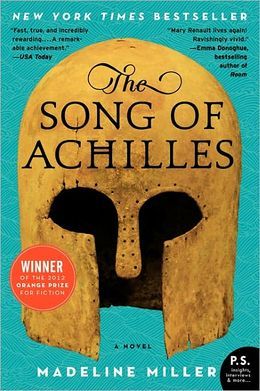
THE SONG OF ACHILLES!!! (Did you even think there was a question in this category?) Granted, much of this list is quality, and I can imagine getting more out of the Lord of the Rings as I reread and appreciate the ending more. I've also been overwhelming friends and family with my analysis of Austen's unfinished novels, so if my category were "Most Likely for Me to Bring Up in Conversation" this would be a strong contender. But this award is for my favorite read of this summer, and for now, it’s Miller’s reworking of Homeric material.

Tuesday, August 13, 2013

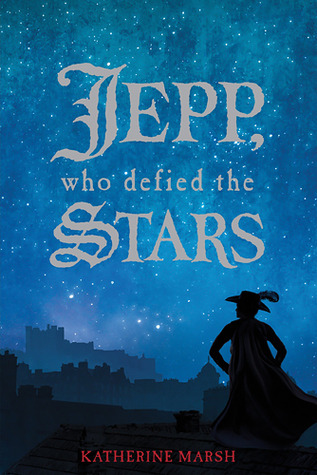
Book Review: Jepp, Who Defied the Stars, by Katherine Marsh

Title: Jepp, Who Defied the Stars
Author: Katherine Marsh
Publisher: Hyperion
Publication Year: 2012
Read: June 2013
Where It Came From: Library
Genre: YA-Historical
Rating: 4 Stars


Jepp, a teenaged dwarf at the close of the sixteenth century, leaves his quiet life at his mother’s inn to see the world and have a finer life at the palace of the Spanish Infanta. The promised finery, however, comes at the price of humiliating work aiding the court jester. Eventually Jepp finds himself sharing a room with a beer-drinking moose and reduced to picking up his master’s prosthetic nose. Although his horoscope promises many things, it isn’t until Jepp starts to take action that his stars can begin to make sense.

Jepp is a pleasing YA historical fiction novel. Author Katherine Marsh found several ideas in her research, and wove them together into an interesting story with multifaceted characters. The setting of the intermediate section offers the perfect transition for Jepp—the castle of Tycho Brahe, an early astronomer, has an unorthodoxy that can inspire Jepp, and a fascinating landscape of contradictions for readers: despite doing work in science, everyone takes their horoscopes seriously; Lord Brahe’s liberal enough to live with a commoner wife, but he makes his employed dwarf sit under the dinner table and eat only scraps; there are inventions like automatons and running water, however all their astronomy work must be done without a telescope.

Jepp is a particularly good character. He’s at point of life where he is beginning to question things and piece together his observations. He’s kind yet not self-sacrificing; smart yet not a prodigy; assertive yet largely cautious. When he falls in love, it’s cheer-worthy (plus his love interest is an imperfect, interesting and smart character in her own right).

To round out the good of the book, Jepp’s struggle to determine whether his star-chart controls his destiny is an extended consideration about the role of fate vs. self-determination. In some ways the question Jepp asks is a dated one—most people today do not commission astrological charts for their birthdays, or take them seriously if they do see one—but it speaks to the eternal question we ask about what makes us ourselves. To see beyond your role in your school/family/world and find who you are without the trappings is worth striving for at any age, and we can all hope for the clarity Jepp achieves.

Friday, August 9, 2013

Graphic Novels Galore: Monster on the Hill, by Rob Harrell

Title: Monster on the Hill
Author: Rob Harrell
Publisher: Top Shelf Productions
Publication Date: August 2013
Read: August 2013
Where It Came From: ARC from publisher via NetGalley*
Genre: Fantasy-Humor
Format: Graphic Novel
Rating: 4 Tentaculor Plushies

The Quick and Dirty:


In this imagining of Victorian England, all towns and villages in the countryside have their very own monster, who occasionally makes an appearance and scares the pants off residents and visitors—and brings in the tourist dollars! The towns are proud of their mascot-monsters…except for Stoker-on-Avon. Their monster, Rayburn, is down in the dumps and hasn’t made an appearance in ages. The townsfolk are starting to get concerned, so they pressure “man of science” Wilkie into trying to help. Orphan boy Tim tags along too as they go on a quest to help Rayburn regain his self-confidence and self-worth—and not a moment too soon, as a real monster is about to set its sights on Stoker-on-Avon. Very cute and really funny—reading it made me grin like a goofball, and for all the best reasons.

The Wordy Version:


I had a lot of fun with this one! First of all, the premise is adorable and kind of hilarious—monsters “terrorizing” towns as a tourist attraction? Amazing! To fill in a few more plot details, Charles Wilkie, formerly a doctor, is coerced by the town fathers into attempting to “fix” the monster, and in so doing lift the town’s sagging morale. If he is successful, they will restore his medical license and forget about his “experimental mishaps” (which ended up being rather innocent, and thankfully not the horror movie kind of stuff that comes to mind upon hearing the words “medical experiments”). A mouthy street kid named Tim stows away in Wilkie’s supply trunk when he heads off in search of Rayburn’s cave. When they find the monster, it turns out he’s just your average guy, but happens to be depressed. He’s out of shape, can’t breathe fire, his wings are flightless, he’s got no laser beam eyes…in short, he’s low on confidence and self-esteem. So Wilkie and Tim offer to help him, and he invites them into his cave for tea (ha!) and to get out of the rain for the night (awww). The story then continues with Wilkie and Tim trying to show Rayburn that he’s really not as pathetic as he thinks he is, and to help him build up some monster skills and self-esteem. They end up enlisting the help of Rayburn’s old school friend Tentaculor, a successful monster from a nearby town. Rayburn is making great progress when the Murk—a MONSTER monster—moves in to attack Rayburn’s town of Stoker-on-Avon, and Rayburn and his crew have to combine their skills and pull out all the stops to have any chance of saving it. It’s a simple storyline, but the details and humor make it unique and fun.

Although set in a fantastical Victorian England, the book was filled with all sorts of anachronisms and pop culture references that were used to greatly amusing effect. Some examples:

  • When disgraced scientist Wilkie is listing his failed experiments, he includes “inventing a blanket with sleeves”—who doesn’t love a good Snuggy reference?
  • The team ends up deciding on “road trip?” as the way to help Rayburn get his groove back
  • Rayburn’s reply to being asked if he’s a carnivore is, “Oh no. More like Hot Pockets and caramel corn.”
There are all kinds of things like that sprinkled throughout the story, and these anachronisms add to the good-natured silliness of the tale and its setting.

Other qualities that added to the humor were a sort of self-awareness and gentle snark (such as Tim’s comment when he sees the famous monster Tentaculor get emotional: “You ain’t gonna cry, are ya? I’m not sure I could handle the disillusionment”), and great comedic timing. Plenty of fun side details added to the world-building and funniness, like the Tentaculor posters and plushies that are sold to the delighted tourists after his “attacks,” and the fact that he has a monster intern.

I liked the art—I thought it fit the tone of the story quite well, and it conveyed the comedy just as much as the words did. Here’s a sample from one of my favorite panels in the whole book (reproduced here with the author's permission):

 photo monsteronhillsample_zps9e87ca54.jpg
Adorable!

If I had to find one thing to nitpick (and this really is nitpicky), it would be that sometimes the characters have their accents or manner of speaking written into their dialogue, and other times it kind of fades away. It sounds like it’s supposed to be vaguely cockney-esque for many of the characters, but then there are phrases that I just can’t hear in that voice, like “If I blow chow, I’m blaming you” (96). Maybe it’s just me?

In all, this was a good, old-fashioned silly read that's fun for all ages! Goofy humor + a tale of friendship and getting through the tough spots in life + cute art + a happy ending = a good way to spend a hour or two this weekend.

*As ever, much as we are grateful for the copy, our review is uninfluenced by its source.

Thursday, August 8, 2013

Book Review: The Last Camellia, by Sarah Jio

Title: The Last Camellia
Author: Sarah Jio
Publisher: Plume
Publication Year: 2013
Read: July 2013
Where It Came From: BEA Galley
Rating: 4 Flowers


A historical/contemporary split novel about two women in different decades at an English estate. In 1940 Flora agrees to search for a rare camellia for a ring of flower thieves, while acting as nanny for manor’s motherless children. In 2000 Addison, a landscape designer summering with her husband at the estate, is curious about a missing flower record. As Addison uncovers evidence of what occurred at the house in the past, both story lines head to dangerous encounters with killers.

I love split narratives that use the present day research story to build suspense for the historical narrative, and Sarah Jio uses the technique to full effect. As far as dangerous situations go, spying for a flower thief is relatively tame, a judgment that is only upheld by the narrative's initially focusing on the burgeoning romance between Flora and the wealthy young man she meets on the passage to England. When Flora arrives to work at the manor house she finds a family seemingly identical to the von Trapps of The Sound of Music, and a below stairs staff friendlier than the one in Downton Abbey.

But the benign appearances of characters may be deceiving. From Addison’s research the reader knows that there was a serial killer on the loose when Flora was living in the manor, and there is something suspicious about Flora's employer as well as the now-elderly housekeeper (though admittedly this could be dependent on previous experience with Rebecca). We also learn that Flora went missing after a short employment. With those clues, every chapter that returns to the past has delicious tension. Who is killing women on the manor? Does Flora find the flower before the flower thieves run out of patience? Why is the flower missing in 2000? This is a story about unraveling mysteries, whether in the past or in the present, and everything moves along quickly until the only question remaining is whether the story would have been different without the prologue.

In all, a well-balanced book, achieving an amazingly comfortable mood considering its notes of creepiness (a rather novel combination!). I've already snuck my copy into my mother's to-read pile because I had so much fun reading it.

Wednesday, August 7, 2013

Book Review: The Solar System Through Infographics, by Nadia Higgins

Title: The Solar System Through Infographics
Author: Nadia Higgins
Illustrator: Lisa Waananen
Publisher: Lerner Publishing Group
Publication Date: August 2013*
* NetGalley states a pub. date of November 2013, but Amazon shows 1 August 2013
Read: August 2013
Where It Came From: ARC from Publisher via NetGalley*
Genre: Kid's Non-fiction
Rating: 4 Champagne Supernovas


What’s Shakin’, Bacon?


I requested this from the publisher on a whim because I. Love. Infographics. What is an infographic, you say? It’s a way of depicting information (be it statistics, facts, concepts, survey results, what have you) through a visual medium that helps it all make sense, often involving flowcharts, graphs, illustrations, and things like that. It’s info conveyed using graphics—info, graphic, INFOGRAPHIC! Makes sense, yes? Here, I will show you:


I did not make this infographic; it came from Goodreads. I wish I had the mad skillz to make infographics like this (or at all). You can click the image to read the whole original post, if you are interested.

If you find this sort of thing as intriguing as I do, you can find a few more lurking on one of our Pinterest boards. But on with the show! I thought a whole book of infographics sounded great, and this one did not disappoint. It covers all sorts of outer space-y topics, from the big bang theory (the actual theory, not the show), to black holes, to the different kinds of stars, and on and on. It’s meant for kids, but I think the format, humorous tone, and interesting info make it a book that’s fun for all ages. The straightforward, easy-to-comprehend explanations of some admittedly esoteric topics helped me learn all kinds of things I never knew before, and the engaging graphics and fun, informal voice kept me turning pages and thinking, “Oh, just one more infographic…” until the book was done.

Atoms take up only 3% of the universe, and the rest is all dark matter and dark energy?! Who knew! A chart with how much a dog would weigh on each of the planets, taking into account the different gravities? Awesome! An equation for measuring the possibility of intelligent life in our galaxy? Why didn’t I know about this before?! My absolute favorite, though, was the infographic explaining what would happen if one were to fall in a black hole. Remind me never to do that.

The info doesn’t go too deep, but I wouldn’t expect it to—this is an introduce-and-intrigue-type book, not a textbook. Rather, when a reader’s interest in a certain topic is piqued, it serves as a springboard for going off to the interwebs or the library in search of more information. It inspired lots of questions and discussion between Susan and me as we perused the pages and pondered theoretical astrophysics (and we are not often astrophysically inclined!). I thought it was a great book and the perfect format for opening up readers’ eyes to the wonder of the cosmos and the amazing science of studying it.

I especially like that near the end of the book it becomes interactive, with a guide to some interesting things beyond the usual constellations that readers can find in the night sky. It also has a “Further Information” section with a listing of books and websites, each accompanied by a mini description, for further investigation of topics introduced in the book. Best treasure found therein: This website is purported to have archived episodes of “Consider the Following” with Bill Nye, the Science Guy. BILL NYE!!!

I would’ve absolutely loved this book as a kid. Who am I kidding—I pretty much love it now! This would be great for school libraries and teachers’ classroom libraries, in addition to the personal libraries of children and their families. I’m confident that anyone at all curious about the universe (and multiverse! I about died of happiness when the book mentioned the concept) could find something to enjoy here, and I’d be happy to have a physical copy of it on my own shelf.

*As ever, much as we are grateful for the copy, our review is uninfluenced by its source.

Related Posts Plugin for WordPress, Blogger...