Showing posts with label ARC review. Show all posts

Monday, January 30, 2017

Some of My Favorites From 2016

2017 may be well and truly underway by now, but since it’s been a while since I last posted, I thought I’d take a moment to look back on some of my favorite reads from last year.

New Favorite Series: The Amory Ames books, by Ashley Weaver
These books are so much fun. Amory Ames, a well-to-do uppercrust-y British lady in the ‘20s-’30s, solves murder mysteries and contends with her flirtatious and flighty husband, Milo. Though by the third book the romantic tension that came from her estrangement from her husband has been mostly resolved, the mysteries are interesting enough and her and Milo’s relationship sweet enough that I stuck around. Three books out so far, and I can’t wait for more! Thanks to Susan for turning me on to this series!

Best Non-Fiction Book: All the Single Ladies: Unmarried Women and the Rise of an Independent Nation, by Rebecca Traister
Everyone should read this book, regardless of their sex, but especially, DEFINITELY if you are female. It doesn’t matter whether you are single or attached, gay or straight (this is starting to ring a bell—I feel like I’ve written this for the blog before), rich or poor—it’s a book about feminism and what it’s like to be a woman in the world, what it’s BEEN like to be a woman in the world since time immemorial. It seems to go without saying in our current political climate that there are those who feel threatened by the titular “rise of an independent nation” of females, and this book will empower you to fight back.

Best Graphic Novels of the Year: Too Many to List, Nearly
I read a *lot* of graphic novels last year, and loved most of them. I’ll try to limit myself to one line about each that I’m featuring here.
• Lumberjanes: Female friendship and the fun adventures of summer camp, with a delightful dose of the supernatural and humor added to the mix.
• Bitch Planet: Just what the doctor ordered for reading on 11/09/2016. That was probably the only day in my life when I have seriously (and I mean seriously) considered getting a tattoo, and it was going to say “non-compliant.”
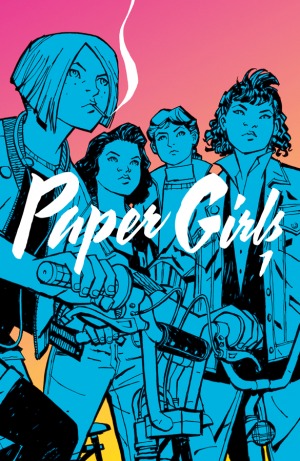
• Paper Girls: More female friendship + supernatural, but with more of a sci-fi bent and some good old fashioned ‘80s fun. It’s kooky! It’s crazy! I loved it! (Also, it seems to live in the same ballpark of my brain as Stranger Things, for what it’s worth.)
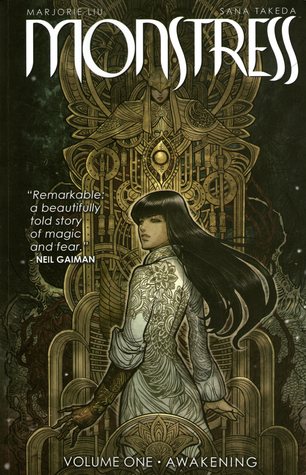
• Monstress: Scary/sad/icky-at-times ruminations on war in a fantasy world, but with truly stunning art and an ever-deepening world that continues to draw me in. It’s kinda like a blend of manga and American comic traditions, and the result is completely unique.
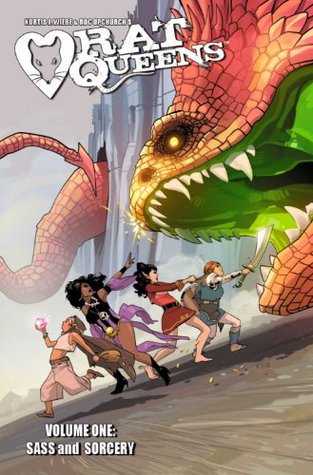
• Rat Queens: I just discovered this series in 2016, and I really, really love it. The female friendships (which seems to be a theme for my 2016 graphic novel readings) are hilariously real, and the good-natured pokes at the fantasy genre made me laugh out loud while reading. I know there has been some weirdness regarding the continuation of the series, but I really hope it does continue.
Best Series Ender: Morning Star, by Pierce Brown
The Red Rising series has been one of my absolute favorites of recent years, and though this final entry may not have eclipsed Golden Son as my favorite of the series, it was very, very good. There’s one thing that came up at the end that I’m still ambivalent about that I’m not going to talk about here because spoilers, but it was a sweeping, emotional end to a fantastic trilogy. I’m looking forward to seeing what the author does with this world next.
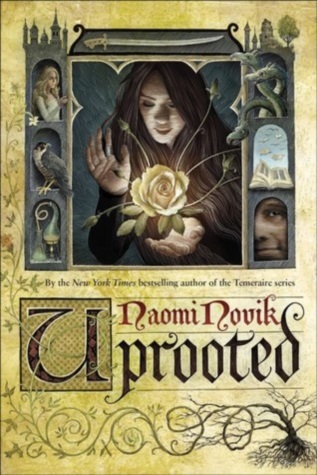
Best Soul-Nourishing Heart-Book: Uprooted, by Naomi Novik
Starting this book felt like sinking into a feather bed. I felt the same way reading it that I did reading some of my favorite books from my childhood—Ella Enchanted, especially—but in a more mature way, if that makes sense. I’m sure it’s already been said in the jacket blurbs for the book, but it is fairy tale for grown-ups, and perfect. I can’t think of one thing I would change about it. The engagement I felt while reading it, the intense need to just not.stop.reading, and the happiness I felt after finishing it—I just haven’t felt that way about a book in a long while.

Best New-to-Me Series: The Shades of Magic Series, by V.E. Schwab
If Uprooted nourished the historical fairytale side of my reading personality, The Shades of Magic books nourish the slightly darker, sharper facet of said personality. These books are witty, and wise, and harrowing, and FUN. I love them. A Darker Shade of Magic and Uprooted are the two books I bought for everyone for Christmas, and everyone knows that when I get militantly insistent about reading a certain book, I must really, REALLY adore it.

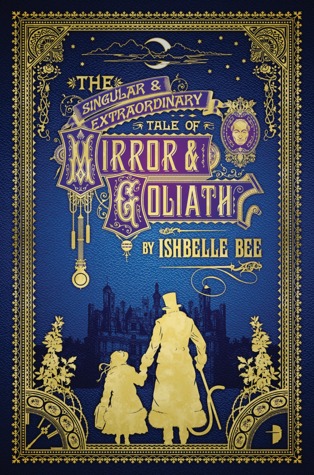
Best Book That Nourished Yet Another Facet of My Literary Personality: The Singular and Extraordinary Tale of Mirror & Goliath, by Ishbelle Bee
So, if I had to pick a couple authors to typify these various sides of my literary personality, one might be the Gail Carson Levine/Megan Whalen Turner/Elizabeth C. Bunce side (the side Uprooted appeals to). Another might be the Holly Black/Neil Gaiman side (where The Shades of Magic gets mentally filed for me). And yet another, the present one, would be the Catherynne Valente side. I love books that are magical and poetic and feel like they speak directly to me, touch my heart, in the way that art can. Mirror & Goliath has that sort of sensory language and intense imagery, and at times feels almost stream-of-consciousness (though the storytelling is still quite clear!), similar to some of my favorite Cat Valente stories. It is a beautiful book, and I loved it.

So those were some of my favorites from last year, and here, very quickly, is a preview of the books I’m most looking forward to in 2017!

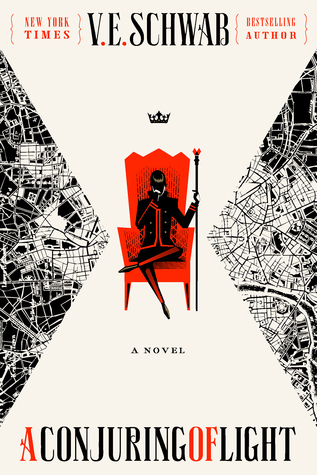

What were some of your favorite reads of 2016? What are you looking forward to reading in the year to come? Hit up the comments and let us know!

**Where did the books come from? Glad you asked! Purchased: Rat Queens, Morning Star, A Darker Shade of Magic (well, library, then purchased a copy), and A Gathering of Shadows. Library: The Amory Ames books, All the Single Ladies, Bitch Planet, and Paper Girls. ARC from publisher: Lumberjanes (physical copy) and Monstress (digital copy). ARC from publisher, then either purchased or checked out from library: Uprooted (ARC, then purchased) and Mirror & Goliath (ARC, then libraried). As ever, much as we are grateful for review copies, our reviews are uninfluenced by the source of said copies, or by anyone else, for that matter.

Monday, July 18, 2016

Book Review: The Singular & Extraordinary Tale of Mirror & Goliath

Title: The Singular & Extraordinary Tale of Mirror & Goliath
Author: Ishbelle Bee
Publisher: Angry Robot
Publication Year: 2015
Read: July 2016
Where It Came From: eARC from publisher via NetGalley + Hard copy from library
Genre: Dark-fantasy-fairy-tale-for-grown-ups
Rating: 4.5 Ladybirds

If your preference is for linear, straightforward storytelling and practical prose in your reading, this might not be the book for you. That disclaimer out of the way, however, I can assure you that I loved this book. Really, really loved it. Y’know, I really hate comps for describing books, because they usually end up being completely off in the ways that matter, but the comps to Catherynne Valente and Neil Gaiman on the back cover did a nice job of approximating the feel of this book. I would add to that a bit—Valente and Gaiman by way of Dickens and Carroll, resulting in something that is in conversation with those authors, but unique in its own right.

Mirror is a young girl traveling back from Egypt with her protector Goliath Honey-Flower. However, Mirror has not always been Mirror—she used to be Myrtle, with two sisters and a sinister grandfather, living in Victorian London. But then her grandfather locked her in a strange clock to die, and something changed, and when the policeman Goliath rescued her and sent her grandfather to prison, something was different. For Goliath, too. No longer a policeman, he can change shape and is determined protect his young charge and help her solve the mystery of what happened to her in the clock.

John Loveheart was an aristocratic young boy, with a sick mother and an evil aunt and a father in over his head. When a demon called Mr. Fingers comes to collect his due from John’s father, John finds himself orphaned and then adopted by the Lord of the Underworld. Driven mad and wicked (though not as wicked as some), now he is a young lord, bound to do Daddy’s bidding around London, and Daddy wants Mirror. Something powerful that has escaped Mr. Fingers for some time resides in her, and he believes consuming it will add to his power.

There are many other characters and plots and tangentially related stories interwoven around this basic story, which may at first seem disparate, but weave together beautifully to form a beautiful whole of interrelated people, pieces, and parts. The climax of what might be called the main plot occurs about a third of the way into the book, and then the reader is left teetering on that edge as the following chapters change narrators and settings and jump back and forth in the timeline (that nonlinear storytelling I mentioned earlier). This could’ve had the potential to be confusing, but in fact has the effect of filling in the story and backstory around our central tale of Mirror and Goliath and Loveheart and Mr. Fingers, giving a greater view of the world and the events of the story, with all of the interconnected threads lending it a great emotional resonance.

The beautifully poetic writing only adds to this emotional resonance, and is evocative in an almost synesthetic way. It’s probably what some may call “purple prose” (which I just think some people use as a pejorative way to refer to lyrical writing when it’s not to their tastes), but I think its lyricism holds magic and power. This story is at its heart a fairy tale, and a dark one—modern in many ways, but as old as time in others, with that current of magic and power and truth you can feel in the old tales, and when you’re lucky, in the new ones, too. It may not be a book for everyone, but it was definitely a book for me.

*As ever, much as we are grateful for the copy, our review is uninfluenced by its source.

Tuesday, July 12, 2016

Comics Review: Monstress

Title: Monstress (Issues #1-6)
Author: Marjorie Liu & Sana Takeda
Publisher: Image Comics
Publication Date: Trade paperback collecting issues #1-6 to be released on July 19th, 2016
Read: July 2016
Where It Came From: Digital ARCs from publisher via NetGalley
Genre: Fantasy-sci-fi-horror-graphic-novel?
Rating: 4 Mask Pieces

Hey, remember when I was talking about how much I love Image Comics? Here’s another one from them! I saw issues of Monstress on the counter at my Friendly Local Comic Shop a couple months ago and was really drawn to the art, but, as is usual for me, I decided to wait for the trade paperback to come out. However! When issues #1-6 recently came up on NetGalley in anticipation of said trade paperback releasing later this month, I couldn’t resist the chance to catch up on what I’ve been missing with this title.

Monstress is the story of Maika, an Arcanic (a.k.a. supernatural hybrid) teenage girl. She lives in a world still rife with conflict between Arcanics and humans after a great war between the two. Arcanics are being captured and sold as slaves to humans, and a powerful religious organization of human women called the Cumaea performs experiments on Arcanics and murders them to harvest a magical substance called lilium from their bones. Maika and her best friend Tuya are just trying to settle down and find normalcy again after surviving the war, but Maika has a secret. There is a monster living inside of her—literally—and it hungers for blood and violence. As Maika’s control over it weakens, she travels to the city of Zamora, located at the edge between the territory of the Federation of Man and the land of the Arcanics, to look for answers in perhaps the most dangerous place possible.

And that’s just the beginning of the first issue! A lot of ground is covered, story-wise, and it took me a few issues to get a good mental handle on the world and the moving pieces of the plot. However, the richness of the world-building really is beautiful as it unfolds, and to call it simply Asian-inspired seems to somehow be an inadequate description. It is a fantasy world, to be sure, but the nods to and nuances of a diversity of Asian cultures from our world are incorporated seamlessly, and come together with all of the imaginative fantasy elements to form something new and singular. I believe in the letters section of one of the issues, creator Liu talks about how she wanted the comic to reflect the hybrid nature of Asia itself, and I think this was accomplished masterfully.

The comic also does a masterful job of demonstrating the horrors and atrocities of war and its aftermath, which only takes on even greater depth and meaning when you learn that some of the inspiration for this story comes from the experiences of the author’s grandparents. And I will be honest—the violence and horror in that first issue (murder of children, implied cannibalism, references to rape) made me feel so sick to my stomach that I wasn’t sure I wanted to continue reading. But I did, and I’m glad I did—violence is still a part of the comic, as you would expect of a story concerned with war, but in later issues I didn’t find it was quite as much at the forefront of the storytelling as it was in that first issue. For me, the story really hit its stride in issues four and on, when other places and characters from the fringes of the world as we know it so far start to become tied in to Maika’s story, and some questions begin to be answered to a degree (and of course new ones come up). And that ending to issue six was a killer!

Let’s talk about Sana Takeda’s art for a moment, because it is absolutely stunning—beautiful, with a sort of Art Deco, steampunk vibe, and manga-esque touches here and there that add to that hybrid-Asia atmosphere that this comic does so well. For all the violent, scary things that her art depicts in this story, there is also room for occasional hits of the super-cute (Kippa the kitsune-like fox child hugging her own big fluffy tail makes me squee every time), as well as really just staggering splendor and detail (Corvin D’Oro, anyone?). Completely frame-worthy.

Overall, though the initial level of violence and gore made me squeamish and I was a bit confused about the history and mythology of the setting, as I continued reading, the decrease in depicted violence and further clarification about murky aspects of Maika’s world (the quick lessons from the cat Professor Tam Tam at the end of each issue were helpful, too) helped me to become invested in the story, and now I can’t wait to find out what happens next (because that issue six, you guys!!). And though I am not one to usually buy single issues of comics, knowing that there are fun extras like letters and additional art might convert me, at least in the case of Monstress!

*As ever, much as we are grateful for the copies, our review is uninfluenced by their source.

Sunday, July 10, 2016

Cookbook Review: Asian Pickles

Title: Asian Pickles: Sweet, Sour, Salty, Cured, and Fermented Preserves from Korea, Japan, China, India, and Beyond
Author: Karen Solomon
Publisher: Ten Speed Press
Publication Year: 2014
Read: 2014-present (future, too, most certainly)
Where It Came From: Digital ARC direct from publisher + hard copy from library
Genre: Cookbook of International Delights
Rating: 5 Happy, Healthy Pickling Beds

Living in Japan cultivated in me a healthy respect for the pickle, far beyond the definition as I came to understand it in my youth (“pickle” being synonymous with “cucumber” to me at the time, and of which there were only the options of dill and sweet). Well, I suppose on my mother’s side of the family we had the purple, Pennsylvania Dutch tradition of pickled eggs, but to my southwestern born-and-bred palate, the color was shocking, as was the thought of a protein rather than the accepted vegetable being the subject of said pickling.

But in Japan, my concepts of what makes a pickle were broadened beyond my wildest dreams. After a trial by fire with umeboshi (seriously, my Western palate ignored the “pickled” part of the translation of “pickled plum,” and focused on the “plum” to expect something sweet. It was not sweet.), it was as if I had survived my hazing to join a not-so-secret society of briny, fermented, vinegary delights. The small side dishes of pickled vegetables to accent the meal became my favorite part of the spread at the dinner table with my host family, and I would question my host mom relentlessly about them. What vegetable? What do I eat it with? Local specialty? Homemade or store-bought? Which is not to say every pickle I encountered in my time living in Japan or in my travels around Asia was exactly to my tastes (I still remember fondly many occasions on the Kyoto city bus when I would suddenly get a hit of a really unpleasant smell and think, “Oh no, farts from strangers,” only to look around and see a little old lady holding a freshly purchased culprit package of some pickled item from the market), but I am rather proud of the fact that I would try at least once nearly anything offered to me.

And after my experiences with Japanese pickles, anything was fair game. Korean banchan! Pickles from Vietnam! I would try all the things!! I loved it all, but it never really occurred to me that these were things I could make at home. Well, it did occur to me, but it seemed like a magical process too esoteric and specialized for me to pull off on my own. Moving back stateside made it much more difficult for me to get my pickle-fix, and my mind turned to making pickles of my own. There were books out there with info about Japanese pickle-making, certainly, but it seemed time-consuming, with considerable expense for materials and special, difficult-to-source ingredients. I tried my hand at some simple Korean pickles, but nothing too complicated. I also made some quick fridge takuan daikon radish pickles for an aunt who enjoys them, but that was about the extent of my experimentation. Overall, I felt kind of blind in my pursuit of pickles like those I ate abroad.

And now we come to the actual book review. I was super excited to hear about Asian Pickles prior to its publication, because a book covering basic pickle traditions from countries across Asia, with an emphasis on accessibility, sounded like just the thing I was looking for. And it did not disappoint! The book covers pickles and pickle-adjacent foods from many Asian countries, from classics to pickles of the author's own creation inspired by the flavors and pickle-making techniques of the country, and from simple pickles with a broad appeal, to more complicated, challengingly flavored ones for those who have reached graduate-level in their pickle studies.

There are chapters devoted to Japan, Korea, China, India, and Southeast Asia (the latter containing recipes from Vietnam, Thailand, the Philippines, Indonesia, and Malaysia). Each chapter opens with a quick, fun look at the history and culture of pickles in that particular place, followed by suggestions and ideas for when and how to serve the pickles that follow, and a primer on basic techniques of pickle-making in the culture in question. And then the recipes, oh delightful recipes! The recipes for each country are divided or categorized in a way that makes sense for them. For example, Japan is divided into traditional recipes, and new recipes inspired by the traditional. India is divided into pickles and chutneys. Korea is divided into kimchis and banchans. And so on. The book is not intended to be a comprehensive treatment of pickles in each culture, but rather to provide an accessible way to bring traditional recipes, flavors, and techniques into your home, and to inspire you in your own creations and further forays into the world of Asian pickles. And accessibility is key to the author—in her introduction, she promises to provide DIY alternatives to special equipment, and to not ask readers to buy special tools or hard-to-find ingredients unless absolutely necessary to the success of a recipe. Any unfamiliar terms or ingredients can be found in the glossary at the back of the book (along with ideas on where you can buy them), and there is also a resource list of books, magazines, and websites for further research.

The writing is easy reading, fun, and humorous, like you’ve got a pickle-making friend who is just chatting with you about a mutual interest, sharing her tips and knowledge (one of my favorite tips—use a teaspoon instead of a potato peeler to peel away the thin skin of ginger and other rhizomes. Genius!). It’s as much fun to simply sit and read as it is to cook from. And the photos are absolutely gorgeous! I was having a Pavlovian response as I paged through the book, admiring the bright colors and imagining the walloping flavor punches packed by the pickles on the page. Overall, a great book and one I will be adding to my personal collection. I think next on my to-pickle list will be the Kyoto-specific, Kyoto-nostalgic senmaizuke , or “Thousand Slices” Turnips from page twenty-four.

*Additional important facts:

  • I ate some homemade kimchi before writing this.
  • I have a dog named Pickle, completely independent of any love I bear the food of the same name. (She had picked out her name long before I learned the joys of fermented veggies.)
  • Once, at a school I was teaching at in Japan, I was very surprised to find a huge glass jar of plums sitting in alcohol on the counter, which the teachers were making into umeshu. No one could understand why I was mildly shocked to find liquor being produced in the teacher’s workroom.

*As ever, much as we are grateful for the copy, our review is uninfluenced by its source.

Saturday, July 2, 2016

Image Comics Round-Up: Limbo, WicDiv, Paper Girls, and More!

I’ve tried some superhero graphic novels in my day, but I can never seem to get into much in the DC/Marvel worlds (Ms. Marvel being the exception). Enter Image Comics! Pretty much all of the graphic novels I read on a regular basis come from this publisher. I’ve been trying a lot of different series of theirs in recent months, and thought I’d do a little round-up post of what I’ve thought of my readings so far.

Limbo is a backwater swamp-noir, with voodoo in its veins and a touch of Lovecraft woven into the mix, with hints of the ‘80s and an analog vibe to round out the palate. Sound eclectic? It is, but the moving parts all come together smoothly to spin a story with some deeply creepy moments, a mystery that starts out simple and gains momentum and complexity, and the overall puzzle of our amnesiac P.I.’s origins and the world he finds himself living in. On a few occasions there was some convoluted philosophical-esque stuff that I wanted to tl;dr, and some of the reveals about P.I. Clay were dark enough to be almost depressing, but overall I enjoyed it. This trade encompasses a complete story arc, but enough mysteries remain that I might seek out the next volume to find out what’s in store for Dedande and its denizens. Also, the included extras were really, really awesome.

I.D. reads like the graphic novel equivalent of a short story. It fits the sci-fi category in terms of both the medical main concept of the story (brain transplants) and the setting (we get hints of non-Earth colonies and terraforming). Still, the main concerns of the story seem to be philosophical and psychological, as three previously-unknown-to-each-other characters consider having their brains transplanted to new bodies. What would motivate a person to take such drastic action? How would personal identity fare in such a situation? The art is absolutely beautiful, and the storytelling has an ethereal, vague quality, creating the necessary shape of the story while leaving much of the surrounding information amorphous, conveying details that create character depth in few pages and hint at further depth, while dancing airily around the questions those hints and nuances tease out of the reader. It’s a story that I can respect, but not the kind of thing I’d go back and re-read.

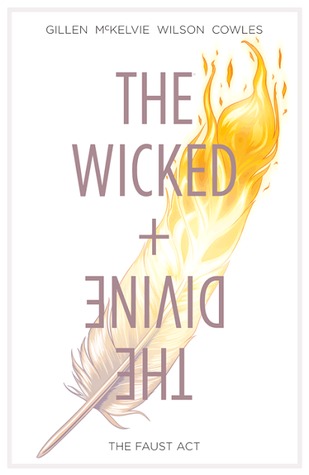
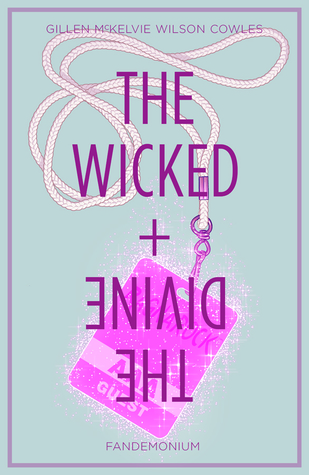
The Wicked + The Divine is pure delight for me. In an alternate modern day, every ninety or so years twelve gods are incarnated as humans, with a 2-year expiration date on life. For those two years after awakening, they are music stars with fanatic followers, zealot-y anti-fans, and skeptics as well. Are these people really gods in the flesh? Are they just crazy, deluded young people out for fame and fortune? A young woman from the “fanatic follower” category finds herself embroiled in the world of the twelve and their caretaker/advisor, and begins to see that there’s a lot more going on under the surface of the phenomenon. The art is quite stunning, with a fresh, clean-cut style, and a bit of neon-hip edge, unlike anything I’ve seen before. Some shocking moments and reveals keep me plowing through the trades.

Paper Girls comes from Brian K. Vaughan, the mind behind the immensely popular Saga (which it perhaps inevitably draws comparisons to). The short pitch: In the late ‘80s, four preteen newspaper delivery girls out running their routes stumble upon some seriously weird shit. This one was super fun for me because I went into it with no idea that it was going to veer into sci-fi at all. The whole time I was like, “What the hell is happening?!”—and I absolutely loved it. It’s strange and wonderful and weird and crazy and completely its own thing in the way that Saga is, but strangewonderfulweirdcrazy in its own brand new ways, though you can see how the same mind dreamt them up. Awesome art, with a neon suburban ‘80s vibe, and plenty of mystery to keep me looking forward to future volumes.

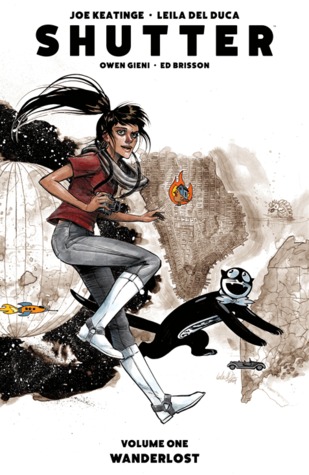
Shutter is another one that has drawn comparisons to Saga, and unfairly so, in my opinion. (The only time I thought about Saga while reading this was when the main character’s talking, helpful Felix the Cat clock was introduced. I remember thinking, “Hey, another comic I love with a cat that talks! Cool!” And that was it. The word Saga didn’t even come into my brain.) Said main character is Kate Kristopher, who lives in a wild, eclectic version of modern day Earth. As the daughter of a famous explorer, she spent her youth and teen years traveling the world with her father, until a tragedy caused her early retirement. Now, however, sinister and mysterious forces hunting her down have forced her out of retirement and back into the world of adventuring and hidden family secrets. The art didn’t do as much for me as in other comics like Paper Girls and The Wicked + The Divine, but I didn’t mind it. Beware of occasional and unsettling intrusions of gore and violence, though.

What are your latest graphic novel discoveries and obsessions? Let us know in the comments!

Limbo, by Dan Watters & Caspar Wijngaard
Published by Image Comics (June 2016)
Read in July 2016; e-ARC from NetGalley
3.5 Stars

I.D., by Emma RĂ­os
Published by Image Comics (June 2016)
Read in July 2016; e-ARC from NetGalley
3 Stars

The Wicked + The Divine, Vol. 1: The Faust Act, by Kieron Gillen, Jamie McKelvie, Matt Wilson, & Clayton Cowles
Published by Image Comics (2014)
Read in May 2016; Paper copy checked out from library
4 Stars

The Wicked + The Divine, Vol. 2: Fandemonium, by Kieron Gillen, Jamie McKelvie, Matt Wilson, & Clayton Cowles
Published by Image Comics (2015)
Read in June 2016; Paper copy checked out from library
4 Stars

Paper Girls, by Brian K. Vaughan, Cliff Chiang, & Matthew Wilson
Published by Image Comics (April 2016)
Read in May 2016; Paper copy checked out from library
5 Stars

Shutter, Vol. 1: Wanderlost, by Joe Keatinge, Leila del Duca, & Owen Gieni
Published by Image Comics (2014)
Read in June 2016; Paper copy checked out from library
4 Stars

*As ever, much as we are grateful for review copies, our reviews are uninfluenced by their source.

Monday, May 16, 2016

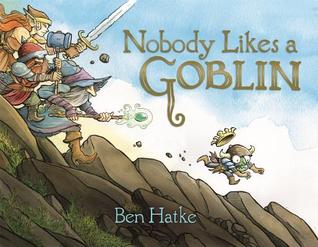
Book Review: Nobody Likes a Goblin

Title: Nobody Likes a Goblin
Author: Ben Hatke
Publisher: First Second
Publication Date: June 7th, 2016
Read: May 2016
Where It Came From: Print ARC received via Goodreads Giveaways
Genre: Fantasy-children’s-picture-book
Rating: 4.5 Honk-Honks

I was so happy to receive a review copy of this picture book through a Goodreads Giveaway. I’ve never read anything else by Ben Hatke (though his Zita the Spacegirl graphic novels have always looked intriguing), but the cover art and the blurb were delightful. And now that I’ve read the book, I can confirm that it is delightful as well!

In the story, cute little Goblin is minding his own business, living in his dungeon and hanging out with his friend Skeleton, when a band of mean, nasty adventurers invades and takes everything—even Skeleton! So Goblin bravely goes out into the world to rescue his friend, though he has been warned to be careful, because nobody likes a goblin. The reversal of the typical order of things in a fantasy story here is fun, with Goblin and other monsters as the heroes, and the adventurers and townsfolk as the thoughtless, greedy villains. I love the humor in both the words and the pictures, and the illustrations add richness and depth to the story, with plenty of interesting things to notice and talk about that never come up in the text. Like the woman who is on the adventurers’ cart full of looted treasure!! What happened there?!

My favorite part, though, had to be Honk-Honk. As Goblin starts off on his adventure, he asks a neighboring hill troll if he saw which way the adventurers took Skeleton, and as she points him in the right direction, she mentions that they took her Honk-Honk away with them (which of course, sweet Goblin that he his, he promises to bring back). At the time there is no other context, and I was like, “...what’s a Honk-Honk?” But later, when Goblin finds the adventurers and their cart of spoils, when you look at the illustration, there is a goose in a cage amongst the riches (and next to the random captive woman)! Honk-Honk!!! Honk-Honk plays his (or her) part in chasing off the baddies and is eventually returned to the hill troll, and they join Goblin and their other new friends for a meal at home in the dungeon at the very end of the book. Cute, funny little details like that make this story a pleasure from start to finish.

Dungeons and Dragons, RPG-loving parents (or even just parents who are fantasy fans) would probably love to share this with their children. Even grown-ups without children will find much to love in this book and could give it a nice home on their shelf. Older, elementary-age children would understand the humor in the reversal of the good guy/bad guy roles, but younger children could enjoy the story, too (though it’s probably not one I would choose for a 5-and-under storytime program—I think that a grown-up and child would get more out of it by sharing the story as a pair).

*As ever, much as we are grateful for the copy, our review is uninfluenced by its source.

Sunday, June 28, 2015

Book Review: Alive, by Scott Sigler

Title: Alive
Author: Scott Sigler
Publisher: Del Rey
Publication Date: July 14th, 2015
Read: June 2015
Where It Came From: ARC from author at PHXCC
Genre: YA-speculative-fiction
Rating: 3.75 Coffin-Cradles

How, oh how, to review this book without giving away any of its secrets? As the author stated on a panel at Phoenix Comicon last month, the book is pretty much secrets from page one. Those secrets drive the story, and I will try my darnedest to preserve them! (Also, I like a challenge like that.) So. Here goes.

Our narrator wakes up in a strange place with little idea of who she is, or how she got there. After fighting her way to freedom from the adverse situation she finds herself in immediately upon waking, she finds others like her. They are somewhere, in a place with many rooms. Also, many skeletons. Weird carvings on the walls that seem reminiscent of the ancient world, but also evidence of technology not of the ancient world. Where are the adults? Where are other people? The need for water and food drives them to explore and try to find a way out of there, wherever there is, as they try to unravel the mystery of their existence and the situation they find themselves in.

I’ve heard good things about Scott Sigler’s books, but this is actually the first book of his that I’ve read. My friend saw him signing ARCs at the Del Rey booth at Phoenix Comicon, and kindly grabbed one for me (I think I was probably at a panel at the time). She told me that he had said to read the first 20 pages that night, and so, dutiful recipient of free books that I am, I did so. Bad idea!!! I was hooked from the get go, and let me tell you—wandering around a convention while your brain is fixated on reading a new book is not the way to go. It was an absorbing, quick read that I tore through once the convention was over.

Now, I hesitate to say this because I really, really despise the publishing trend of describing new books as “Book A meets Book B!”, because I find the comparisons are rarely apt and mostly lead to disappointment (Harry Potter meets Men in Black! Game of Thrones for teens! Batman meets Rainbow Rowell!). But I think this book appeals to the same part of me that the TV show Lost did. Not in plot, not in voice or style or anything like that, but more in the level of mystery surrounding, well, pretty much everything. The mysteries and strangeness at every turn engage the reader (or watcher) in the story, and before you know it you’re formulating theories about what’s really going on and forging ahead for more.

One of the really cool things about this book is that the way it’s structured and told allows the reader to fill the shoes of Em, our protagonist. The first-person present narration (consider yourself warned, Susan) of course plays a big part in that, but also the fact that as soon as Em wakes up, we know just as much as she does (i.e., very little), and only learn new information when she does, as we try to understand the many mysteries along with her.

If I had any quibbles, it would be that not all of the characters truly came alive for me in this book. Part of me thinks this makes sense, though, since the characters themselves are still trying to figure out who they are and how they fit into what’s going on. I didn’t grow terribly attached to any of them, with the exception being Gaston—he was great! (And provided comic relief.) He reminded me a bit of Sevro from Pierce Brown’s Red Rising, in all the best ways. The other quibble would be that the way 12-year-olds are characterized in the story actually felt quite a bit younger than that, to me. (Apologies for vagueness, but you’ll know what I’m talking about when you read it!)

At any rate, by the end of the book, some mysteries have been solved but plenty remain, which makes sense now that I know it’s the first book in a trilogy. Overall, an intriguing premise and a fast-paced read, and I look forward to seeing how the characters continue to learn about and define themselves in future books!

*As ever, much as we are grateful for the copy, our review is uninfluenced by its source.

**I think that might be the ARC cover, and that the actual finished book might have a different one? This one is very cool, though.

Tuesday, August 19, 2014

Genre-ally Speaking: Lock In, by John Scalzi

Title: Lock In
Author: John Scalzi
Publisher: Tor Books
Publication Date: August 26th, 2014
Read: June 2014
Where It Came From: Paper ARC from BEA*
Genre: Sci-Fi-Mystery-Thriller
Rating: 4 Threeps

It’s been over a month since I read Lock In (tore through it in a matter of days, in fact), so this review probably won’t go into specifics as much as I usually do. And I think that’s a good idea for this book—part of the joy of reading it is trying to puzzle out the threads of the mystery for yourself as the stakes for the characters increase and the tension ratchets up. But first, let’s talk plot!

Chris Shane is a new FBI agent, working a murder case in the D.C. area with his partner Leslie Vann. It sounds like the beginning of your usual crime thriller, but here’s the sci-fi twist: The world Shane and Vann live in is one that has been shaped by a flu-like virus that swept the globe 25 years previously. Most people who catch the disease just experience mild flu-y symptoms, but 1% of the infected—which doesn’t sound like much, but amounts to millions of people in the US alone—end up “locked in.” That means they are in their bodies and fully conscious, but are unable to move, respond, or make use of those bodies beyond just being, well, alive. The world has changed in many ways to deal with the situation and accommodate victims of Haden’s syndrome (they’re called Hadens for short), such as with the development of the Agora, an online space for Hadens, and the creation of robot-like devices their consciousness can inhabit to move around in and interact with the physical world. Another salient point—some non-Hadens have the ability to be an Integrator, or someone able to let a locked in individual inhabit their body for a time and experience the world as the non-locked in do.

So, back to Shane and Vann—they are working on a Haden-related murder case, and it looks like an Integrator is their prime suspect. This complicates the situation in ways I’m sure you can imagine. Was the Integrator himself the perpetrator? What if he was integrated with a Haden at the time? Surely there must be safeguards against that…? Hmmm… As they trace the trails leading out from the murder in many directions, the mystery expands to encompass politics and greed on a much larger scale, while also focusing down on those caught in the crossfire of the hidden players in the game.

I quite enjoyed Lock In. Shane is an engaging narrator, and his first-person voice propels us through the story. In typical Scalzi fashion, it is a very smooth, fast-paced reading experience, with writing that feels effortless and pages that fly by. The world is certainly different from the one we inhabit now, but it’s still similar enough as to be very recognizable—no flying cars and vacation jaunts to outer space here, but rather a vision of a near future that has been altered by something easily conceivable (like, y’know, a huge epidemic we are ill prepared for), but that humans are adapting to. People keep on keeping on, doing normal human things, both good and bad. I also love how the story conveys the far-reaching effects of the murder and the plotting behind it, since it is certainly something with consequences for the entire world, but also narrows in on the effects on a very personal level for the main characters and other people involved.

Some of the things that really stood out to me in Lock In:

  • The pacing. This is probably one of my top awesome things in the book. Scalzi really nailed it, creating a reading experience that is relaxed enough for you to be able to process all the information coming your way, but still be a page-turning thriller that keeps you guessing what lies beyond the next chapter. From reading the jacket copy you know Chris Shane is an FBI agent, but then on page two you find out he is a Haden—boom, first surprise (which may then cause you to consider your pre-conceived notions you didn’t realize you had about characters, as it did for me). Also wonderfully paced was the information about who Chris Shane is—he is the narrator, so it’s difficult for him to hide things from the reader, but since his background is so obvious to himself, he is able to sort of obliquely think around certain details of his life, with the result being that we know he is somehow famous, but we don’t know why. Scalzi teases us with it as we wonder why the heck everyone knows who Chris Shane is, and the suspense and anticipation that build leading to that reveal is pretty damn great.

  • The humor. The trademark Scalzi humor was definitely present in this book, but at the same time it didn’t seem like quite as much of a focus or its own character as it is in some of his other books. And that is in no way a criticism—just an observation. Like in Redshirts, or the funny bits in Old Man’s War--they have a style of writing and kind of witty, punchy humor that I have come to associate with Scalziness, and Lock In feels a little different. Humor is still very much present in it and very recognizably Scalzi, but it comes through the filter of Chris Shane and his situation in this world. For me, it’s a new facet of Scalzi funniness, and I like the versatility it demonstrates.

  • The twisty-turniness. The whole situation with Hadens, Integrators, and threeps (the machines Hadens can use to function in the physical world) quite brilliantly lends itself to all sorts of twists and surprises in the mystery as you try to figure out and predict who precisely is involved, and why, and with what motivations, and where they are, and WHO they are, and what are they doing, and—well, you get it.

  • The smooth-like-buttah reading experience. I already went into this a bit, but the ease and speed with which I tore through Lock In is really a testament to the skill behind the writing. To create an entertaining, suspenseful, and emotion-tugging mystery that’s this much fun and speed-inducing to read is an art.

The only part I had questions about involved some of the details of the climactic scene. Without getting into spoiler territory, there were some scientific-technological aspects that I, with my not super techno-savvy skills, tried to follow through mentally to their ends, and I wasn’t sure I was completely clear on it all by the time the scene wrapped up. But it didn’t have a negative effect on my enjoyment of the book as a whole—it merely gave me ideas of questions I could ask Scalzi if I ever see him at Phoenix Comicon again. :) Overall, I really enjoyed the book—it is both sweeping as a thriller on the grand scale, and also affecting on the micro scale of individual human interactions and emotions. It's a good one for Scalzi fans and sci-fi fans, of course, but I’d also recommend it to general thriller and mystery audiences; I think it’s definitely a book with crossover appeal. (…there may not be any semi-colons in Lock In, but I thought there needed to be at least one in this review!)

*As ever, much as we are grateful for the copy, our review is uninfluenced by its source.

Thursday, July 3, 2014

Book Review: Landline, by Rainbow Rowell

Title: Landline
Author: Rainbow Rowell
Publisher: St. Martin's Press
Publication Date: July 8, 2014
Read: June 2014
Where It Came From: BEA
Genre: General fiction
Rating: 4.5 Metallica T-Shirts

The Quick and Dirty:


Landline is a perfect beach read, a novel that is gripping, affecting, and page-turning. This isn’t a surprise, seeing that it is written by Rainbow Rowell, whose 2013 YA releases proved she has a style that is easy-to-read and content that is equally funny and tender. In Landline Rowell takes her skill at focusing on the little moments of relationships—dialogue that has ellipses from awkwardness, half smiles, hand holding, and where eyes are looking—and seamlessly applies it to a 17-year relationship from its first date to a time when there are children and careers to balance.

The Wordy Version:


When Georgie McCool gets an opportunity to pitch her dream show, she has to cancel her family Christmas plans to get scripts written by their deadline. Her husband, Neal, says he understands her need to work through the holiday, but takes their two young daughters to his mother’s home in Nebraska for the week, and then never picks up his cell phone when Georgie calls. Panicking because she hasn’t spent more than a day without talking to Neal in 15 years, Georgie resorts to dialing her mother-in-law’s landline from her own mother’s house phone, and Neal comes on the line.

It takes only a few conversations for Georgie to realize that she’s not talking to her husband Neal, but to her college boyfriend Neal, a younger, perhaps more affectionate version of himself with dreams for the future that she knows he won’t realize once he marries her. As Georgie becomes useless at work, she talks longer and longer with Neal of her past, trying to figure out if she should encourage him to break up with her before he ruins her life, and simultaneously desperate to heal her relationship with her husband.

I could absolutely see why Georgie is so torn about whether love means encouraging Neal to choose a Georgie-less direction for his life. Neal is amazing: he’s patient, accepting, encouraging, self-sacrificing, creative, funny, honorable. When Georgie realizes that he’s also been miserable for years, she thinks that she has gotten far more from their relationship than she’s given to Neal in return. I love that Georgie, even while listening to her mother claim that the marriage is over, has no regrets for herself in the marriage. I love that she loves Neal the way he deserves based on the scenes we see of him. I love that there was another romantic direction she could have gone as a college student or recent alum, and she doesn’t really pause to believe that that would have been a good idea. But mostly I love Neal.

I’ve already listed adjectives that describe Neal in the most flattering of terms, so it may seem redundant to dwell on how great he is here. But Neal was more swoon-worthy than any hero of a romance novel, and I’m not sure how you’ll believe me if I don’t keep saying it. Young Neal is the guy I wish I had met in college. He goes to a party he knows he won’t like just so he can talk to Georgie. He banters. He’s solid and appreciates Georgie’s dreams. He talks to Georgie on the phone for hours. Furthermore Neal is the husband I dream of having. He’s a stay-at-home dad who lets his preschooler pretend to be a cat to the point that there is a bowl of milk on the floor for her. He cooks kale for dinner. He paints murals on all their west-facing walls. I’m totally in love with him.

And I’m basically in love with Rainbow Rowell too, because it takes skill to make characters seem perfect and yet human (in Neal fairness, Neal does give Georgie the silent treatment, and he sulks at parties), and even more skill to make me willing to relinquish my dream husband to the character he actually married. Plus she manages to make her books almost impossible to put down. Yet another thing to love.


Tuesday, July 1, 2014

Book Fun: Sinner, by Maggie Stiefvater

Title: Sinner
Author: Maggie Stiefvater
Publisher: Scholastic Press
Publication Date: July 1, 2014
Read: June 2014
Where It Came From: BEA
Genre: YA / YA Paranormal
Rating: 4 White Pants

The Quick and Dirty:


Cole and Isabel from the Wolves of Mercy Falls (Shiver) trilogy are back, and having adventures in fame, werewolfery and emotions in L.A. Top-notch, as I've come to expect from Maggie Stiefvater, and a good place to start Stiefvater reading if you're not a paranormal/fantasy fan. There is humor, but it's always tempered by real emotions and insecurities.

The Wordier Version:


The werewolf situation in Mercy Falls having been resolved, Cole St. Clair is in Los Angeles to resume his rock star career with a new studio album and a reality web series. At least that’s his public story. He’s actually in L.A. to restart things with Isabel Culpeper, who may be the only person capable of making him feel right in his human skin. Isabel, however, isn’t ready to deal with the addiction, fame and wolf issues Cole presents; she feels disconnected from her medical career plans and her current job in fashion, and she has no patience for people. Cole’s arrival in Isabel’s life threatens to destabilize the only things allowing her to get through each day, but Isabel’s withdrawal from Cole threatens his sobriety.

In all honesty this doesn’t need a review from me. I could note that you might be momentarily confused if you haven't read the trilogy. I could say BUT WHAT HAPPENS TO ISABEL'S COUSIN? Or, GIVE ME MORE SCENES WITH LEON! But I accept that the story of Sinner is not in the supporting characters so much as it's in the relationship between Isabel and Cole, and if you were reading the book to find out what happens to Isabel's cousin, who makes Martha Stewart arrays of food every day in a quest to become more perfect and less anxious, you'd be missing the main part of the book. Just as any criticism of the book seems silly, any praise I can give it is superfluous.

In the last year I have become convinced that Maggie Stiefvater, much like the Disney-Pixar people, can make whatever project she’s working on top-notch. Her writing has gotten better since the Wolves of Mercy Falls Trilogy, her supporting characters are more fleshed out, and the technicalities behind the fantasy elements of her worlds have been glossed over (unlike in the Wolves of Mercy Falls series when explaining how werewolfing worked involved some dodgy use of biology terms). The result of all this improvement is that Stiefvater’s last four books have been adventure-romances featuring mature and confident teen characters, with a fast horse or car thrown in for good measure, and a death-related subplot. How anyone could dislike these books is beyond my comprehension.

And with that in mind, I'm just going to pepper the rest of my thoughts about Sinner with some pictures. To get into the true Sinner mentality, read the rest of this while listening to Stiefvater's curated playlist for her WhitePantsNovel project.

The Picture Book Version:


This is basically how I picture Cole:


But because music isn’t my thing and I only know like ten rock groups, my brain kept confusing confident Cole with sensitive heroin addict rocker (and idol of my elementary school years) Kurt Cobain.


At least Cole has Isabel, who is too cool for drugs.


Even drugs that only turn you into a wolf for a few minutes.


But whereas the werewolf thing in the original trilogy made my thoughts revert in confusion to my biology studies:

This book didn't dwell on any of that. This is the first Stiefvater novel that doesn't need to be on a speculative fiction shelf. Cole’s transformation to wolf is consistently shown as the equivalent to his former drug use. He loses control of his body and his mind for a period after shooting up, and then returns to his friends’ worries about his use. If there were not a trilogy that rests on the werewolves actually being wolves, it would be easy to assume that Cole and Isabel are just processing his drug behavior as animal-like. Like the scene that got me to stop watching Trainspotting.


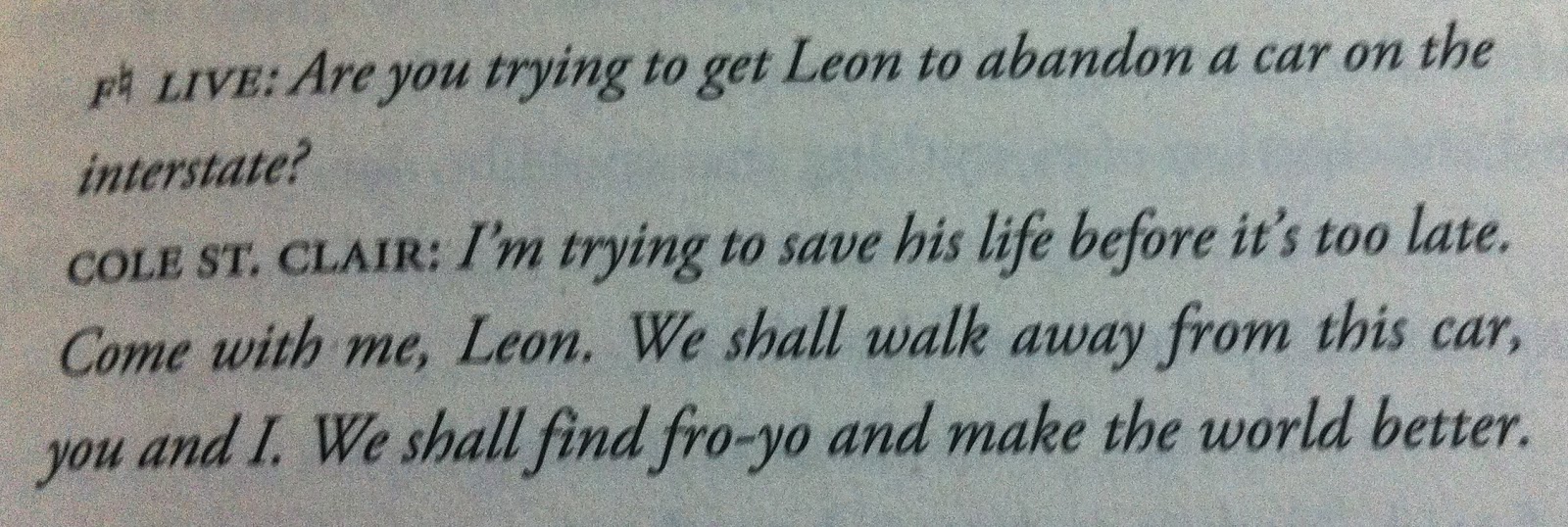
Stiefvater writes in a forward letter that Sinner is "the truest novel I've written. I hope that those who don't need the truth in it will see only the werewolf, and I hope that those who do need the truth will see only the human." In addition to the heavy themes of substance abuse and grief, the truth of the novel comes through in Cole's public persona. There are moments when Cole sounds exactly like Maggie Stiefvater's twitter account. (AWESOME)


This quote, and the next two, are from an advanced reader's copy of Sinner, and I will update when I get a copy if I see that the quotes have changed.


So Cole sometimes = Stiefvater, and I remember loving Cole in his science-nerd/jaded-rock-star form in Mercy Falls, but I forgot how much I liked Isabel. Isabel is so disconnected from her world that she has begun to wonder if she is a sociopath, when in fact her problems probably stem from feeling too much for others. In that state it might be easy for her to accept Cole with all his problems just because they make her feel something in the midst of the nothing. Isabel, though, knows what she wants from Cole and she isn’t afraid to risk losing him if she cannot have that.


And if that wasn't enough to convince you how much fun the book is...

There are fast cars!

>

Tuesday, May 13, 2014

Genre-ally Speaking: Manifest Destiny, Vol. 1

Title: Manifest Destiny
Author: Matthew Roberts, Owen Gieni, & Chris Dingess
Publisher: Image Comics
Publication Date: May 27th, 2014
Read: May 2014
Where It Came From: eARC from publisher via NetGalley*
Genre: Historical-supernatural-graphic-novel
Rating: 3.5 Sad Dead Herons

The Quick and Dirty:


Lewis and Clark lead an exploration of the United States’ new territory at the behest of President Jefferson, and encounter all sorts of supernatural monsters and other entities. Also, Sacagawea kicks some major ass.

The Wordy Version:


Lewis and Clark are on a mission from Jefferson to explore and document the Louisiana Purchase. At least, that’s the public face of the mission—Jefferson has actually tasked the two with leading the expedition to destroy the monsters inhabiting the interior of the continent and make way for westward expansion. L and C are naturally a little skeptical about this less-public aspect of the assignment, but carry on as their president has ordered. They've got a bunch of military men in the party, supplemented with freed criminals—expendable manpower for what horrors might be ahead. Their first stop is La Charette, the westernmost bastion of civilization.

It soon becomes clear that Prez Tommy J is not, in fact, losing his marbles, when they are attacked by a bison/minotaur/centaur creature while investigating a structure that looks mysteriously like the plant version of the St. Louis arch. Things go downhill from there—more murderous bison creatures, a naked lady with scary green eyes jumping off a cliff but leaving no body behind, an abandoned fort, moss zombies… They make it to La Charette and eventually find some of the village’s survivors. The original plan was to hook up with an Indian girl at the fort (wonder who that could be?), but they’re forced to make plans to leave without her. Said plans are derailed by various malevolent flora and fauna, and the awaited Indian girl swoops in to save their asses. More than once.

Lewis is a kind of happy-go-lucky-ish, scholarly type of individual, while Clark seems to be the harder, less forgiving military man. Their bromance could get pretty epic. Other prominent characters include a particularly slimy convict named Jensen, who suspects the real reason the criminals were brought along on the trip and has no qualms about the measures he may have to take to escape. Sacagawea is the strong, silent (and pregnant) type, and her husband/baby-daddy Toussaint Charbonneau seems a little creepy, especially when we find out he’s being paid by L and C for delivering her to them, with more money to come when the baby is born…

I didn’t have especially strong feelings about the art in general, but there were some really cool full-page panels. It’s actually a pretty gruesome graphic novel at times (bison creature dissection, anyone?), and the slime ball Jensen says some pretty offensive things (cannot WAIT until some creature gets him. Or Sacagawea!), but it didn’t make me squeamish enough to stop reading. Overall, I was feeling kind of in the middle about it—it was interesting enough, but maybe not so much that I would seek out the next installment. But some set up at the very end involving plant prophecies and demons from Clark’s past, as well as some loose ends, such as Sacagawea’s undisclosed role (both from L and C’s perspective and from her own) and the green-eyed cliff-jumper, convinced me the next volume is worth a place on my TBR. I’m looking forward to further development of some characters we only got a glimpse of, like Mrs. Boniface from La Charette, and York, Clark’s African-American companion (slave, freedman, servant—we don’t know yet).

Have you been reading this one in its comic book form, or do you plan to check out this graphic novel collection of issues #1-6? What other graphic novels have caught your eye lately?

*As ever, much as we are grateful for the copy, our review is uninfluenced by its source.

Sunday, May 11, 2014

Book Review: Curses and Smoke

Title: Curses and Smoke: A Novel of Pompeii
Author: Vicky Alvear Shecter
Publisher: Arthur A. Levine Books
Publication Date: May 27th, 2014
Read: April 2014
Where It Came From: eARC from publisher via NetGalley*
Genre: YA-historical
Rating: 3 Foreshadowing Earthquakes

The Quick and Dirty:


Lucia is the daughter of a gladiator training school owner in Pompeii, and not looking forward to her impending arranged marriage. When her childhood friend, a slave boy named Tag, returns from Rome after training to be a healer, the two reconnect and begin dreaming of a life beyond their current confines. But then there’s all the strange things occurring around Pompeii recently—earthquakes, dead fish in the bay, poisoned springs… Lucia ponders what it could all mean while imagining a life with Tag out from under her father’s thumb, but will they be able to escape life in the shadow of Vesuvius? I didn’t find the characters particularly compelling and the writing was in the middle—not awful, but not super good. Still, it kept me turning pages and as the inevitable drew near there were some unexpected twists that (at last!) got an emotional response out of me.

The Wordy Version:


Guys. This book…I don’t even know what to say. For a book that I was feeling so solidly meh about throughout the entire reading to have that sort of effect on me at the very end… I wasn’t expecting tragedy! Which might sound dumb for a book about Pompeii, but…well, we’ll come back to that later.

Lucia is the only child of a middle-class gladiator training school owner, and she wants more from life than marriage to an old, lecherous man in Rome for her father’s gain. She’s interested in science and nature, and has been noticing strange things happening around the city of late (naturally, no one pays any attention to her when she brings them up). She’s pretty in the middle as far as characters go—she’s not objectionable, but she’s not terribly interesting either. Our other protagonist, Tag, was sent away to Rome to train as a healer for a few years to eventually follow in his father’s footsteps at the training school, but upon his return to Pompeii he dreams instead of becoming a gladiator and winning his freedom. Again, not objectionable, but not a character I felt overly attached to. I did really like his Etruscan heritage, though—the fact that he was descended from a formerly powerful family from the time the Etruscans ruled the area added a new slant and extra fire to his rage at being a slave.

So of course the two fall in love, FORBIDDEN love, and have to keep it secret from everyone around them. The daughter of a training school owner cannot love a slave, especially when she is already promised to a creepy old man! For some reason, Tag and Lucia both came across as younger than their 16 years for much of the book (at least until they start making out in the woods and Lucia debates love vs. lust with her married friend). Other characters are added to the mix—Lucia’s father, mostly portrayed as monstrous; Castor, a young slave boy who takes a shine to Tag; Quintus, a louche patrician dilettante who plays at gladiator training and develops an interest in Lucia; Lucia’s friend Cornelia, sassy and pregnant; and Cornelia’s husband, who sounds like a pretty awesome guy until we actually meet him. Cornelia is one of the more interesting characters, as she has some life and verve to her (although the fact that the word “waddle” is used to describe her every movement got a little irritating. Yes, alright, she’s hugely pregnant! We get it already!). My FAVORITE character, though, was Lucia’s dog Minos. So cute. I even wrote in my notes as I was reading that the most emotional reaction the book got out of me was when someone hit the dog. But…that was before I got to the end.

Wednesday, April 23, 2014

Quick Bites: Stitchery, Double Takes, and the Twilight of Imperial Russia (Again)

I’ve peremptorily decided to create a new feature for RTET, called Quick Bites. The idea is to write short reviews of books read in the recent past (but perhaps not too recently, thus enabling the requisite shortness), and gather them up into a single post. Minute reviews, if you will. Called quick bites, because they’re quick…and bite-sized…and about books on a blog that also occasionally covers food-related topics… (Yes, yes, I’m terribly clever, I know.) This new feature will appear on the blog…well, whenever I feel like creating such a post. It’ll be crazy! Fun! You’ll never know when one’s coming!!! (…have I convinced you that sporadic is cool?)

The Gentle Art of Stitching, by Jane Brocket
Published by Collins & Brown in 2012
Read: March 2014
From: Library
4 Sashiko Needles

Yay for another crafty book! As you can guess from reading the title, this one is about stitching—all different kinds, in fact. That’s what makes it such a fun book—it goes beyond the basics to cover projects involving Japanese sashiko, Indian kantha-style quilts, interesting ways to use buttons, modern needlepoint cushions… The book is full of ideas, and provides practical information and instructions to complete the projects included, while also equipping the reader to take inspiration from them and create projects of their own devising. I had originally picked it up to see what sorts of cross stitch projects it contained, and while they were cute, I was looking for a bit more complex of a project to take on. My absolute favorite project in the book is one where kitschy embroidered linens from the ‘40s (easily found at antique shops and online) are repurposed into a collage quilt with a very vintage, very fun design aesthetic. The one the author made is the coolest thing, and I can’t remember the last time I was so inspired by a project idea—I was showing it off to everyone I know, and got really excited about making one myself someday. There were admittedly a few projects that were a little TOO kitschy for my taste (anything involving felt, pretty much), but most of the projects were things I’d like to try someday. Very cool book—I will be purchasing a copy, and checking out the author’s other craft books.


The Burning Sky, by Sherry Thomas
Published by Balzer + Bray in September 2013
Read: April 2014
From: Paper ARC Susan sent me
3.5 Canaries

You may remember when Susan read and reviewed this one last fall, giving the verdict of “very enjoyable.” Now I’ve finally gotten around to reading it, and while I did enjoy it, I think I perhaps enjoyed it with more reservations than she did. Quick plot rundown for those who didn’t click the link: Iolanthe Seabourne is the greatest elemental mage of her generation, being hunted by the Big Bad Guy the Bane and his agents of Atlantis. Titus is the prince of the Domain they live in, but is actually just a puppet of Atlantis, and he wants to find Iolanthe because a prophecy says she’ll help him defeat the Bane. They meet up, he hides her by making her pose as Archer Fairfax, a fellow student at Eton, and they begin training to defeat the Bane and hide from the agents that are trying to capture her.

The book was slow to start, but I kept at it, and overall it was a fun fantasy with historical elements. My main issues with the book, however, involve the world building. It was shaky, holey, and not explained well enough to create a solid base for the story to unfold upon. For example, Iolanthe and Titus are from the Domain. Okay, sounds good. Like maybe some random fantasy place not in our world. But then Titus travels to England to go to Eton. This does not involve spaceships, so maybe the Domain is on Earth, or somewhere close enough for him to reach it by magic? But what about Atlantis? They’re running the show in the Domain and have agents everywhere, and there are mentions of other mage and non-mage realms existing. But do they exist in our world? On parallel Earths? Are they hidden in plain sight in our world, like in another dimension? When I ranted at Susan about this, the best explanation we came up with was perpendicular universes. …when I have a tenuous grasp of something as basic to a book as its setting, that’s a problem for me. I also found Titus too-tragic-to-tolerate for much of the book, but he did get better as it went on. The best scenes were when they were at Eton, and I wish there had been more of that. But even with my complaints, as the book reached its climax involving intrepid travel and danger via the virtual reality-like fairytale training books, I was very invested and flipping pages like nobody’s business. And once Titus stopped being a putz, the romance became cute, too. I’ll probably read the sequel, but it’s not one I’ll feel compelled to grab right when it’s published.


Tsarina, by J. Nelle Patrick
Published by Razorbill in February 2014
Read: March 2014
From: Library
3.5 Fabergé Eggs

Despite crap luck in the past with books involving the downfall of imperial Russia, this one came highly recommended by Maggie Stiefvater, so I thought I’d give it a go. I really, really want there to be a novel on this subject that’s as awesome as Anastasia, and I will keep looking until I find it, dammit! This one was better than the last, but still not quite as much as I’d been hoping for. Natalya, daughter of an aristocrat military officer, is in love with Alexei Romanov. During a ball, Alexei lets his love in on a secret—before Rasputin died, he channeled all of his power into the Constellation FabergĂ© egg, and it will keep Russia and the Romanovs safe. Soon, however, the Reds rise up in St. Petersburg, raiding the palace and capturing the imperial family. Natalya, along with fellow aristocrat and friend Emilia, will have to team up with a mysterious young man named Leo to track down the egg and save Russia and the Romanovs.

I liked that both Natalya and Leo have convictions about their respective White and Red politics, and that over time they come to see that it’s not quite that simple. They gain an understanding of the other’s point of view as the story progresses, which felt realistic, and provided obstacles to their relationship and a meaningful way for it to develop. While we’re on the subject of relationships, we actually only see Alexei and Natalya together in the first chapter, which is really more of a prologue, since it happens months before the action of the rest of the story. Because we have only that and Natalya’s recollections of him to go on, it was hard for me to be invested in their love. Still, even though I didn’t see their relationship unfold, even though I know that Russian society had some big-time problems that needed to be fixed, even though I KNOW what happens, I found myself hoping that the story would somehow take an alternate history tack and there’d be a way for them to be together and have Russia’s problems solved magically and for everyone to be happy. And when the inevitable comes to pass, it was more affecting than I had expected it to be due to foreknowledge of history and a lack of attachment to their relationship.

One of the weaker aspects of the book was the plot line with the mystics—it was a bit muddled, and I just didn’t find it compelling. As historical fantasy, some liberties are taken with the actual history of the Russian revolution and related topics (aging up Alexei, for one). This isn’t the kind of thing that bothers me, but if it would irritate you, it’s something to consider. Overall, while the novel may not rank among my favorites, it was entertaining and highly readable, though I wish it had made me feel more. I may pick up the sequel, but it’s probably not a must-read for me.

Have you already read any of these or plan on checking them out?

Wednesday, April 2, 2014

Cookery Bookery: The Kinfolk Table

Title: The Kinfolk Table: Recipes for Small Gatherings
Author: Nathan Williams with Rebecca Parker Payne
Publisher: Artisan
Publication Date: October 15th, 2013
Read: March 2014
Where It Came From: eARC from publisher via NetGalley*
Genre: Lifestyle-Manifesto-with-Recipes
Rating: 3 Shared Meals

This cookbook will always have the odd distinction of being the one where I opened it up to a random page while browsing and saw my cousin’s wedding photographer staring right back at me. Weird coincidence, right? Check out page 250. There he is! (Took really beautiful photos of the wedding, too.) …I’m trying to come up with some way to connect this to the cookbook itself and what I thought of it, but am failing. Basically I just wanted to share that little tidbit because it was completely unexpected and made me laugh. Okay, moving on.

Kinfolk Magazine is a popular small press quarterly that bills itself as “the lead entertaining magazine for young food enthusiasts and adventure-seekers” and “a blueprint for a balanced, intentional lifestyle.” I’ve seen the magazine in my wanderings about the internet, and the relaxed, simple, rural-hipster vibe appealed to me. I haven’t picked up a copy yet, so when I saw this cookbook by the same people come up on NetGalley, I thought it would be a good way to try it out and get a sense of what Kinfolk is all about.

I love everything that the founder of the magazine, Nathan Williams, talks about in his introduction. He discusses the rituals of gathering together with friends to cook and eat, and how this sort of entertaining inhabits some middle ground between simply hanging out and the rigid, la-tee-dah associations the word “dinner party” can have. He says the idea for the magazine was “born in the course of trying to describe those evenings spent with friends when the hours pass effortlessly, conversation flows naturally, cooking is participatory, and the evening ends with a satisfying sense of accomplishment.” The goal of the magazine is to demonstrate this idea of entertaining and to make it accessible to younger people like himself and his friends. What he describes as casual, meaningful entertaining is something I’m totally behind—I’ve experienced it often in my life, though I never really thought of it in those terms until I read what he’d written about it. Some of those experiences that immediately came to mind while reading included my junior year of college, when my flatmates (of whom Susan was one) and I were the odd ducks who did not subsist on pizza and cheetos, but had higher aspirations for our comestibles. We had an impressive collection of cookbooks and planned out all of our meals a week in advance, assigned people to cook each night of the week, and had a complicated but accurate system for dividing up the grocery bills. We ate dinner at the table together most nights, and for those roomies who could not attend we always saved leftovers. Our senior year, when Susan and I were test cooking for the newspaper column we wrote together, we often invited friends over to help in the process and partake of the results. Later, when I was living in Japan, the other foreign English teachers in my city and I instituted what we called Magic Mondays, where we would gather at one of our apartments and have a delicious dinner that the host cooked for us, talking and venting and laughing until it was time to go home and look forward to the next Monday, when we would descend upon whomever was next on the rotation schedule. Having experienced myself how fun, warm, and good-for-the-spirit these kinds of social interactions can be, I was excited to read about other people identifying and exploring that idea.

Related Posts Plugin for WordPress, Blogger...