Showing posts with label fantasy. Show all posts

Monday, February 27, 2017

Whatchoo reading?

Hello, bookworms and moths! I can’t believe February is almost over. Though I don’t think I’ll be going full-blown review on any of the books I’ve been reading in January and February, I thought I’d share a few thoughts about them, the ones I’m in the middle of right now, and a couple I’m looking forward to verrrrrry soon. Allons-y!

Things I’ve Been Reading

  • Gemina, by Jay Kristoff and Amie Kaufman. This second entry in the Illuminae Files series did not disappoint. In fact, I think I liked this one even more than the first one! I love the way the format of these books continues to push boundaries—it often reminds me of Guillaume Apollinaire's calligrammes (thanks, college French!). These books are action-packed like the best summer movies, but with characterization and a sort of overarching mythology that those summer tentpoles often lack. Romance is a component thread of these books, but it is definitely secondary to the rollicking plot. For these books, I find that that is the perfect balance. There was also a perfect balance of plot twists that I figured out, and ones that I didn't see coming—enough to make you feel smart, but still have the fun of being surprised. Can't wait for book three.
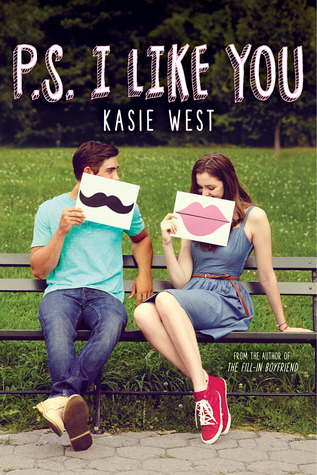
  • P.S. I Like You, by Kasie West. I got this book for S for Christmas because I thought it sounded cute, and then decided I had probably better read it myself to be sure. And how often do you a find a YA that takes place in Phoenix?? After a rough, choppy start (think oddly disjointed sentence flow, stilted dialogue, me thinking, "Grrr, I was an Arizona high schooler and my experience was nothing like this!"), some sort of unseen transition occurred and the dialogue became funny, the characters became real, the romance gave me butterflies, and I was utterly charmed. Enough so that I passed that late night reading point of no return and had to finish the book before finally going to bed around 2 a.m. A quick, cute, fun read! I’ll definitely be looking for more Kasie West novels.
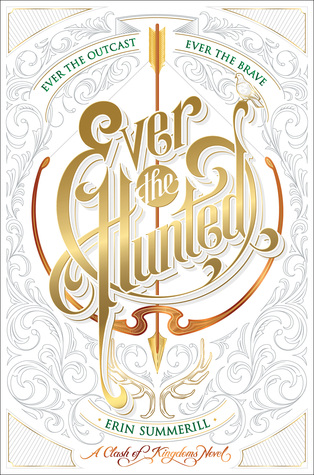
  • Ever the Hunted, by Erin Summerill. Though this book has an absolutely stunning cover design (and I am a sucker for cover design!), my overall feeling about the story inside the covers was a resounding “meh.” I was tentatively interested and engaged in the beginning (world-building concerns were primarily what kept me from being fully interested and engaged), and then halfway through I got bored. The romance, which had an interesting hook and tension to start with, was resolved too quickly for me. Though the plot kept a tidy pace, it still somehow managed to feel mired and slow to me. The plot development on the last page was intriguing, but probably not enough to motivate me to pick up the next book when it comes out.
  • Snow White: A Graphic Novel, by Matt Phelan. I loved the aesthetic and storytelling of this graphic novel. Easy to read in one sitting, it situates the traditional Snow White story in New York in the 1920s and the Great Depression. Samantha White (her mother calls her “Snow”) lives in NYC, and after her mother dies when she is young, her businessman father remarries a star performer of the Follies—enter evil stepmother! You know how the story goes from there. I love the twists that evoke the original fairytale while adjusting it to fit in the new time period. A ticker tape stands in for the magic mirror, seven street urchins remind the reader of dwarves in a forest, and a detective investigating the case of a mysteriously sleeping girl found in the display window of a department store makes for a modern prince charming. There are few words in the graphic novel, but the expressive art clearly tells the tale.
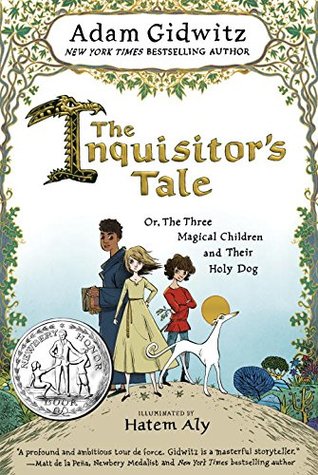
  • The Inquisitor’s Tale, by Adam Gidwitz. This Canterbury Tales-esque story follows three unique young people and one very special dog in France in the 1240s—Jeanne, a peasant girl on the run from the authorities who experiences prophetic visions; Jacob, a Jewish boy with mysterious healing powers who has escaped the hate-fueled burning of his village; William, an unusual oblate endowed with colossal strength; and Gwenforte, Jeanne’s beloved greyhound, long dead and yet somehow returned to her. Though the storytelling is fast-paced, it somehow still manages to be a slow burner, with a powerful payoff. Also, it's really funny. I mean, there’s a farting dragon! The humor is definitely a hallmark of the story, but it also depicts people in all their complexity, and its ruminations on prejudice and tolerance are especially important. It could also serve as a master class on how to use modern speech in a historical (or fantasy) setting without it sounding jarring, inappropriate, or false. Highly recommended!


Things I’m Currently Reading

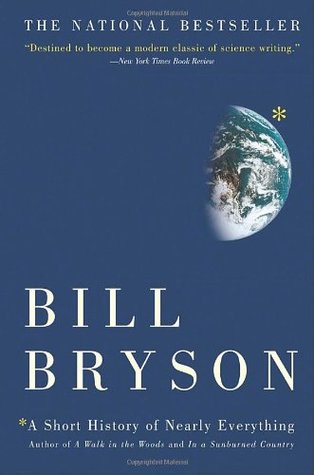
  • A Short History of Nearly Everything, by Bill Bryson. As I continue my incursions into the Bill Bryson audiobook realm, I recently started this one, wherein BB takes on science, the universe, and everything! Completely fascinating, and makes me want to learn more about all the topics he covers. His wit and his knack for finding and relating bizarre footnotes to history delight, as ever.
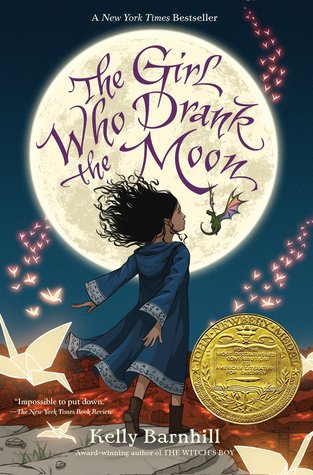
  • The Girl Who Drank the Moon, by Kelly Barnhill. This one is hitting all the right fairytale buttons for me. I adore Fyrian the Perfectly Tiny Dragon (he’s prone to crying), and I’m not even 100 pages in. But, I had to take a break from this one so I could starting reading…
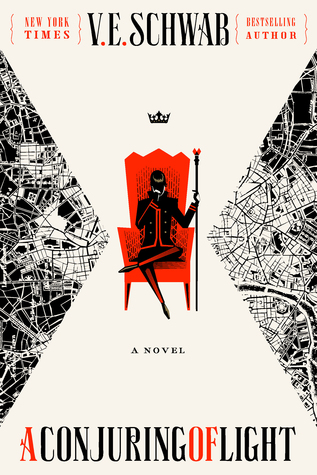
  • A Conjuring of Light, by V.E. Schwab. AHHHHHHHAGHAIOHGALIFBHALKHGHLGIagahgipuahg’gauug GO AWAY I’M READING


Things I’m Looking Forward to Reading

  • Rat Queens #1, by Kurtis Wiebe and Owen Gieni. Rat Queens is back with Image Comics and a new artist (astute blog readers and comics fans might recognize his name from Manifest Destiny)! It looks like they’ll be doing a kind of reboot of the series, which honestly I’m down with since, storywise, the last issues before all the artist kerfuffle and hiatus went down were kind of going in a weird direction. I’m hoping it’s fun and awesome and helps me forget all the strangeness that went on with the artists and story. Out on March 1st, 2017.
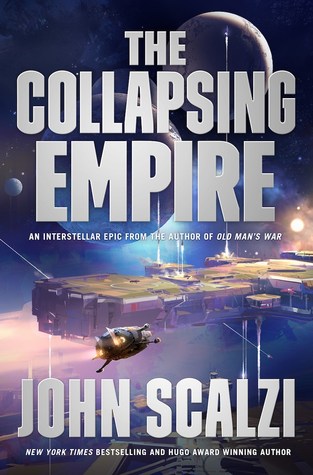
  • The Collapsing Empire, by John Scalzi. You can click on the picture to read the blurb—it sounds amazing, and has been getting some great reviews. I don’t think I’ve read a Scalzi novel I didn’t like, and this one sounds especially cool. Can’t wait to get my hands on it! Too much to hope he’ll be promoting it at Phoenix Comicon this year? Out on March 21st, 2017.


Well, that’s it from me this month. What’s been on your TBR? What are you looking forward to reading next? Let us know in the comments!

**All books purchased or borrowed from the library. An e-ARC of Ever the Hunted was received from the publisher via NetGalley, but this short review is based on my reading of a finished copy. As ever, much as we are grateful for review copies, our reviews are uninfluenced by the source of said copies, or by anyone else, for that matter.

Monday, January 30, 2017

Some of My Favorites From 2016

2017 may be well and truly underway by now, but since it’s been a while since I last posted, I thought I’d take a moment to look back on some of my favorite reads from last year.

New Favorite Series: The Amory Ames books, by Ashley Weaver
These books are so much fun. Amory Ames, a well-to-do uppercrust-y British lady in the ‘20s-’30s, solves murder mysteries and contends with her flirtatious and flighty husband, Milo. Though by the third book the romantic tension that came from her estrangement from her husband has been mostly resolved, the mysteries are interesting enough and her and Milo’s relationship sweet enough that I stuck around. Three books out so far, and I can’t wait for more! Thanks to Susan for turning me on to this series!

Best Non-Fiction Book: All the Single Ladies: Unmarried Women and the Rise of an Independent Nation, by Rebecca Traister
Everyone should read this book, regardless of their sex, but especially, DEFINITELY if you are female. It doesn’t matter whether you are single or attached, gay or straight (this is starting to ring a bell—I feel like I’ve written this for the blog before), rich or poor—it’s a book about feminism and what it’s like to be a woman in the world, what it’s BEEN like to be a woman in the world since time immemorial. It seems to go without saying in our current political climate that there are those who feel threatened by the titular “rise of an independent nation” of females, and this book will empower you to fight back.

Best Graphic Novels of the Year: Too Many to List, Nearly
I read a *lot* of graphic novels last year, and loved most of them. I’ll try to limit myself to one line about each that I’m featuring here.
• Lumberjanes: Female friendship and the fun adventures of summer camp, with a delightful dose of the supernatural and humor added to the mix.
• Bitch Planet: Just what the doctor ordered for reading on 11/09/2016. That was probably the only day in my life when I have seriously (and I mean seriously) considered getting a tattoo, and it was going to say “non-compliant.”
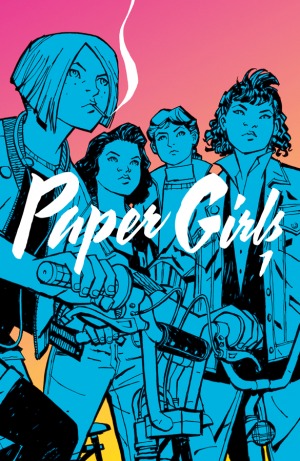
• Paper Girls: More female friendship + supernatural, but with more of a sci-fi bent and some good old fashioned ‘80s fun. It’s kooky! It’s crazy! I loved it! (Also, it seems to live in the same ballpark of my brain as Stranger Things, for what it’s worth.)
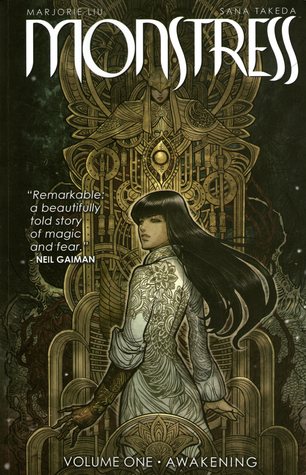
• Monstress: Scary/sad/icky-at-times ruminations on war in a fantasy world, but with truly stunning art and an ever-deepening world that continues to draw me in. It’s kinda like a blend of manga and American comic traditions, and the result is completely unique.
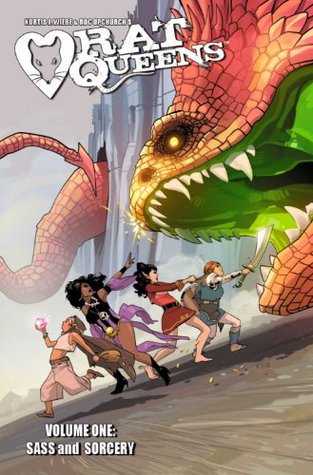
• Rat Queens: I just discovered this series in 2016, and I really, really love it. The female friendships (which seems to be a theme for my 2016 graphic novel readings) are hilariously real, and the good-natured pokes at the fantasy genre made me laugh out loud while reading. I know there has been some weirdness regarding the continuation of the series, but I really hope it does continue.

Best Series Ender: Morning Star, by Pierce Brown
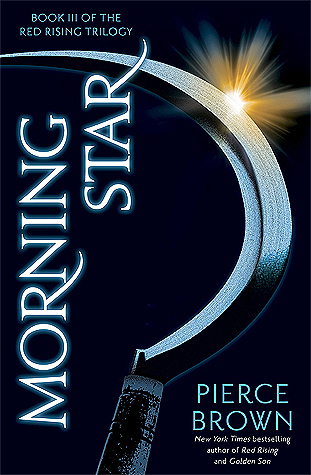
The Red Rising series has been one of my absolute favorites of recent years, and though this final entry may not have eclipsed Golden Son as my favorite of the series, it was very, very good. There’s one thing that came up at the end that I’m still ambivalent about that I’m not going to talk about here because spoilers, but it was a sweeping, emotional end to a fantastic trilogy. I’m looking forward to seeing what the author does with this world next.

Best Soul-Nourishing Heart-Book: Uprooted, by Naomi Novik
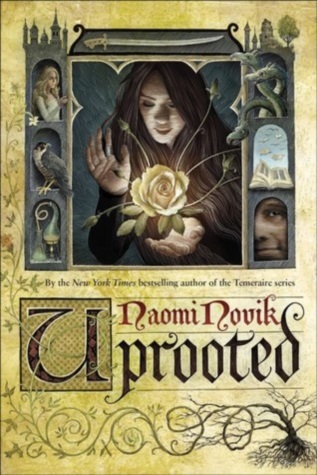
Starting this book felt like sinking into a feather bed. I felt the same way reading it that I did reading some of my favorite books from my childhood—Ella Enchanted, especially—but in a more mature way, if that makes sense. I’m sure it’s already been said in the jacket blurbs for the book, but it is fairy tale for grown-ups, and perfect. I can’t think of one thing I would change about it. The engagement I felt while reading it, the intense need to just not.stop.reading, and the happiness I felt after finishing it—I just haven’t felt that way about a book in a long while.

Best New-to-Me Series: The Shades of Magic Series, by V.E. Schwab
If Uprooted nourished the historical fairytale side of my reading personality, The Shades of Magic books nourish the slightly darker, sharper facet of said personality. These books are witty, and wise, and harrowing, and FUN. I love them. A Darker Shade of Magic and Uprooted are the two books I bought for everyone for Christmas, and everyone knows that when I get militantly insistent about reading a certain book, I must really, REALLY adore it.

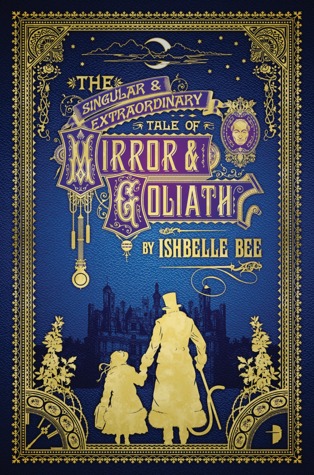
Best Book That Nourished Yet Another Facet of My Literary Personality: The Singular and Extraordinary Tale of Mirror & Goliath, by Ishbelle Bee
So, if I had to pick a couple authors to typify these various sides of my literary personality, one might be the Gail Carson Levine/Megan Whalen Turner/Elizabeth C. Bunce side (the side Uprooted appeals to). Another might be the Holly Black/Neil Gaiman side (where The Shades of Magic gets mentally filed for me). And yet another, the present one, would be the Catherynne Valente side. I love books that are magical and poetic and feel like they speak directly to me, touch my heart, in the way that art can. Mirror & Goliath has that sort of sensory language and intense imagery, and at times feels almost stream-of-consciousness (though the storytelling is still quite clear!), similar to some of my favorite Cat Valente stories. It is a beautiful book, and I loved it.

So those were some of my favorites from last year, and here, very quickly, is a preview of the books I’m most looking forward to in 2017!


What were some of your favorite reads of 2016? What are you looking forward to reading in the year to come? Hit up the comments and let us know!

**Where did the books come from? Glad you asked! Purchased: Rat Queens, Morning Star, A Darker Shade of Magic (well, library, then purchased a copy), and A Gathering of Shadows. Library: The Amory Ames books, All the Single Ladies, Bitch Planet, and Paper Girls. ARC from publisher: Lumberjanes (physical copy) and Monstress (digital copy). ARC from publisher, then either purchased or checked out from library: Uprooted (ARC, then purchased) and Mirror & Goliath (ARC, then libraried). As ever, much as we are grateful for review copies, our reviews are uninfluenced by the source of said copies, or by anyone else, for that matter.

Monday, July 18, 2016

Book Review: The Singular & Extraordinary Tale of Mirror & Goliath

Title: The Singular & Extraordinary Tale of Mirror & Goliath
Author: Ishbelle Bee
Publisher: Angry Robot
Publication Year: 2015
Read: July 2016
Where It Came From: eARC from publisher via NetGalley + Hard copy from library
Genre: Dark-fantasy-fairy-tale-for-grown-ups
Rating: 4.5 Ladybirds

If your preference is for linear, straightforward storytelling and practical prose in your reading, this might not be the book for you. That disclaimer out of the way, however, I can assure you that I loved this book. Really, really loved it. Y’know, I really hate comps for describing books, because they usually end up being completely off in the ways that matter, but the comps to Catherynne Valente and Neil Gaiman on the back cover did a nice job of approximating the feel of this book. I would add to that a bit—Valente and Gaiman by way of Dickens and Carroll, resulting in something that is in conversation with those authors, but unique in its own right.

Mirror is a young girl traveling back from Egypt with her protector Goliath Honey-Flower. However, Mirror has not always been Mirror—she used to be Myrtle, with two sisters and a sinister grandfather, living in Victorian London. But then her grandfather locked her in a strange clock to die, and something changed, and when the policeman Goliath rescued her and sent her grandfather to prison, something was different. For Goliath, too. No longer a policeman, he can change shape and is determined protect his young charge and help her solve the mystery of what happened to her in the clock.

John Loveheart was an aristocratic young boy, with a sick mother and an evil aunt and a father in over his head. When a demon called Mr. Fingers comes to collect his due from John’s father, John finds himself orphaned and then adopted by the Lord of the Underworld. Driven mad and wicked (though not as wicked as some), now he is a young lord, bound to do Daddy’s bidding around London, and Daddy wants Mirror. Something powerful that has escaped Mr. Fingers for some time resides in her, and he believes consuming it will add to his power.

There are many other characters and plots and tangentially related stories interwoven around this basic story, which may at first seem disparate, but weave together beautifully to form a beautiful whole of interrelated people, pieces, and parts. The climax of what might be called the main plot occurs about a third of the way into the book, and then the reader is left teetering on that edge as the following chapters change narrators and settings and jump back and forth in the timeline (that nonlinear storytelling I mentioned earlier). This could’ve had the potential to be confusing, but in fact has the effect of filling in the story and backstory around our central tale of Mirror and Goliath and Loveheart and Mr. Fingers, giving a greater view of the world and the events of the story, with all of the interconnected threads lending it a great emotional resonance.

The beautifully poetic writing only adds to this emotional resonance, and is evocative in an almost synesthetic way. It’s probably what some may call “purple prose” (which I just think some people use as a pejorative way to refer to lyrical writing when it’s not to their tastes), but I think its lyricism holds magic and power. This story is at its heart a fairy tale, and a dark one—modern in many ways, but as old as time in others, with that current of magic and power and truth you can feel in the old tales, and when you’re lucky, in the new ones, too. It may not be a book for everyone, but it was definitely a book for me.

*As ever, much as we are grateful for the copy, our review is uninfluenced by its source.

Tuesday, July 12, 2016

Comics Review: Monstress

Title: Monstress (Issues #1-6)
Author: Marjorie Liu & Sana Takeda
Publisher: Image Comics
Publication Date: Trade paperback collecting issues #1-6 to be released on July 19th, 2016
Read: July 2016
Where It Came From: Digital ARCs from publisher via NetGalley
Genre: Fantasy-sci-fi-horror-graphic-novel?
Rating: 4 Mask Pieces

Hey, remember when I was talking about how much I love Image Comics? Here’s another one from them! I saw issues of Monstress on the counter at my Friendly Local Comic Shop a couple months ago and was really drawn to the art, but, as is usual for me, I decided to wait for the trade paperback to come out. However! When issues #1-6 recently came up on NetGalley in anticipation of said trade paperback releasing later this month, I couldn’t resist the chance to catch up on what I’ve been missing with this title.

Monstress is the story of Maika, an Arcanic (a.k.a. supernatural hybrid) teenage girl. She lives in a world still rife with conflict between Arcanics and humans after a great war between the two. Arcanics are being captured and sold as slaves to humans, and a powerful religious organization of human women called the Cumaea performs experiments on Arcanics and murders them to harvest a magical substance called lilium from their bones. Maika and her best friend Tuya are just trying to settle down and find normalcy again after surviving the war, but Maika has a secret. There is a monster living inside of her—literally—and it hungers for blood and violence. As Maika’s control over it weakens, she travels to the city of Zamora, located at the edge between the territory of the Federation of Man and the land of the Arcanics, to look for answers in perhaps the most dangerous place possible.

And that’s just the beginning of the first issue! A lot of ground is covered, story-wise, and it took me a few issues to get a good mental handle on the world and the moving pieces of the plot. However, the richness of the world-building really is beautiful as it unfolds, and to call it simply Asian-inspired seems to somehow be an inadequate description. It is a fantasy world, to be sure, but the nods to and nuances of a diversity of Asian cultures from our world are incorporated seamlessly, and come together with all of the imaginative fantasy elements to form something new and singular. I believe in the letters section of one of the issues, creator Liu talks about how she wanted the comic to reflect the hybrid nature of Asia itself, and I think this was accomplished masterfully.

The comic also does a masterful job of demonstrating the horrors and atrocities of war and its aftermath, which only takes on even greater depth and meaning when you learn that some of the inspiration for this story comes from the experiences of the author’s grandparents. And I will be honest—the violence and horror in that first issue (murder of children, implied cannibalism, references to rape) made me feel so sick to my stomach that I wasn’t sure I wanted to continue reading. But I did, and I’m glad I did—violence is still a part of the comic, as you would expect of a story concerned with war, but in later issues I didn’t find it was quite as much at the forefront of the storytelling as it was in that first issue. For me, the story really hit its stride in issues four and on, when other places and characters from the fringes of the world as we know it so far start to become tied in to Maika’s story, and some questions begin to be answered to a degree (and of course new ones come up). And that ending to issue six was a killer!

Let’s talk about Sana Takeda’s art for a moment, because it is absolutely stunning—beautiful, with a sort of Art Deco, steampunk vibe, and manga-esque touches here and there that add to that hybrid-Asia atmosphere that this comic does so well. For all the violent, scary things that her art depicts in this story, there is also room for occasional hits of the super-cute (Kippa the kitsune-like fox child hugging her own big fluffy tail makes me squee every time), as well as really just staggering splendor and detail (Corvin D’Oro, anyone?). Completely frame-worthy.

Overall, though the initial level of violence and gore made me squeamish and I was a bit confused about the history and mythology of the setting, as I continued reading, the decrease in depicted violence and further clarification about murky aspects of Maika’s world (the quick lessons from the cat Professor Tam Tam at the end of each issue were helpful, too) helped me to become invested in the story, and now I can’t wait to find out what happens next (because that issue six, you guys!!). And though I am not one to usually buy single issues of comics, knowing that there are fun extras like letters and additional art might convert me, at least in the case of Monstress!

*As ever, much as we are grateful for the copies, our review is uninfluenced by their source.

Thursday, June 30, 2016

Holland, Holly Black, & Brown Sugar: A Conversation with V.E. Schwab

So, if you’ve frequented RTET or its attached social media accounts with any regularity of late, you probably know of my recent tumble into love with the Shades of Magic series. I don’t stop talking about it. I hardly stop tweeting about it. I keep pushing it on friends and strangers. I’ve become a book-pusher—a book-pusher, I tell you!!

But anyway—when I found out V.E. Schwab, the author of the series, would be coming to Phoenix Comicon this year, I was beyond excited. Like, super beyond excited. Geeking out about Kell, Lila, Holland, Rhy, Red London, White London, OHMYGODEVERYTHING with not only strangers who also love the series, but the author, too?! Huzzah!!! And when the opportunity to interview her at said event came about, I was absolutely delighted (and okay, maybe a little bit terrified) to have the chance to pick her brain about the series, writing in general, and even just a bit about culinary escapades. She was kind enough to meet me one morning before the con ratcheted into full gear for the day, and fielded my (sometimes vague, sometimes oddly specific) questions about her books and the writing life.
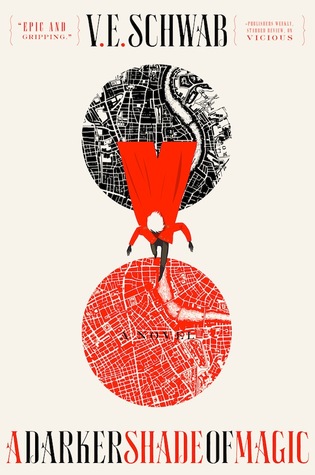
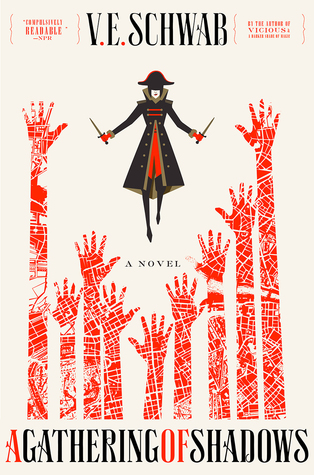
Disclaimer: Things that could be considered spoilery for all published books of the Shades of Magic series are contained herein. If you haven’t read A Darker Shade of Magic and A Gathering of Shadows yet, proceed at your own risk!

Me: So, I kind of just don’t shut up about your books. I was telling one of my friends about them, and what she took away was, “Oh, so it’s like Regency fantasy? That kind of seems to be a genre.” And I said, “Well, I don’t know—I don’t think that’s the thing that really defines the Shades of Magic.”

V.E. Schwab: Yeah, especially because only one of the Londons is based in our world. I think it’s definitely more of a secondary world fantasy. Three of the four Londons have nothing to do with our world whatsoever. I got to really build them from scratch—they just have an anchor point in 1819 London, and that’s one of the settings, but I definitely wouldn’t say that’s the primary setting.

Me: What made you choose that late Georgian Regency period? Was it because there was a crazy George?

V.E. Schwab: That was part of it. I really did want to play with a version of the world that had Crazy George, but also I really wanted pre-electricity. I wanted the pre-Industrial Revolution because even though the Londons have diverged at this point in the past and are now taking their own courses, I wasn’t really interested in how they might treat technology differently—or, if I was interested, that was a different story than I wanted to tell. I wanted to focus on this cast of characters, and I worried that as rich as I could make the world, if I started going much later, I was going to have to handle technology in each of the worlds. And technology and magic is a different discussion than these worlds, which, the whole question of the series is, how does magic shape a society in each of these situations. Grey London has forgotten magic, so it has no magic and it looks like our world. Red London is a world in which magic thrives, and it shows. White London is a world that has an adversarial relationship with magic, and so it’s being starved out. And in Black London, magic consumed everything. I wanted to really give due focus to that question, of the relationship between magic and nature and people, as compared to magic and technology, which really is its own genre. There are several books out there that deal with magic and technology at their intersection, and it just wasn’t the story that I wanted to tell.

Me: Another thing I thought was really cool was that so many stories that do have any part in the Regency are concerned with the upper classes, and with Lila we get to see the dark underbelly.

V.E. Schwab: I look at all of my books, and I’m really interested in insider-outsider culture. And so, in the series, even the characters who do belong inside of a culture feel like outsiders. Kell technically belongs to the upper echelon of society in Red London—he’s been raised essentially as a prince, but he has never fit in. He doesn’t feel like he belongs there. Lila has come up through the bottom, through the lower echelon of society of Grey London and she didn’t really care. She’s going to claw her way toward whatever she wants. I think it’s a much more dynamic place to play in. And then of course I get to have someone like Rhy, the prince, who is born in that society and in many ways does fit, but at the same time he’s an outsider because he doesn’t have magic. So all of my characters are outsiders in some way.

Me: That’s the perfect segue to my next question! I remember yesterday at your spotlight panel you talked about how you like to write about the lines between things. So I started thinking about the lines between characters, and that made me think about how the circumstances of their birth seem to be something that informs their personal conflict.

V.E. Schwab: Oh, definitely.

Me: Kell and Holland—Holland is like, we’re both Antari, but I was born in this really shitty place and you had it so much better than me. And Lila, who is always talking to Kell like, oh poor Kell, you had food and roof over your head, but nobody loves you. Even Kell and Rhy—Kell was raised in that royal family, but he feels apart, and then Rhy feels apart because he doesn’t have magic.

V.E. Schwab: I think the thing you have to remember is, to treat characters like people, we don’t look at how they see themselves only, we look at how other people see them and how they see other people. So I try to focus really, really hard at the points of intersection between characters in my books. It’s way more interesting to see Kell through Lila and Rhy and Holland’s eyes—I think if we only saw Kell through Kell’s eyes, it would be kind of dull because Kell is very much a little…a little self-righteous, and he feels very victimized. And so I look at foils in all of my books between characters, and this is really a special project in that normally a character has one foil. Each character has a foil, someone who kind of butts up against them, is at perpendiculars. Kell is literally the pivot point for the whole series—everyone is Kell’s foil.

Me: I was thinking about that. I was like, well, there’s Alucard, and then there’s Holland…

V.E. Schwab: They are all Kell’s foil! So Kell and Rhy are foils because—you have to look at basically whoever pisses each other off, right? Kell and Rhy fight like brothers. They are family and they are not family. They are totally at odds half the time, but they love each other. Kell and Lila are complete foils—again, it’s just oil and water. They just butt at all heads. And then obviously Kell and Holland are foils. And then yes, Kell and Alucard are foils. Basically, it looks like Kell pisses off everybody that he is around.

Me: It’s so good, I love it so much. Thank you so much for writing it.

V.E. Schwab: Thank you for reading it!

Me: So, something I am super nerdy about—I love languages, and so that’s immediately something I home in on when I’m reading a book. And I love how all the little bits and pieces of the languages we see in your books, whether it’s Arnesian or the language of Kell’s magic—it’s just such an organic part of the world. Sometimes in books it feels like flavoring just thrown in there. How did you go about creating those languages and words?

V.E. Schwab: I never thought I would—growing up, I was really gun-shy to read fantasy (especially classic fantasy, the Tolkien-style) because it felt really exclusive. It felt like if I didn’t memorize an entire fictional language, then I didn’t really belong to the fan club. And so, when I set out to write the Shades of Magic series, it was really important to me that I wrote something accessible. Because of that, I’d be very careful on how much of the foreign languages I used because I never at any point wanted it to feel like someone was being excluded if they didn’t follow that train of thought, if they didn’t memorize, oh, you know, everything from As Hasari means to heal, to avan means hello, to tiny things like Vas ir means go in peace—all these little things that were really important for taking a setting and making it a world, the same way details are important for taking a character and making it a person. I felt really strongly that they needed to be there, but I also had to be very careful in how I used them and the quantity that I used them. I actually love your wording because I do tend to treat them like spice in that they spice my world, but they’re very much part of the characters’ culture. I was on a panel yesterday and I was talking about this in that the things that we use to inform a world, besides description, are language and idiom, pun and humor—what actually informs a culture, not just a people. And so I actually build my whole worlds kind of from the inside out. I don't design my characters first. I design my world. And then I design the insiders for that world, and then I design the outsiders. My characters are invariably the outsiders, but before I ever design them, when I design my world, I design the foundations of a language—so, which linguistic systems I’m going to pull from, which syllabic rhythms I’m going to work for. The Veskans, for instance, in A Gathering of Shadows, are very much Gaelic—they have very hard edges, a very consonant language, similarly to the White Londoners, just a different breed. One’s Scandinavian-based, and one is definitely Scottish Gaelic. And so I pick out those seeds. I don’t design the entire language. I make it as I go and I keep a glossary of it, make sure that it feels cohesive and feels natural without being—like, this is not Dothraki from Game of Thrones. I don’t actually have the entire language. But what I do have are the grammar and syntax. I always know what order everything goes in and that keeps it from feeling like gibberish. I know the subject-object relationships, I know that it’s not like French wherein the descriptor usually follows the word—it’s much more simple than that for Arnesian. So those are the things that I think of, and I think of, what are their folktales? What are their songs? What are the things they sing in taverns, and what are the things they sing on their holy days, what are these blessings—you learn in A Conjuring of Light they don’t actually have a word for good-bye. They have a word for “go in peace,” and they have a word for “until I see you again,” but there is no formal parting word.

Me: And that says so much about the culture.

V.E. Schwab: Yeah, that’s a reflection of a culture. And so for me, I treat language like that. I treat language like another facet of the culture I need to know, because the way that Kell and Rhy use the Arnesian language is different. Kell has a better handle on it just because he is stubbornly determined to be a commoner, and to be treated like a commoner. Rhy has an excellent handle on it, but it’s almost like the kid who has been taught French in school without ever actually going to France. He has a really, really strong book knowledge of all languages because he was raised to have a book knowledge of languages. And so there’s the way they function with language, as compared to the fact that the king and queen never speak Arnesian. They only speak High Royal, which is like our English, our common tongue. And Lila, in Conjuring, will call them out on that—basically that Maxim is addressing a citizen, a commoner, and he’s demanding something of him and he’s doing it in High Royal, and the commoner doesn’t speak High Royal. There’s this fundamental divide, and language really helps me play up insider-outsider culture. It’s been really fun in the series because Lila is not from Red London and she only speaks English, and so when she arrives in this world—it’s been really exciting to do her point of views because I get to watch her learn a language, and pick it up from its roughest, most essential parts that she would’ve learned aboard the Night Spire, to actually becoming a citizen of this world. That’s one of the coolest ways to show language—through people who know it and people who don’t. In a lot of A Darker Shade of Magic, when she first gets there, you don’t get a lot of dialogue happening around her because she doesn’t know the language.

Me: It’s funny that you said “not like Dothraki,” because I feel like the way you use it in the books feels the way it does when George R.R. Martin uses it. It just feels like you can, as the reader, pick up on what words mean, and you can pick up on the syntax just from reading a little bit in the book.

V.E. Schwab: And that’s the goal. I want my readers, by the end of one of the books, to have a little bit of understanding when then they see avan, or aven, which means “blessed,” or mas vares, which means “my prince.” Which gets used in a lot of different ways because they address Rhy that way, and that’s good, but they address Kell that way and it drives him absolutely crazy. I want my reader to pick up on those tiny little jabs, but I also had to create a story that wouldn’t be lacking if they didn’t. If you go through and you just skim the Arnesian and treat it like gibberish, you will still enjoy the story. [Brandon] Sanderson was on a panel yesterday and we were talking about that. It’s like an Easter egg, it’s that extra little piece for the readers that want that.

Me: Yes! I say, “Kers la?” in my head now.

V.E. Schwab: Yeah, exactly. And I have people who have designed tattoos that have, like, As Hasari for a nurse, and things like that. I’ve seen people do a lot of hand lettering for As Travars. I sign A Darker Shade of MagicAs Travars,” and I sign A Gathering of ShadowsStas Reskon,” which means “chasing danger.”

Me: So…is Holland totally your favorite?

V.E. Schwab: Yes. Have you seen the cover for Conjuring at this point? I won’t say who’s on the cover, but I will say that it’s probably the main character of book three. Because Kell’s on the cover of book one and it’s his book, Lila’s on the cover of book two and it’s arguably her book, and the character on the cover of book three, whether it’s Holland or Rhy—it’s their book. But I will say that Holland is my favorite character in the whole series, and it’s because I play short cons with some of my characters and long cons with other ones. And Holland’s my long con. He’s the one that it takes the entire series to get his story, and…I love his story.

Me: In the first book, and correct me if I’m wrong, I think nothing is written from his perspective at all. And so when you’re first reintroduced to White London in A Gathering of Shadows and it’s from Ojka’s perspective, you’re like, “Oh hey, that’s Holland!” But then you’re like, “Wait…is that Holland?” And then he says, “Call me Holland.”

V.E. Schwab: And then you get Holland’s perspective.

Me: And the vibe is just so completely different from any other time we’ve seen him in the books. Is it just because we’re seeing him from his own perspective now? Is it because he’s now got a little hitchhiker from Black London?

V.E. Schwab: It’s definitely the first time you get to see him from his own perspective. So Holland—even knowing nothing of Conjuring, you know that he was tortured for seven years at the hands of the Danes, and in order to survive he essentially killed a part of himself. And that’s understandable, but because of that, Holland is very, very, very guarded. You will never get anything of him from someone else’s perspective. If you’re in another perspective, like Kell’s or Lila’s or Rhy’s, and you see Holland, you will not be able to tell what he’s thinking, you will not be able to read him, any of that. Only in Holland’s perspective do you get Holland, and it’s still a very guarded perspective. He’s never going to be an emotional person. He can’t. He can’t, at this point, be an emotional person. He can be angry, he can be frustrated, but he’s never going to show vulnerability. He’s been trained—it’s been beaten out of him essentially. He has learned that the only way to survive in this world is by not showing weakness. You get a lot of his perspective in book three, and it’s been really exciting to actually show the person that he was before the Danes. You get to see how he became the Holland who would torture Lila in the streets in book one. It’s going to be really cool for any later readers or people who choose to go back and re-read to see Holland in book one—and people hated him at the end of A Darker Shade of Magic. They wanted comeuppance for him. And over the course of the series, I’m watching that shift to they want him to be okay. And that’s all I can ask for. As an author, my greatest goal is to turn a villain into an antagonist into a protagonist. And so the fact that people’s opinions of him are shifting—and it will be interesting when you read Vicious, because a very similar thing happens with a character named Victor Vale, who everyone starts out being like, “Fuck this dude.” He is awful. He murders people, he tortures people. He has the ability to control pain, so he’s just a terrible person, and then about halfway through the book, people are like, “Aw man, this dude is awful, but I kinda see where he’s coming from,” and then by the end of the book they’re like, “Yeah, Victor Vale!!” That’s my favorite challenge as an author. I think every author has a little personal thing that they like to do—mine is taking the ostensibly least relatable or least likeable character and making them the one that you want to win.

Me: That’s so funny that people hated Holland. Kind of from the beginning, I was like, “I feel like this guy is awesome. I know I shouldn’t think that, but…”

V.E. Schwab: I wanted people to at least think there’s more to him. And I think the transformation is happening in Gathering because nobody let themselves really think, “Okay, we’re going to find out more,” because they thought he’d be dead. It was interesting, because about half of my readers thought Holland was really dead, and half were just like, “Let’s see this. Bring him back.”

Me: He’s not dead until I see a body that doesn’t breathe anymore.

V.E. Schwab: Exactly. And I think people knew—people should’ve suspected he wasn’t dead because I hadn’t shown Black London yet. If I had shown Black London, then maybe…

Me: Chekhov’s Black London.

V.E. Schwab: Yeah, exactly. You haven’t seen Black London yet, I just sent him into Black London! I will admit, though, that when I got to write a flashback in Conjuring that involved the Dane twins, I immediately got chills again. I was like, “I forgot how much I love to hate you as people!” They’re full-on sadists.

Me: I love the Danes so much.

V.E. Schwab: One of my favorite pieces of art that’s ever been done was done by Victoria Ying, who is just an incredible illustrator, who has this picture—it’s now hanging on my wall—of Holland standing between the Dane twins and they each have a hand wrapped around his throat, and he’s staring forward. It gives me chills every time I see it. It’s so good. He’s such a tragic character.

Me: Oh man. So good. SO GOOD.

V.E. Schwab: I know, we’re going on a Holland tangent.

Me: I could probably talk about the Shades of Magic forever, but another interesting thing you mentioned in your panel yesterday was how you write for three different age groups—middle grade, YA, and adults. So that’s three books a year? That sounds crazy to me.

V.E. Schwab: Some years there’s two, just because of how the schedule happens, but most of the time it’s three.

Me: How does your writing process work? Do you switch between projects?

V.E. Schwab: Well, it’s been screwed up by the Shades of Magic actually doing really well, and so I’m doing a lot of travel and a lot of promotion right now. I thought, “Oh, I’ll just take my work with me.” I have since discovered that there is very little time and much less energy to actually sit down and write when I’m traveling. There’s an adjustment I’m still trying to make. Everyone assumes I’m a very fast writer because of how many books I write. I’m actually a very slow writer, which means I have to be a very consistent writer. I have to do it almost every day that I can. And I can only write one book at a time. I can’t switch back and forth between. And I think if I wrote contemporary realism I could, or if I wrote all my books in the same world I could, but switching between magical systems—because I write This Savage Song, which is set in a slightly futuristic society that’s based on a version of the United States, and then I have the Shades of Magic, which is very historical fantasy. I can’t switch back and forth. They both have really complicated magic systems, and I think I would-- I work in third person close, but I would lose all sense of voice, I think.

Me: Culture shock.

V.E. Schwab: Yeah, it would be culture shock. I need a two-day transition to move between projects, so I tend to write one whole project at a time. It makes me constantly behind on something.

Me: To get three done, do you have to be super regimented?

V.E. Schwab: I normally am. Right now I’ve been thrown, just because this is the first year that I’ve had an adult book, A Gathering of Shadows, and a YA, This Savage Song, come out within four months of each other. I have just started to wind down on A Gathering of Shadows promotion and This Savage Song is about to come out.

Me: I’m so excited for This Savage Song.

V.E. Schwab: I’m so nervous. It’s going to be my most divisive book. Without question, it is the darkest, strangest thing I’ve ever written. What’s fascinating is I’m watching some of the reviews come in, and it’s 5 stars or 1 star. But that’s how I want it to be. I don’t want 3-star book reviews. I would love people to either love it or hate it, and it’s a very dark YA novel. The whole book is an existential question about what it means to be human in a monstrous world. And it’s not for everyone. It’s very specifically for 17-year-old me. And so because of that, it’s finding the right readers. And it’s that thing you have to remind yourself as an author, that there is no book you could ever write that it would appeal to everybody. But if you stay true to your craft, you will write the book that is right for somebody. It’s very hard to remember when there are reviews and all of these things pouring in—you want everybody to like you. You want everyone to like your books. But at the end of the day, as long as the right people find your books—there are books out there for everybody. Your book doesn’t have to be the book for everybody.

Me: I was reading the blurb for it, and the dark, gritty fantasy-ish vibe reminded me of—I was going to say old school Holly Black, but pretty much all Holly Black.

V.E. Schwab: I love Holly Black so much. I love White Cat, I love the Curse Workers series so much. I grew up on Neil Gaiman and Holly Black and Susanna Clarke and T.H. White—all of these very, very classic—but Holly is probably one of my favorite writers in the entire world.

Me: Do you see their influence on your own writing?

V.E. Schwab: I see it on my aesthetic. I don’t see it in my voice, but I see it in my aesthetic. I think our worlds are drawn in the same color palette. I definitely read Neverwhere or I read White Cat and I feel like they’re in the same colors.

Me: That’s a cool way to put it.

V.E. Schwab: It’s the only way I can really think of it. There are books out there that I really enjoy that are written in such bright colors that there’s no comparison between us. But I honestly read a Holly Black book or a Neil Gaiman book and I think that people who like them would potentially like my books.

Me: Very cool. I have one last question, and it has nothing to do with books. My website is half about books, half about food, and when I told my co-editor I was going to interview you, she said, “Oh, it says on her website that she likes baking! You should ask her what her favorite thing to bake is.” So. What do you like to bake?

V.E. Schwab: I’m a stress baker. Writing is terribly insular. It’s just all in your head, all the time, and so sometimes it’s nice to use your hands instead of your head for a little while. But I am one of the best in the world at making dark chocolate sea salt chocolate chip cookies.

Me: That sounds amazing.

V.E. Schwab: And I have been making them since I was five.

Me: What?!

V.E. Schwab: I was on TV when I was five. My mom was a caterer, and we were on the television together, like on a Good Morning America-style thing, and I was five and I was helping her bake these. And I have perfected that recipe since then. I am now 28, and I make such a bad-ass chocolate chip cookie.

Me: Can you just do it off the top of your head?

V.E. Schwab: Oh yeah, I don’t look at anything. I don’t measure anything. I know exactly how it’s supposed to taste at every single stage of the recipe. It’s super simple. I can bake really complicated things, like triple chocolate tortes with raspberry glaze. I make a really, really good triple lemon cake, which is where you infuse lemon at three different stages of it, like a soaked lemon cake. I make very good banana bread. But my favorite thing to make is just chocolate chip cookies. And I’ll come home, and it’ll be like an hour after dinner and my housemate will be like, “You know what we don't have? We don’t have cookies.” And I’m like, “…okay, give me ten minutes.” In ten minutes the cookies will be in the oven, fifteen minutes in and we’re just having cookies. She knows that she can just ask me, “Can you just make me cookies now?”

Me: What you should try—have you ever used mesquite flour?

V.E. Schwab: No. Is it smoky?

Me: I think it depends on where the tree grows, the terroir, stuff like that…but the one I bought kind of has a cinnamon-y cocoa-y flavor. And you don’t use it for all the flour in the recipe.

V.E. Schwab: That would be so good. I’d love to try that in an oatmeal raisin.

Me: I used it in a David Lebovitz recipe that had oatmeal in it, and it was really good. So if you ever get the chance…

V.E. Schwab: Nice. My trick with banana bread is that I cut the sugar in half and switch to brown sugar for the other half, and it makes that caramelization in it.

Me: Brown sugar is the best sugar, bar none.

V.E. Schwab: Oh, it’s the best. Also, more bananas than the recipe ever calls for.

Me: All the bananas.

V.E. Schwab: ALL the bananas. But brown sugar is the golden gift of baking that I don’t think people use enough. And it does tweak the baking times a little bit because it crystallizes very quickly, but everything is better with it.

Me: I agree—brown sugar is the best sugar.

And on that sweet note, we closed out the interview so she could head off to her panels for the day and I could attempt to plot my comicon-ing for the remainder of the weekend. Thanks again for taking the time to talk with us, Victoria! It was so much fun to chat with her, and now my appetite is even more whetted for A Conjuring of Light, the final book in the Shades of Magic, due out in February 2017. How will we wait a whole YEAR?!? ((insert distraught emoji here)) At least This Savage Song will be out very soon, on July 5th, so our next hit of V.E. Schwab-y goodness is not too far over the horizon. Which is your favorite of her books? Who’s your favorite character? What questions would you have liked to ask her? Hit the comments down below and let us know!

Thursday, May 26, 2016

Phoenix Comicon 2016 is Coming!

It’s that time of year again…comicon time! Though neither S nor I made it to BEA this year, I will be making the summerly sojourn to Phoenix Comicon in about a week to partake of their lovely books and authors programming track. (I tried to entice S into joining me, craftily using her love of the Animaniacs against her—voice actors from the show will be there this year—but alas, it was to no avail.) It seems like this year there won’t quite as many big name SFF author guests at the con as there have been in previous years, but there will still be plenty to see and do and experience. I could seriously probably attend booksy-authory panels back-to-back the entire convention and still miss out on half the programming on that track. Two very big names will be attending again—Pat Rothfuss and Brandon Sanderson. I’m not a superfan of Sanderson’s work (I know, I know…unpopular opinion), but I am a big Rothfuss fan, and I think it will be especially cool to hear what he has to say coming off the recent and highly successful Tak kickstarter.

But anyway—who and what am I most looking forward to about this year’s PHXCC? Let’s see…

  1. OH MY GOD V.E. SCHWAB IS GOING TO BE THERE AHHHHHHAHAHGDHGOHZDGIHDPIUVH{OIDHOI
    So, if you’ve seen me on the blog or social media lately, you have probably witnessed my recent obsession with her books, A Darker Shade of Magic and A Gathering of Shadows. Ummmmm I may have just actually bought her entire bibliography (well, almost) on Amazon because I was so in love with those two books. DON’T JUDGE ME. Anyway, shortly after reading A Darker Shade of Magic, I found out she was doing a signing in my city…the previous week. In a fit of despair at missing out, I randomly checked on the Phoenix Comicon page and, lo and behold, she was listed as a guest! I am super excited to hear what she has to say about the writing life and any tidbits about the upcoming A Conjuring of Light and This Savage Song. Woot!

  2. Hooray, I’ll be able to get the last book in the Red Rising trilogy signed!
    Pierce Brown will be back at PHXCC this year. Red Rising was awesome, Golden Son was the best thing I read last year, and I’m currently prolonging my reading of Morning Star because I don’t want the series to end. (I suppose I should finish it by next week, though, so I don’t get inadvertently spoiled at panels.) At any rate, Pierce Brown is a fantastic storyteller and writer, and I’m eager to see what’s in store for him next. (And also deathly afraid of what might happen by the end of Morning Star.)

    There will be lots of old favorites and new faces as well as far as the author lineup goes, but if you really twisted my arm for a top two list of authors I’m looking forward to, thar it be. Now, what panels look intriguing, you ask? Well, let me tell you! Beyond the spotlight panels on various superfan-squee-inducing authors, I am looking forward to…

  3. Adventuring Parties, Still Cool? (featuring Patrick Rothfuss, Sam Sykes, Sarah Remy, and Todd Lockwood). “The world of fantasy has long been defined by the Fellowship but in a post Dragonlance world, does the adventuring party still have a place in epic fantasy?”

    Points for best panel name ever. I was sold on that alone. Also, I bet you a dollar Rat Queens comes up during the panel discussion.

  4. Del Rey Superfight (featuring Kevin Hearne, Michael J. Sullivan, Pierce Brown, and Scott Sigler). “Superfight! 3 authors enter, 1 author leaves…join Del Rey in our new favorite gaming tradition.”

    Watching favorite authors go all cutthroat on each other in pursuit of a win at the tabletop game Superfight was a blast last year—just as hilarious as Author Batsu, if not more so. Can’t wait to see what’s in store this year. BSing has never been so fun!

  5. Would You Lie to Me (featuring Beth Cato, Brandon Sanderson, Jason Hough, Mary Robinette Kowal, Sam Sykes, Scott Sigler, and V.E. Schwab). “Authors lie for a living, but are they any good at knowing when they are being lied to? Hosted by Jason Hough, our two teams of authors will try to outwit each other and discern fact from fiction.”

    Apparently I really, really like panels that run a little bit like game shows.

  6. Mythology and Folklore (featuring Alyssa Wong, Joseph Nassise, Mary Robinette Kowal, and Todd Lockwood). “Fantasy has always borrowed heavily from the myths and legends around the globe. As the genre expands, so too do the myths we draw upon. Our panelists discuss their favorite legends throughout history and how they use them in their work.”

    As a lifelong mythnerd, this is immensely appealing to me. I mean, one of my life ambitions is to join the Mythopoeic Society. In what world would I not be attending this panel?

  7. Guilty Pleasure Tropes (featuring Christina Henry, Gini Koch, Patrick Rothfuss, and Tom Leveen). “Weird magic, awkward relationships, witty banter; everyone’s got a favorite trope, even if it’s sometimes a dirty word. Our authors talk about the tropes we’re most embarrassed about but just can’t quit.”

    Serendipitous, because as S and I have been recently plotting a ridiculous romance novel (seriously ridiculous—it was inspired by word scrambles that sound like fancy names), it has come to my attention that I have a talent for generating tropes. S assures me this is perfectly acceptable—nay, required—for the romance genre, and I bow to her expertise on the subject.

  8. Fantasy Draft League (featuring Alexandra Oliva, Austin Aslan, Beth Cato, Lexie Dunne, Ryan Dalton, and Scott Sigler). “Fantasy football. Hold the football. Our authors assemble an adventuring party from fantasy characters and duke it out to determine the one bracket to rule them all.”

    What fun!! This sounds similar to something S was telling me about earlier this year that happened at her local library (she was hunting for a good cleric—she came up with Melisandre, and I came up with Lirael).

  9. Embarrassing Author Con Stories (featuring Kevin Hearne, Leanna Renee Hieber, Mary Robinette Kowal, Patrick Rothfuss, Pierce Brown, Sam Sykes, and Shannon Messenger). “Everyone’s got one. Sometimes they witnessed it. Sometimes they were a part of it. Sometimes they caused it. Our authors relive hilariously awkward and light-heartedly embarrassing experiences at conventions.”

    Ah, looks like more comedy gold. Who doesn’t love a little schadenfreude?


So much to see and do, and it all starts next Thursday! I can’t help but feel woefully unprepared, but it’s looking to be a busy, crazy, awesome weekend-after-Memorial-Day-weekend. Who are you most excited about at the con? Which panels sound the most intriguing? Hit up the comments and let us know!

Monday, May 16, 2016

Book Review: Nobody Likes a Goblin

Title: Nobody Likes a Goblin
Author: Ben Hatke
Publisher: First Second
Publication Date: June 7th, 2016
Read: May 2016
Where It Came From: Print ARC received via Goodreads Giveaways
Genre: Fantasy-children’s-picture-book
Rating: 4.5 Honk-Honks

I was so happy to receive a review copy of this picture book through a Goodreads Giveaway. I’ve never read anything else by Ben Hatke (though his Zita the Spacegirl graphic novels have always looked intriguing), but the cover art and the blurb were delightful. And now that I’ve read the book, I can confirm that it is delightful as well!
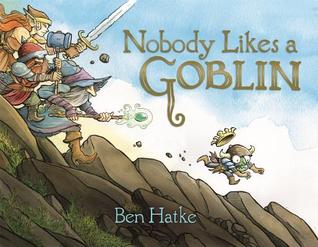
In the story, cute little Goblin is minding his own business, living in his dungeon and hanging out with his friend Skeleton, when a band of mean, nasty adventurers invades and takes everything—even Skeleton! So Goblin bravely goes out into the world to rescue his friend, though he has been warned to be careful, because nobody likes a goblin. The reversal of the typical order of things in a fantasy story here is fun, with Goblin and other monsters as the heroes, and the adventurers and townsfolk as the thoughtless, greedy villains. I love the humor in both the words and the pictures, and the illustrations add richness and depth to the story, with plenty of interesting things to notice and talk about that never come up in the text. Like the woman who is on the adventurers’ cart full of looted treasure!! What happened there?!

My favorite part, though, had to be Honk-Honk. As Goblin starts off on his adventure, he asks a neighboring hill troll if he saw which way the adventurers took Skeleton, and as she points him in the right direction, she mentions that they took her Honk-Honk away with them (which of course, sweet Goblin that he his, he promises to bring back). At the time there is no other context, and I was like, “...what’s a Honk-Honk?” But later, when Goblin finds the adventurers and their cart of spoils, when you look at the illustration, there is a goose in a cage amongst the riches (and next to the random captive woman)! Honk-Honk!!! Honk-Honk plays his (or her) part in chasing off the baddies and is eventually returned to the hill troll, and they join Goblin and their other new friends for a meal at home in the dungeon at the very end of the book. Cute, funny little details like that make this story a pleasure from start to finish.

Dungeons and Dragons, RPG-loving parents (or even just parents who are fantasy fans) would probably love to share this with their children. Even grown-ups without children will find much to love in this book and could give it a nice home on their shelf. Older, elementary-age children would understand the humor in the reversal of the good guy/bad guy roles, but younger children could enjoy the story, too (though it’s probably not one I would choose for a 5-and-under storytime program—I think that a grown-up and child would get more out of it by sharing the story as a pair).

*As ever, much as we are grateful for the copy, our review is uninfluenced by its source.

Sunday, May 15, 2016

Cool Stuff: Tak on Kickstarter

In the past couple weeks, I have come across lots of really, really cool book-related stuff in my wanderings around the interwebs. Stuff that made me think, “This is a thing?? This is amazing! How did I not know about this?!” And then I would frantically text Susan or whichever friend I thought would most appreciate it to share the awesomeness I had stumbled upon. And that got me thinking—with all the really nifty, book-related stuff out there for one to come across mostly randomly and fortuitously (one might say like meeting a tinker upon the road?), why not have a new blog feature for sharing the very, very coolest of things like that that I come across? And thus, the creatively titled “Cool Stuff” genre of posts was born.

First up: The game Tak, from Pat Rothfuss’ Kingkiller Chronicle books, is becoming a real thing on Kickstarter. In fact, it already is a thing, with rules and instructions for creating your own game to start playing before the Kickstarter is even over.

If you are at all into fantasy novels, you’ve probably heard of these books, if not nommed them like a voracious reading beast. I’m sure I’ve written little blurbs about them here on RTET in the past, but it’s Sunday and I’m feeling too lazy to link to those past posts—suffice to say, they are very, very good (the books, not the posts). They’re the kind of books with a whole wonderful world that you could just crawl into. Good world-building, man. I am powerless to resist it. And it is so, SO cool when things from a beloved, so-well-crafted-as-to-feel-real fictional world make the jump and become real things in our world. (See also this article by Elizabeth Wein on the Book Smugglers site for further treatment of this topic.)

So. Tak. It was introduced in The Wise Man’s Fear, the second book of Rothfuss’ series, and is described by protagonist Kvothe as being “simple it its rules, complex in its strategy.” And now Rothfuss and game designer extraordinaire James Ernest of Cheapass Games have actually created it! It is an abstract strategy game for two players (ahem, I am learning so much about different genres of games and what they’re called these days), and it looks awesome. Fun for book fans, and also fun for people who like games and maybe know nothing about the books. I will be backing this Kickstarter for sure.

Sunday, April 3, 2016

Recent Favorites: A Darker Shade of Magic & Rat Queens

Do you ever find that your luck with reading choices comes in streaks? Sometimes you’ll have a long string of less-than-awesome reads, and other times it’ll be one homerun after another? I’ve been having more of the homerun experience with a surprising number of the books I’ve read lately, and thought I’d share some of the ones that were especially fantastic.

This book is probably the best thing I’ve read so far this year. You know that feeling when you start a new book, and only a few paragraphs in you find yourself feeling like you’re sinking into a feather bed and the writing wraps around you, and you know, you just know that you are in for a damn good read? That deep certainty from just the first few sentences that the author is going to lead you through a wonderful story, wonderfully written, and your inner critic knows it’s okay to shut off? That doesn’t happen terribly often for me (my inner critic is particularly noisy), but that is exactly how I felt with this book. Just a few pages in, and I knew it was going to be a favorite.

Ah, but what is it about? Well. Kell is an Antari, a magic user from a place called Red London, with the rare ability to travel between parallel worlds. His home of Red London is a city where magic flourishes, and he travels with messages from its rulers to the rulers of the other Londons, such as White London (scary, violent magic London) and Grey London (boring, no-magic London, the London of our world during the Regency). There used to be a Black London, but…well. Not anymore. In addition to his cross-dimensional messenger duties, Kell also moonlights as a smuggler, illegally bringing artifacts from one London to another. Naturally, this smuggling (which he considers more or less benign) eventually gets him into trouble, with monarchy- and multiverse-shaking consequences, which he must deal with, with the help of a thief named Lila from Grey London…

The jacket blurb for this book is a rare one that actually accurately captures both the plot and the tone of the story it provides a preview for. Here ‘tis:

“Kell is one of the last Travelers—magicians with a rare, coveted ability to travel between parallel universes, connected by one magical city.

There's Grey London, dirty and boring, without any magic, and with one mad king—George III. Red London, where life and magic are revered—and where Kell was raised alongside Rhy Maresh, the roguish heir to a flourishing empire. White London—a place where people fight to control magic and the magic fights back, draining the city to its very bones. And once upon a time, there was Black London. But no one speaks of that now.

Officially, Kell is the Red Traveler, ambassador of the Maresh empire, carrying the monthly correspondences between the royals of each London. Unofficially, Kell is a smuggler, servicing people willing to pay for even the smallest glimpses of a world they'll never see. It's a defiant hobby with dangerous consequences, which Kell is now seeing firsthand.

Fleeing into Grey London, Kell runs into Delilah Bard, a cutpurse with lofty aspirations. She first robs him, then saves him from a deadly enemy, and finally forces Kell to spirit her to another world for a proper adventure.

Now perilous magic is afoot, and treachery lurks at every turn. To save all of the worlds, they'll first need to stay alive.”

A very unique, creative fantasy, with elements of darkness, a bit of swashbuckling attitude, well-drawn characters in a beautifully conceived world, and plenty of action and emotion. I could ask for nothing more from a book. It was the kind of book where I became visibly annoyed when people would interrupt me reading it, and I had to plot my reading cannily, lest I arrive at work too tired to function after an all-night reading bender. So much fun, and so good. READ IT.


Rat Queens has been on my radar for quite awhile, but, not willing to fork over cash for a graphic novel without previewing it first, I’ve had to wait for the library to catch up with my TBR list. Alas, the library still doesn’t have a physical copy of the book, but they do have the first volume available on their streaming service, Hoopla. And once I started reading that first book, I didn’t put it down (or, er, close out my browser window) until I was finished.

The story follows an all-female band of fantasy adventurers, but with some seriously (and hilariously) modern twists. De facto leader is Hannah, a rockabilly elf magic user; Violet is a dwarven fighter (and a hipster, because she shaved her beard before it became cool); Betty is a flower child, drug-experimenting smidgen (vaguely hobbit- or gnome-esque) thief; and Dee is an atheist cleric of a religion (cult?) that reads a little like a Lovecraft/voudou smash-up. I mean, an atheist cleric! That’s hilarious!! XD

The town where they live kind of hates them, because they get drunk and raucous and destructive when they’re not off fighting big monster-y problems. They have foul mouths, a loose interpretation of what is, strictly speaking, legal, and varied amorous pursuits. They get into fights with each other, and have secrets from each other, and love each other all the same. In short, they’re girls you’d probably want to hang out with.

The writers and illustrators subvert the tropes of the genre through a distinctly modern lens, to hilarious effect (I burst out laughing at Hannah’s arcane cell phone and the nagging from her parents), but not at the expense of the genre—it is clear that the people behind Rat Queens love fantasy-adventure, sword and sorcery stories, and honor that genre by pushing its boundaries. The second volume deepens the storylines begun in the first outing, and begins revealing some serious backstory, while not losing any of the humor that makes it such a delight.

So, while probably not for the faint of heart or those offended by the F word, I absolutely loved it. I can’t wait for the third volume to come out (later this month!). This is a series that I would actually consider buying each comic as it comes out, rather than waiting for the trade paperbacks.

Have you had any outstandingly good reads lately? Already read these, or plan on adding them to your TBR? Let us know in the comments!

A Darker Shade of Magic, by V.E. Schwab
Published by Tor Books (2015)
Read in March-April 2016; Hard copy from library

Rat Queens Volume 1: Sass & Sorcery, by Kurtis J. Wiebe & Roc Upchurch
Published by Image Comics (2014)
Read in February 2016; Digital streaming from library

Rat Queens Volume 2: The Far Reaching Tentacles of N’Rygoth, by Kurtis J. Wiebe & Roc Upchurch
Published by Image Comics (2015)
Read in February 2016; Bought it

Related Posts Plugin for WordPress, Blogger...