Showing posts with label sff. Show all posts

Monday, July 18, 2016

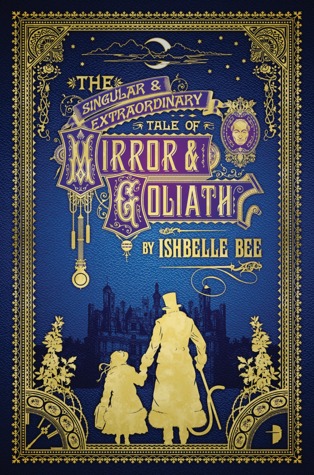
Book Review: The Singular & Extraordinary Tale of Mirror & Goliath

Title: The Singular & Extraordinary Tale of Mirror & Goliath
Author: Ishbelle Bee
Publisher: Angry Robot
Publication Year: 2015
Read: July 2016
Where It Came From: eARC from publisher via NetGalley + Hard copy from library
Genre: Dark-fantasy-fairy-tale-for-grown-ups
Rating: 4.5 Ladybirds

If your preference is for linear, straightforward storytelling and practical prose in your reading, this might not be the book for you. That disclaimer out of the way, however, I can assure you that I loved this book. Really, really loved it. Y’know, I really hate comps for describing books, because they usually end up being completely off in the ways that matter, but the comps to Catherynne Valente and Neil Gaiman on the back cover did a nice job of approximating the feel of this book. I would add to that a bit—Valente and Gaiman by way of Dickens and Carroll, resulting in something that is in conversation with those authors, but unique in its own right.

Mirror is a young girl traveling back from Egypt with her protector Goliath Honey-Flower. However, Mirror has not always been Mirror—she used to be Myrtle, with two sisters and a sinister grandfather, living in Victorian London. But then her grandfather locked her in a strange clock to die, and something changed, and when the policeman Goliath rescued her and sent her grandfather to prison, something was different. For Goliath, too. No longer a policeman, he can change shape and is determined protect his young charge and help her solve the mystery of what happened to her in the clock.

John Loveheart was an aristocratic young boy, with a sick mother and an evil aunt and a father in over his head. When a demon called Mr. Fingers comes to collect his due from John’s father, John finds himself orphaned and then adopted by the Lord of the Underworld. Driven mad and wicked (though not as wicked as some), now he is a young lord, bound to do Daddy’s bidding around London, and Daddy wants Mirror. Something powerful that has escaped Mr. Fingers for some time resides in her, and he believes consuming it will add to his power.

There are many other characters and plots and tangentially related stories interwoven around this basic story, which may at first seem disparate, but weave together beautifully to form a beautiful whole of interrelated people, pieces, and parts. The climax of what might be called the main plot occurs about a third of the way into the book, and then the reader is left teetering on that edge as the following chapters change narrators and settings and jump back and forth in the timeline (that nonlinear storytelling I mentioned earlier). This could’ve had the potential to be confusing, but in fact has the effect of filling in the story and backstory around our central tale of Mirror and Goliath and Loveheart and Mr. Fingers, giving a greater view of the world and the events of the story, with all of the interconnected threads lending it a great emotional resonance.

The beautifully poetic writing only adds to this emotional resonance, and is evocative in an almost synesthetic way. It’s probably what some may call “purple prose” (which I just think some people use as a pejorative way to refer to lyrical writing when it’s not to their tastes), but I think its lyricism holds magic and power. This story is at its heart a fairy tale, and a dark one—modern in many ways, but as old as time in others, with that current of magic and power and truth you can feel in the old tales, and when you’re lucky, in the new ones, too. It may not be a book for everyone, but it was definitely a book for me.

*As ever, much as we are grateful for the copy, our review is uninfluenced by its source.

Tuesday, July 12, 2016

Comics Review: Monstress

Title: Monstress (Issues #1-6)
Author: Marjorie Liu & Sana Takeda
Publisher: Image Comics
Publication Date: Trade paperback collecting issues #1-6 to be released on July 19th, 2016
Read: July 2016
Where It Came From: Digital ARCs from publisher via NetGalley
Genre: Fantasy-sci-fi-horror-graphic-novel?
Rating: 4 Mask Pieces

Hey, remember when I was talking about how much I love Image Comics? Here’s another one from them! I saw issues of Monstress on the counter at my Friendly Local Comic Shop a couple months ago and was really drawn to the art, but, as is usual for me, I decided to wait for the trade paperback to come out. However! When issues #1-6 recently came up on NetGalley in anticipation of said trade paperback releasing later this month, I couldn’t resist the chance to catch up on what I’ve been missing with this title.

Monstress is the story of Maika, an Arcanic (a.k.a. supernatural hybrid) teenage girl. She lives in a world still rife with conflict between Arcanics and humans after a great war between the two. Arcanics are being captured and sold as slaves to humans, and a powerful religious organization of human women called the Cumaea performs experiments on Arcanics and murders them to harvest a magical substance called lilium from their bones. Maika and her best friend Tuya are just trying to settle down and find normalcy again after surviving the war, but Maika has a secret. There is a monster living inside of her—literally—and it hungers for blood and violence. As Maika’s control over it weakens, she travels to the city of Zamora, located at the edge between the territory of the Federation of Man and the land of the Arcanics, to look for answers in perhaps the most dangerous place possible.

And that’s just the beginning of the first issue! A lot of ground is covered, story-wise, and it took me a few issues to get a good mental handle on the world and the moving pieces of the plot. However, the richness of the world-building really is beautiful as it unfolds, and to call it simply Asian-inspired seems to somehow be an inadequate description. It is a fantasy world, to be sure, but the nods to and nuances of a diversity of Asian cultures from our world are incorporated seamlessly, and come together with all of the imaginative fantasy elements to form something new and singular. I believe in the letters section of one of the issues, creator Liu talks about how she wanted the comic to reflect the hybrid nature of Asia itself, and I think this was accomplished masterfully.

The comic also does a masterful job of demonstrating the horrors and atrocities of war and its aftermath, which only takes on even greater depth and meaning when you learn that some of the inspiration for this story comes from the experiences of the author’s grandparents. And I will be honest—the violence and horror in that first issue (murder of children, implied cannibalism, references to rape) made me feel so sick to my stomach that I wasn’t sure I wanted to continue reading. But I did, and I’m glad I did—violence is still a part of the comic, as you would expect of a story concerned with war, but in later issues I didn’t find it was quite as much at the forefront of the storytelling as it was in that first issue. For me, the story really hit its stride in issues four and on, when other places and characters from the fringes of the world as we know it so far start to become tied in to Maika’s story, and some questions begin to be answered to a degree (and of course new ones come up). And that ending to issue six was a killer!

Let’s talk about Sana Takeda’s art for a moment, because it is absolutely stunning—beautiful, with a sort of Art Deco, steampunk vibe, and manga-esque touches here and there that add to that hybrid-Asia atmosphere that this comic does so well. For all the violent, scary things that her art depicts in this story, there is also room for occasional hits of the super-cute (Kippa the kitsune-like fox child hugging her own big fluffy tail makes me squee every time), as well as really just staggering splendor and detail (Corvin D’Oro, anyone?). Completely frame-worthy.

Overall, though the initial level of violence and gore made me squeamish and I was a bit confused about the history and mythology of the setting, as I continued reading, the decrease in depicted violence and further clarification about murky aspects of Maika’s world (the quick lessons from the cat Professor Tam Tam at the end of each issue were helpful, too) helped me to become invested in the story, and now I can’t wait to find out what happens next (because that issue six, you guys!!). And though I am not one to usually buy single issues of comics, knowing that there are fun extras like letters and additional art might convert me, at least in the case of Monstress!

*As ever, much as we are grateful for the copies, our review is uninfluenced by their source.

Saturday, July 2, 2016

Image Comics Round-Up: Limbo, WicDiv, Paper Girls, and More!

I’ve tried some superhero graphic novels in my day, but I can never seem to get into much in the DC/Marvel worlds (Ms. Marvel being the exception). Enter Image Comics! Pretty much all of the graphic novels I read on a regular basis come from this publisher. I’ve been trying a lot of different series of theirs in recent months, and thought I’d do a little round-up post of what I’ve thought of my readings so far.

Limbo is a backwater swamp-noir, with voodoo in its veins and a touch of Lovecraft woven into the mix, with hints of the ‘80s and an analog vibe to round out the palate. Sound eclectic? It is, but the moving parts all come together smoothly to spin a story with some deeply creepy moments, a mystery that starts out simple and gains momentum and complexity, and the overall puzzle of our amnesiac P.I.’s origins and the world he finds himself living in. On a few occasions there was some convoluted philosophical-esque stuff that I wanted to tl;dr, and some of the reveals about P.I. Clay were dark enough to be almost depressing, but overall I enjoyed it. This trade encompasses a complete story arc, but enough mysteries remain that I might seek out the next volume to find out what’s in store for Dedande and its denizens. Also, the included extras were really, really awesome.

I.D. reads like the graphic novel equivalent of a short story. It fits the sci-fi category in terms of both the medical main concept of the story (brain transplants) and the setting (we get hints of non-Earth colonies and terraforming). Still, the main concerns of the story seem to be philosophical and psychological, as three previously-unknown-to-each-other characters consider having their brains transplanted to new bodies. What would motivate a person to take such drastic action? How would personal identity fare in such a situation? The art is absolutely beautiful, and the storytelling has an ethereal, vague quality, creating the necessary shape of the story while leaving much of the surrounding information amorphous, conveying details that create character depth in few pages and hint at further depth, while dancing airily around the questions those hints and nuances tease out of the reader. It’s a story that I can respect, but not the kind of thing I’d go back and re-read.

The Wicked + The Divine is pure delight for me. In an alternate modern day, every ninety or so years twelve gods are incarnated as humans, with a 2-year expiration date on life. For those two years after awakening, they are music stars with fanatic followers, zealot-y anti-fans, and skeptics as well. Are these people really gods in the flesh? Are they just crazy, deluded young people out for fame and fortune? A young woman from the “fanatic follower” category finds herself embroiled in the world of the twelve and their caretaker/advisor, and begins to see that there’s a lot more going on under the surface of the phenomenon. The art is quite stunning, with a fresh, clean-cut style, and a bit of neon-hip edge, unlike anything I’ve seen before. Some shocking moments and reveals keep me plowing through the trades.

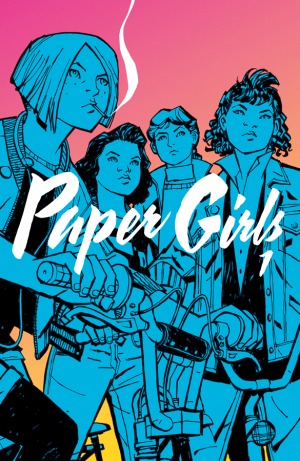
Paper Girls comes from Brian K. Vaughan, the mind behind the immensely popular Saga (which it perhaps inevitably draws comparisons to). The short pitch: In the late ‘80s, four preteen newspaper delivery girls out running their routes stumble upon some seriously weird shit. This one was super fun for me because I went into it with no idea that it was going to veer into sci-fi at all. The whole time I was like, “What the hell is happening?!”—and I absolutely loved it. It’s strange and wonderful and weird and crazy and completely its own thing in the way that Saga is, but strangewonderfulweirdcrazy in its own brand new ways, though you can see how the same mind dreamt them up. Awesome art, with a neon suburban ‘80s vibe, and plenty of mystery to keep me looking forward to future volumes.

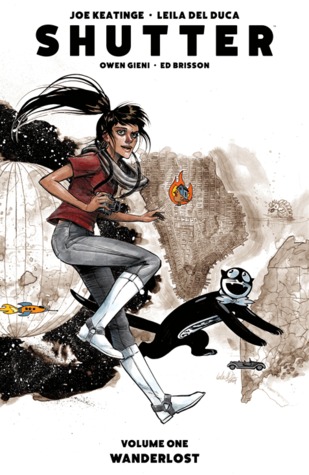
Shutter is another one that has drawn comparisons to Saga, and unfairly so, in my opinion. (The only time I thought about Saga while reading this was when the main character’s talking, helpful Felix the Cat clock was introduced. I remember thinking, “Hey, another comic I love with a cat that talks! Cool!” And that was it. The word Saga didn’t even come into my brain.) Said main character is Kate Kristopher, who lives in a wild, eclectic version of modern day Earth. As the daughter of a famous explorer, she spent her youth and teen years traveling the world with her father, until a tragedy caused her early retirement. Now, however, sinister and mysterious forces hunting her down have forced her out of retirement and back into the world of adventuring and hidden family secrets. The art didn’t do as much for me as in other comics like Paper Girls and The Wicked + The Divine, but I didn’t mind it. Beware of occasional and unsettling intrusions of gore and violence, though.

What are your latest graphic novel discoveries and obsessions? Let us know in the comments!

Limbo, by Dan Watters & Caspar Wijngaard
Published by Image Comics (June 2016)
Read in July 2016; e-ARC from NetGalley
3.5 Stars

I.D., by Emma RĂ­os
Published by Image Comics (June 2016)
Read in July 2016; e-ARC from NetGalley
3 Stars

The Wicked + The Divine, Vol. 1: The Faust Act, by Kieron Gillen, Jamie McKelvie, Matt Wilson, & Clayton Cowles
Published by Image Comics (2014)
Read in May 2016; Paper copy checked out from library
4 Stars

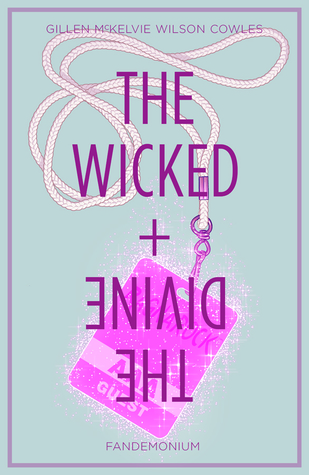
The Wicked + The Divine, Vol. 2: Fandemonium, by Kieron Gillen, Jamie McKelvie, Matt Wilson, & Clayton Cowles
Published by Image Comics (2015)
Read in June 2016; Paper copy checked out from library
4 Stars

Paper Girls, by Brian K. Vaughan, Cliff Chiang, & Matthew Wilson
Published by Image Comics (April 2016)
Read in May 2016; Paper copy checked out from library
5 Stars

Shutter, Vol. 1: Wanderlost, by Joe Keatinge, Leila del Duca, & Owen Gieni
Published by Image Comics (2014)
Read in June 2016; Paper copy checked out from library
4 Stars

*As ever, much as we are grateful for review copies, our reviews are uninfluenced by their source.

Thursday, June 30, 2016

Holland, Holly Black, & Brown Sugar: A Conversation with V.E. Schwab

So, if you’ve frequented RTET or its attached social media accounts with any regularity of late, you probably know of my recent tumble into love with the Shades of Magic series. I don’t stop talking about it. I hardly stop tweeting about it. I keep pushing it on friends and strangers. I’ve become a book-pusher—a book-pusher, I tell you!!

But anyway—when I found out V.E. Schwab, the author of the series, would be coming to Phoenix Comicon this year, I was beyond excited. Like, super beyond excited. Geeking out about Kell, Lila, Holland, Rhy, Red London, White London, OHMYGODEVERYTHING with not only strangers who also love the series, but the author, too?! Huzzah!!! And when the opportunity to interview her at said event came about, I was absolutely delighted (and okay, maybe a little bit terrified) to have the chance to pick her brain about the series, writing in general, and even just a bit about culinary escapades. She was kind enough to meet me one morning before the con ratcheted into full gear for the day, and fielded my (sometimes vague, sometimes oddly specific) questions about her books and the writing life.
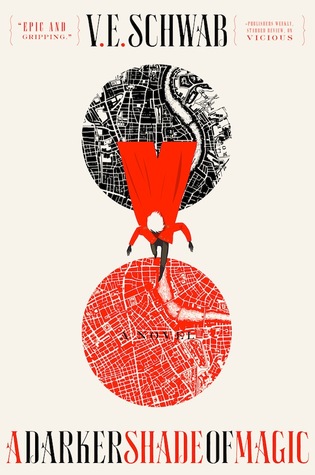
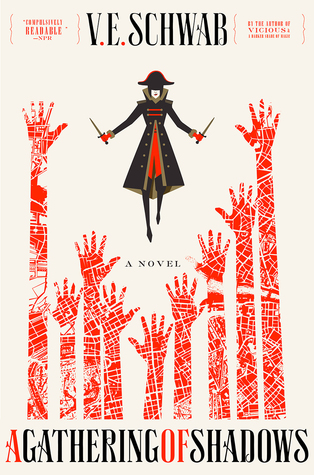
Disclaimer: Things that could be considered spoilery for all published books of the Shades of Magic series are contained herein. If you haven’t read A Darker Shade of Magic and A Gathering of Shadows yet, proceed at your own risk!

Me: So, I kind of just don’t shut up about your books. I was telling one of my friends about them, and what she took away was, “Oh, so it’s like Regency fantasy? That kind of seems to be a genre.” And I said, “Well, I don’t know—I don’t think that’s the thing that really defines the Shades of Magic.”

V.E. Schwab: Yeah, especially because only one of the Londons is based in our world. I think it’s definitely more of a secondary world fantasy. Three of the four Londons have nothing to do with our world whatsoever. I got to really build them from scratch—they just have an anchor point in 1819 London, and that’s one of the settings, but I definitely wouldn’t say that’s the primary setting.

Me: What made you choose that late Georgian Regency period? Was it because there was a crazy George?

V.E. Schwab: That was part of it. I really did want to play with a version of the world that had Crazy George, but also I really wanted pre-electricity. I wanted the pre-Industrial Revolution because even though the Londons have diverged at this point in the past and are now taking their own courses, I wasn’t really interested in how they might treat technology differently—or, if I was interested, that was a different story than I wanted to tell. I wanted to focus on this cast of characters, and I worried that as rich as I could make the world, if I started going much later, I was going to have to handle technology in each of the worlds. And technology and magic is a different discussion than these worlds, which, the whole question of the series is, how does magic shape a society in each of these situations. Grey London has forgotten magic, so it has no magic and it looks like our world. Red London is a world in which magic thrives, and it shows. White London is a world that has an adversarial relationship with magic, and so it’s being starved out. And in Black London, magic consumed everything. I wanted to really give due focus to that question, of the relationship between magic and nature and people, as compared to magic and technology, which really is its own genre. There are several books out there that deal with magic and technology at their intersection, and it just wasn’t the story that I wanted to tell.

Me: Another thing I thought was really cool was that so many stories that do have any part in the Regency are concerned with the upper classes, and with Lila we get to see the dark underbelly.

V.E. Schwab: I look at all of my books, and I’m really interested in insider-outsider culture. And so, in the series, even the characters who do belong inside of a culture feel like outsiders. Kell technically belongs to the upper echelon of society in Red London—he’s been raised essentially as a prince, but he has never fit in. He doesn’t feel like he belongs there. Lila has come up through the bottom, through the lower echelon of society of Grey London and she didn’t really care. She’s going to claw her way toward whatever she wants. I think it’s a much more dynamic place to play in. And then of course I get to have someone like Rhy, the prince, who is born in that society and in many ways does fit, but at the same time he’s an outsider because he doesn’t have magic. So all of my characters are outsiders in some way.

Me: That’s the perfect segue to my next question! I remember yesterday at your spotlight panel you talked about how you like to write about the lines between things. So I started thinking about the lines between characters, and that made me think about how the circumstances of their birth seem to be something that informs their personal conflict.

V.E. Schwab: Oh, definitely.

Me: Kell and Holland—Holland is like, we’re both Antari, but I was born in this really shitty place and you had it so much better than me. And Lila, who is always talking to Kell like, oh poor Kell, you had food and roof over your head, but nobody loves you. Even Kell and Rhy—Kell was raised in that royal family, but he feels apart, and then Rhy feels apart because he doesn’t have magic.

V.E. Schwab: I think the thing you have to remember is, to treat characters like people, we don’t look at how they see themselves only, we look at how other people see them and how they see other people. So I try to focus really, really hard at the points of intersection between characters in my books. It’s way more interesting to see Kell through Lila and Rhy and Holland’s eyes—I think if we only saw Kell through Kell’s eyes, it would be kind of dull because Kell is very much a little…a little self-righteous, and he feels very victimized. And so I look at foils in all of my books between characters, and this is really a special project in that normally a character has one foil. Each character has a foil, someone who kind of butts up against them, is at perpendiculars. Kell is literally the pivot point for the whole series—everyone is Kell’s foil.

Me: I was thinking about that. I was like, well, there’s Alucard, and then there’s Holland…

V.E. Schwab: They are all Kell’s foil! So Kell and Rhy are foils because—you have to look at basically whoever pisses each other off, right? Kell and Rhy fight like brothers. They are family and they are not family. They are totally at odds half the time, but they love each other. Kell and Lila are complete foils—again, it’s just oil and water. They just butt at all heads. And then obviously Kell and Holland are foils. And then yes, Kell and Alucard are foils. Basically, it looks like Kell pisses off everybody that he is around.

Me: It’s so good, I love it so much. Thank you so much for writing it.

V.E. Schwab: Thank you for reading it!

Me: So, something I am super nerdy about—I love languages, and so that’s immediately something I home in on when I’m reading a book. And I love how all the little bits and pieces of the languages we see in your books, whether it’s Arnesian or the language of Kell’s magic—it’s just such an organic part of the world. Sometimes in books it feels like flavoring just thrown in there. How did you go about creating those languages and words?

V.E. Schwab: I never thought I would—growing up, I was really gun-shy to read fantasy (especially classic fantasy, the Tolkien-style) because it felt really exclusive. It felt like if I didn’t memorize an entire fictional language, then I didn’t really belong to the fan club. And so, when I set out to write the Shades of Magic series, it was really important to me that I wrote something accessible. Because of that, I’d be very careful on how much of the foreign languages I used because I never at any point wanted it to feel like someone was being excluded if they didn’t follow that train of thought, if they didn’t memorize, oh, you know, everything from As Hasari means to heal, to avan means hello, to tiny things like Vas ir means go in peace—all these little things that were really important for taking a setting and making it a world, the same way details are important for taking a character and making it a person. I felt really strongly that they needed to be there, but I also had to be very careful in how I used them and the quantity that I used them. I actually love your wording because I do tend to treat them like spice in that they spice my world, but they’re very much part of the characters’ culture. I was on a panel yesterday and I was talking about this in that the things that we use to inform a world, besides description, are language and idiom, pun and humor—what actually informs a culture, not just a people. And so I actually build my whole worlds kind of from the inside out. I don't design my characters first. I design my world. And then I design the insiders for that world, and then I design the outsiders. My characters are invariably the outsiders, but before I ever design them, when I design my world, I design the foundations of a language—so, which linguistic systems I’m going to pull from, which syllabic rhythms I’m going to work for. The Veskans, for instance, in A Gathering of Shadows, are very much Gaelic—they have very hard edges, a very consonant language, similarly to the White Londoners, just a different breed. One’s Scandinavian-based, and one is definitely Scottish Gaelic. And so I pick out those seeds. I don’t design the entire language. I make it as I go and I keep a glossary of it, make sure that it feels cohesive and feels natural without being—like, this is not Dothraki from Game of Thrones. I don’t actually have the entire language. But what I do have are the grammar and syntax. I always know what order everything goes in and that keeps it from feeling like gibberish. I know the subject-object relationships, I know that it’s not like French wherein the descriptor usually follows the word—it’s much more simple than that for Arnesian. So those are the things that I think of, and I think of, what are their folktales? What are their songs? What are the things they sing in taverns, and what are the things they sing on their holy days, what are these blessings—you learn in A Conjuring of Light they don’t actually have a word for good-bye. They have a word for “go in peace,” and they have a word for “until I see you again,” but there is no formal parting word.

Me: And that says so much about the culture.

V.E. Schwab: Yeah, that’s a reflection of a culture. And so for me, I treat language like that. I treat language like another facet of the culture I need to know, because the way that Kell and Rhy use the Arnesian language is different. Kell has a better handle on it just because he is stubbornly determined to be a commoner, and to be treated like a commoner. Rhy has an excellent handle on it, but it’s almost like the kid who has been taught French in school without ever actually going to France. He has a really, really strong book knowledge of all languages because he was raised to have a book knowledge of languages. And so there’s the way they function with language, as compared to the fact that the king and queen never speak Arnesian. They only speak High Royal, which is like our English, our common tongue. And Lila, in Conjuring, will call them out on that—basically that Maxim is addressing a citizen, a commoner, and he’s demanding something of him and he’s doing it in High Royal, and the commoner doesn’t speak High Royal. There’s this fundamental divide, and language really helps me play up insider-outsider culture. It’s been really fun in the series because Lila is not from Red London and she only speaks English, and so when she arrives in this world—it’s been really exciting to do her point of views because I get to watch her learn a language, and pick it up from its roughest, most essential parts that she would’ve learned aboard the Night Spire, to actually becoming a citizen of this world. That’s one of the coolest ways to show language—through people who know it and people who don’t. In a lot of A Darker Shade of Magic, when she first gets there, you don’t get a lot of dialogue happening around her because she doesn’t know the language.

Me: It’s funny that you said “not like Dothraki,” because I feel like the way you use it in the books feels the way it does when George R.R. Martin uses it. It just feels like you can, as the reader, pick up on what words mean, and you can pick up on the syntax just from reading a little bit in the book.

V.E. Schwab: And that’s the goal. I want my readers, by the end of one of the books, to have a little bit of understanding when then they see avan, or aven, which means “blessed,” or mas vares, which means “my prince.” Which gets used in a lot of different ways because they address Rhy that way, and that’s good, but they address Kell that way and it drives him absolutely crazy. I want my reader to pick up on those tiny little jabs, but I also had to create a story that wouldn’t be lacking if they didn’t. If you go through and you just skim the Arnesian and treat it like gibberish, you will still enjoy the story. [Brandon] Sanderson was on a panel yesterday and we were talking about that. It’s like an Easter egg, it’s that extra little piece for the readers that want that.

Me: Yes! I say, “Kers la?” in my head now.

V.E. Schwab: Yeah, exactly. And I have people who have designed tattoos that have, like, As Hasari for a nurse, and things like that. I’ve seen people do a lot of hand lettering for As Travars. I sign A Darker Shade of MagicAs Travars,” and I sign A Gathering of ShadowsStas Reskon,” which means “chasing danger.”

Me: So…is Holland totally your favorite?

V.E. Schwab: Yes. Have you seen the cover for Conjuring at this point? I won’t say who’s on the cover, but I will say that it’s probably the main character of book three. Because Kell’s on the cover of book one and it’s his book, Lila’s on the cover of book two and it’s arguably her book, and the character on the cover of book three, whether it’s Holland or Rhy—it’s their book. But I will say that Holland is my favorite character in the whole series, and it’s because I play short cons with some of my characters and long cons with other ones. And Holland’s my long con. He’s the one that it takes the entire series to get his story, and…I love his story.

Me: In the first book, and correct me if I’m wrong, I think nothing is written from his perspective at all. And so when you’re first reintroduced to White London in A Gathering of Shadows and it’s from Ojka’s perspective, you’re like, “Oh hey, that’s Holland!” But then you’re like, “Wait…is that Holland?” And then he says, “Call me Holland.”

V.E. Schwab: And then you get Holland’s perspective.

Me: And the vibe is just so completely different from any other time we’ve seen him in the books. Is it just because we’re seeing him from his own perspective now? Is it because he’s now got a little hitchhiker from Black London?

V.E. Schwab: It’s definitely the first time you get to see him from his own perspective. So Holland—even knowing nothing of Conjuring, you know that he was tortured for seven years at the hands of the Danes, and in order to survive he essentially killed a part of himself. And that’s understandable, but because of that, Holland is very, very, very guarded. You will never get anything of him from someone else’s perspective. If you’re in another perspective, like Kell’s or Lila’s or Rhy’s, and you see Holland, you will not be able to tell what he’s thinking, you will not be able to read him, any of that. Only in Holland’s perspective do you get Holland, and it’s still a very guarded perspective. He’s never going to be an emotional person. He can’t. He can’t, at this point, be an emotional person. He can be angry, he can be frustrated, but he’s never going to show vulnerability. He’s been trained—it’s been beaten out of him essentially. He has learned that the only way to survive in this world is by not showing weakness. You get a lot of his perspective in book three, and it’s been really exciting to actually show the person that he was before the Danes. You get to see how he became the Holland who would torture Lila in the streets in book one. It’s going to be really cool for any later readers or people who choose to go back and re-read to see Holland in book one—and people hated him at the end of A Darker Shade of Magic. They wanted comeuppance for him. And over the course of the series, I’m watching that shift to they want him to be okay. And that’s all I can ask for. As an author, my greatest goal is to turn a villain into an antagonist into a protagonist. And so the fact that people’s opinions of him are shifting—and it will be interesting when you read Vicious, because a very similar thing happens with a character named Victor Vale, who everyone starts out being like, “Fuck this dude.” He is awful. He murders people, he tortures people. He has the ability to control pain, so he’s just a terrible person, and then about halfway through the book, people are like, “Aw man, this dude is awful, but I kinda see where he’s coming from,” and then by the end of the book they’re like, “Yeah, Victor Vale!!” That’s my favorite challenge as an author. I think every author has a little personal thing that they like to do—mine is taking the ostensibly least relatable or least likeable character and making them the one that you want to win.

Me: That’s so funny that people hated Holland. Kind of from the beginning, I was like, “I feel like this guy is awesome. I know I shouldn’t think that, but…”

V.E. Schwab: I wanted people to at least think there’s more to him. And I think the transformation is happening in Gathering because nobody let themselves really think, “Okay, we’re going to find out more,” because they thought he’d be dead. It was interesting, because about half of my readers thought Holland was really dead, and half were just like, “Let’s see this. Bring him back.”

Me: He’s not dead until I see a body that doesn’t breathe anymore.

V.E. Schwab: Exactly. And I think people knew—people should’ve suspected he wasn’t dead because I hadn’t shown Black London yet. If I had shown Black London, then maybe…

Me: Chekhov’s Black London.

V.E. Schwab: Yeah, exactly. You haven’t seen Black London yet, I just sent him into Black London! I will admit, though, that when I got to write a flashback in Conjuring that involved the Dane twins, I immediately got chills again. I was like, “I forgot how much I love to hate you as people!” They’re full-on sadists.

Me: I love the Danes so much.

V.E. Schwab: One of my favorite pieces of art that’s ever been done was done by Victoria Ying, who is just an incredible illustrator, who has this picture—it’s now hanging on my wall—of Holland standing between the Dane twins and they each have a hand wrapped around his throat, and he’s staring forward. It gives me chills every time I see it. It’s so good. He’s such a tragic character.

Me: Oh man. So good. SO GOOD.

V.E. Schwab: I know, we’re going on a Holland tangent.

Me: I could probably talk about the Shades of Magic forever, but another interesting thing you mentioned in your panel yesterday was how you write for three different age groups—middle grade, YA, and adults. So that’s three books a year? That sounds crazy to me.

V.E. Schwab: Some years there’s two, just because of how the schedule happens, but most of the time it’s three.

Me: How does your writing process work? Do you switch between projects?

V.E. Schwab: Well, it’s been screwed up by the Shades of Magic actually doing really well, and so I’m doing a lot of travel and a lot of promotion right now. I thought, “Oh, I’ll just take my work with me.” I have since discovered that there is very little time and much less energy to actually sit down and write when I’m traveling. There’s an adjustment I’m still trying to make. Everyone assumes I’m a very fast writer because of how many books I write. I’m actually a very slow writer, which means I have to be a very consistent writer. I have to do it almost every day that I can. And I can only write one book at a time. I can’t switch back and forth between. And I think if I wrote contemporary realism I could, or if I wrote all my books in the same world I could, but switching between magical systems—because I write This Savage Song, which is set in a slightly futuristic society that’s based on a version of the United States, and then I have the Shades of Magic, which is very historical fantasy. I can’t switch back and forth. They both have really complicated magic systems, and I think I would-- I work in third person close, but I would lose all sense of voice, I think.

Me: Culture shock.

V.E. Schwab: Yeah, it would be culture shock. I need a two-day transition to move between projects, so I tend to write one whole project at a time. It makes me constantly behind on something.

Me: To get three done, do you have to be super regimented?

V.E. Schwab: I normally am. Right now I’ve been thrown, just because this is the first year that I’ve had an adult book, A Gathering of Shadows, and a YA, This Savage Song, come out within four months of each other. I have just started to wind down on A Gathering of Shadows promotion and This Savage Song is about to come out.

Me: I’m so excited for This Savage Song.

V.E. Schwab: I’m so nervous. It’s going to be my most divisive book. Without question, it is the darkest, strangest thing I’ve ever written. What’s fascinating is I’m watching some of the reviews come in, and it’s 5 stars or 1 star. But that’s how I want it to be. I don’t want 3-star book reviews. I would love people to either love it or hate it, and it’s a very dark YA novel. The whole book is an existential question about what it means to be human in a monstrous world. And it’s not for everyone. It’s very specifically for 17-year-old me. And so because of that, it’s finding the right readers. And it’s that thing you have to remind yourself as an author, that there is no book you could ever write that it would appeal to everybody. But if you stay true to your craft, you will write the book that is right for somebody. It’s very hard to remember when there are reviews and all of these things pouring in—you want everybody to like you. You want everyone to like your books. But at the end of the day, as long as the right people find your books—there are books out there for everybody. Your book doesn’t have to be the book for everybody.

Me: I was reading the blurb for it, and the dark, gritty fantasy-ish vibe reminded me of—I was going to say old school Holly Black, but pretty much all Holly Black.

V.E. Schwab: I love Holly Black so much. I love White Cat, I love the Curse Workers series so much. I grew up on Neil Gaiman and Holly Black and Susanna Clarke and T.H. White—all of these very, very classic—but Holly is probably one of my favorite writers in the entire world.

Me: Do you see their influence on your own writing?

V.E. Schwab: I see it on my aesthetic. I don’t see it in my voice, but I see it in my aesthetic. I think our worlds are drawn in the same color palette. I definitely read Neverwhere or I read White Cat and I feel like they’re in the same colors.

Me: That’s a cool way to put it.

V.E. Schwab: It’s the only way I can really think of it. There are books out there that I really enjoy that are written in such bright colors that there’s no comparison between us. But I honestly read a Holly Black book or a Neil Gaiman book and I think that people who like them would potentially like my books.

Me: Very cool. I have one last question, and it has nothing to do with books. My website is half about books, half about food, and when I told my co-editor I was going to interview you, she said, “Oh, it says on her website that she likes baking! You should ask her what her favorite thing to bake is.” So. What do you like to bake?

V.E. Schwab: I’m a stress baker. Writing is terribly insular. It’s just all in your head, all the time, and so sometimes it’s nice to use your hands instead of your head for a little while. But I am one of the best in the world at making dark chocolate sea salt chocolate chip cookies.

Me: That sounds amazing.

V.E. Schwab: And I have been making them since I was five.

Me: What?!

V.E. Schwab: I was on TV when I was five. My mom was a caterer, and we were on the television together, like on a Good Morning America-style thing, and I was five and I was helping her bake these. And I have perfected that recipe since then. I am now 28, and I make such a bad-ass chocolate chip cookie.

Me: Can you just do it off the top of your head?

V.E. Schwab: Oh yeah, I don’t look at anything. I don’t measure anything. I know exactly how it’s supposed to taste at every single stage of the recipe. It’s super simple. I can bake really complicated things, like triple chocolate tortes with raspberry glaze. I make a really, really good triple lemon cake, which is where you infuse lemon at three different stages of it, like a soaked lemon cake. I make very good banana bread. But my favorite thing to make is just chocolate chip cookies. And I’ll come home, and it’ll be like an hour after dinner and my housemate will be like, “You know what we don't have? We don’t have cookies.” And I’m like, “…okay, give me ten minutes.” In ten minutes the cookies will be in the oven, fifteen minutes in and we’re just having cookies. She knows that she can just ask me, “Can you just make me cookies now?”

Me: What you should try—have you ever used mesquite flour?

V.E. Schwab: No. Is it smoky?

Me: I think it depends on where the tree grows, the terroir, stuff like that…but the one I bought kind of has a cinnamon-y cocoa-y flavor. And you don’t use it for all the flour in the recipe.

V.E. Schwab: That would be so good. I’d love to try that in an oatmeal raisin.

Me: I used it in a David Lebovitz recipe that had oatmeal in it, and it was really good. So if you ever get the chance…

V.E. Schwab: Nice. My trick with banana bread is that I cut the sugar in half and switch to brown sugar for the other half, and it makes that caramelization in it.

Me: Brown sugar is the best sugar, bar none.

V.E. Schwab: Oh, it’s the best. Also, more bananas than the recipe ever calls for.

Me: All the bananas.

V.E. Schwab: ALL the bananas. But brown sugar is the golden gift of baking that I don’t think people use enough. And it does tweak the baking times a little bit because it crystallizes very quickly, but everything is better with it.

Me: I agree—brown sugar is the best sugar.

And on that sweet note, we closed out the interview so she could head off to her panels for the day and I could attempt to plot my comicon-ing for the remainder of the weekend. Thanks again for taking the time to talk with us, Victoria! It was so much fun to chat with her, and now my appetite is even more whetted for A Conjuring of Light, the final book in the Shades of Magic, due out in February 2017. How will we wait a whole YEAR?!? ((insert distraught emoji here)) At least This Savage Song will be out very soon, on July 5th, so our next hit of V.E. Schwab-y goodness is not too far over the horizon. Which is your favorite of her books? Who’s your favorite character? What questions would you have liked to ask her? Hit the comments down below and let us know!

Sunday, April 3, 2016

Recent Favorites: A Darker Shade of Magic & Rat Queens

Do you ever find that your luck with reading choices comes in streaks? Sometimes you’ll have a long string of less-than-awesome reads, and other times it’ll be one homerun after another? I’ve been having more of the homerun experience with a surprising number of the books I’ve read lately, and thought I’d share some of the ones that were especially fantastic.

This book is probably the best thing I’ve read so far this year. You know that feeling when you start a new book, and only a few paragraphs in you find yourself feeling like you’re sinking into a feather bed and the writing wraps around you, and you know, you just know that you are in for a damn good read? That deep certainty from just the first few sentences that the author is going to lead you through a wonderful story, wonderfully written, and your inner critic knows it’s okay to shut off? That doesn’t happen terribly often for me (my inner critic is particularly noisy), but that is exactly how I felt with this book. Just a few pages in, and I knew it was going to be a favorite.

Ah, but what is it about? Well. Kell is an Antari, a magic user from a place called Red London, with the rare ability to travel between parallel worlds. His home of Red London is a city where magic flourishes, and he travels with messages from its rulers to the rulers of the other Londons, such as White London (scary, violent magic London) and Grey London (boring, no-magic London, the London of our world during the Regency). There used to be a Black London, but…well. Not anymore. In addition to his cross-dimensional messenger duties, Kell also moonlights as a smuggler, illegally bringing artifacts from one London to another. Naturally, this smuggling (which he considers more or less benign) eventually gets him into trouble, with monarchy- and multiverse-shaking consequences, which he must deal with, with the help of a thief named Lila from Grey London…

The jacket blurb for this book is a rare one that actually accurately captures both the plot and the tone of the story it provides a preview for. Here ‘tis:

“Kell is one of the last Travelers—magicians with a rare, coveted ability to travel between parallel universes, connected by one magical city.

There's Grey London, dirty and boring, without any magic, and with one mad king—George III. Red London, where life and magic are revered—and where Kell was raised alongside Rhy Maresh, the roguish heir to a flourishing empire. White London—a place where people fight to control magic and the magic fights back, draining the city to its very bones. And once upon a time, there was Black London. But no one speaks of that now.

Officially, Kell is the Red Traveler, ambassador of the Maresh empire, carrying the monthly correspondences between the royals of each London. Unofficially, Kell is a smuggler, servicing people willing to pay for even the smallest glimpses of a world they'll never see. It's a defiant hobby with dangerous consequences, which Kell is now seeing firsthand.

Fleeing into Grey London, Kell runs into Delilah Bard, a cutpurse with lofty aspirations. She first robs him, then saves him from a deadly enemy, and finally forces Kell to spirit her to another world for a proper adventure.

Now perilous magic is afoot, and treachery lurks at every turn. To save all of the worlds, they'll first need to stay alive.”

A very unique, creative fantasy, with elements of darkness, a bit of swashbuckling attitude, well-drawn characters in a beautifully conceived world, and plenty of action and emotion. I could ask for nothing more from a book. It was the kind of book where I became visibly annoyed when people would interrupt me reading it, and I had to plot my reading cannily, lest I arrive at work too tired to function after an all-night reading bender. So much fun, and so good. READ IT.


Rat Queens has been on my radar for quite awhile, but, not willing to fork over cash for a graphic novel without previewing it first, I’ve had to wait for the library to catch up with my TBR list. Alas, the library still doesn’t have a physical copy of the book, but they do have the first volume available on their streaming service, Hoopla. And once I started reading that first book, I didn’t put it down (or, er, close out my browser window) until I was finished.

The story follows an all-female band of fantasy adventurers, but with some seriously (and hilariously) modern twists. De facto leader is Hannah, a rockabilly elf magic user; Violet is a dwarven fighter (and a hipster, because she shaved her beard before it became cool); Betty is a flower child, drug-experimenting smidgen (vaguely hobbit- or gnome-esque) thief; and Dee is an atheist cleric of a religion (cult?) that reads a little like a Lovecraft/voudou smash-up. I mean, an atheist cleric! That’s hilarious!! XD

The town where they live kind of hates them, because they get drunk and raucous and destructive when they’re not off fighting big monster-y problems. They have foul mouths, a loose interpretation of what is, strictly speaking, legal, and varied amorous pursuits. They get into fights with each other, and have secrets from each other, and love each other all the same. In short, they’re girls you’d probably want to hang out with.

The writers and illustrators subvert the tropes of the genre through a distinctly modern lens, to hilarious effect (I burst out laughing at Hannah’s arcane cell phone and the nagging from her parents), but not at the expense of the genre—it is clear that the people behind Rat Queens love fantasy-adventure, sword and sorcery stories, and honor that genre by pushing its boundaries. The second volume deepens the storylines begun in the first outing, and begins revealing some serious backstory, while not losing any of the humor that makes it such a delight.

So, while probably not for the faint of heart or those offended by the F word, I absolutely loved it. I can’t wait for the third volume to come out (later this month!). This is a series that I would actually consider buying each comic as it comes out, rather than waiting for the trade paperbacks.

Have you had any outstandingly good reads lately? Already read these, or plan on adding them to your TBR? Let us know in the comments!

A Darker Shade of Magic, by V.E. Schwab
Published by Tor Books (2015)
Read in March-April 2016; Hard copy from library

Rat Queens Volume 1: Sass & Sorcery, by Kurtis J. Wiebe & Roc Upchurch
Published by Image Comics (2014)
Read in February 2016; Digital streaming from library

Rat Queens Volume 2: The Far Reaching Tentacles of N’Rygoth, by Kurtis J. Wiebe & Roc Upchurch
Published by Image Comics (2015)
Read in February 2016; Bought it

Sunday, June 28, 2015

Book Review: Alive, by Scott Sigler

Title: Alive
Author: Scott Sigler
Publisher: Del Rey
Publication Date: July 14th, 2015
Read: June 2015
Where It Came From: ARC from author at PHXCC
Genre: YA-speculative-fiction
Rating: 3.75 Coffin-Cradles

How, oh how, to review this book without giving away any of its secrets? As the author stated on a panel at Phoenix Comicon last month, the book is pretty much secrets from page one. Those secrets drive the story, and I will try my darnedest to preserve them! (Also, I like a challenge like that.) So. Here goes.

Our narrator wakes up in a strange place with little idea of who she is, or how she got there. After fighting her way to freedom from the adverse situation she finds herself in immediately upon waking, she finds others like her. They are somewhere, in a place with many rooms. Also, many skeletons. Weird carvings on the walls that seem reminiscent of the ancient world, but also evidence of technology not of the ancient world. Where are the adults? Where are other people? The need for water and food drives them to explore and try to find a way out of there, wherever there is, as they try to unravel the mystery of their existence and the situation they find themselves in.

I’ve heard good things about Scott Sigler’s books, but this is actually the first book of his that I’ve read. My friend saw him signing ARCs at the Del Rey booth at Phoenix Comicon, and kindly grabbed one for me (I think I was probably at a panel at the time). She told me that he had said to read the first 20 pages that night, and so, dutiful recipient of free books that I am, I did so. Bad idea!!! I was hooked from the get go, and let me tell you—wandering around a convention while your brain is fixated on reading a new book is not the way to go. It was an absorbing, quick read that I tore through once the convention was over.

Now, I hesitate to say this because I really, really despise the publishing trend of describing new books as “Book A meets Book B!”, because I find the comparisons are rarely apt and mostly lead to disappointment (Harry Potter meets Men in Black! Game of Thrones for teens! Batman meets Rainbow Rowell!). But I think this book appeals to the same part of me that the TV show Lost did. Not in plot, not in voice or style or anything like that, but more in the level of mystery surrounding, well, pretty much everything. The mysteries and strangeness at every turn engage the reader (or watcher) in the story, and before you know it you’re formulating theories about what’s really going on and forging ahead for more.

One of the really cool things about this book is that the way it’s structured and told allows the reader to fill the shoes of Em, our protagonist. The first-person present narration (consider yourself warned, Susan) of course plays a big part in that, but also the fact that as soon as Em wakes up, we know just as much as she does (i.e., very little), and only learn new information when she does, as we try to understand the many mysteries along with her.

If I had any quibbles, it would be that not all of the characters truly came alive for me in this book. Part of me thinks this makes sense, though, since the characters themselves are still trying to figure out who they are and how they fit into what’s going on. I didn’t grow terribly attached to any of them, with the exception being Gaston—he was great! (And provided comic relief.) He reminded me a bit of Sevro from Pierce Brown’s Red Rising, in all the best ways. The other quibble would be that the way 12-year-olds are characterized in the story actually felt quite a bit younger than that, to me. (Apologies for vagueness, but you’ll know what I’m talking about when you read it!)

At any rate, by the end of the book, some mysteries have been solved but plenty remain, which makes sense now that I know it’s the first book in a trilogy. Overall, an intriguing premise and a fast-paced read, and I look forward to seeing how the characters continue to learn about and define themselves in future books!

*As ever, much as we are grateful for the copy, our review is uninfluenced by its source.

**I think that might be the ARC cover, and that the actual finished book might have a different one? This one is very cool, though.

Sunday, May 24, 2015

Coming soon: BEA and PHXCC!!!

Well, it’s that time of year again! The sun is starting to beat down in earnest in my fair city, and soon S will be heading off to Book Expo America in New York, and I to Phoenix Comicon. So much excitement on the horizon!

I’ve perused the programming for PHXCC this year and I’ve made my tentative list of panels to see. I’ve pored over the convention center maps. I’ve dug out the books I want to get signed by attending authors. I am READY! Let’s have a look at some of the fun stuff scheduled to go down this year…

While there don’t look to be as many traditional fantasy authors as there were last year, there are still many authors I love whom I’m excited to see, and plenty more I’ve heard of but haven’t yet read their books. Richard Kadrey, who writes the Sandman Slim novels, Max Brooks of World War Z fame, Michael A. Stackpole, prolific author whom I most often associate with Star Wars books…the list goes on, with many familiar faces from years past, as well as new-to-PHXCC authors joining the fun. Here’s a smattering of some I’m really looking forward to seeing on panels/getting my books signed by them…


  • Ann Leckie!!! Hugo and Nebula award-winning Ann Leckie!!! I’m reading Ancillary Justice right now, and it is sooooo good. It’s not the kind of book I’m tearing through, but I’m taking my time and savoring it (and, to be honest, trying to make sure I keep everything straight in my head). So excited to meet this lady!


  • Max Gladstone!! I haven’t picked up any of his books yet, but people really, really love him. I’ve been trying something new this year, where I download a Kindle sample of books from all the authors at the con I’m interested in but mostly unfamiliar with, to get a feel for their writing and try to decide if I should pick up a copy of their book at the con to get signed, or just wait and check it out at the library. Last night I read a sample of Three Parts Dead, and I liked it—it felt fresh and complex, and even though the sample wasn’t really long enough for me to get a full grasp of the world, it was enough to make me want to read more. Very intrigued!


  • So, Cherie Priest—I already know I like her writing, right? So why haven’t I already bought and read Maplecroft?!? Good question. This is another one I decided to read a sample of to aid me in my purchasing decisions, and those were the questions I was asking myself when I’d finished. I remember her talking about this Lizzie-Borden-fights-Cthulhu-with-an-ax story the first time I saw her at PHXCC in 2013, but I never got around to picking it up when it came out last fall. The sample, however, hooked me—it ended and I wanted moooore! Will probably be picking this one up.


  • Naomi Novik! I have a pile of her Temeraire books at home that friends have recommended to me but I just haven’t started yet. Last year at PHXCC, though, I was given a sample of her forthcoming standalone novel, Uprooted. Fast forward to now—here’s what the back of the book looks like:
     photo IMG_3642_zps7jtzbhau.jpg

    ALL OF THE BEST PEOPLE HAVE GREAT THINGS TO SAY ABOUT THIS BOOK. Seriously, the only endorsements that could’ve bumped it up even higher on my insta-buy list are Holly Black, Megan Whalen Turner, and Elizabeth C. Bunce. So…I bought it. Of course, right? Can’t wait to dive it!


  • Pierce Brown! He was at PHXCC last year, but I hadn’t yet read Red Rising. Quite soon after the con, I dove into the free copy of it that I got at the Del Rey booth, and though I wasn’t that into it for the first 150 pages, the rest of the book was so good that I loved it even with the beginning that had been blah for me. And then when Golden Son came out this year…man, that was a phenomenal book. None of the things that I hadn’t liked about the first book were present in this book, and everything that I loved about it was there and made even more awesome! It was relentlessly paced (so much so that I couldn’t allow myself to read it on nights when I had to be at work early the next day), and just plain riveting. It’s sci-fi, but in my head it’s more like historical-fantasy-sci-fi…I love all the Rome-ish stuff, and the political maneuverings are reminiscent of some of my favorite historical fantasies. Would it be too much to hope for a sneak peek of Morning Star at PHXCC…?

That’s just a smattering of the authors I’m most excited to see on panels, but there are sooo many more! As for the panels themselves, there aren’t as many on my absolute-must-list as there were last year, so I’d been hoping my schedule might be a little less jam-packed this year, but as I look over it again, I’m realizing there will be more than enough to see and do, and a few tough decisions when panels conflict. Here are my top 5 panels I’m looking forward to as of now (not counting author spotlight panels), with the descriptions from the PHXCC website. Any of them sound intriguing to you?

  1. Historical and Fantastical and Maybe a Little Magical (featuring Cherie Priest, Django Wexler, Joseph Nassise, Michael Martinez, and Viola Carr). “What happens to history when reality is breached by more than just a person or 2 that never really existed? How does it stand up when strange, mystical, and/or magical occurrences take hold? Spice up history, make it more enjoyable with un-reality.”

    Yay for historical fantasy! Or at least, fantasy taking place in a time in history…?

  2. Here on Earth (featuring Ann Leckie, Chuck Wendig, Jason Hough, Jay Posey, Myke Cole, and Pierce Brown). “Science Fiction doesn't always have to take place in unknown space on unknown worlds. This panel celebrates Science Fiction on our planet Earth. Discussions and comparisons on how Earth-centric Science Fictions compare to the typical space opera.”

    I like Science Fiction. I like Earth. I like Science Fictions involving Earth. I’m not sure how I feel about this capitalization. Should “science fiction” really be “Science Fiction?” I’m not sure, and now I’m way off topic.

  3. Author Batsu with Sam Sykes (featuring Cherie Priest, Delilah S. Dawson, Myke Cole, Peter V. Brett, Pierce Brown, Scott Sigler, and Sam Sykes). “Our hapless authors join Sam Sykes for another batsu game! (Batsu: the Japanese word for 'punishment,') Each panelist is charged with performing a task under pressure. If they fail, they will be subjected to a 'horrible' punishment. Sounds fun! Right?”

    Who doesn’t like a little schadenfreude? (Yeah, try to tackle that one, spell check!) The Sam Sykes panels are always amusing.

  4. Unashamed Full Frontal Nerdity (featuring Django Wexler, Jason Hough, Michael Martinez, and Naomi Novik). “A panel for authors to gush about the facets of their research that surprised and delighted them.”

    I love supernerding, and especially supernerding about research!!

  5. Del Rey Superfight (featuring Jason Hough, Naomi Novik, Peter V. Brett, Pierce Brown, and Scott Sigler). “Who would win: Starlord with machine guns as legs or an ocelot that's really really emotional? How about Iron Man who hasn't slept in three days or Godzilla with an endless supply of trampolines? The Del Rey authors battle it out in a game of Superfight.”

    Um, what? This sounds amazing. And hilarious. Count me in.


And that’s it from me tonight! Any authors not on my shortlist that you’re super-psyched about? Any awesome panels you think I should check out and report back on? Hit up the comments and let me know! Only a few more days to go…

Monday, March 23, 2015

Book Review: Revenge of the Witch

Title: The Last Apprentice: Revenge of the Witch
Author: Joseph Delaney
Publisher: Greenwillow Books
Publication Year: 2005
Read: March 2015
Where It Came From: Library
Genre: Middle-grade-to-YA-historical-fantasy-horror
Rating: 4 Boggart Pits

I can trace my interest in these books back many years, based almost entirely on the eye-catching art. The covers for this series are creepy, atmospheric, and striking (and, as I discovered when I read this one, the art continues on the inside, too!). When I saw that it was being made into a movie with the awesome Ben Barnes (a.k.a. Prince Caspian, a.k.a. Dunstan Thorn), I finally decided I had better read the book, since the general chatter I’ve heard about the books didn’t seem to quite match up with the almost goofy quest-fantasy look of the movie trailer. I mean, I’ve heard these books are SCARY, and the movie looks anything but.

The story begins with our narrator, twelve-year-old Thomas Ward, getting sent off to try out to be the apprentice to the local Spook, or the person who roams about the countryside taking care of unwanted supernatural phenomena and creatures, such as boggarts, witches, ghouls, and the like. Thomas is the seventh son of a seventh son, making him uniquely qualified for this job. His Mam believes he is in fact even more uniquely qualified than that, but never quite explains why, which is a strong thread of mystery running through the story. The story follows Tom through his trial period (spoiler alert: he gets the job), and through the early days of his apprenticeship with the Spook. He meets a pointy-shoed local girl named Alice, and eventually ends up inadvertently releasing a big, bad witch called Mother Malkin into the world. He then tries to counteract the bad she does and has to figure out a way to recapture her to save both himself and his family.

The story is very well-written. It is a quick read, but there is a lot of complexity beneath the surface. Tom’s voice shines brightly—he is an honest, straightforward narrator. He is a good person to his core, but we see his struggles as he tries to make the right decisions, and, when he doesn’t, try to fix things. All of the main characters are similarly complex. The Spook, for instance, has a fraught relationship with his brother, a past occupation that comes to light, and qualms about burning witches (too cruel, he says), that show he is more than his gruff, beastie-hunting exterior. Tom’s Mam, too, is wonderfully complex and mysterious—she loves her son, but not in a soft way, and I look forward to finding out more about her in future books. And then there is Alice—torn between her family and wanting to maybe not be like them. She is a particularly compelling character because of her seeming powerlessness in her situation, and her struggle to make choices to gain power in her own life. I was initially a little turned off by the number of “evil” women in the story (the witches), but complex and layered characters like Alice and Mam mitigated that.

As for the creepy factor, this was another book where I found myself thinking, okay, this is a little creepy, but not actually frightening! as I was reading, but then my phone would buzz or someone would come in my room to talk to me and I’d jump about 5 feet in the air. So…not nightmare-inducing, but a little scarier than I initially gave it credit for!

I enjoyed this one, and look forward to reading the rest of the series and delving deeper into these characters. Also, I forgot to mention that there is a passive-aggressive boggart housekeeper—what could be better than that? (Also also, I hemmed and hawed and then included “historical” in the genre tags, because it could easily be a fantasy world, but there was mention of people reading Greek and Latin. So I guess it must be this world, or a version of it, after all?)

Thursday, February 19, 2015

Book Review: This Shattered World

Title: This Shattered World
Author: Amie Kaufman & Meagan Spooner
Publisher: Disney-Hyperion
Publication Date: December 23rd, 2014
Read: January 2015
Where It Came From: BEA Galley + Purchased Copy
Genre: YA-sci-fi-space-opera
Rating: Averages out to 2.5 stars. (Which we can’t see anyway, because they’re hidden by clouds, of course.)

Alas, seduced by a pretty cover again! You’d think I would have learned my lesson with the first book in this series, which had an equally gorgeous cover that the story living beneath didn’t quite live up to. Last year, rave reviews were popping up all over the place for These Broken Stars, even from reviewers whose tastes I find often parallel my own, and all I could think was, “…really? Am I missing something here?” I found it simply…okay.

That bit of background out of the way, I can tell you that I actually enjoyed the first one more than This Shattered World. Here’s a quick plot rundown of this latest installment: Jubilee Chase is a soldier extraordinaire stationed on the planet Avon (what the military is there for in the first place was never really clear to me). The problem with Avon is that it’s not terraforming into a habitable planet at the usual rate, so it’s a cloudy swampland otherwise inhabited only by the colonists-who-are-also-considered-natives-of-the-planet. There is a sect of rebellious colonists who live out in the swamps, wanting to take the terraforming corporations to task for not fulfilling the promises of a better life and a livable planet that they used to lure the colonists to Avon. Flynn Cormac, though hoping for a peaceful resolution to Avon’s woes, is one of these rebels. Now, Jubilee hates rebels (do I smell a BACKSTORY?), and Flynn has reasons to dislike the military presence (yet MORE backstory??), but the two find themselves pushed together as they discover the conspiracy underlying Avon’s very existence.

So, same world, different protagonists, different planet in this latest outing in the Starbound trilogy. It probably didn’t help that I remembered next to nothing from These Broken Stars, and as bits and pieces of the first installment began to trickle back into my memory, I found myself thinking, “Oh! That thing that happened earlier would’ve been much more intriguing/made more sense if I had remembered plot point thus-and-such from book one!” Still, I think my issues with this one cannot simply be attributed to my own poor recall abilities regarding the previous installment.

Problems I Had With It

  1. S L O W pacing. And I mean grass-growing, paint-drying, other-clichĂ©s-of-slowness slow. The first half of the book (which was nearly 200 pages, mind you!) could probably be boiled down to just three plot points. In fact, I think at one point Jubilee lists to herself the important things that have happened to her since the first scene, and I was like yes, only three! In this many pages, only three! The opening scenes involving a kidnapping at a bar and a subsequent vision of a disappearing research facility were promising, but everything came to a screeching all-but-halt after that. So many times I kept thinking to myself, why can’t we revisit that disappearing building thing that I know is coming back later? Why can’t it come back NOW? In the second half of the book the action picked up, aided in part by the arrival of characters from the first book (yay!). It was a lot quicker reading and a lot more interesting, but it still wasn’t enough to salvage the story for me.
  2. Lack of chemistry. Flynn and Jubilee…I just didn’t feel it. Zero chemistry between these two. There were constant references to the fact that Flynn is all charming rogue-y, but being in his head for half the chapters and seeing him through Jubilee’s POV in most of the other chapters, his actions and thoughts show him to be pretty much a straightforward, sweet, boy-next-door type. Rogue level of next-to-zero. I mean, he’s a pacifist, for the love of pete! Which is fine—I quite liked Flynn, but he is not the smooth operator I felt like I was supposed to be convinced he was. Between that and the trying-to-convince-me-there’s-chemistry-between-our-leads-when-there-is-none just made me keep internally shouting STOP TRYING TO MAKE FETCH HAPPEN! I will note, however, that this was another thing that improved in the second half of the book. I’d still say I’m not fully feeling the Flynn-Jubilee love connection, but I’m more inclined to live and let live now.
  3. Vague worldbuilding. Things I am learning about myself: I value worldbuilding. A lot. My opinions of books live and die by worldbuilding. Now, to be clear, good worldbuilding does not necessarily mean a ton of background information and history and culture dropped into the text. If writing is good, it can let you know the world of the story is fully conceived, with internal logic and a depth and life like that of our own world, without having to sit and explain every single aspect of it to you. Heck, even if a ton of background information and history and culture is worked into the text, it should still feel like you’re only scratching the surface of that world, and that there are infinite depths beyond what you can see. …That is not what happened here. Vague can work in some stories, but not this one. Two books in, and I still don’t have a clear picture of the greater shape of this world. What’s the association between the planets in this overall system—what’s the government like? How have people spread across the galaxy/universe/whatever? Whose military is this, who controls them? Why the hell are all the Avon colonists still so strongly Irish this long after humanity has spread to the stars? If you want me to be invested in a story, you’ve got to make it real, and I wonder how much more I would enjoy these books if they were a little more fully fleshed out.

Overall, the first half of the book was a struggle (2 stars), but in the second half things became a little more interesting (3 stars). Though the worldbuilding is often annoyingly vague (when not outright deficient), bringing in some of the plot threads from the first book made me a little more invested in the story. I wouldn’t say Jubilee and Flynn won me over by the end, but they were tolerable. And maybe that was the problem with this one for me—it never made me do more than simply tolerate it. It was passable sci-fi—I’ve read worse, but I’ve also certainly read better. When the third volume comes out at the end of this year, I’m sure the cover will be beautiful again, so there might need to be an intervention to keep me from buying it. You know what they say—fool me once, shame on you. Fool me twice and thrice…well, you know how it goes.

*As ever, much as we are grateful for the copy, our review is based on the finished book rather than the galley, and at any rate is uninfluenced by its source.

Sunday, January 25, 2015

Happy January!

Hello all, and happy 2015! It has been much too long, dear bookworms and moths! Susan and I have both been immersed in the responsibilities of new jobs for the past few months, thus our diminished online presence since autumn—but we have missed you fiercely, and are looking forward to getting back on the blog train in this year two thousand and fifteen. We hope it has been treating you well so far (the new year, not the blog train), and that you have been snacking on delicious foods and reading wonderful books during our absence! If you follow us on Twitter, you may have caught a glimpse of some of our readings and eatings over the past few months. Graphic novels, SFF, Thai shrimp soup…yums across the board! So, in the spirit of the “Best Of” lists that have come before, I thought I would share a short listing of some of my own 2014 bests. If the books I read last year all went to high school together, this is what the superlative pages in their yearbook would look like…

Alyssa’s Notable Books of 2014

Best New-to-Me Authors

Oh, Elizabeth C. Bunce and Scott Lynch, what was my life before I read your books? Where, oh where have you BEEN my entire life?! Well, sitting patiently on my shelf, apparently. I remember purchasing A Curse Dark As Gold when it first came out in 2009, but didn’t get around to reading it until 2014. And what a treat it was! Brilliant writing, brilliant detail, brilliant insight into people, and perfectly atmospheric. In fact, those words could be used to describe my experience with Scott Lynch’s Gentleman Bastard series, as well. The adoration I bear for Jean Tannen and Locke Lamora is an ardent one, and I’m eagerly anticipating the next book in the series. On that note, it hurts my heart a little bit (okay, a lot a bit) that Arthur A. Levine Books doesn’t appear to be publishing the third volume in Elizabeth Bunce’s Thief Errant series. WHY?!? Anyway, I love books with worlds so rich you could just crawl inside them and live there, and the writings of these two authors both fit that bill perfectly.

Best Picture Book

I find myself reading a whole lot of picture books to children these days, and this by far has been the biggest hit (though It’s a Tiger! and Press Here are also contenders). Teachers have told me a month later that the kids are still playing Shark in the Park on the playground at recess. Four months later they’ll come up to me and ask if I brought the shark book today. And what does that tell me? That tells me it’s an awesome, awesome book. So why is it out of print? I don’t know, but I really want to buy a copy for myself on eBay…

Best Graphic Novel (Serial)

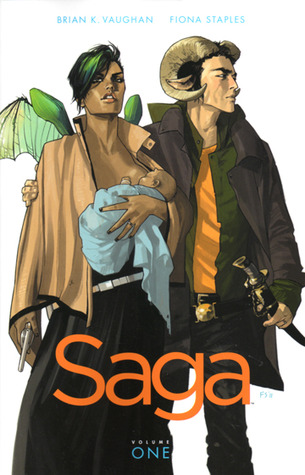
This fantasy-tinged sci-fi space opera is really kind of stunning. It is fearlessly imaginative, and creative, and hilarious, and action-packed, and yet still so very real. Our wry narrator guides us through the story, and an extensive cast of weird and wonderful characters inhabiting a weird and wonderful universe grab on to you and don’t let go. Again, this is one of those rich fictional worlds so fully realized that you just want to crawl inside. I just read volume four of the trade paperbacks, and can’t wait for the next installment.

Best Graphic Novel (Standalone)

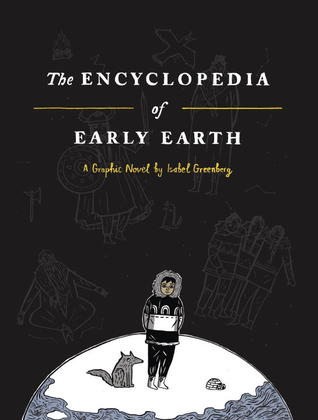
I’ve talked about this one many times before, and my love for it has only grown stronger with time. Its beautiful art, clever, funny writing, and demonstrated deep understanding of stories and their power make this one irresistible to me. A little odd in the way that all the best things are, and all kinds of awesome.

Best Series I Devoured Whole at a Most Unladylike Speed

I had never read anything by Seanan McGuire before (or anything published under her horror-writing pseudonym, Mira Grant), but she was on my radar as an author that authors I love, love. (Did that make sense…?) I picked up the first October Daye book, and it was all over. These books speak to and nourish the same part of me that Holly Black’s Modern Faerie Tales series does (favorites of mine since high school)—stories of a world both close to, and eons away from, our own. Atmospheric, beautiful, but a little dark, too. Watch out for those teeth. So of course I read the entire series in less than three weeks. More, please!

Book Most Likely to Affect My Enjoyment of a TV Series

Mr Selfridge on PBS is one of my favorite TV shows (sometimes I think I like it more than the recent seasons of Downton Abbey!), so I thought it would be fun to read the book that inspired the show. I’m not a big reader of nonfiction, but this book was quite fascinating. It allows you to see where the show had to fill in information, and where they found some of their inspiration, and it sheds light on a time and a topic (the advent of advertising and merchandising) that I hadn’t thought much about before. And yet, this was kind of the spoiler of all spoilers—knowing what happens to beloved characters and the way things ended up in real life was often quite sad, and now it’s sometimes hard to watch the show and separate it from what I know of the real life people and events it’s based on. I usually get over it pretty quickly, though—the show’s ability to dive into each character in a way not really possible in a book that can’t fabricate where there is nothing in the historical record reminds me that this lovely series is fiction, and a pleasant one at that.

Other Great Books I Read That Haven’t Got a Category Yet

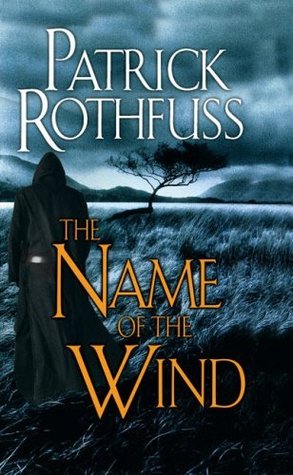
After hearing about the brilliance of The Name of the Wind for so long, I finally took the advice of many friends and read it. I enjoyed it, too, and hurried on to the second installment. Now, don’t get me wrong, they were fabulous books that I recommend to people all the time. But for me…they didn’t have the certain je ne sais quoi that made them into oh-my-gosh-holy-crap-all-time-favorites. However. As they’ve sat in my mind in the months since reading them, I find that they continue to grow in my estimation and to become more powerful. Reading the Bast short story in the Rogues anthology really slammed that home for me. These books are magical, powerful—with complex characters and a rich world (yes, one you can crawl into) that you find yourself personally involved in. And to segue…my first Terry Pratchett experience also introduced me to complex characters I cared deeply about and a world, maybe not so complex on the surface, but certainly complex underneath. Both authors are grandmasters, and both ones whose words and worlds I feel quite privileged to be acquainted with.

So what were some of your top reads of 2014? What superlatives would there be in YOUR 2014 books’ yearbook? What would you like to see from Read This / Eat That this year? Hit the comments and let us know!

Tuesday, July 8, 2014

Phoenix Comicon 2014: The Haul

Hi all! Just here with a quick post about all the books that came to live with me in wake of this year’s comicon, to pass the time while I’m working away on the final panel report. I exhibited a fair amount of restraint with regards to book-buying, and lucky for me, even with that restraint I came home with lots and lots of reading material thanks to all the publisher giveaways and swag! Have a look:

 photo photo4_zpsb61921ab.jpg

These are the books I ponied up some cash and bought. The top four in the pile were acquired at a steep discount at the Angry Robot booth after I attended their panel. What can I say, cheap books are hard to turn down! I also couldn’t say no to the Rogues anthology when I saw that it was on sale early at a booth which shall not be named, especially considering the added opportunity of having three of the featured authors present at PHXCC to sign it! Nor could I pass up the chance to meet the author of a graphic novel I really liked last year, Monster on the Hill, and get him to sign/doodle a copy of it for me. Seriously y’all, you may not be convinced, but this stack was me being the very soul of restraint!


 photo photo3_zps800d0dad.jpg

These are the books I already owned by authors attending the con, and I schlepped them around during the weekend to get them all autographed. (Am I crazy? When I read that typed out, I feel like I sound crazy. Like a book zealot of some sort.) Luckily we had a rolly suitcase to lighten the load. To anyone else in a situation where you need to haul books around for many hours, this is my advice to you: GET A ROLLY SUITCASE. You will not be sorry.


 photo photo1_zpse236b768.jpg

And THESE, my dears, are the free books I ended up with! Quite a tower, eh? My thanks go out to Del Rey and Tor for so graciously offering them to all book-nerd types in attendance at the con. So far I’ve read three of them (well, technically I read a library e-copy of Locke Lamora before the con, but I say that still counts), and look forward to trying out the rest!


 photo photo2_zps537eacfe.jpg

Here are a couple samplers I got from the Del Rey booth. The big one has short snippets from books by many different Del Rey authors, and the smaller one is a nice-sized chunk of Naomi Novik’s Uprooted, coming in June of next year.


 photo photo5_zps68e71cb5.jpg

Lastly, we have all the assorted swag accumulated over the weekend. There’s a Hellboy anniversary window cling from Dark Horse, along with various buttons and posters from them, some bags from Tor, some trading cards from the Monster on the Hill graphic novel, a keychain for John Scalzi’s upcoming novel Lock In, other posters, art from the Buffy the Vampire Slayer graphic novels signed by Amber Benson…all kinds of cool stuff. I think my favorites are the Tor.com tote and the monster trading cards.

All in all, it was a weekend that ended up contributing to the ever-shrinking state of available real estate in my room for books and other things. I’m excited to read new books by authors I was heretofore unfamiliar with, and to catch up on the series of authors I already know and love.

Any of these books catch your eye? Any recommendations on where to start in my foray into the piles? Let me know down below!

Monday, June 23, 2014

Phoenix Comicon 2014: Authors I Met

 photo photo21_zpscda9f20d.jpg
Authors at a YA panel! Laini Taylor is easily recognizable by her vivid pink hair. :)

I think one of the coolest things about Phoenix Comicon is all the opportunities for interaction with authors and publishers. There are so many chances to see your favorite authors, whether at a panel or performance of some sort, and to also meet them, gets books signed, and chat for a bit at the PHXCC-sponsored signings, publisher signings, signings at Mysterious Galaxy’s booth, or at the author’s own table in the authors alley. There were so many cool writers this year that it was at times a challenge to plot out our panels-and-signings schedule!

I always feel kind of like a book-obsessed weirdo when I recognize an author on sight. While I was waiting in line to get my media badge on Thursday, I passed the time locating points of interest on the dealer hall map and taking in all the passers-by in all their cosplayish glory. (The coolest was seeing a family of Jedi getting interviewed by a news outlet. Nerd families are so awesome!) After about 20 minutes of this, I started to zone out a bit, and I was staring off into the middle distance when I registered pink hair. I thought to myself, “What bright pink hair! How nice.” Then I registered the person it was attached to, and also that she was walking with a man and a little girl, and I realized that it was Laini Taylor! That was my first in-the-wild author spotting. While in line I also saw Lynne M. Thomas of SF Squeecast (and Editor-in-Chief of Apex magazine) and Django Wexler (whose book The Thousand Names I’ve been meaning to get to) wandering about. Later that night, when I was navigating the crush of people exiting the Books and Authors Kickoff Panel, I noticed someone moving against the flow, trying to get toward the table at the front of the room. I registered that this person had pink hair, and I again thought to myself, “My, what bright pink hair! How nice.” I then, of course, realized that it was Laini Taylor, again. And because I was so surprised by this, I squeaked, “Laini Taylor!” at her when she was standing right in front of me (as if she didn’t know who she was). She said hi and shook my hand, and then it was a little awkward because I was trying to move toward the door and she was trying to move toward the front table, but neither of us could go anywhere because the crowd was in a bit of a traffic jam. That’s me, always smooth and sophisticated… XD

Del Rey had a cool thing going on during the con (in addition to all the free books, of course), where they encouraged you to take selfies with all their authors and tweet them with the hashtag #RHAuthorHunt to be entered to win a box of books signed by Del Rey authors. This sounded like an acceptable challenge to me, and I managed to take photos with all five authors. I also apparently blocked out the selfie part, however, and press-ganged my friend into taking the photos for me (don’t worry, I returned the favor). Here’s who I found in the scavenger hunt!

 photo MePierceBrown_zps19927bb4.jpg  photo MeJasonHough_zps56ba2a8c.jpg  photo MeScottLynch_zps0a2f5c81.jpg  photo MeKevinHearne_zps63b4725a.jpg  photo MeNaomiNovik_zpsa20cc1bd.jpg
Left to right: Pierce Brown, Jason Hough, Scott Lynch, Kevin Hearne, & Naomi Novik.

No word yet on if I’ve won the box o’ books, but I’ve still got my fingers crossed!

Here’s a bullet run-down of the weekend’s greatest hits, author-wise:

  • Pierce Brown made me feel a little guilty about not being sad when a character dies early on in Red Rising. (He also pantomimed being hanged. I promise this makes sense in context.)
  • After we warned him that my friend’s name is hard to spell, he wrote as the dedication in her book, “Your name is strange.”
  • Jason Hough, whose books I was unfamiliar with pre-con, was very nice! I’m looking forward to reading The Darwin Elevator.
  • We ended up seeing Scott Lynch twice, first to sign our Locke Lamora books, and then again the next day when we discovered that the Rogues anthology was mysteriously and fortuitously on sale early at a booth which shall not be named. We then had to of course get it signed, too. The first time we talked about humidity in the Minne-consin area (inspiring this awesome dedication in my friend’s book: “The Minnesota swamps miss you!”) and the second time we somehow ended up discussing whether or not George R.R. Martin is an omniscient being.

Related Posts Plugin for WordPress, Blogger...