Showing posts with label contemporary. Show all posts

Monday, February 27, 2017

Whatchoo reading?

Hello, bookworms and moths! I can’t believe February is almost over. Though I don’t think I’ll be going full-blown review on any of the books I’ve been reading in January and February, I thought I’d share a few thoughts about them, the ones I’m in the middle of right now, and a couple I’m looking forward to verrrrrry soon. Allons-y!

Things I’ve Been Reading

  • Gemina, by Jay Kristoff and Amie Kaufman. This second entry in the Illuminae Files series did not disappoint. In fact, I think I liked this one even more than the first one! I love the way the format of these books continues to push boundaries—it often reminds me of Guillaume Apollinaire's calligrammes (thanks, college French!). These books are action-packed like the best summer movies, but with characterization and a sort of overarching mythology that those summer tentpoles often lack. Romance is a component thread of these books, but it is definitely secondary to the rollicking plot. For these books, I find that that is the perfect balance. There was also a perfect balance of plot twists that I figured out, and ones that I didn't see coming—enough to make you feel smart, but still have the fun of being surprised. Can't wait for book three.
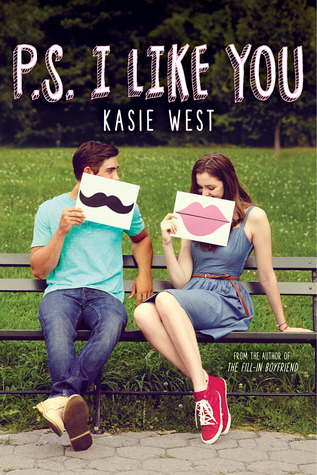
  • P.S. I Like You, by Kasie West. I got this book for S for Christmas because I thought it sounded cute, and then decided I had probably better read it myself to be sure. And how often do you a find a YA that takes place in Phoenix?? After a rough, choppy start (think oddly disjointed sentence flow, stilted dialogue, me thinking, "Grrr, I was an Arizona high schooler and my experience was nothing like this!"), some sort of unseen transition occurred and the dialogue became funny, the characters became real, the romance gave me butterflies, and I was utterly charmed. Enough so that I passed that late night reading point of no return and had to finish the book before finally going to bed around 2 a.m. A quick, cute, fun read! I’ll definitely be looking for more Kasie West novels.
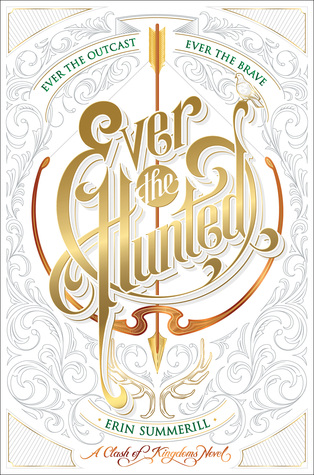
  • Ever the Hunted, by Erin Summerill. Though this book has an absolutely stunning cover design (and I am a sucker for cover design!), my overall feeling about the story inside the covers was a resounding “meh.” I was tentatively interested and engaged in the beginning (world-building concerns were primarily what kept me from being fully interested and engaged), and then halfway through I got bored. The romance, which had an interesting hook and tension to start with, was resolved too quickly for me. Though the plot kept a tidy pace, it still somehow managed to feel mired and slow to me. The plot development on the last page was intriguing, but probably not enough to motivate me to pick up the next book when it comes out.
  • Snow White: A Graphic Novel, by Matt Phelan. I loved the aesthetic and storytelling of this graphic novel. Easy to read in one sitting, it situates the traditional Snow White story in New York in the 1920s and the Great Depression. Samantha White (her mother calls her “Snow”) lives in NYC, and after her mother dies when she is young, her businessman father remarries a star performer of the Follies—enter evil stepmother! You know how the story goes from there. I love the twists that evoke the original fairytale while adjusting it to fit in the new time period. A ticker tape stands in for the magic mirror, seven street urchins remind the reader of dwarves in a forest, and a detective investigating the case of a mysteriously sleeping girl found in the display window of a department store makes for a modern prince charming. There are few words in the graphic novel, but the expressive art clearly tells the tale.
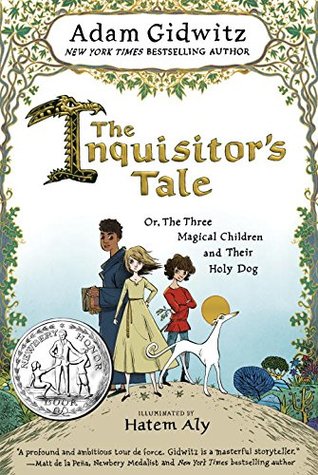
  • The Inquisitor’s Tale, by Adam Gidwitz. This Canterbury Tales-esque story follows three unique young people and one very special dog in France in the 1240s—Jeanne, a peasant girl on the run from the authorities who experiences prophetic visions; Jacob, a Jewish boy with mysterious healing powers who has escaped the hate-fueled burning of his village; William, an unusual oblate endowed with colossal strength; and Gwenforte, Jeanne’s beloved greyhound, long dead and yet somehow returned to her. Though the storytelling is fast-paced, it somehow still manages to be a slow burner, with a powerful payoff. Also, it's really funny. I mean, there’s a farting dragon! The humor is definitely a hallmark of the story, but it also depicts people in all their complexity, and its ruminations on prejudice and tolerance are especially important. It could also serve as a master class on how to use modern speech in a historical (or fantasy) setting without it sounding jarring, inappropriate, or false. Highly recommended!


Things I’m Currently Reading

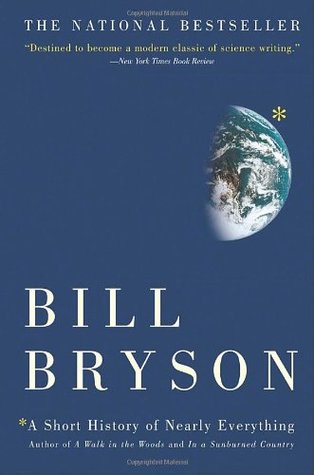
  • A Short History of Nearly Everything, by Bill Bryson. As I continue my incursions into the Bill Bryson audiobook realm, I recently started this one, wherein BB takes on science, the universe, and everything! Completely fascinating, and makes me want to learn more about all the topics he covers. His wit and his knack for finding and relating bizarre footnotes to history delight, as ever.
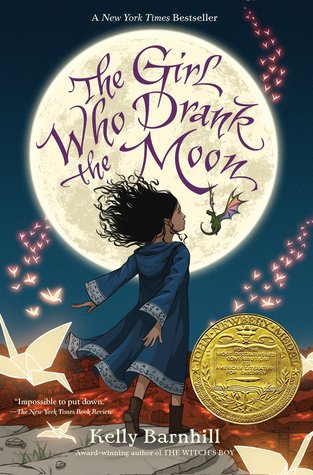
  • The Girl Who Drank the Moon, by Kelly Barnhill. This one is hitting all the right fairytale buttons for me. I adore Fyrian the Perfectly Tiny Dragon (he’s prone to crying), and I’m not even 100 pages in. But, I had to take a break from this one so I could starting reading…
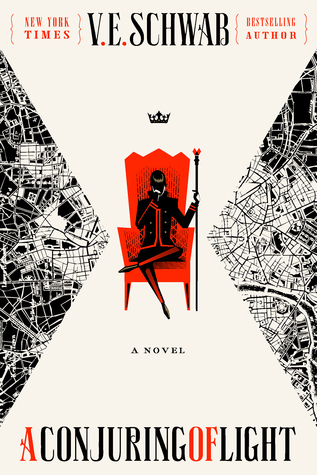
  • A Conjuring of Light, by V.E. Schwab. AHHHHHHHAGHAIOHGALIFBHALKHGHLGIagahgipuahg’gauug GO AWAY I’M READING


Things I’m Looking Forward to Reading

  • Rat Queens #1, by Kurtis Wiebe and Owen Gieni. Rat Queens is back with Image Comics and a new artist (astute blog readers and comics fans might recognize his name from Manifest Destiny)! It looks like they’ll be doing a kind of reboot of the series, which honestly I’m down with since, storywise, the last issues before all the artist kerfuffle and hiatus went down were kind of going in a weird direction. I’m hoping it’s fun and awesome and helps me forget all the strangeness that went on with the artists and story. Out on March 1st, 2017.
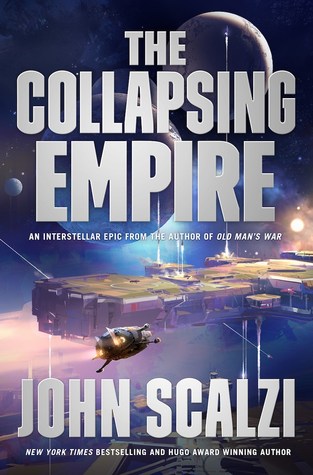
  • The Collapsing Empire, by John Scalzi. You can click on the picture to read the blurb—it sounds amazing, and has been getting some great reviews. I don’t think I’ve read a Scalzi novel I didn’t like, and this one sounds especially cool. Can’t wait to get my hands on it! Too much to hope he’ll be promoting it at Phoenix Comicon this year? Out on March 21st, 2017.


Well, that’s it from me this month. What’s been on your TBR? What are you looking forward to reading next? Let us know in the comments!

**All books purchased or borrowed from the library. An e-ARC of Ever the Hunted was received from the publisher via NetGalley, but this short review is based on my reading of a finished copy. As ever, much as we are grateful for review copies, our reviews are uninfluenced by the source of said copies, or by anyone else, for that matter.

Thursday, July 3, 2014

Book Review: Landline, by Rainbow Rowell

Title: Landline
Author: Rainbow Rowell
Publisher: St. Martin's Press
Publication Date: July 8, 2014
Read: June 2014
Where It Came From: BEA
Genre: General fiction
Rating: 4.5 Metallica T-Shirts

The Quick and Dirty:


Landline is a perfect beach read, a novel that is gripping, affecting, and page-turning. This isn’t a surprise, seeing that it is written by Rainbow Rowell, whose 2013 YA releases proved she has a style that is easy-to-read and content that is equally funny and tender. In Landline Rowell takes her skill at focusing on the little moments of relationships—dialogue that has ellipses from awkwardness, half smiles, hand holding, and where eyes are looking—and seamlessly applies it to a 17-year relationship from its first date to a time when there are children and careers to balance.

The Wordy Version:


When Georgie McCool gets an opportunity to pitch her dream show, she has to cancel her family Christmas plans to get scripts written by their deadline. Her husband, Neal, says he understands her need to work through the holiday, but takes their two young daughters to his mother’s home in Nebraska for the week, and then never picks up his cell phone when Georgie calls. Panicking because she hasn’t spent more than a day without talking to Neal in 15 years, Georgie resorts to dialing her mother-in-law’s landline from her own mother’s house phone, and Neal comes on the line.

It takes only a few conversations for Georgie to realize that she’s not talking to her husband Neal, but to her college boyfriend Neal, a younger, perhaps more affectionate version of himself with dreams for the future that she knows he won’t realize once he marries her. As Georgie becomes useless at work, she talks longer and longer with Neal of her past, trying to figure out if she should encourage him to break up with her before he ruins her life, and simultaneously desperate to heal her relationship with her husband.

I could absolutely see why Georgie is so torn about whether love means encouraging Neal to choose a Georgie-less direction for his life. Neal is amazing: he’s patient, accepting, encouraging, self-sacrificing, creative, funny, honorable. When Georgie realizes that he’s also been miserable for years, she thinks that she has gotten far more from their relationship than she’s given to Neal in return. I love that Georgie, even while listening to her mother claim that the marriage is over, has no regrets for herself in the marriage. I love that she loves Neal the way he deserves based on the scenes we see of him. I love that there was another romantic direction she could have gone as a college student or recent alum, and she doesn’t really pause to believe that that would have been a good idea. But mostly I love Neal.

I’ve already listed adjectives that describe Neal in the most flattering of terms, so it may seem redundant to dwell on how great he is here. But Neal was more swoon-worthy than any hero of a romance novel, and I’m not sure how you’ll believe me if I don’t keep saying it. Young Neal is the guy I wish I had met in college. He goes to a party he knows he won’t like just so he can talk to Georgie. He banters. He’s solid and appreciates Georgie’s dreams. He talks to Georgie on the phone for hours. Furthermore Neal is the husband I dream of having. He’s a stay-at-home dad who lets his preschooler pretend to be a cat to the point that there is a bowl of milk on the floor for her. He cooks kale for dinner. He paints murals on all their west-facing walls. I’m totally in love with him.

And I’m basically in love with Rainbow Rowell too, because it takes skill to make characters seem perfect and yet human (in Neal fairness, Neal does give Georgie the silent treatment, and he sulks at parties), and even more skill to make me willing to relinquish my dream husband to the character he actually married. Plus she manages to make her books almost impossible to put down. Yet another thing to love.


Friday, June 27, 2014

Book Review: Life by Committee, by Corey Ann Haydu

Title: Life by Committee
Author: Corey Ann Haydu
Publisher: Katherine Tegen Books
Publication Date: May 13, 2014
Read: June 2014
Where It Came From: BEA
Genre: YA-contemporary
Rating: 2.5 Assignments

The Quick and Dirty:


A formerly good girl is obsessed with a hockey player who's been flirting with her online while dating another girl at their high school. When she joins a web community of truth and dares, she gets some action with the hockey player but almost ruins her life and the lives of those around her. The cover is beautiful, the actions of the characters are not.

The Wordy and Spoilery Version:


Tabitha used to be a Rory Gilmore. The now teenage child of teen parents, she lives in a small town in New England, enjoys reading strangers’ marginalia in works of classic literature (with a particular fondness for Frances Hodgson Burnett), and drinks lots of coffee. But Tabitha is not handling puberty well, from anyone’s perspective other than her own. Her book-loving friends felt awkward around her growing breasts and interest in boys, and have left her socially adrift; her parents are expecting a new baby, and have made her feel like a starter-child; and her only interest in the boyfriend department is already going out with a depressed Artiste in their high school. When Tab finds a note at the end of a marked-up Secret Garden, she joins an internet community dedicated to sharing secrets and doing relevant assignments meant to change their lives into something remarkable. The first assignment, to kiss her love-interest, fills her with excitement, but the assignments start to have repercussions Tab isn’t sure are ethical.

Personally I struggled to understand Tabitha, and found myself allied with her former best friends, who wished she’d wash off the mascara and return to literary discussions. So, there, I’m as petty as they are, I guess. But it was really hard to develop sympathy for Tabitha! She’s obsessed with another girl’s boyfriend, she’s moping around her house and coffee shop, and she plays along in a truth-and-dare game that anyone could tell is a bad idea. The only positive thing about Tab is that she’s likely a good portrait of a teenager. I want to shake her, and every adult in the book is on the same page as me.

The actual problem of the book for me is in the resolution. To avoid having her secrets spread as a consequence of refusing a challenge on the website, Tabitha interrupts her school’s morning assembly to tell everyone the secrets she shared on the site. In a scene out of Mean Girls, everyone else takes the opportunity to share his or her own secrets, and the principal lets this go on for an entire school day. I could say that this is a little too close to Mean Girls to feel fresh; I could also say that it’s unrealistic to think that an entire day of instruction would be given up to microphone confessions. But that’s not really what left me wishing for something else.

The ending is dramatic but doesn’t seem to actually resolve much. By the end of the book I was getting the impression that Tabitha’s transformation came from her anxiety about the new baby and the ways that it would change her family. Yet aside from her parents advising her to air her secrets to the school, the family aspect of the plot is gone by the climactic scene. Apparently her father has been able to quit his marijuana habit within a week? And having a family meeting about the online drama means that Tabitha feels parented to the point that she’s okay with a new sibling? And is her mother’s dress more appropriate to wear to school than the clothes that everyone thinks are slutty?

I don’t need my endings to wrap up everything with a ribbon and bow. I like perfectly wrapped up endings, but I also appreciate artfully vague endings (The Spectacular Now stands out in my recent reading for this quality). My problem here is that the dramatic moment of triumph and its aftermath didn’t solve the big issues I saw Tabitha having. Maybe it’s my perspective at a different stage of life than Tabitha, but Rory Gilmore made some crazy stupid life decisions too, and their ultimate resolution (a powerful moment between mother and daughter) seemed to match the conflicts.

Monday, May 26, 2014

Book Review: The Spectacular Now, by Tim Tharp

Title: The Spectacular Now
Author: Tim Tharp
Publisher: Alfred A. Knopf
Publication Date: November 2008
Read: May 2014
Where It Came From: Library
Genre: YA-contemporary
Rating: 4.5 Bright Planets

The Quick and Dirty:


Sutter Keely is a high school senior with a firm philosophy of living in the now. Thinking about the past of his parents’ divorce hurts, and even the future seems pointless and vague. Behind his confident claims that he’s happy in his ever-maintained buzz, we see that even Sutter’s present isn’t quite as spectacular as he says he is. The disconnect between Sutter’s perception of his life and everyone else’s view of it becomes even more poignant when Sutter, recently dumped, decides to help a quiet honors student, Aimee, develop self-confidence. I'm still nursing a book hangover, days after finishing it. Almost flawlessly executed novel in the tradition of The Catcher in the Rye.

The Wordy Version:


You guys, it’s two days since I finished The Spectacular Now and I’ve read an entire new book since then, but I’m still having major feels about The Spectacular Now. To me this means all of you should pick up a copy of the book for yourselves. And if any of the plot summary or response I give you makes the book sound like it’s not for you, just ignore that feeling and read it anyway. I was unsure I’d like it myself, and I was particularly suspicious of the Catcher in the Rye feeling I was getting off of the tone (I’ve never fully appreciated Holden Caulfield), but I am so glad I stuck through because this book is top quality.

When we meet Sutter Keely, he is in his car, drinking some whisky while ditching algebra to meet up with his girlfriend. Sutter is very happy with his girlfriend, but he makes a few mistakes (like kind of going on a double date to get his best friend a girlfriend) that lead her to break up with him. Sutter at first believes reconciliation will happen easily, but his focus shifts after Aimee Finecky finds Sutter passed out on a lawn along her paper route. Sutter determines that shy Aimee needs his help to become more confident in asserting her wishes and in getting a boyfriend. Sutter soon finds himself dating Aimee, but his live-in-the-now philosophy is at odds with her developing future plans, and her willingness to follow his lead in drinks and parties also signal that their relationship is troubled at its basic core. As high school graduation approaches, Aimee forces Sutter to consider his past and future.

I’m still a little surprised that I responded so strongly to the character of Sutter, buried as it is within a strong colloquial narrative voice where people don’t say things as much as they’re like in dialogue, and “spanktacular” is the highest form of praise. Sutter is a complicated character, whose contradictions make it hard to reduce him to simple adjectives. He’s intensely judgmental about his family, but almost entirely accepting of his friends and acquaintances. He’s a cynic and a dreamer at separate turns; he sees himself as the center of the party but also as a permanent outlier to the social scene; and he’s an unrepentant drunk driver with a code of ethics that leads him to deliver a beautifully heartfelt apology for the comparatively minor rudeness of being delayed for a lunch date.

Saturday, May 24, 2014

BEA 2014 Anticipation!

It’s summertime, and that means fun! (And also constant sunscreen and AC, in my case. Fun, right? Come visit the glorious American Southwest!) Much like last year, early summer means some exciting doings in RTET-land—Susan will be attending Book Expo America in NYC again, while I will be covering the book and author track at Phoenix Comicon. Susan is planning her galley-grabs and author visits for BEA, and it looks like there will be the standard convention problem of so much to do, so little time! We’ve been following the info coming out of various publish-y sources to keep up-to-date on what will be available there. Looks like there will be a lot of highly anticipated books up for grabs! Here are some of the ones I’ve been eagerly awaiting or recently had brought to my attention and think sound cool:

“Fifteen years from now, a new virus sweeps the globe. 95% of those afflicted experience nothing worse than fever and headaches. Four percent suffer acute meningitis, creating the largest medical crisis in history. And one percent find themselves “locked in”—fully awake and aware, but unable to move or respond to stimulus.

One per cent doesn't seem like a lot. But in the United States, that's 1.7 million people ‘locked in’...including the President's wife and daughter.

Spurred by grief and the sheer magnitude of the suffering, America undertakes a massive scientific initiative. Nothing can restore the ability to control their own bodies to the locked in. But then two new technologies emerge. One is a virtual-reality environment, ‘The Agora,’ in which the locked-in can interact with other humans, both locked-in and not. The other is the discovery that a few rare individuals have brains that are receptive to being controlled by others, meaning that from time to time, those who are locked in can ‘ride’ these people and use their bodies as if they were their own.

This skill is quickly regulated, licensed, bonded, and controlled. Nothing can go wrong. Certainly nobody would be tempted to misuse it, for murder, for political power, or worse….”

I enjoy John Scalzi very much, so I’m looking forward to his newest. It sounds a little claustrophobic, but also like an interesting change up from his other stuff I’ve read (the Old Man’s War series and Redshirts). I’m looking forward to giving it a go!


“ ‘Miss Rook, I am not an occultist,’ Jackaby said. ‘I have a gift that allows me to see truth where others see the illusion--and there are many illusions. All the world’s a stage, as they say, and I seem to have the only seat in the house with a view behind the curtain.’

Newly arrived in New Fiddleham, New England, 1892, and in need of a job, Abigail Rook meets R. F. Jackaby, an investigator of the unexplained with a keen eye for the extraordinary--including the ability to see supernatural beings. Abigail has a gift for noticing ordinary but important details, which makes her perfect for the position of Jackaby’s assistant. On her first day, Abigail finds herself in the midst of a thrilling case: A serial killer is on the loose. The police are convinced it’s an ordinary villain, but Jackaby is certain it’s a nonhuman creature, whose existence the police--with the exception of a handsome young detective named Charlie Cane--deny.

Doctor Who meets Sherlock in William Ritter’s debut novel, which features a detective of the paranormal as seen through the eyes of his adventurous and intelligent assistant in a tale brimming with cheeky humor and a dose of the macabre.”

While “Doctor Who meets Sherlock” sounds like an awesome hook that is probably doomed to set the expectations bar much too high, I am most definitely interested. Historical supernatural is my jam! (Or one of my jams, at least.)


“Children can have a cruel, absolute sense of justice. Children can kill a monster and feel quite proud of themselves. A girl can look at her brother and believe they’re destined to be a knight and a bard who battle evil. She can believe she’s found the thing she’s been made for.

Hazel lives with her brother, Ben, in the strange town of Fairfold where humans and fae exist side by side. The faeries’ seemingly harmless magic attracts tourists, but Hazel knows how dangerous they can be, and she knows how to stop them. Or she did, once.

At the center of it all, there is a glass coffin in the woods. It rests right on the ground and in it sleeps a boy with horns on his head and ears as pointed as knives. Hazel and Ben were both in love with him as children. The boy has slept there for generations, never waking.

Until one day, he does…

As the world turns upside down, Hazel tries to remember her years pretending to be a knight. But swept up in new love, shifting loyalties, and the fresh sting of betrayal, will it be enough?”

The blurb for this one is both intriguing and cryptic, and you know what? It doesn’t matter. The blurb could just say Bobloblaw’slawblog and I would be down. Holly Black is always, ALWAYS an instabuy.


“THE ACCIDENTAL HIGHWAYMAN is the first swashbuckling adventure for young adults by talented author and illustrator, Ben Tripp. This thrilling tale of dark magic and true love is the perfect story for fans of William Goldman’s THE PRINCESS BRIDE.

In eighteenth-century England, young Christopher ‘Kit’ Bristol is the unwitting servant of notorious highwayman Whistling Jack. One dark night, Kit finds his master bleeding from a mortal wound, dons the man’s riding cloak to seek help, and changes the course of his life forever. Mistaken for Whistling Jack and on the run from redcoats, Kit is catapulted into a world of magic and wonders he thought the stuff of fairy tales.

Bound by magical law, Kit takes up his master’s quest to rescue a rebellious fairy princess from an arranged marriage to King George III of England. But his task is not an easy one, for Kit must contend with the feisty Princess Morgana, goblin attacks, and a magical map that portends his destiny: as a hanged man upon the gallows….

Fans of classic fairy-tale fantasies such as STARDUST by Neil Gaiman and will find much to love in this irresistible YA debut by Ben Tripp, the son of one of America’s most beloved illustrators, Wallace Tripp (AMELIA BEDELIA). Following in his father’s footsteps, Ben has woven illustrations throughout the story.”

Okay, again with the setting-expectations-way-too-high thing with that reference to The Princess Bride, but color me charmed by the cover and the title. I’ve been burned by Tor Teen books in the past that sounded awesome and ended up tepid, but this one sounds too fun to pass up.


“Finn Easton sees the world through miles instead of minutes. It’s how he makes sense of the world, and how he tries to convince himself that he’s a real boy and not just a character in his father’s bestselling cult-classic book. Finn has two things going for him: his best friend, the possibly-insane-but-definitely-excellent Cade Hernandez, and Julia Bishop, the first girl he’s ever loved.

Then Julia moves away, and Finn is heartbroken. Feeling restless and trapped in the book, Finn embarks on a road trip with Cade to visit their college of choice in Oklahoma. When an unexpected accident happens and the boys become unlikely heroes, they take an eye-opening detour away from everything they thought they had planned—and learn how to write their own destiny.”

I’ve never read any of Andrew Smith’s books before, but I’ve heard great things about both Winger and Grasshopper Jungle. I haven’t read much contemporary YA lately, but this sounds like it could be a good introduction to the author.


“Clariel is the daughter of the one of the most notable families in the Old Kingdom, with blood relations to the Abhorsen and, most importantly, to the King. When her family moves to the city of Belisaere, there are rumors that her mother is next in line for the throne. However, Clariel wants no part of it—a natural hunter, all she ever thinks about is escaping the city’s confining walls and journeying back to the quiet, green world of the Great Forest.

But many forces conspire against Clariel’s dream. A dangerous Free Magic creature is loose in the city, her parents want to marry her off to a killer, and there is a plot brewing against the old and withdrawn King Orrikan. When Clariel is drawn into the efforts to find and capture the creature, she discovers hidden sorcery within herself, yet it is magic that carries great dangers. Can she rise above the temptation of power, escape the unwanted marriage, and save the King?”

I’ve talked about this one before, and my excitement remains undiminished. If I had to choose only one book coming out of BEA to read, this might edge out Holly Black to take the prize. I am THAT psyched about it!


“From the #1 New York Times bestselling author Scott Westerfeld comes a smart, thought-provoking novel-within-a-novel that you won’t be able to put down.

Darcy Patel has put college on hold to publish her teen novel, Afterworlds. With a contract in hand, she arrives in New York City with no apartment, no friends, and all the wrong clothes. But lucky for Darcy, she’s taken under the wings of other seasoned and fledgling writers who help her navigate the city and the world of writing and publishing. Over the course of a year, Darcy finishes her book, faces critique, and falls in love. Woven into Darcy’s personal story is her novel, Afterworlds, a suspenseful thriller about a teen who slips into the ‘Afterworld’ to survive a terrorist attack. The Afterworld is a place between the living and the dead, and where many unsolved—and terrifying—stories need to be reconciled. Like Darcy, Lizzie too falls in love…until a new threat resurfaces, and her special gifts may not be enough to protect those she cares about most.”

Scott Westerfeld is another favorite author of mine, and this novel sounds really different and intriguing. Is it just me, or does anyone else get a whiff of foreboding from the blurb…? Eh, it’s late. I’m probably imagining it.


“Match wits with Lemony Snicket to solve thirteen mini-mysteries.

Paintings have been falling off of walls, a loud and loyal dog has gone missing, a specter has been seen walking the pier at midnight -- strange things are happening all over the town of Stain'd-By-The-Sea. Called upon to investigate thirteen suspicious incidents, young Lemony Snicket collects clues, questions witnesses, and cracks every case. Join the investigation and tackle the mysteries alongside Snicket, then turn to the back of the book to see the solution revealed.

A delicious read that welcomes readers into Lemony Snicket's world of deep mystery, mysterious depth, deductive reasoning, and reasonable deductions.”

This one technically already came out in April, but it’s being featured at BEA, too. It sounds like just the sort of thing my younger self would’ve loved, and I imagine my current self would have fun with it, too.


“Aaron Becker, creator of JOURNEY, a Caldecott Honor book, presents the next chapter in his stunning wordless fantasy.

A king emerges from a hidden door in a city park, startling two children sheltering from the rain. No sooner does he push a map and some strange objects into their hands than he is captured by hostile forces that whisk him back through the enchanted door. Just like that, the children are caught up in a quest to rescue the king and his kingdom from darkness, while illuminating the farthest reaches of their imagination. Colored markers in hand, they make their own way through the portal, under the sea, through a tropical paradise, over a perilous bridge, and high in the air with the help of a winged friend. Journey lovers will be thrilled to follow its characters on a new adventure threaded with familiar elements, while new fans will be swept into a visually captivating story that is even richer and more exhilarating than the first.”

Journey was a wonderful wordless picture book, and I think this next one will be just as lovely. I love Becker’s beautiful style of art, and how perfectly he can tell a story with fun, emotion, and humor with just pictures.

Hooray for BEA! Hopefully Susan will be able to snap up one or two of these while dashing around the Javits Center this coming week, and then we can read and chat about them. Any of these sound good to you? What are your most anticipated books at BEA?

Sunday, March 30, 2014

Blogoversary Fun: 2014 Favorites

In the vein of continuing blogoversary fun, we thought we’d celebrate our blog birthday with a few of our favorite things—favorite reads for the year so far, that is! We’ve been working hard trying to keep up to pace in the Girls in Capes 2014 Reading Challenge, and happily we’ve come across quite a few keepers along the way. Since we’re only drawing near to the quarter mark of the year, we thought five would be a good number to share with you. So without further ado, here are each of our top reads for the first three months of 2014!

A’s Top 5 Books of 2014 (So Far)


1. A Curse Dark As Gold, by Elizabeth C. Bunce

You may recognize this book as my Morris Award winner from reading bingo, and WOW, am I glad I picked this one. It was damn near perfection.

The book takes place in a setting much like that of England on the cusp of the industrial revolution, in a small town centered around a wool mill. Charlotte Miller has to take charge of the mill with her sister after their father’s death, and though she refuses to believe that it’s cursed, as people claim, bad luck is visited upon them again and again. Just when it appears that everything is going to fall apart, a man called Jack Spinner shows up, and offers to spin straw into gold thread for a small price. Starting to sound familiar yet? Every time bad luck threatens to shut the mill down, Jack Spinner reappears to save it, always with a different, strange price. But as the bad luck and bargaining continue, Charlotte will have to get to the bottom of the curse if she hopes to save the mill and the town along with it.

I just. It was SO good. The writing is exceptional, with fun period-appropriate spellings here and there. All the characters are fully realized, complicated people. The mystery surrounding the curse is genuinely mysterious, and kept me guessing at what was really going on with each new clue that surfaced. The atmosphere was pitch perfect, with the spookiness and suspense executed flawlessly. In fact, it ended up being a lot creepier than I would’ve expected from reading the blurb, and it really worked. I was completely engaged and engrossed—as Charlotte was making decisions and trying to save the mill, I found myself wondering at the strangeness of events along with her, or covering my eyes and howling nonoNO don’t do it!!!, or having some other completely crazy reaction. The only thing I was initially unsure about was the protagonist marrying the love interest not even halfway through the book, but I should never have worried—the romance lost none of its interest (in fact, I’d say it GAINED interest) and it had a huge emotional payoff. Not an approach to romance you see everyday, and it was pretty brilliant. SO GOOD.

Seriously, you should read this book.

2. The Tiffany Aching Quartet, by Terry Pratchett

Okay, I guess this is kind of cheating because it’s a series. But I couldn’t pick just one of the two I’ve read!!! These books take place within Terry Pratchett’s Discworld, but you don’t have to have read all, or any, of the Discworld books to understand these ones. They were actually my first trip into the world of Terry Pratchett, and I absolutely loved them.

Tiffany Aching is a young girl living in the Chalk, a region of fields and sheep, who finds out that she is a witch. In the first book, The Wee Free Men, Tiffany has to go to Fairyland to save her kidnapped baby brother, and in the second, she leaves the Chalk to study with another witch. Always with her, however, are the Nac Mac Feegle (also known as Wee Free Men), tiny Scottish-ish Pictsies who love drinking and fighting, and who never fail to show up and help the wee hag face whatever challenges come. I mean, they’re called Pictsies! That’s hilarious!!!

Terry Pratchett is a funny man, and his wit is on display in full force in these books. Reading them makes me laugh, but it also makes me feel like I’ve learned something about life and the universe. The books have an impressive depth and resonance that commingle with the humor, creating something that feels both meaningful and entertaining. These books are fantasy, but like all good fantasies, they are completely real in all the important things. They may be labeled as YA, but they’re ones that everyone should read. I can’t wait to read the second half of the quartet!

3. Arcadia, by Tom Stoppard

I effing love this play. I've seen a couple amateur productions of it before, but I’d never actually sat down and read it until this month. It's wonderful to watch and I can’t recommend that experience enough, but it’s also amazing how full the play is, how there was so much more I picked up on in the reading that flew right by me in the watching. Though I spent quite a while lingering over it, I suspect there is yet more that has gone over my head, and I hope to grasp it in future readings and viewings.

The play has two parallel storylines, one unfolding at an English country estate in the nineteenth century, and the other taking place at the same estate in the 1990s, with scenes switching back and forth between the two. The modern day story involves academics who are investigating or tangentially related to a mystery involving Lord Byron’s possible presence at the estate in, you guessed it, the timeline of the earlier storyline. While the academics debate the truth of what really happened all those years ago, we learn more about it through the nineteenth century storyline involving a young girl who is brilliant at mathematics, her tutor, and the rest of her family and the guests they host at the estate. The contrast between the conclusions the modern people draw about the earlier days and what we see actually happening in that time is completely absorbing, and two storylines’ convergence as the end of the play draws near is powerful.

It’s just…it’s perfection, and I don’t have any words to properly convey its brilliance. It’s full of scintillating wit and intelligence, and it perfectly captures the exhilaration of literary/academia nerding. It covers ideas of truth (both its objectivity and subjectivity), the effects of passing time, science, math, poetry, the nature of existence and the universe, lust, love… It’s laugh-out-loud funny, and joyful, and witty, and quirky (there are pet tortoises!), and very moving, and sad. I don’t know how all that can be contained in 97 pages, but Stoppard achieves it masterfully. Please read it. Please watch it. Experience it for yourself, since nothing I say here can do it justice.

4. The Encyclopedia of Early Earth, by Isabel Greenberg

I’ve already talked about this one recently here, so I’ll try not to repeat myself too much. I went into reading this graphic novel not really knowing what to expect, and ended up thoroughly enjoying it. It was easy to get caught up in the stories within stories narrative style, and the mix of old myths in new clothes and unfamiliar ones is addictive. Since it’s a story about storytelling, there are some funny meta moments, and the humor is a nice contrast to some of the intensity that myths can have—y’know, vengeful gods, murders, those kinda things. You can tell that the author just gets it, with regards to the nature of myth and legend. I hope there are more graphic novels about Early Earth to come in the future!


5. The Civil War in Color, by John C. Guntzelman

I’ve had my eye on this one since I first saw it on a Barnes and Noble Civil War 150th anniversary themed display table sometime last year. I recently checked it out from the library, and liked it enough that when I heard through the grapevine that it had made its way to the bargain books section of many B&Ns, I bought a copy for the low price of thirteen dollars. And well worth it, I say! The basic idea behind the book is to take images from the Civil War, the first conflict in US History that was widely photographed, and after much research about the appearances of the people involved, the popular clothing colors of the day, etc., colorize the photos in hopes of giving readers a new perspective on the war.

It is completely successful in that aim. I love black and white photography, but when I look at photos taken long ago, there is something undeniably historical about them. On the one hand I feel connected with the past by seeing actual images of the way things looked back then, but on the other it still feels distant in many ways. It was astonishing to me how the addition of color to the photos contained in this book makes them feel so much closer. It makes them seem more real, more alive, and more relatable. So many more details become noticeable in color (there are the original B&W versions included for some of the photos, for comparison purposes), and I found myself poring over every inch of each photograph, wondering about the lives of the people immortalized in them. (The similarities between the appearance of men from this era and modern hipsters are also surprising. Photoshop in a smartphone and some sort of organic craft beverage, and you could be at Coachella.) Lots of text to help elucidate what you’re looking at makes this an educational, eye-opening coffee table book. Check it out if you can.

*Honorable Mention* The Name of the Wind, by Patrick Rothfuss

I finally got around to reading this much-loved epic fantasy novel, and really enjoyed it. Though I worried that the main character, Kvothe, was wandering into Mary Sue territory at times, he is a fascinating, resourceful dude and it is thoroughly awesome to live vicariously through his experiences. There were a few tricksy twists by the author that pleased me greatly, and a cast of well-developed characters that I can’t wait to visit again when I get my hands on book two. I liked the book’s unique take on magic and solid world-building. The way the story is structured, with an adult, fallen-from-grace Kvothe telling the story of his life up to that point, inevitably creates a sense of foreshadowing where you’re kept wondering how things went so wrong for a guy who from childhood seems to be heading in the direction of becoming an epic hero.

Overall I rated the book a 4 out of 5, since I try to be stingy with fives and reserve them for ones with that certain indescribable, jaw-dropping, knock-me-on-my-ass quality. For me it hovered between the two for most of its over-700 pages, but there were definitely a lot of full-on 5 moments, like when Kvothe plays for his pipes at the Eolian. That was probably my favorite scene in the entire book—the way the words make you hear music is pure magic. (If you haven’t read the book that probably sounds like gibberish, but when you read it will make sense. Promise!)


S’s Top 5 Books of 2014 (So Far)


1. Where’d You Go, Bernadette, by Maria Semple

Bea, a young teenager, is trying to piece together what happened before her mother, Bernadette, disappeared on the eve of a family trip to Antarctica. With notes between members of the PTA at Bea’s school, memos between Bernadette and her remote personal assistant, magazine clippings about her Bernadette’s illustrious career as an architect before Bea’s birth, Bea tells a gripping and often hilarious account of her mother’s eccentricity and the absurdity of the school parent community.

I knew I loved Bernadette as I was reading it in January, but I couldn’t put my feelings into words before I read another book in March that seemed to be approaching similar themes in a far less appealing way.

Basically the success of this rests in the decision of the author, Maria Semple, to structure the book as a project Bea is doing to find her mother, both in the “getting to know who she really is” sense, and in the action later in the story. First, Bea is a charming narrator. She’s a cusp-of-high-school girl who is mature and sheltered, allowing her to make observations on the people who surround her with well-considered judgments but some level of innocent miscalculation. In a story that uses petty PTA mom gossip, Bea’s voice serves as a palate cleanser and as reality check.

Next, the double sense of finding Bernadette is doubly interesting. Exploring the paper trail of what seems to be a crazy Bernadette is a solid enough basis for a funny satire about stay-at-home mothers. Having Bea propose to travel to Antarctica to try to find a missing mother follows the absurdity of the earlier part of the novel, but adds an extremely somber element of a girl struggling to find peace with grief. And once the grief is there, it’s easy to see the darker side to Bernadette’s problems in the first half of the book, even as it’s impossible to keep from laughing at some of them.

I don’t want to limit my praise to these elements. Bernadette herself is a great character, the writing style is so controlled and yet seemingly effortless, the send-up of tech culture in Seattle is funny too.

2. The Beginning of Everything, by Robyn Schneider

Witty teen boy narrators idolizing troubled girls who wear cool clothes and plan cooler pranks seem to be a mainstay in young adult literature these days (at least on this week’s NY Times YA Best Sellers List, where 3-4 titles essentially fit that description), and this February I got angry at Looking for Alaska for being an inferior version of Paper Towns, and I started to wonder if I had just exhausted my ability to like witty teen boys yearning for manic pixie dream girls. Turn the calendar to March, when I read The Beginning of Everything, and found within the first chapter that I could possibly forgive the book for anything it did in the remaining 90% of the plot (decapitation on roller coasters is an amazing way to start a book).

But the rest of the book was just as good as the beginning! Ezra Faulkner, finishing his junior year of high school as captain of the varsity tennis team and soon-to-be-elected president of the senior class, discovers his girlfriend cheating on him at a party, and gets into a car accident bad enough to ruin his tennis ambitions. When he withdraws from his popular and athletic friends, an old childhood friend brings him into the world of debate club, where transfer student Cassidy catches Ezra’s eye. Everything about this book worked for me. The depiction of social circles in high school seemed spot-on, and Ezra’s voice is funny, mostly mature, but still youthfully insecure.

3. The Art of Fielding, by Chad Harbach

A brilliant shortstop, Henry Skrimshander, is on track to realizing his dream of playing professional baseball when he enters a debilitating slump in his junior year. At the same time his mentor and best friend, Mike Schwartz, has also seen his dream of living up to expectations of entering a top-tier law school shatter. Though Henry cannot escape his panic on the field, Mike starts to date the college president’s daughter, Pella Affenlight, who is recovering from a too-early marriage and debilitating depression. The book could be a grim portrait of lost confidence and dreams deferred in the early twenties of life, but Henry’s roommate, Owen Dunne, has fallen in love with the late middle-aged college president, whose path to accepting his love for Owen suggests that dreams and identity can fail or change at any point of life.

If you haven’t guessed already, this is a book to shelve with The Emperor’s Children (Claire Messud) and The Marriage Plot (Jeffrey Eugenides), which also deal with interia-laden, depressed young people trying to find a place in the world. I really disliked both of those books, but for some reason I really enjoyed The Art of Fielding. I can’t say I liked any of the main characters all of the time, but I felt for them, and genuinely hoped they could solve their problems and regain their happiness. Chad Harbach uses Henry’s book of meditations on how to be a shortstop as a focus, and also weaves in Herman Melville and Moby Dick as models for the characters.

In all, an incredibly solid book, and a compulsive read.

4. A Venetian Affair, by Andrea Di Robilant

This is one of the juiciest nonfiction books you can imagine, with a premise so incredible that reviewers on Goodreads have labeled it fiction. The author’s father found in his Venetian palazzo a trunk of 18th century love letters, detailing the passionate relationship between Andrea Memmo, a young nobleman, and Giustiniana Wynne, a younger and less noble woman. The book is di Robilant’s effort to tie together the letters that so fascinated his family, with a story that I know see could be described as How I Met Your Ancestor in mid-1700s Venice.

Andrea is a twenty-something romantic who, despite his love of art and sentimentality, is quite an experienced man. Giustiniana is a young, somewhat foreign, girl, who has ambitions beyond marriage. The two of them spend a decade trying to figure out their mixed-up relationship, which involves proposals, engagements to others, separation, secret meetings, and a correspondence that works because Giustiniana addresses Andrea as her “dear brother.” Several of the chapters read very much like the 18th Century Venetian version of How I Met Your Mother plots. Seriously, Casanova turns out to be Giustiniana’s best friend in Paris, and his “cure” for unwanted pregnancy is so ludicrous to our modern ears that not even Barney Stinson would dare to use it as a play. And for those of you who have seen the finale of How I Met Your Mother, the last chapter of this story reads almost the same. Instead of the leisurely pace of the rest of the book, there are summaries of the directions everyone’s lives turned, and the limited personal interaction they had with people who were so important to their raucous social lives in their youth.

5. The Last Dragonslayer, by Jasper Fforde

Jasper Fforde, famous for his Thursday Next series of book-hopping action and word play, started a young adult series a few years ago that I never quite got around to reading. FOOLISH ME. This book was an absolute delight. It’s as zany as you’d expect from a Fforde book, and at a shorter length, more tightly focused than any other Fforde book. Plus the characters are all fun, and the pet Quarkbeast has surpassed Thursday’s pet dodo, Pickwick, as the coolest pet ever.

Jennifer Strange, indentured orphan at Kazam Mystical Arts Management, has her hands full just trying to run company of eccentric magicians without raising suspicions that the owner has disappeared, but premonitions of the death of the last dragon in the land bring her life into chaos as she tries to protect the interests of the dragon, avoid committing treason against King Snood, and prevent a war over the Dragonlands. Oh, and it seems that the death of the dragon could result in a mystical arts management industry change due to wild flux of magic available.

Thursday, January 23, 2014

Already Missing 2013: Susan's Top 10

At Alyssa’s urging, I am spending some time today to order my list of favorite books from the reading I did last year. Back at the beginning of December, Alyssa and I were both playing around with our favorite books lists, and I had a slight advantage going in because I had been assiduously keeping track of my least favorite books of the year (and out of a sense of guilt for the immeasurable fun of rating my ARGH reads, I had started a list of favorite books as well). But it turned out that my guilt was disproportionate! I had 11 books on my Worst-Reads list (and one of them was a little exaggerated to make it there), and a full 18 on my Best-Reads list. Eighteen!! To choose only ten seemed unfair to the other eight that had been scrawled on my scrap of paper. As I looked at the paper, I realized I hadn’t even remembered to put some other well-enjoyed books I’d read this year on it. It really was a better year for my reading than the existence of a “Worst Books of 2013 Reading” list suggests.

Yet, Alyssa and a seeming majority of the book blogosphere seem to have been able to accomplish this feat of winnowing books down to a top-ten list, so it is obviously not impossible. And with that spirit, I shall set about making my list. Because I am having particular trouble deciding on the top-top spots, I am going to deviate from Alyssa’s formatting and do my list count-down style.

S’s Best Books of 2013


10. Ready Player One, by Ernest Cline

Kicking it off at #10 is Alyssa’s recommended Ready Player One. I, having some distrust of fiction audiobooks, picked up a paperback in February after hearing something that sounded like The Westing Game. So, recommended by Alyssa and bearing at least casual similarity to a beloved work of children’s literature? It was an easy choice to read, but had a lot to live up to based on that. AND IT DID!! I loved it! I like only a handful of things about 80s pop culture, and because I truly despise 80s fashion, I don’t even bother to watch classic Brat Pack movies. Yet the book completely worked for me, and based on the number of times it stops to explain every 80s reference it makes, it should work for anyone.

This is one of those books that is so secure in what it’s doing that it takes a little time afterwards to figure out why it worked so well. The narrative voice of Wade, a teen competing in a virtual reality scavenger hunt of 80s pop culture, is completely compelling, combining authority about his videogame skills and insecurity about his personal relationships. To an extent the book is dystopian, but in a much more realistic way than the popular depictions of overreaching government programs. Here, poverty in the United States has caused an increase in crime, spurring many to retreat to a cyber-reality so they don’t need to go outside, and discouraging them from believing that political elections provide any means of breaking the cycle of poverty and crime. So solid main character, solid setting . . . AND the scavenger hunt, mental puzzle cleverness promised by Westing Game comparison.

And this is only the beginning of my year’s top-ten.

9. Paper Towns, by John Green

Paper Towns is similar to Ready Player One in that it is also narrated by a smart teenage boy. But while Wade was focused on solving the steps of a game (albeit a game with immense monetary value), Paper Towns’ Quentin is navigating the much more complicated world of teenage identity, and trying to solve the mystery of his dream girl neighbor, who has taken him on a crazy night’s adventure before running away from home in the last weeks before high school graduation.

The book is a suspenseful page-turner, but John Green does a clever job layering the book by interpreting Whitman poetry and having characters respond to key symbols differently. What makes it truly deserving of a spot here is that our book club conversation had a LOT to talk about after finishing the book.


8. Sir Gawain and the Green Knight, translated by Simon Armitage

I read “Sir Gawain and the Green Knight” in my Survey of Early English Literature, and I liked it well enough at the time. But after reading Alyssa’s review of the audiobook of Simon Armitage’s translation, I decided to visit it again. I am so glad I did!

If you missed it last spring, now is actually the BEST time to pick up a copy because the small epic poem takes place in winter. The cold landscape evoked in Gawain’s travels, contrasted with the warmth of sitting in a castle resting during the holidays, feels particularly close to me after a day spent shoveling and then nestled with a book. Thematically the poem is also close to us right now because it is about realizing your shortcomings and strengths, and resolving to be a better person as the new year begins.

And, as Alyssa has said, the language (particularly when listened to on the audiobook) is beautiful.


7. Code Name Verity, by Elizabeth Wein

Another wonderful read that our book club had this year. Code Name Verity does so many things exceptionally well that I could spend a lot of space repeating what Alyssa and I already said about it in October. I think what I love the most about it in retrospect is how much Elizabeth Wein successfully manipulates my sense of hope throughout the story. There are some stories that you assume will not end happily: Shakespeare warns us right away that Romeo and Juliet are going to kill themselves, Jodi Piccoult and Nicholas Sparks have built publishing empires on tissue boxes emptied on their books. There are some stories that you know will end happily: genre romances, anything by P.G. Wodehouse. And then there is Code Name Verity, which opens in medias res with the announcement that one main character is dead and the other is being held prisoner. But did you SEE THE DEATH HAPPEN? it tempts you to ask. Where is the rescue mission? It’s very disorienting not to know whether the plotline is heading towards a happy or tragic resolution, and it takes a ton of skill for Wein to make parts of the book very funny even while the tension is high.

6. The Summer Prince, by Alaya Dawn Johnson

I read The Summer Prince back in April, and my first impression was that the concept was brilliant and the writing artful. In the months since then, my admiration for this book has not waned, and instead has become stronger. I think it’s so well done that it vied for my top spots on this list. The only thing holding me back is that when I went to write just why it was so worthy of the second place spot, most of what I was saying wasn’t about my emotional response. Nevertheless this is my pick for the 2014 Printz Award.


5. The Swerve, by Stephen Greenblatt

Ecce! Coming in at #5 is my only nonfiction work on the final list. It’s the fascinating story of the transmission of Lucretius’s De Rerum Natura from ancient days to the early modern age. I listened to this one in March while snowshoeing behind my old university buildings, so part of my reaction could be nostalgia for college learning and friends, but just thinking about the story of the book is enough to make me quiver a little now.

Lucretius is arguably the only genius of Latin literature, and his lengthy poem about the nature of things is one of the only remaining texts we have of Epicurean philosophy, which (among other things) proposes that living wisely for the absence of pain is the greatest end. Even though I know I should have read this poem (nay, translated it) by now, I never have because philosophy tends to confuse or bore me. Or when I wake up after a quick nap from being bored, I am confused about where I am in the text.

But Greenblatt’s premise is spine-tingling: he claims that the rediscovery of Lucretius’s writing is what sparked the humanism of the Renaissance, and that the event of the rediscovery was far from assured. Unlike the works of Homer, which existed in many Medieval libraries across Europe, De Rerum Natura was found in only one manuscript. Greenblatt tells the story of its Renaissance discoverer, as well as the story of the disappearance of Epicurean philosophy in the late Roman Empire, in such a way that I caught my breath a few times, and felt tears at others.

Read it. Listen to it. Tromp through some snowy woods on a sunny day, taste something delicious, and brush your finger along some dusty old books on your bookshelf as you contemplate what life means, and how your idea of that is related to the survival of one manuscript copied and recopied by monks for a thousand years.

4. Fangirl, by Rainbow Rowell

The way that Alyssa cried over Code Name Verity, I blubbered over Fangirl. It seems a little weird to write them both in the same sentence (and to compare the tears that flowed over each) because they are very different books. But I LOVE Cath as a character, and I adore Rainbow Rowell for validating the world of fanfiction even as Cath’s struggles are mostly to find that the world outside of her fandom is a good place to live. Whereas Eleanor & Park focuses on a romance in the 80s terminally complicated by Eleanor’s danger in her home, Fangirl is about the very modern world of Internet fandoms, and its romance is endangered by Cath’s anxieties. I think that Cath’s story may have the broader appeal, and that Rowell’s writing style fits Cath better, so I am hoping that everyone tries this one in the coming year. Particularly if you have trouble with transitions in life.


3. The Scorpio Races, by Maggie Stiefvater

Three entries on my general loved-it list this year are Maggie Stiefvater books. After not particularly loving the Shiver trilogy (maybe because I’m not a big fan of wolves in snow?), I wasn’t sure I wanted to read the new Raven Cycle. Then I read a few pages, which turned into the whole book, which then turned into quick consumption of The Scorpio Races, and a hunt for The Dream Thieves at the BEA. Suffice to say, I loved EACH of these Stiefvater books, but out of a sense of diversity I am only picking one of them for this list. The Scorpio Races takes far less plot explanation than the Raven Cycle, so it is my choice. Also, it is tightly written as a stand-alone novel. Puck and Sean are sensitive and brave. The Stiefvateran conflict between rich and poor is handled well. And the idea of racing by the sea on carnivorous giant horses is breathtaking.


2. A Tale for the Time Being, by Ruth Ozeki

If you follow us on Twitter you may remember my angst in reading this in bed back at the October/November cusp, summed up by a quote from the book: “their monstrous barbarity shines a new light on my own small suffering.” Based on my horrified tweeting you’d think that this Booker finalist was a book to be avoided, but I think my immeasurable pain for Nao, a young Japanese teenager, and her long-dead young uncle is an indication that Ruth Ozeki crafted a very strong book. My stomach turned, my palms got sweaty, and I read pages of philosophy with total interest. The ending surprised me and provoked more caps-lock on Twitter. Do yourself and me a favor by reading this and letting yourself get carried away by Nao’s confident and intimate diary of coming to peace with being uprooted to lower-middle class life in Japan from upper-middle class life in California. And then thank Ozeki for breaking up Nao’s story with the rest of the book’s focus on adults who give you some space to calm down before entering the sadistic world of secondary school, office culture, or barracks again.


1. The Song of Achilles, by Madeline Miller

As everyone is probably sick of hearing by now, I loved this book. It’s already appeared as my favorite book of the summer, and its depiction of the gods is still in my head. Unlike Homer's Thetis, whom I picture shrouded and hunched with grief, Miller's Thetis is a frightening force of nature and destruction. "Her mouth was a gash of red, like the torn-open stomach of a sacrifice, bloody and oracular. Behind it her teeth shone sharp and white as bone." "[Her] voice hissed like water poured coals." And then I keep thinking about the book, and I remember that a message of the book is that the force of the gods is not as terrifying as the emptiness of death and being forgotten. Ahhhhhh I love this book!

Tuesday, October 8, 2013

Book Review: Poor Little Dead Girls, by Lizzie Friend

Title: Poor Little Dead Girls
Author: Lizzie Friend
Publisher: Merit Press
Publication Date: December 18th, 2013
Read: Sept - Oct 2013
Where It Came From: eARC from publisher via NetGalley*
Genre: YA-contemporary-thriller
Rating: 2.5 Secret Society Scandals

The Quick and Dirty:


Lacrosse star Sadie Marlowe transfers from her life in Portland to the prestigious Keating Hall in Virginia on an athletic scholarship. Boarding school life with the 1% is a bit of a culture shock for her, and she gets yet another shock when she is kidnapped one night to be inducted into a secret society. The posh parties, high fashion, and other privileges for members are enough to keep her from thinking too hard about the unexplained bruises on her body, other members with sociopathic tendencies, and the mysterious deaths of some former inductees—until things get really out of hand. But will Sadie be able to extricate herself and her friends from the toxic world of Keating and the Order of the Optimates before it’s too late? There’s potential here, but clunky dialogue, blah characters, and other aspects of the story/writing need polishing.

The Wordy Version:


This book…gah. I just. I don’t know how to feel about it. It’s not horrible by any means, but there’s so much that could be better about it. It was really hit and miss for me—some parts were pretty good, but other times it just fell flat.

I was drawn to this book because it sounded vaguely like the Pretty Little Liars series, which I unironically and unabashedly enjoy (the books, not the TV show. The show is dumb). Wealthy teenagers with private school shenanigans—scandal! Murder! Mayhem! The books are very different, but try as I might, I find it very hard not to compare the two. Still, for you, dear readers, I will try to keep them in separate corners of my head.

For the most part, the writing in Poor Little Dead Girls is good in that the words are put together in sentences that make sense and flow well. However, I do have issues with the dialogue—it often sounds like it’s trying too hard to sound teenager-y, dropping all kinds of lingo and slang that comes off a bit like an adult trying to approximate how they imagine high schoolers might speak. Even for the adult characters the dialogue simply doesn’t feel realistic. There were also many times when the word choice or phrasing of a sentence was just off—I understood what the author was going for, but it was just a bit wonky and could have been said better or more clearly. Keeping in mind that I read an advanced reader’s copy that may differ from the final published version of the book, here’s an example of some word choice/ambiguity that made me lol: “Brett shook her head, so small it was almost imperceptible” (270). I would argue that “slightly” would be a more appropriate word than “small” in this instance, unless of course Brett’s head really had been shrunk down to microscopic proportions. I can forgive that sort of word-wonk if it happens once or twice in a book, but if it happens repeatedly there’s some editing that needs to be done. Here’s hoping these sorts of things get worked out before the final version goes to print.

Another thing that left me confused in this book was the humor. Sometimes it was spot-on and made me cackle to myself as I read (ex: referring to a pair of heels as “high-fashion bear traps” [47]), and other times it just fell completely flat for me (“Maybe fashion designers really were magical. It would explain how they had managed to convince people to wear shoulder pads” [47] ::crickets::). Humor can be a subjective sort of thing, but I felt there was unevenness here.

I also felt the storycraft aspect of the writing could use some work. I was irked by characters being introduced only to disappear until it was convenient for them to be a part of the story again (e.g. Sadie’s roommates), and the romance between Sadie and her male counterpart transfer-student-lacrosse-player-not-buying-into-this-rich-crap Jeremy was on the trite side (although the pair of them watching a movie online together while in separate dorms was cute). There was uneven characterization and not much difference in voice between many of the main characters—you could probably give me isolated quotes from many of the Keating girls and it would be hard for me to match up who said what. Sadie herself had moments of feisty badassery, but other times I found it hard to connect with her. Additionally, sometimes there were jarring statements or turns of phrase that didn’t seem to fit in with the rest of the book (“Her voice cracked like a choirboy's whose balls were starting to drop” [138]—oddly vulgar, no?).

There was also level of unreality that I just couldn’t shake and made it hard for me to suspend my disbelief. Things like the fact that Sadie rarely ever thinks of friends back home in Portland, that she is able to identify and comment on her roommates’ habits after knowing them for about one night, a character saying he’d call Sadie even though we’d recently established that he didn’t have her phone number…I could go on. And there were loose plot threads dangling at the end—what happened to Thayer, and more importantly, Brett, who was one of the protagonist’s good friends and dealing with a (spoiler alert) abusive relationship?! I don’t know if the author is planning a sequel, but I didn’t think those things (well, mostly Brett) should be left up in the air.

Like I said, it’s hard for me not to lay this one alongside Pretty Little Liars in my mind. Both are kind of bonkers, outrageous, implausible rich-kids-at-school stories, but PLL has a gossipy, scandalous fun to it that I didn’t quite find here. There’s implausible that I can suspend my disbelief and have fun with, and then there’s implausible with mustache-twirling bad guys and a certain cardboardiness that doesn’t entice me to buy in.

That being said, it’s worth noting that despite these complaints, I did finish the book. I may not have been completely satisfied with many aspects of the story and writing, but it did pique my curiosity and pull me through the story. The writing had a humor and brightness that shone out from behind the things I found problematic, and I wanted to see the mysteries through to the end and find out how things turned out. But would I buy it? Probably not. Would I check out a sequel? Also probably not. I see potential here, but I think the book would benefit from some (a lot of) polishing and tightening.

*As ever, much as we are grateful for the copy, our review is uninfluenced by its source.

Related Posts Plugin for WordPress, Blogger...