Showing posts with label youth revisited. Show all posts

Saturday, October 12, 2013

Booktoberfest, or, Happy Halloween Reading!

I love Halloween. I always try to read at least one spooky and/or Halloween-themed book every October, so on a recent trip to my local independent bookstore I was very excited to see a display of the new Penguin Horror line of special editions of classic horror tales. Not that I’m actually a horror aficionado—more like I love great cover design, and Penguin has definitely cornered the market on that front. According to Penguin USA’s website, this is a six-volume series curated by filmmaker and horror lit fan Guillermo del Toro. I don’t think anyone would question this guy’s horror chops, but just in case you’d like extra proof that he’s a good man for the job, I’ll direct you to this nightmare-inducing creature from his excellent film, Pan’s Labyrinth:


SO TERRIFYING.

The cover art for these editions was created by Penguin Art Director Paul Buckley, and they are very nice hardcover copies that would make a festive eye-candy addition to any bookshelf. Seriously, I hold Penguin solely responsible for all the duplicate classics I have on my shelves, which I felt compelled to buy simply because of the awesome covers. Maybe some of these will join the ranks someday! Here’s a look-see at what’s on offer in this line:

I would probably be interested in trying out the Lovecraft (every year I mean to check out his books, but I never get around to it…) and The Haunting of Hill House. After actually reading Frankenstein in college it struck me as more sad than scary, but that is an awesome cover. The Poe one is, too. And all the rest of them. WHY MUST YOU DO THIS TO ME, PENGUIN?!?

I thought I’d follow up my fascination (obsession?) with the Penguin Horror line with a rundown of some of my favorite spooky or Halloween-y books throughout the ages. Maybe you’ve read some of these, and maybe some will be new to you. In no particular order, I present to you a smattering of my seasonal fall faves:


  1. The Hallo-Wiener, by Dave Pilkey. A super cute picture book about a dachshund who is made fun of by all the other dogs for being short, and humiliatingly has to dress up as a hot dog for Halloween. But when a monster attacks, he saves the day and the other dogs feel ashamed about their treatment of him. Back when I was in high school I used to read books to kids at a local Halloween event, and this was always a great favorite. Very cute and funny!


  2. House of Leaves, by Mark Z. Danielewski. In the interest of full disclosure, I have not actually finished reading this book. I started a couple years ago (in October, of course) and for one reason or another got distracted and haven’t gotten back to it yet. Even if I had finished it, I don’t think I’d be up to the task of blurbing it, so I will refer to GoodReads for this one:
    Years ago, when House of Leaves was first being passed around, it was nothing more than a badly bundled heap of paper, parts of which would occasionally surface on the Internet. No one could have anticipated the small but devoted following this terrifying story would soon command. Starting with an odd assortment of marginalized youth -- musicians, tattoo artists, programmers, strippers, environmentalists, and adrenaline junkies -- the book eventually made its way into the hands of older generations, who not only found themselves in those strangely arranged pages but also discovered a way back into the lives of their estranged children.

    Now, for the first time, this astonishing novel is made available in book form, complete with the original colored words, vertical footnotes, and newly added second and third appendices.

    The story remains unchanged, focusing on a young family that moves into a small home on Ash Tree Lane where they discover something is terribly wrong: their house is bigger on the inside than it is on the outside.

    Of course, neither Pulitzer Prize-winning photojournalist Will Navidson nor his companion Karen Green was prepared to face the consequences of that impossibility, until the day their two little children wandered off and their voices eerily began to return another story -- of creature darkness, of an ever-growing abyss behind a closet door, and of that unholy growl which soon enough would tear through their walls and consume all their dreams.

    I remember the story being layered, complexly structured, meandering, and very creepy. The whole bigger-on-the-inside thing is fun when it’s a TARDIS, but for the house in this book it was more ominously malevolent. Someday I will finish reading it!


  3. The Diviners, by Libba Bray. Having read other things by Libba Bray, I knew she was more than capable of scary (the poppy knights in A Great and Terrible Beauty, anyone?). Still, I was not prepared for the level of creepiness I found in The Diviners. The story revolves around a girl named Evie O’Neill and a cast of other bright young things living in New York in the 1920s. Sounds pretty normal, until things take a left turn into creepy territory when occult shenanigans and a serial killer enter into their lives, and Evie, with her secret ability to learn things from touching objects, tries to get to the bottom of it. I read this one quite accidentally last October, having no idea it would end up being so appropriate for the month. Parts of it were really, really scary. Actually, I think the book trailer probably does a better and more artful job explaining it than me. I normally find book trailers to be kind of ridiculous and hilarious and not my favorite thing, but this one really captures the feel of the book:


    Yeah. Terrifying, but awesome.


  4. “Nowhere is Safe,” by Libba Bray, from Vacations from Hell. While we’re on the subject of Libba Bray, this is the first thing I read from her that really made me go, “Wow. That was scary. And really, really good.” There were moments of creepiness in the Gemma Doyle trilogy, but nothing really scary for me. Then I read her short story in the Vacations from Hell YA anthology. Her story, “Nowhere is Safe,” was really the standout of the whole book. Here is my attempt to summarize it in one sentence without ruining any of the fun: Some young people are backpacking in Eastern Europe, and find themselves trapped in a town where the people have a contract with the Devil. Perhaps your brain might be thinking, “Hostel?”, but I assure you it’s not like that at all (I’m not into the slasher/torture-porn sort of stuff.) It’s so so SO worth tracking down a copy of this book—the story is scary good and good scary.
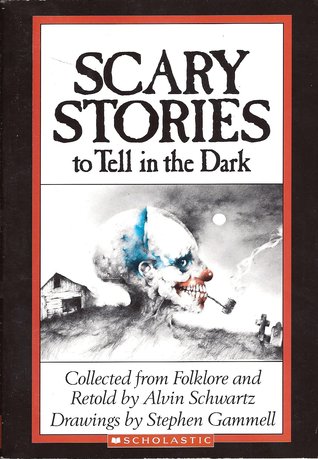


  5. Scary Stories to Tell in the Dark, by Alvin Schwartz. A classic collection of horror folktales for kids! I remember first reading this one when I was 10 or 11 at my aunt’s house on Cape Cod—I can’t remember whose book it was (probably belonged to one of my cousins), but I remember tentatively flipping through the pages and reading a couple of the tales before I got too creeped out and put it away, only to bring it back out a couple hours later and read some more. Stephen Gammell’s illustrations really add to the scare-factor. I get chills just thinking about them!
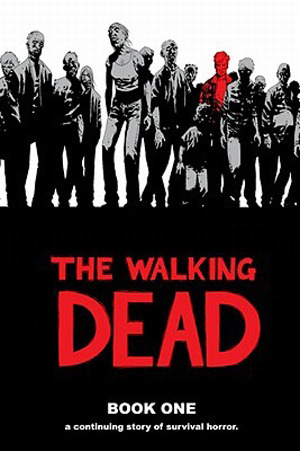


  6. The Walking Dead, by Robert Kirkman and Charlie Adlard (illus.). Okay, I guess this one is sort of a gimme these days, but I decided graphic novels needed some representation on this list. I enjoy both the TV and comic versions of The Walking Dead—they each have their own distinct personalities, and they’re different enough that I don’t find myself constantly comparing them. I really enjoy the character development in the show, but I think the graphic novels have more moments of true, stomach-flipping horror. (And it’s always the humans, rather than the zombies, who perpetrate it.)


  7. Baby-Sitters Club Super Mystery #3: Baby-sitters’ Fright Night, by Ann M. Martin. Like most young female readers of the ‘90s, I loved me some Baby-Sitters Club. The mysteries were always my favorites, and this was one of my most dog-eared ones. Sadly, it’s been a decade and a half since I read it and I don’t remember many details, but here’s what I managed to dredge up from the quagmire of my memory: The BSC goes to Salem, Massachusetts around Halloween. Can’t remember why. School trip? Maybe. Anyway, there is a famous diamond that gets stolen, and the BSC does their thing. Abby was super-cool, and I loved her narration. I wanted to be awesome like Abby! Who knows how this would hold up if I re-read it now, but at the time it was the perfect mix of spooky and fun for Halloween.

  8. And for my final offering, I present you not with a book, but with an internet-y virally-spread creepypasta-presented-as-reality type story called The Dionaea House. It’s about…a creepy house. And that’s all I’ll say, so as not to spoil anything. But it’s good. And veeeeery creepy. Click here to read it.

Now that I’ve thoroughly creeped myself out writing this post and am now jumping at noises and shadows, I don’t think I’ll be walking my dog after dark tonight. What are your favorite creepy or Halloween-y books? Anything in particular you like to read when the weather cools down and the leaves start to blow? Hit the comments and give me suggestions of things to read and add to my list!

Thursday, June 6, 2013

In Which I Return from the BEA

Hello again, bookworms and moths! I’ve returned from the event of the season, Book Expo America, with a book haul to end all my previous presumptions of having impressive library hauls. Plus several new book blogging friends (Paper Reader, Girls in Capes, Dead Book Darling, and Headstrong-Tomgirl —all of them have much more established blogs with incisive reviews, so check them out!), and answers to most of my questions about American Girl books.

 photo IMG_0429_zpsf1ebe804.jpg
Anyway, for everyone as clueless as I was before I registered for this shindig, the BEA is to the publishing industry what NY Fashion Week is to the garment industry.

NYFW BEA
Dress is extremely fashionable Dress is power-lunch or power-walk
Runway shows with next season's clothing Galley proof giveaways of next season's books
Stars are mobbed for autographs Authors are mobbed for autographs
Editors spew theories about "upcoming trends" Editors spew theories about "upcoming trends"

Totally the same thing! Except with people happily eating cupcakes at parties, and a focus on books instead of clothing...

Mo Willems Cupcake

Trend Report


YA Dystopian is Dead. Long Live YA Contemporary, Diversity, and Melded Genres

Editors from Arthur A. Levine Books/Scholastic, Candlewick Press, The Atlantic, and Disney-Hyperion proclaimed that the YA Dystopian trend is over, but every few minutes they seemed to decide another buzzword was the future of the YA market. I can’t remember if different publishing houses were predicting different trends, but it seems like the YA book world could be spending the next season in transition before a new real trend emerges. Let’s face it, diversity and melded genres cannot be a fad the way that vampires/werewolves/angels/corrupt futuristic governments have been because something that’s offering novelty at every corner is not going to gain the trust of reluctant readers. (Unless you distill “diversity” into a trite common theme of “I’m different but I love myself for it!” which I very much hope doesn't happen.)

Based on the galleys I picked up and the books I heard about at the panel, transcending time is a theme, whether through literal time travel (the much-hyped All Our Yesterdays), genetic immortality (Wake Up Missing), or ghosts (Marie Antoinette, Serial Killer; Plague in the Mirror; Raven Boys quartet; These Broken Stars).

As for the editor-observed diversity theme, maybe there’s a Native American Indian moment coming this fall (Ghost Hawk, If I Ever Get out of Here, Sorrow’s Knot), but it looks like there’s a long way to go still.

Welcome Back, Stand Alone Novels!

The editors on the YA panel said that they are “weary” of the trilogy craze that has dominated the market for years. We can only hope that readers agree, and that John Green gets some healthy competition on the NYTimes YA Bestsellers list.

New Adult Fiction

This is the latest buzzword, and it seems to describe YA-like books with late teen / early twenties main characters who have more sex than normal YA characters. I think I picked up two that may qualify (Left Drowning and The Art of Falling). The only thing truly interesting about New Adult is that there’s no consensus on whether it exists.

I think it may work like imaginary numbers, so when a publisher has only one manuscript that seems like New Adult, it gets marketed as YA; but two manuscripts get farmed to genres, three claim a mature YA designation, and if there are four then the publisher can announce that New Adult is real. (Yes, the math on this is not just imaginary but wrong.)

American Girls Historical Book Questions

(because you know you had them too)


Why did Elizabeth Cole (Felicity books) become a blonde, and did someone simply Photoshop all the images of her to keep girls from learning she originally had beautiful dark brown hair?

At the time of the Elizabeth Cole BFF doll creation, American Girl determined that they had overrepresented brunettes, and for the sake of balance they needed another blonde. I really enjoyed talking to the American Girl editor, but it is INSANE that the American Girl/Mattel people thought that blondes should be 40% of their visual image.

As for how such hair changes are done, the illustrator was asked to rework some pictures. There may have also been some Photoshopping involved, but it was mostly done by hand.

Why wasn’t Ivy the main character of the Julie/Ivy 1970s pair? Did American Girl really need another blonde?

The process of making an American Girl historical character starts with brainstorming issues or events that the company would like to address, matching these to a time period, and fleshing out further themes for the series. The company then commissions an author, who develops the character’s personality and stories. After that, the company determines what the character looks like (by figuring out what color hair they need, as we saw above).

In the case of Julie/Ivy, author Megan McDonald wrote a draft of Meet Julie that described Ivy. The production team loved Ivy so much that they hired an additional author, Lisa Yee, to write a separate book about Ivy in time for the Julie launch.

I still think it’s weird that American Girl’s efforts towards showing the diversity of experiences and circumstances in American history, as well as the unity of family and friendship bonds, hasn’t led to an AAPI main character in the historical line. I can only guess that the story the editor told me about Ivy’s inception means that American Girl legitimately didn’t realize it was ignoring the AAPI community, and when they saw Ivy in the Julie draft, they decided to create an Ivy doll before drawing too much attention to their oversight.

Why did they stop giving all the books formulaic names beginning with Kaya?

Booksellers HATED that the titles for each girl were essentially the same. Family members who didn’t fully understand the concept of a series of different girls would get confused and buy the wrong books for presents. And the original Pleasant Company had never expected they would have so many characters that the repetitive titles would become a problem.

What’s up with new girls not having stories that take place during a year ending with 4 (earlier books were set in 1904, 1864, 1774, etc.)?

Pleasant Rowland, founder of the company, created the original characters as a way for girls to connect with history. Ms. Rowland had a background in education, and figured that by making all the years end with a 4, children would have an easier time remembering the century and decade. But in order for the 4 to fit all the later stories, some finagling on the part of the production team was necessary. The Julie books were intended to be about the bicentennial celebrations in 1976, but to keep the year 1974 the first book had to take place two years before the celebration book. When the company wanted to use the events of the 1853 New Orleans yellow fever epidemic, they decided it would be extremely confusing to talk about the year in the books but put 1854 on the covers. Thus, they freed themselves from their final digit restriction.

Friday, April 26, 2013

Youth Revisited: Lemon Squares

 photo IMG_0283_zps0abac871.jpg When Alyssa and I first talked about doing a Youth Revisited post about food, I was kind of stumped.

Wednesday, April 24, 2013

Youth Revisited: Watergate Salad Recipe

For our latest recipe challenge, Susan and I decided to do recipes we remember fondly from our childhood. Interestingly enough, they both ended up being desserts. I chose Watergate salad, hearkening back to a time when salads were a lot more diverse than greenery in a bowl with some extra add-ons to liven things up (not that I’m against that sort of salad. I actually rather enjoy it!). Just looking at it reminds me of the ‘50s and ‘60s, when people ate all manner of strange “salads” and things that might appear odd to modern taste buds, served at dinner parties and potlucks. (I’m picturing people in Mad Men-style attire, smoking cigarettes and schmoozing. It’s a very glamorous American nostalgia mental image, and I wasn’t even alive then for me to be nostalgic about it now!)

Alas, my visions of vintage fashion and family life might be set a couple decades too early, as pistachio pudding mix, one of the main ingredients, didn’t come out until 1975. Apparently Kraft, the maker of said pudding, came up with the recipe under the moniker of “Pistachio Pineapple Delight.” There doesn’t seem to be much consensus on how the name “Watergate” came about. Some think it was a new name for Kraft’s recipe invented by a Chicago food editor, others say the whole thing was concocted by a sous chef at the Watergate Hotel, and still others say it’s just an association with the presidential scandal that occurred around the same time as the salad’s height in popularity. Wikipedia says all these things and more.

At any rate, I find “Pistachio Pineapple Delight” to be a little too literal for me. I prefer the name Watergate for the tasty green concoction—mysterious, with absolutely no hints as to what the ingredients are. And Watergate was such a mystery to me as a child, my eyes peering at it over the edge of my grandparents’ dining room table, sitting so unnaturally pastel in its crystal bowl, waiting until such a time as I would be allowed to glop it on my plate. Did it contain water chestnuts, and that’s how it got its name? Wasn’t Watergate also a kind of crystal, and maybe that’s the kind of crystal bowl it always lived in on my grandma’s table, and maybe that’s why it’s called Watergate? It was an endless source of mystery and speculation to me. Not only the name, but the ingredients that made it so delicious as well.

Related Posts Plugin for WordPress, Blogger...