Showing posts with label yay illustrations!. Show all posts

Tuesday, July 12, 2016

Comics Review: Monstress

Title: Monstress (Issues #1-6)
Author: Marjorie Liu & Sana Takeda
Publisher: Image Comics
Publication Date: Trade paperback collecting issues #1-6 to be released on July 19th, 2016
Read: July 2016
Where It Came From: Digital ARCs from publisher via NetGalley
Genre: Fantasy-sci-fi-horror-graphic-novel?
Rating: 4 Mask Pieces

Hey, remember when I was talking about how much I love Image Comics? Here’s another one from them! I saw issues of Monstress on the counter at my Friendly Local Comic Shop a couple months ago and was really drawn to the art, but, as is usual for me, I decided to wait for the trade paperback to come out. However! When issues #1-6 recently came up on NetGalley in anticipation of said trade paperback releasing later this month, I couldn’t resist the chance to catch up on what I’ve been missing with this title.

Monstress is the story of Maika, an Arcanic (a.k.a. supernatural hybrid) teenage girl. She lives in a world still rife with conflict between Arcanics and humans after a great war between the two. Arcanics are being captured and sold as slaves to humans, and a powerful religious organization of human women called the Cumaea performs experiments on Arcanics and murders them to harvest a magical substance called lilium from their bones. Maika and her best friend Tuya are just trying to settle down and find normalcy again after surviving the war, but Maika has a secret. There is a monster living inside of her—literally—and it hungers for blood and violence. As Maika’s control over it weakens, she travels to the city of Zamora, located at the edge between the territory of the Federation of Man and the land of the Arcanics, to look for answers in perhaps the most dangerous place possible.

And that’s just the beginning of the first issue! A lot of ground is covered, story-wise, and it took me a few issues to get a good mental handle on the world and the moving pieces of the plot. However, the richness of the world-building really is beautiful as it unfolds, and to call it simply Asian-inspired seems to somehow be an inadequate description. It is a fantasy world, to be sure, but the nods to and nuances of a diversity of Asian cultures from our world are incorporated seamlessly, and come together with all of the imaginative fantasy elements to form something new and singular. I believe in the letters section of one of the issues, creator Liu talks about how she wanted the comic to reflect the hybrid nature of Asia itself, and I think this was accomplished masterfully.

The comic also does a masterful job of demonstrating the horrors and atrocities of war and its aftermath, which only takes on even greater depth and meaning when you learn that some of the inspiration for this story comes from the experiences of the author’s grandparents. And I will be honest—the violence and horror in that first issue (murder of children, implied cannibalism, references to rape) made me feel so sick to my stomach that I wasn’t sure I wanted to continue reading. But I did, and I’m glad I did—violence is still a part of the comic, as you would expect of a story concerned with war, but in later issues I didn’t find it was quite as much at the forefront of the storytelling as it was in that first issue. For me, the story really hit its stride in issues four and on, when other places and characters from the fringes of the world as we know it so far start to become tied in to Maika’s story, and some questions begin to be answered to a degree (and of course new ones come up). And that ending to issue six was a killer!

Let’s talk about Sana Takeda’s art for a moment, because it is absolutely stunning—beautiful, with a sort of Art Deco, steampunk vibe, and manga-esque touches here and there that add to that hybrid-Asia atmosphere that this comic does so well. For all the violent, scary things that her art depicts in this story, there is also room for occasional hits of the super-cute (Kippa the kitsune-like fox child hugging her own big fluffy tail makes me squee every time), as well as really just staggering splendor and detail (Corvin D’Oro, anyone?). Completely frame-worthy.

Overall, though the initial level of violence and gore made me squeamish and I was a bit confused about the history and mythology of the setting, as I continued reading, the decrease in depicted violence and further clarification about murky aspects of Maika’s world (the quick lessons from the cat Professor Tam Tam at the end of each issue were helpful, too) helped me to become invested in the story, and now I can’t wait to find out what happens next (because that issue six, you guys!!). And though I am not one to usually buy single issues of comics, knowing that there are fun extras like letters and additional art might convert me, at least in the case of Monstress!

*As ever, much as we are grateful for the copies, our review is uninfluenced by their source.

Monday, May 16, 2016

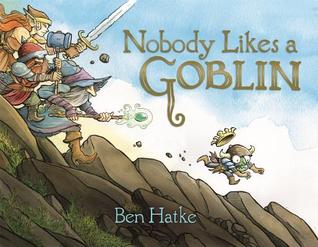
Book Review: Nobody Likes a Goblin

Title: Nobody Likes a Goblin
Author: Ben Hatke
Publisher: First Second
Publication Date: June 7th, 2016
Read: May 2016
Where It Came From: Print ARC received via Goodreads Giveaways
Genre: Fantasy-children’s-picture-book
Rating: 4.5 Honk-Honks

I was so happy to receive a review copy of this picture book through a Goodreads Giveaway. I’ve never read anything else by Ben Hatke (though his Zita the Spacegirl graphic novels have always looked intriguing), but the cover art and the blurb were delightful. And now that I’ve read the book, I can confirm that it is delightful as well!

In the story, cute little Goblin is minding his own business, living in his dungeon and hanging out with his friend Skeleton, when a band of mean, nasty adventurers invades and takes everything—even Skeleton! So Goblin bravely goes out into the world to rescue his friend, though he has been warned to be careful, because nobody likes a goblin. The reversal of the typical order of things in a fantasy story here is fun, with Goblin and other monsters as the heroes, and the adventurers and townsfolk as the thoughtless, greedy villains. I love the humor in both the words and the pictures, and the illustrations add richness and depth to the story, with plenty of interesting things to notice and talk about that never come up in the text. Like the woman who is on the adventurers’ cart full of looted treasure!! What happened there?!

My favorite part, though, had to be Honk-Honk. As Goblin starts off on his adventure, he asks a neighboring hill troll if he saw which way the adventurers took Skeleton, and as she points him in the right direction, she mentions that they took her Honk-Honk away with them (which of course, sweet Goblin that he his, he promises to bring back). At the time there is no other context, and I was like, “...what’s a Honk-Honk?” But later, when Goblin finds the adventurers and their cart of spoils, when you look at the illustration, there is a goose in a cage amongst the riches (and next to the random captive woman)! Honk-Honk!!! Honk-Honk plays his (or her) part in chasing off the baddies and is eventually returned to the hill troll, and they join Goblin and their other new friends for a meal at home in the dungeon at the very end of the book. Cute, funny little details like that make this story a pleasure from start to finish.

Dungeons and Dragons, RPG-loving parents (or even just parents who are fantasy fans) would probably love to share this with their children. Even grown-ups without children will find much to love in this book and could give it a nice home on their shelf. Older, elementary-age children would understand the humor in the reversal of the good guy/bad guy roles, but younger children could enjoy the story, too (though it’s probably not one I would choose for a 5-and-under storytime program—I think that a grown-up and child would get more out of it by sharing the story as a pair).

*As ever, much as we are grateful for the copy, our review is uninfluenced by its source.

Monday, March 23, 2015

Book Review: Revenge of the Witch

Title: The Last Apprentice: Revenge of the Witch
Author: Joseph Delaney
Publisher: Greenwillow Books
Publication Year: 2005
Read: March 2015
Where It Came From: Library
Genre: Middle-grade-to-YA-historical-fantasy-horror
Rating: 4 Boggart Pits

I can trace my interest in these books back many years, based almost entirely on the eye-catching art. The covers for this series are creepy, atmospheric, and striking (and, as I discovered when I read this one, the art continues on the inside, too!). When I saw that it was being made into a movie with the awesome Ben Barnes (a.k.a. Prince Caspian, a.k.a. Dunstan Thorn), I finally decided I had better read the book, since the general chatter I’ve heard about the books didn’t seem to quite match up with the almost goofy quest-fantasy look of the movie trailer. I mean, I’ve heard these books are SCARY, and the movie looks anything but.

The story begins with our narrator, twelve-year-old Thomas Ward, getting sent off to try out to be the apprentice to the local Spook, or the person who roams about the countryside taking care of unwanted supernatural phenomena and creatures, such as boggarts, witches, ghouls, and the like. Thomas is the seventh son of a seventh son, making him uniquely qualified for this job. His Mam believes he is in fact even more uniquely qualified than that, but never quite explains why, which is a strong thread of mystery running through the story. The story follows Tom through his trial period (spoiler alert: he gets the job), and through the early days of his apprenticeship with the Spook. He meets a pointy-shoed local girl named Alice, and eventually ends up inadvertently releasing a big, bad witch called Mother Malkin into the world. He then tries to counteract the bad she does and has to figure out a way to recapture her to save both himself and his family.

The story is very well-written. It is a quick read, but there is a lot of complexity beneath the surface. Tom’s voice shines brightly—he is an honest, straightforward narrator. He is a good person to his core, but we see his struggles as he tries to make the right decisions, and, when he doesn’t, try to fix things. All of the main characters are similarly complex. The Spook, for instance, has a fraught relationship with his brother, a past occupation that comes to light, and qualms about burning witches (too cruel, he says), that show he is more than his gruff, beastie-hunting exterior. Tom’s Mam, too, is wonderfully complex and mysterious—she loves her son, but not in a soft way, and I look forward to finding out more about her in future books. And then there is Alice—torn between her family and wanting to maybe not be like them. She is a particularly compelling character because of her seeming powerlessness in her situation, and her struggle to make choices to gain power in her own life. I was initially a little turned off by the number of “evil” women in the story (the witches), but complex and layered characters like Alice and Mam mitigated that.

As for the creepy factor, this was another book where I found myself thinking, okay, this is a little creepy, but not actually frightening! as I was reading, but then my phone would buzz or someone would come in my room to talk to me and I’d jump about 5 feet in the air. So…not nightmare-inducing, but a little scarier than I initially gave it credit for!

I enjoyed this one, and look forward to reading the rest of the series and delving deeper into these characters. Also, I forgot to mention that there is a passive-aggressive boggart housekeeper—what could be better than that? (Also also, I hemmed and hawed and then included “historical” in the genre tags, because it could easily be a fantasy world, but there was mention of people reading Greek and Latin. So I guess it must be this world, or a version of it, after all?)

Wednesday, March 18, 2015

Book Review: Lost in Translation

Title: Lost in Translation
Author: Ella Frances Sanders
Publisher: Ten Speed Press
Publication Date: September 2014
Read: March 2015
Where It Came From: eARC via NetGalley* + purchased copy
Genre: Non-fiction-language-culture-coffee-table
Rating: 4 Tsundoku Book Piles

What a fun little book! This “illustrated compendium of untranslatable words from around the world” (as it calls itself) is a delight, gathering up words from languages the world over that have no equivalent in English, but that put a name to feelings and ideas we know and understand, but perhaps had difficulty describing before (like jayus, from Indonesian—a joke so bad you can’t help laughing at it), or ones that give insight to aspects of other cultures and places (like fika, from Swedish—getting together to sip coffee, eat snacks, and relax together).

Each word gets a two-page spread, with the name of the language it’s from and some additional explanation on the left side, and the word, definition, and a watercolor illustration on the right. The art is lovely, but then again, I am a sucker for watercolors! I will note that in my digital ARC, I thought the watercolor looked a little better than it does in the finished book—I don’t know if it’s the way it was printed or what, but it’s especially noticeable in the cursive handwritten definition for each word, which looks a little fuzzy.

I am a huge language nerd, and I love that this book celebrates how culture and language are inextricably intertwined, and how language shapes the way we think. Even if you wouldn’t consider yourself particularly language-nerdy, there’s still a lot of fun to be had with this book, like with pisan zapra (from Malay—the time it takes to eat a banana) or kummerspeck (from German—literally “grief-bacon,” or weight gain from eating one’s feelings). I was a little unsatisfied by their definition of the Japanese concept of wabi-sabi, but I learned a new Japanese word, too! Komorebi--sunlight filtering through tree leaves above you. This is something I photographed often when I was in Japan, and always noticed and enjoyed during my many walks through city, countryside, temple, and shrine. How lovely to learn that there is a word I could have used to talk about it!

A couple other favorites: Trepverter, from Yiddish, meaning that witty comeback that you think of only after the time to use it has passed. (I seem to remember that this one exists in French, too--l’esprit d’escalier, or the spirit of the stairs. Coming up with that zinger right when you’re leaving!) And this one, particularly apt for this blog: Tsundoku, from Japanese, referring to the act of buying a book and then not reading it, usually piling it up with other books bought and as yet unread.

Fun book. It would make a great gift or be a nice addition to your coffee table, providing fodder for conversation, some laughs, and thinking.

*As ever, much as we are grateful for the copy, our review is uninfluenced by its source.

Monday, October 14, 2013

Book Review Times Two: The Pretty Pictures Edition

Hi all—it’s a twofer, it’s a twofer! Two reviews in one post, that is. Who doesn’t like a double dose of nice illustrations? First up is a very cool graphic novel, followed by a children’s picture book of a Scottish folktale. Keep reading for the rundown!

Title: The Unwritten: Tommy Taylor and the Ship That Sank Twice
Author: Mike Carey, Peter Gross, Kurt Huggins, & Zelda Devon
Publisher: Vertigo
Publication Date: September 24th, 2013
Read: October 2013
Where It Came From: eARC from publisher via NetGalley*
Genre: Fantasy Graphic Novel
Rating: 3.5 Sunken Ships

This lovely little graphic novel is billed as a standalone prequel to the author’s series, The Unwritten, which is (from what I gathered through a quick Amazon check) about a guy named Tom Taylor whose life is kind of ridiculous because his father named him after the main character of his insanely popular Harry Potter-like book series. And it’s about the power of literature and words and stuff. Although I have wanted to try out this series for some time, I have not yet done so, and thus I came to this graphic novel having no background on the story whatsoever, aside from the aforementioned basic ideas. I was a perfect candidate to test on and see if the book succeeds as a standalone! So now the question is, did it?

The answer is yes, for the most part. First things first: The art is really, really beautiful. It is all rendered in gorgeous full-color, and a treat to look at. As for the story itself, there are two different tales unfolding at the same time—that of the man writing and publishing the first Tommy Taylor book to coincide with the birth of his son, who he has decided to call Tom Taylor, and that of the actual story about Tommy Taylor’s adventures at a school for magic and his discovery of his own magic in his efforts to take down an evil vampire. The Tommy Taylor story was interesting enough, with a wink-wink-nudge-nudge to many fantasy tropes, and some very funny bits. I especially liked that when there was a sort of seriousness in the Tommy Taylor story, it would often have a humorous line to bring things back into perspective. In one of my favorite examples of this, a man and a sea monster are talking about the recent deaths of some people at sea. A man and a sea monster having a conversation is pretty amusing straight off, but what they’re talking about is pretty rough, right? People dying when a ship sinks is no fun at all. But when the monster insinuates that the man had a thing for a woman who went down with the ship, the man snarks back with, “Anyone can read a gossip column. Even without opposable thumbs.” Which gave me a really hilarious mental image of the big whale-looking leviathan reading a newspaper.

The really intriguing part, though, was the diary entries by the Tommy Taylor author, and trying to get a handle on what he’s seeking to accomplish by naming his son after the book character, timing the publication to his son’s birth, making it seem like the biological mother was not the actual mother… Is he just an egomaniac crazy douche-y monster willing to do anything for marketing, or is there something more to it? While this book does not tell you for a certainty if there is something more to it and, if so, what that something more may be, it definitely made me even more interested to read the actual The Unwritten series to see what was really going on and how it all plays out.

Overall, I think it was pretty successful as a standalone graphic novel. For me, as one uninitiated into the greater Unwritten universe, the fantasy meta-ness of the Tommy Taylor story added to its appeal, and the mysteriousness of the Tommy Taylor author’s storyline drew me in and made me want to know what the heck was going on. The writing was very good, and the art was awesome, too. I waffled between giving this a 3.5 or a 4, and settled on 3.5 because while it was good and definitely intriguing, I didn’t LOVE it. I think the people who would LOVE it and really get the most out of it are those who already have The Unwritten series under their belt—this sort of origin story would probably be most meaningful to those who already know what comes after. For the rest of us, we get a good story and good art, and with luck our interest is piqued enough to check out the graphic novels it spun off from. After we’ve read those, we can come back to this one and appreciate it on a different level.


Title: The Woman Who Flummoxed the Fairies
Author: Heather Forest
Illustrator: Susan Gaber
Publisher: August House, Inc.
Publication Date: October 7th, 2013 (Reprint Edition)
Read: October 2013
Where It Came From: eARC from publisher via NetGalley*
Genre: Children’s Folktale Picture Book
Rating: 4 Tasty Cake Crumbs

In this retelling of an old Scottish folktale, a bakerwoman famous for her delicious cakes is captured by the King of the Fairies, who wants her to bake for him and his kingdom. Knowing that she will never be allowed to leave if they taste her amazing cakes, the woman uses her wits to find a way out of the situation and get back home to her husband, baby, and baking. I thought this book was very cute and lots of fun. I’m a sucker for a good folktale, and this one was new to me! I like that it’s a story about a mother having an adventure, and that she’s a woman with skills who uses her head to rescue herself. And on top of that, she keeps her promise to the fairies at the end! All in all, this nameless bakerwoman is a pretty great role model.

The story is well-written, with repetition of certain lines that children can pick up on and join in reading or acting out with the story-reader (such as the Fairy King’s reaction to each of the bakerwoman’s requests: “He clapped his hands, he stamped his foot, and the ground split open”), and there’s funny stuff that will make kids giggle, such as a baby flinging porridge around at fairies. Though the Fair Folk from Celtic cultures and story traditions can sometimes be scary, these fairies aren’t at all, and the resolution of the story is happy for everyone. The last line is a good message for children, and well put for the enjoyment of grown-up readers, too: “For fairies’ gold, they say, is like love or knowledge—or a good story. It’s most valuable when it’s shared.” Awwwww! For added learning, there is also an author’s note at the end that talks about the story’s Scottish origins and the meaning of the word “flummox” (which is a very good word, I might add).

Equally important to the writing, where picture books are concerned, are the illustrations. I thought the art was very cute and pretty—it has a certain softness and plumpness, but still manages to be vaguely ethereal. The palate is colorful but muted, and it all blends together seamlessly with the story. Overall, I found this to be a very nice book for kids and kids-at-heart.

Are you as enticed by pretty pictures in books as I clearly am? What are some of your favorite graphic novels or kids’ books with great art? Hit us up and let us know!

*As ever, much as we are grateful for the copies, our reviews are uninfluenced by their source.

Saturday, October 12, 2013

Booktoberfest, or, Happy Halloween Reading!

I love Halloween. I always try to read at least one spooky and/or Halloween-themed book every October, so on a recent trip to my local independent bookstore I was very excited to see a display of the new Penguin Horror line of special editions of classic horror tales. Not that I’m actually a horror aficionado—more like I love great cover design, and Penguin has definitely cornered the market on that front. According to Penguin USA’s website, this is a six-volume series curated by filmmaker and horror lit fan Guillermo del Toro. I don’t think anyone would question this guy’s horror chops, but just in case you’d like extra proof that he’s a good man for the job, I’ll direct you to this nightmare-inducing creature from his excellent film, Pan’s Labyrinth:


SO TERRIFYING.

The cover art for these editions was created by Penguin Art Director Paul Buckley, and they are very nice hardcover copies that would make a festive eye-candy addition to any bookshelf. Seriously, I hold Penguin solely responsible for all the duplicate classics I have on my shelves, which I felt compelled to buy simply because of the awesome covers. Maybe some of these will join the ranks someday! Here’s a look-see at what’s on offer in this line:

I would probably be interested in trying out the Lovecraft (every year I mean to check out his books, but I never get around to it…) and The Haunting of Hill House. After actually reading Frankenstein in college it struck me as more sad than scary, but that is an awesome cover. The Poe one is, too. And all the rest of them. WHY MUST YOU DO THIS TO ME, PENGUIN?!?

I thought I’d follow up my fascination (obsession?) with the Penguin Horror line with a rundown of some of my favorite spooky or Halloween-y books throughout the ages. Maybe you’ve read some of these, and maybe some will be new to you. In no particular order, I present to you a smattering of my seasonal fall faves:


  1. The Hallo-Wiener, by Dave Pilkey. A super cute picture book about a dachshund who is made fun of by all the other dogs for being short, and humiliatingly has to dress up as a hot dog for Halloween. But when a monster attacks, he saves the day and the other dogs feel ashamed about their treatment of him. Back when I was in high school I used to read books to kids at a local Halloween event, and this was always a great favorite. Very cute and funny!


  2. House of Leaves, by Mark Z. Danielewski. In the interest of full disclosure, I have not actually finished reading this book. I started a couple years ago (in October, of course) and for one reason or another got distracted and haven’t gotten back to it yet. Even if I had finished it, I don’t think I’d be up to the task of blurbing it, so I will refer to GoodReads for this one:
    Years ago, when House of Leaves was first being passed around, it was nothing more than a badly bundled heap of paper, parts of which would occasionally surface on the Internet. No one could have anticipated the small but devoted following this terrifying story would soon command. Starting with an odd assortment of marginalized youth -- musicians, tattoo artists, programmers, strippers, environmentalists, and adrenaline junkies -- the book eventually made its way into the hands of older generations, who not only found themselves in those strangely arranged pages but also discovered a way back into the lives of their estranged children.

    Now, for the first time, this astonishing novel is made available in book form, complete with the original colored words, vertical footnotes, and newly added second and third appendices.

    The story remains unchanged, focusing on a young family that moves into a small home on Ash Tree Lane where they discover something is terribly wrong: their house is bigger on the inside than it is on the outside.

    Of course, neither Pulitzer Prize-winning photojournalist Will Navidson nor his companion Karen Green was prepared to face the consequences of that impossibility, until the day their two little children wandered off and their voices eerily began to return another story -- of creature darkness, of an ever-growing abyss behind a closet door, and of that unholy growl which soon enough would tear through their walls and consume all their dreams.

    I remember the story being layered, complexly structured, meandering, and very creepy. The whole bigger-on-the-inside thing is fun when it’s a TARDIS, but for the house in this book it was more ominously malevolent. Someday I will finish reading it!


  3. The Diviners, by Libba Bray. Having read other things by Libba Bray, I knew she was more than capable of scary (the poppy knights in A Great and Terrible Beauty, anyone?). Still, I was not prepared for the level of creepiness I found in The Diviners. The story revolves around a girl named Evie O’Neill and a cast of other bright young things living in New York in the 1920s. Sounds pretty normal, until things take a left turn into creepy territory when occult shenanigans and a serial killer enter into their lives, and Evie, with her secret ability to learn things from touching objects, tries to get to the bottom of it. I read this one quite accidentally last October, having no idea it would end up being so appropriate for the month. Parts of it were really, really scary. Actually, I think the book trailer probably does a better and more artful job explaining it than me. I normally find book trailers to be kind of ridiculous and hilarious and not my favorite thing, but this one really captures the feel of the book:


    Yeah. Terrifying, but awesome.


  4. “Nowhere is Safe,” by Libba Bray, from Vacations from Hell. While we’re on the subject of Libba Bray, this is the first thing I read from her that really made me go, “Wow. That was scary. And really, really good.” There were moments of creepiness in the Gemma Doyle trilogy, but nothing really scary for me. Then I read her short story in the Vacations from Hell YA anthology. Her story, “Nowhere is Safe,” was really the standout of the whole book. Here is my attempt to summarize it in one sentence without ruining any of the fun: Some young people are backpacking in Eastern Europe, and find themselves trapped in a town where the people have a contract with the Devil. Perhaps your brain might be thinking, “Hostel?”, but I assure you it’s not like that at all (I’m not into the slasher/torture-porn sort of stuff.) It’s so so SO worth tracking down a copy of this book—the story is scary good and good scary.


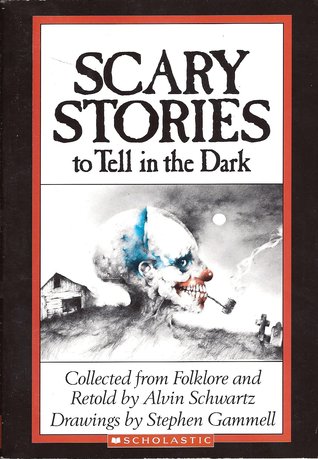
  5. Scary Stories to Tell in the Dark, by Alvin Schwartz. A classic collection of horror folktales for kids! I remember first reading this one when I was 10 or 11 at my aunt’s house on Cape Cod—I can’t remember whose book it was (probably belonged to one of my cousins), but I remember tentatively flipping through the pages and reading a couple of the tales before I got too creeped out and put it away, only to bring it back out a couple hours later and read some more. Stephen Gammell’s illustrations really add to the scare-factor. I get chills just thinking about them!


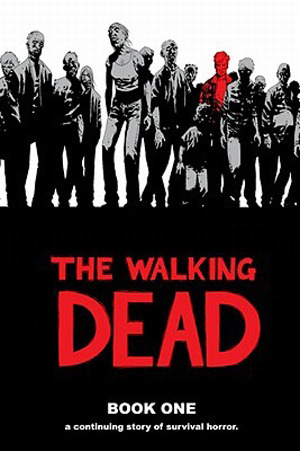
  6. The Walking Dead, by Robert Kirkman and Charlie Adlard (illus.). Okay, I guess this one is sort of a gimme these days, but I decided graphic novels needed some representation on this list. I enjoy both the TV and comic versions of The Walking Dead—they each have their own distinct personalities, and they’re different enough that I don’t find myself constantly comparing them. I really enjoy the character development in the show, but I think the graphic novels have more moments of true, stomach-flipping horror. (And it’s always the humans, rather than the zombies, who perpetrate it.)


  7. Baby-Sitters Club Super Mystery #3: Baby-sitters’ Fright Night, by Ann M. Martin. Like most young female readers of the ‘90s, I loved me some Baby-Sitters Club. The mysteries were always my favorites, and this was one of my most dog-eared ones. Sadly, it’s been a decade and a half since I read it and I don’t remember many details, but here’s what I managed to dredge up from the quagmire of my memory: The BSC goes to Salem, Massachusetts around Halloween. Can’t remember why. School trip? Maybe. Anyway, there is a famous diamond that gets stolen, and the BSC does their thing. Abby was super-cool, and I loved her narration. I wanted to be awesome like Abby! Who knows how this would hold up if I re-read it now, but at the time it was the perfect mix of spooky and fun for Halloween.

  8. And for my final offering, I present you not with a book, but with an internet-y virally-spread creepypasta-presented-as-reality type story called The Dionaea House. It’s about…a creepy house. And that’s all I’ll say, so as not to spoil anything. But it’s good. And veeeeery creepy. Click here to read it.

Now that I’ve thoroughly creeped myself out writing this post and am now jumping at noises and shadows, I don’t think I’ll be walking my dog after dark tonight. What are your favorite creepy or Halloween-y books? Anything in particular you like to read when the weather cools down and the leaves start to blow? Hit the comments and give me suggestions of things to read and add to my list!

Saturday, September 14, 2013

Book Review: The Book of Lost Things (Mister Max #1), by Cynthia Voigt

Title: Mister Max: The Book of Lost Things
Author: Cynthia Voigt
Publisher: Alfred A. Knopf Books for Young Readers
Publication Year: September 10th, 2013
Read: September 2013
Where It Came From: eARC from publisher via NetGalley*
Genre: Middle-Grade-Historical-Mysteryish
Rating: 4 Delicious Pastries

The Quick and Dirty:


In the early 1900s, 12-year-old Max Starling’s actor parents are invited to a maharajah’s palace to start a new theatrical company, but when he arrives at the docks to sail away with them to India they are nowhere to be found. On top of that, there is no record of the ship they were meant to depart on ever being in port at all. Not knowing whether his admittedly flighty parents left him behind or were kidnapped, Max needs to strive to be independent and make enough money to live on until he can get to the bottom of the mystery. He is not alone in his endeavor, though, with his grandmother and a cast of other characters to help him along as he discovers that his talent may not be detecting, per se, but rather helping others solve their problems. This was a really fun middle-grade novel with perceptive, thoughtful, and humorous writing, and great illustrations.

The Wordy Version:


Sometimes, as an adult, the problem I run into when reading middle grade books is that they often feel, in a way, “dumbed down” for younger audiences. This might make sense—younger audiences at a lower reading level need books at their level, and as an adult it’s natural that the reading level and stories may not provide much challenge, and simpler writing and storylines might not hold one’s interest. Many times after reading a middle-grade book I find myself thinking things like, “That was a fun book—I would have loved it when I was 11,” or “I enjoyed it, but I probably would’ve enjoyed it more when I was younger,” or the dreaded and dismissive, “It was cute.” (“Cute” is not always a dismissive and diminishing descriptor, but I find it often can be.) And yet—there are middle grade books that are beloved by adults and kids alike, with no caveats or qualifiers to temper the adults’ esteem for these books. Harry Potter is the most obvious of this category. Good ol’ Mister Potter begins the series at 10 years old, and the book’s target audience is children in the same neck of the woods, age-wise. Of course there’s kind of a built in audience because as Harry and his friends grow up, the kids who started reading the books in their tween years grow along with them, but I think it’s safe to say that this is a series that is completely enjoyable regardless of the reader’s age. Another middle-grade series that seems to be quite popular across many age demographics is the Percy Jackson series by Rick Riordan. I’ve only read the first book and can’t speak to specifics, but from what I can tell it’s pretty popular with people of all ages as well (maybe not to the same extent as HP, but almost nothing compares with that juggernaut!).

There’s a fine line to walk between middle-grade enjoyable for mostly just the middle grades, and middle-grade that is genuinely enjoyable for everyone. This is something I ponder a lot (because I’m weird like that), and I haven’t yet been able to enumerate to my satisfaction what separates the two. Here are some of the qualities I’ve found that characterize the latter category:

  1. Good writing is good writing. No matter what audience an author is writing for, if the writing is good, people will respond to it. (Usually.) Less experienced readers can read and enjoy less skillful writing, but as you grow and read more and your tastes develop, you get a better sense of what good writing is. From that place, it is difficult to go back and enjoy things you may very well have loved if you read them when you were younger, and be able love them in the same way without any sort of qualifications. Really skillful writing, however, is enjoyable regardless of age.
  2. There is plot complexity without engendering confusion.
  3. Solid world building creates an implicit trust between author and reader.
  4. Writing isn’t shallow—it’s perceptive and insightful, and it can be those things without being overly deep and heavy.
  5. Kids can handle depth, though. When the writer handles it well, depth provides emotional resonance, and that’s a good thing.
  6. Readers can connect with characters besides the protagonist—characters are depicted as real people, not caricatures or tropes.
  7. Readers can empathize with the characters even though they may be in a situation the reader has never encountered. This usually comes part and parcel with the creation of realistic characters.

Pretty much all of those tie straight back into number one—good writing is good writing, and that applies to all books, not just middle-grade. Whew! All of this rambling and discussion just for me to finally get to the point and say I think Mister Max: The Book of Lost Things is on the “enjoyable for all ages” end of the spectrum.

I thought this was a well-written, entertaining book. I mean, duh, Cynthia Voigt, right? At the beginning of the book, though, I was a little skeptical. I was like, who are these flaky parents?! Poor Max, they don’t seem to care about him at all! But of course it’s not as simple as that. Through the course of the story, even though they are absent for most of it, the reader comes to see how much they really love Max. Moreover, while I was quick to judge his parents as flighty, the reader learns that Max, instead of feeling angry or bitter, admirably accepts them for who they are. Max is a precocious and wise 12-year-old, but at the same time he also manages to be realistic for that age.

Like Max’s parents, the other characters are more than their first impression would suggest—Baroness Barthold, Joachim the painting instructor, Ari the tutor—they are far from perfect people, but as more of each of their personalities is revealed, they become more compelling and sympathetic. (Refer to 5, 6, & 7 in the above list.)

The many mysteries Max is juggling throughout the story held my interest. The writing is perceptive, and Max in particular is a smart cookie. Topics of depth are explored without bogging the story down—my favorite of these is when Max takes a job to find a missing dog. When he finds her, he realizes that maybe her owners are not the best people to take care of her. He was paid to find the dog, but he doesn’t think it’s right to send a creature with no way to stand up for itself back to people who don’t care for her very well. What is right in that situation? The letter of the law vs. what’s right debate was handled an interesting way without straying into pedantic or heavy territory. I was hooked—I wanted to know what Max was going to do to solve the problem. (Refer to 2, 4, & 5 above.)

I also thoroughly enjoyed the style the book is written in. Max’s fascination with plays and acting, readily visible through the many characters he takes on to aid in his investigations and the way he thinks about his life as if it were a play, is also reflected through the set-up of the book. Chapters are titled in the “In Which Blahblahblah Happens” fashion, or alternatively, as if they were scenes in a play. For example, “The Lost Dog, Act 1” is the first chapter focusing on his search for the missing dog.

Overall, I liked this book a lot. The writing is intelligent and engaging, with enough going on to hold the interest of youngsters and grown-ups alike. Max is relatable—he wants to be an independent person and feels a sort of sense of adventure where that’s concerned, and I can remember feeling the same sorts of things at that age. The other characters are people you want to get to know better, and I always wanted to know how Max would end up solving the problems set before him. As an added bonus, the illustrations by Iacopo Bruno interspersed throughout the text are lovely and contributed to my enjoyment of the book. Bottom line: I liked spending time in this world with these people and would like to visit it again when the next book comes out.

What are some middle-grade books or series you have enjoyed, either when you were in the middle-grade demographic or later? Can you think of anything I should add to my running list of things that make a book targeted at younger readers appeal to people beyond that demographic?

*As ever, much as we are grateful for the copy, our review is uninfluenced by its source.

Related Posts Plugin for WordPress, Blogger...