Showing posts with label book review. Show all posts

Wednesday, March 22, 2017

Book Review: Cleopatra: A Life

Title: Cleopatra: A Life
Author: Stacy Schiff
Publisher: Little, Brown and Company
Publication Year: 2010
Read: March 2017
Where It Came From:Library e-Audiobook
Genre: Non-fiction-biography
Rating: 4 Strands of Pearls

I can't think of the last time a non-fiction book made me cry. Well, I'm sure there are actually lots of tear-jerking and upsetting non-fiction books out there, so let me amend that: I can't think of the last time a non-fiction book about the ancient world, with principal characters more myth than human to modern eyes, made me cry. I first tried to read this book in 2013 (thanks, Goodreads, for allowing me to compulsively keep track of my reading habits!), but I just couldn't get into it. Earlier this month I felt inspired to try again, this time with the audio version, and that did the trick (thanks as always to Susan, who turned me on to the merits of nonfiction in audiobook form). It held my ("rapt" might be an appropriate word here) attention as I listened to it while getting ready in the mornings and on my commute for the last couple weeks. I started listening on International Women's Day, which while not specifically planned, turned out to be apt.

A few thoughts. This book laid open some gaping, heretofore unknown failures in my education. Number one, and one that fits into the category of gape-mouthed shock and mind-blowing world-shifting (ask me about Marie Antoinette and the "let them eat cake" thing or coconut milk vs. coconut water someday if you're interested in more from this same odd subgenre for me)--Cleopatra VII (who was actually VI, but that's not the shocker here), was not actually Egyptian! She, and her entire Ptolemaic dynasty, was of Macedonian Greek descent. They ruled over Egypt and its people, but they and their city of Alexandria were a product of Hellenistic culture (though certainly with some merging and mingling with culturally Egyptian things). Is this common knowledge?? I have spent my entire life (with the exception of a note I remember from a Royal Diaries book I read in junior high mentioning that Cleopatra could have possibly been blonde) under the impression that Cleopatra was ethnically and culturally Egyptian in the way that Ramses and Nefertiti and all those other pharaohs that fascinated me as a child were.

Number two, the more this book went on, the more I realized how little I actually knew of the Caesar/Cleopatra/Marc Antony story. Culturally, it's something probably most everyone is aware of in some way, but I didn't realize how amorphous a blob my understanding of it was, punctuated by random markers (often erroneous, I now know) like "asp" and "love triangle" and "rolled up in a carpet." My weird, literature- and pop culture-influenced understanding of the tale involved a screwed-up timeline, confused relationships, unclear motives, and gaping holes. This book helped straighten out, clarify, and fill in, but only to a certain extent. The broad strokes are there, details too, to an extent, but a great many details are still lost.

And that is in no way the fault of the book. As an adage we all know, used near to the point of cliché, history is written by the victors. And the victors in this case were Octavian, Rome, and a culture supremely uncomfortable with powerful women. The book discusses the fact that there are no contemporaneous accounts of Cleopatra, nothing that remains of her own voice, so we are left to piece together a picture of her based on the accounts of the men telling her story after the fact, and to examine their bias for hints as to how their version of events may be skewed. It’s hard for anyone to get a picture of Cleopatra as she actually was, as throughout history and the many versions of her story, it is easier for the writers (the patriarchy?) to attribute her success to beauty rather than intelligence, to feminine wiles rather than cleverness, to subterfuge rather than strategy, to reduce her power to exoticism and sex. As the author notes in the book, when men do it, it's called strategizing, but when women do it, it's called scheming. It's frustrating, like looking at her through the surface of a pond, able to make out the general shape, but with the details obscured by the shifting surface. In the end, we're left with a picture of Cleopatra as an imperfect, fallible human, but certainly an intelligent, driven, and strong woman, making a stand for her country, her people, and herself, in a masculine world.

I put off finishing this book for a day or two, because I was overcome with that feeling when you know the original story well enough (even considering my aforementioned flawed and incomplete knowledge of said original story) to know that the shit is about to irreparably hit the fan. In the end my tears weren't as much for the tragic end to the Antony/Cleopatra relationship (moving without being overly sentimental here), as they were for the underdogs who had lost, and the woman who had clashed with all Roman expectations of females, and tried to prevent the sun from setting on her land, people, and dynasty. I am left with a hunger for details and questions that can never be answered about these people and their time, and so for the ravages of passing centuries and of those who write the histories, I had some tears, too.

Add this one to the "required feminist reading" list.

*As ever, wherever our copies of the books we read come from, our reviews remain uninfluenced by the source of said copies, or by anyone else, for that matter.

Monday, February 27, 2017

Whatchoo reading?

Hello, bookworms and moths! I can’t believe February is almost over. Though I don’t think I’ll be going full-blown review on any of the books I’ve been reading in January and February, I thought I’d share a few thoughts about them, the ones I’m in the middle of right now, and a couple I’m looking forward to verrrrrry soon. Allons-y!

Things I’ve Been Reading

  • Gemina, by Jay Kristoff and Amie Kaufman. This second entry in the Illuminae Files series did not disappoint. In fact, I think I liked this one even more than the first one! I love the way the format of these books continues to push boundaries—it often reminds me of Guillaume Apollinaire's calligrammes (thanks, college French!). These books are action-packed like the best summer movies, but with characterization and a sort of overarching mythology that those summer tentpoles often lack. Romance is a component thread of these books, but it is definitely secondary to the rollicking plot. For these books, I find that that is the perfect balance. There was also a perfect balance of plot twists that I figured out, and ones that I didn't see coming—enough to make you feel smart, but still have the fun of being surprised. Can't wait for book three.
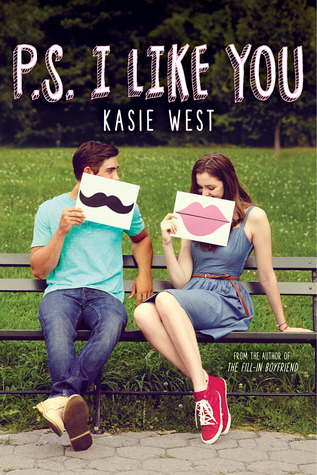
  • P.S. I Like You, by Kasie West. I got this book for S for Christmas because I thought it sounded cute, and then decided I had probably better read it myself to be sure. And how often do you a find a YA that takes place in Phoenix?? After a rough, choppy start (think oddly disjointed sentence flow, stilted dialogue, me thinking, "Grrr, I was an Arizona high schooler and my experience was nothing like this!"), some sort of unseen transition occurred and the dialogue became funny, the characters became real, the romance gave me butterflies, and I was utterly charmed. Enough so that I passed that late night reading point of no return and had to finish the book before finally going to bed around 2 a.m. A quick, cute, fun read! I’ll definitely be looking for more Kasie West novels.
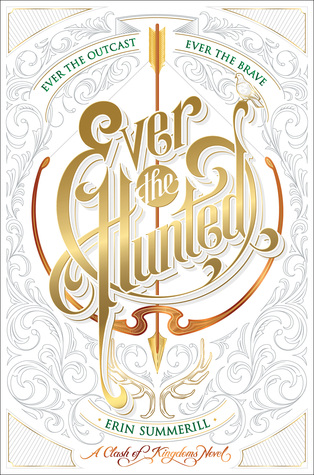
  • Ever the Hunted, by Erin Summerill. Though this book has an absolutely stunning cover design (and I am a sucker for cover design!), my overall feeling about the story inside the covers was a resounding “meh.” I was tentatively interested and engaged in the beginning (world-building concerns were primarily what kept me from being fully interested and engaged), and then halfway through I got bored. The romance, which had an interesting hook and tension to start with, was resolved too quickly for me. Though the plot kept a tidy pace, it still somehow managed to feel mired and slow to me. The plot development on the last page was intriguing, but probably not enough to motivate me to pick up the next book when it comes out.
  • Snow White: A Graphic Novel, by Matt Phelan. I loved the aesthetic and storytelling of this graphic novel. Easy to read in one sitting, it situates the traditional Snow White story in New York in the 1920s and the Great Depression. Samantha White (her mother calls her “Snow”) lives in NYC, and after her mother dies when she is young, her businessman father remarries a star performer of the Follies—enter evil stepmother! You know how the story goes from there. I love the twists that evoke the original fairytale while adjusting it to fit in the new time period. A ticker tape stands in for the magic mirror, seven street urchins remind the reader of dwarves in a forest, and a detective investigating the case of a mysteriously sleeping girl found in the display window of a department store makes for a modern prince charming. There are few words in the graphic novel, but the expressive art clearly tells the tale.
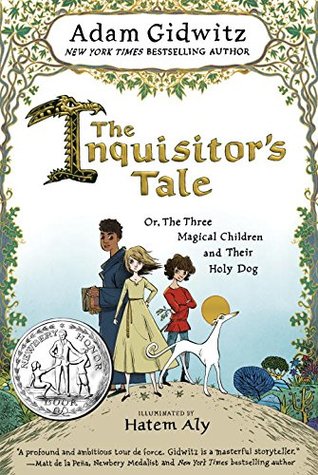
  • The Inquisitor’s Tale, by Adam Gidwitz. This Canterbury Tales-esque story follows three unique young people and one very special dog in France in the 1240s—Jeanne, a peasant girl on the run from the authorities who experiences prophetic visions; Jacob, a Jewish boy with mysterious healing powers who has escaped the hate-fueled burning of his village; William, an unusual oblate endowed with colossal strength; and Gwenforte, Jeanne’s beloved greyhound, long dead and yet somehow returned to her. Though the storytelling is fast-paced, it somehow still manages to be a slow burner, with a powerful payoff. Also, it's really funny. I mean, there’s a farting dragon! The humor is definitely a hallmark of the story, but it also depicts people in all their complexity, and its ruminations on prejudice and tolerance are especially important. It could also serve as a master class on how to use modern speech in a historical (or fantasy) setting without it sounding jarring, inappropriate, or false. Highly recommended!


Things I’m Currently Reading

  • A Short History of Nearly Everything, by Bill Bryson. As I continue my incursions into the Bill Bryson audiobook realm, I recently started this one, wherein BB takes on science, the universe, and everything! Completely fascinating, and makes me want to learn more about all the topics he covers. His wit and his knack for finding and relating bizarre footnotes to history delight, as ever.
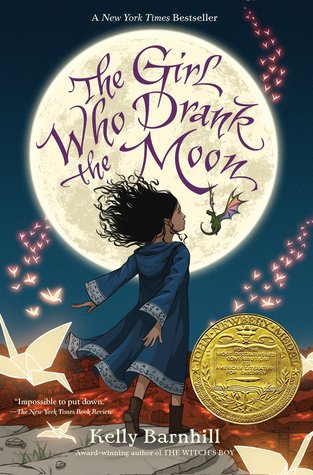
  • The Girl Who Drank the Moon, by Kelly Barnhill. This one is hitting all the right fairytale buttons for me. I adore Fyrian the Perfectly Tiny Dragon (he’s prone to crying), and I’m not even 100 pages in. But, I had to take a break from this one so I could starting reading…
  • A Conjuring of Light, by V.E. Schwab. AHHHHHHHAGHAIOHGALIFBHALKHGHLGIagahgipuahg’gauug GO AWAY I’M READING


Things I’m Looking Forward to Reading

  • Rat Queens #1, by Kurtis Wiebe and Owen Gieni. Rat Queens is back with Image Comics and a new artist (astute blog readers and comics fans might recognize his name from Manifest Destiny)! It looks like they’ll be doing a kind of reboot of the series, which honestly I’m down with since, storywise, the last issues before all the artist kerfuffle and hiatus went down were kind of going in a weird direction. I’m hoping it’s fun and awesome and helps me forget all the strangeness that went on with the artists and story. Out on March 1st, 2017.
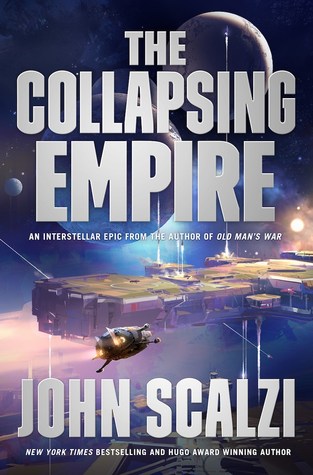
  • The Collapsing Empire, by John Scalzi. You can click on the picture to read the blurb—it sounds amazing, and has been getting some great reviews. I don’t think I’ve read a Scalzi novel I didn’t like, and this one sounds especially cool. Can’t wait to get my hands on it! Too much to hope he’ll be promoting it at Phoenix Comicon this year? Out on March 21st, 2017.


Well, that’s it from me this month. What’s been on your TBR? What are you looking forward to reading next? Let us know in the comments!

**All books purchased or borrowed from the library. An e-ARC of Ever the Hunted was received from the publisher via NetGalley, but this short review is based on my reading of a finished copy. As ever, much as we are grateful for review copies, our reviews are uninfluenced by the source of said copies, or by anyone else, for that matter.
Monday, January 30, 2017

Some of My Favorites From 2016

2017 may be well and truly underway by now, but since it’s been a while since I last posted, I thought I’d take a moment to look back on some of my favorite reads from last year.

New Favorite Series: The Amory Ames books, by Ashley Weaver
These books are so much fun. Amory Ames, a well-to-do uppercrust-y British lady in the ‘20s-’30s, solves murder mysteries and contends with her flirtatious and flighty husband, Milo. Though by the third book the romantic tension that came from her estrangement from her husband has been mostly resolved, the mysteries are interesting enough and her and Milo’s relationship sweet enough that I stuck around. Three books out so far, and I can’t wait for more! Thanks to Susan for turning me on to this series!

Best Non-Fiction Book: All the Single Ladies: Unmarried Women and the Rise of an Independent Nation, by Rebecca Traister
Everyone should read this book, regardless of their sex, but especially, DEFINITELY if you are female. It doesn’t matter whether you are single or attached, gay or straight (this is starting to ring a bell—I feel like I’ve written this for the blog before), rich or poor—it’s a book about feminism and what it’s like to be a woman in the world, what it’s BEEN like to be a woman in the world since time immemorial. It seems to go without saying in our current political climate that there are those who feel threatened by the titular “rise of an independent nation” of females, and this book will empower you to fight back.

Best Graphic Novels of the Year: Too Many to List, Nearly
I read a *lot* of graphic novels last year, and loved most of them. I’ll try to limit myself to one line about each that I’m featuring here.
• Lumberjanes: Female friendship and the fun adventures of summer camp, with a delightful dose of the supernatural and humor added to the mix.
• Bitch Planet: Just what the doctor ordered for reading on 11/09/2016. That was probably the only day in my life when I have seriously (and I mean seriously) considered getting a tattoo, and it was going to say “non-compliant.”
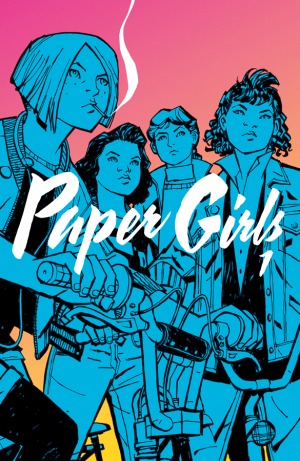
• Paper Girls: More female friendship + supernatural, but with more of a sci-fi bent and some good old fashioned ‘80s fun. It’s kooky! It’s crazy! I loved it! (Also, it seems to live in the same ballpark of my brain as Stranger Things, for what it’s worth.)
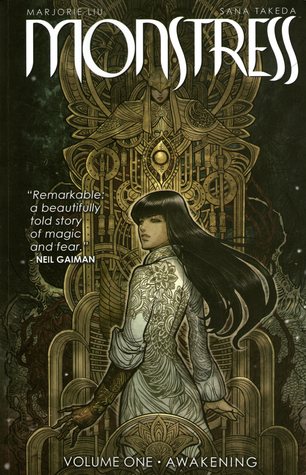
• Monstress: Scary/sad/icky-at-times ruminations on war in a fantasy world, but with truly stunning art and an ever-deepening world that continues to draw me in. It’s kinda like a blend of manga and American comic traditions, and the result is completely unique.
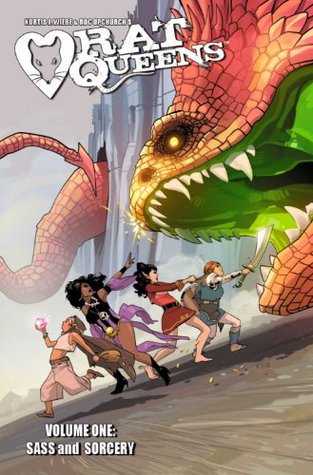
• Rat Queens: I just discovered this series in 2016, and I really, really love it. The female friendships (which seems to be a theme for my 2016 graphic novel readings) are hilariously real, and the good-natured pokes at the fantasy genre made me laugh out loud while reading. I know there has been some weirdness regarding the continuation of the series, but I really hope it does continue.

Best Series Ender: Morning Star, by Pierce Brown
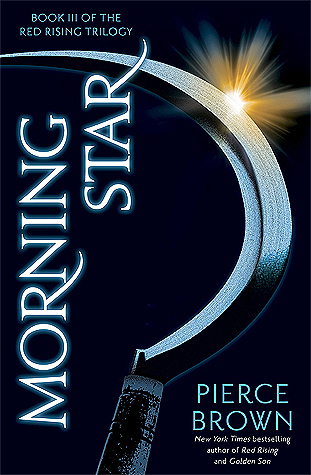
The Red Rising series has been one of my absolute favorites of recent years, and though this final entry may not have eclipsed Golden Son as my favorite of the series, it was very, very good. There’s one thing that came up at the end that I’m still ambivalent about that I’m not going to talk about here because spoilers, but it was a sweeping, emotional end to a fantastic trilogy. I’m looking forward to seeing what the author does with this world next.

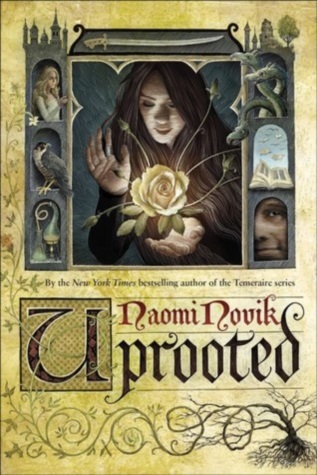
Best Soul-Nourishing Heart-Book: Uprooted, by Naomi Novik
Starting this book felt like sinking into a feather bed. I felt the same way reading it that I did reading some of my favorite books from my childhood—Ella Enchanted, especially—but in a more mature way, if that makes sense. I’m sure it’s already been said in the jacket blurbs for the book, but it is fairy tale for grown-ups, and perfect. I can’t think of one thing I would change about it. The engagement I felt while reading it, the intense need to just not.stop.reading, and the happiness I felt after finishing it—I just haven’t felt that way about a book in a long while.

Best New-to-Me Series: The Shades of Magic Series, by V.E. Schwab
If Uprooted nourished the historical fairytale side of my reading personality, The Shades of Magic books nourish the slightly darker, sharper facet of said personality. These books are witty, and wise, and harrowing, and FUN. I love them. A Darker Shade of Magic and Uprooted are the two books I bought for everyone for Christmas, and everyone knows that when I get militantly insistent about reading a certain book, I must really, REALLY adore it.

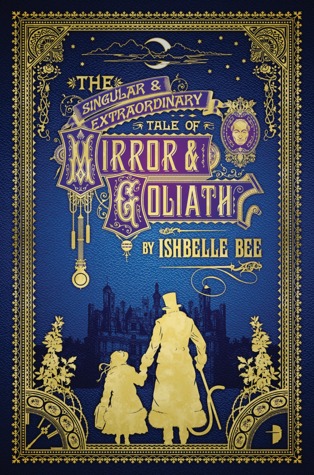
Best Book That Nourished Yet Another Facet of My Literary Personality: The Singular and Extraordinary Tale of Mirror & Goliath, by Ishbelle Bee
So, if I had to pick a couple authors to typify these various sides of my literary personality, one might be the Gail Carson Levine/Megan Whalen Turner/Elizabeth C. Bunce side (the side Uprooted appeals to). Another might be the Holly Black/Neil Gaiman side (where The Shades of Magic gets mentally filed for me). And yet another, the present one, would be the Catherynne Valente side. I love books that are magical and poetic and feel like they speak directly to me, touch my heart, in the way that art can. Mirror & Goliath has that sort of sensory language and intense imagery, and at times feels almost stream-of-consciousness (though the storytelling is still quite clear!), similar to some of my favorite Cat Valente stories. It is a beautiful book, and I loved it.

So those were some of my favorites from last year, and here, very quickly, is a preview of the books I’m most looking forward to in 2017!


What were some of your favorite reads of 2016? What are you looking forward to reading in the year to come? Hit up the comments and let us know!

**Where did the books come from? Glad you asked! Purchased: Rat Queens, Morning Star, A Darker Shade of Magic (well, library, then purchased a copy), and A Gathering of Shadows. Library: The Amory Ames books, All the Single Ladies, Bitch Planet, and Paper Girls. ARC from publisher: Lumberjanes (physical copy) and Monstress (digital copy). ARC from publisher, then either purchased or checked out from library: Uprooted (ARC, then purchased) and Mirror & Goliath (ARC, then libraried). As ever, much as we are grateful for review copies, our reviews are uninfluenced by the source of said copies, or by anyone else, for that matter.
Monday, July 18, 2016

Book Review: The Singular & Extraordinary Tale of Mirror & Goliath

Title: The Singular & Extraordinary Tale of Mirror & Goliath
Author: Ishbelle Bee
Publisher: Angry Robot
Publication Year: 2015
Read: July 2016
Where It Came From: eARC from publisher via NetGalley + Hard copy from library
Genre: Dark-fantasy-fairy-tale-for-grown-ups
Rating: 4.5 Ladybirds

If your preference is for linear, straightforward storytelling and practical prose in your reading, this might not be the book for you. That disclaimer out of the way, however, I can assure you that I loved this book. Really, really loved it. Y’know, I really hate comps for describing books, because they usually end up being completely off in the ways that matter, but the comps to Catherynne Valente and Neil Gaiman on the back cover did a nice job of approximating the feel of this book. I would add to that a bit—Valente and Gaiman by way of Dickens and Carroll, resulting in something that is in conversation with those authors, but unique in its own right.

Mirror is a young girl traveling back from Egypt with her protector Goliath Honey-Flower. However, Mirror has not always been Mirror—she used to be Myrtle, with two sisters and a sinister grandfather, living in Victorian London. But then her grandfather locked her in a strange clock to die, and something changed, and when the policeman Goliath rescued her and sent her grandfather to prison, something was different. For Goliath, too. No longer a policeman, he can change shape and is determined protect his young charge and help her solve the mystery of what happened to her in the clock.

John Loveheart was an aristocratic young boy, with a sick mother and an evil aunt and a father in over his head. When a demon called Mr. Fingers comes to collect his due from John’s father, John finds himself orphaned and then adopted by the Lord of the Underworld. Driven mad and wicked (though not as wicked as some), now he is a young lord, bound to do Daddy’s bidding around London, and Daddy wants Mirror. Something powerful that has escaped Mr. Fingers for some time resides in her, and he believes consuming it will add to his power.

There are many other characters and plots and tangentially related stories interwoven around this basic story, which may at first seem disparate, but weave together beautifully to form a beautiful whole of interrelated people, pieces, and parts. The climax of what might be called the main plot occurs about a third of the way into the book, and then the reader is left teetering on that edge as the following chapters change narrators and settings and jump back and forth in the timeline (that nonlinear storytelling I mentioned earlier). This could’ve had the potential to be confusing, but in fact has the effect of filling in the story and backstory around our central tale of Mirror and Goliath and Loveheart and Mr. Fingers, giving a greater view of the world and the events of the story, with all of the interconnected threads lending it a great emotional resonance.

The beautifully poetic writing only adds to this emotional resonance, and is evocative in an almost synesthetic way. It’s probably what some may call “purple prose” (which I just think some people use as a pejorative way to refer to lyrical writing when it’s not to their tastes), but I think its lyricism holds magic and power. This story is at its heart a fairy tale, and a dark one—modern in many ways, but as old as time in others, with that current of magic and power and truth you can feel in the old tales, and when you’re lucky, in the new ones, too. It may not be a book for everyone, but it was definitely a book for me.

*As ever, much as we are grateful for the copy, our review is uninfluenced by its source.

Tuesday, July 12, 2016

Comics Review: Monstress

Title: Monstress (Issues #1-6)
Author: Marjorie Liu & Sana Takeda
Publisher: Image Comics
Publication Date: Trade paperback collecting issues #1-6 to be released on July 19th, 2016
Read: July 2016
Where It Came From: Digital ARCs from publisher via NetGalley
Genre: Fantasy-sci-fi-horror-graphic-novel?
Rating: 4 Mask Pieces

Hey, remember when I was talking about how much I love Image Comics? Here’s another one from them! I saw issues of Monstress on the counter at my Friendly Local Comic Shop a couple months ago and was really drawn to the art, but, as is usual for me, I decided to wait for the trade paperback to come out. However! When issues #1-6 recently came up on NetGalley in anticipation of said trade paperback releasing later this month, I couldn’t resist the chance to catch up on what I’ve been missing with this title.

Monstress is the story of Maika, an Arcanic (a.k.a. supernatural hybrid) teenage girl. She lives in a world still rife with conflict between Arcanics and humans after a great war between the two. Arcanics are being captured and sold as slaves to humans, and a powerful religious organization of human women called the Cumaea performs experiments on Arcanics and murders them to harvest a magical substance called lilium from their bones. Maika and her best friend Tuya are just trying to settle down and find normalcy again after surviving the war, but Maika has a secret. There is a monster living inside of her—literally—and it hungers for blood and violence. As Maika’s control over it weakens, she travels to the city of Zamora, located at the edge between the territory of the Federation of Man and the land of the Arcanics, to look for answers in perhaps the most dangerous place possible.

And that’s just the beginning of the first issue! A lot of ground is covered, story-wise, and it took me a few issues to get a good mental handle on the world and the moving pieces of the plot. However, the richness of the world-building really is beautiful as it unfolds, and to call it simply Asian-inspired seems to somehow be an inadequate description. It is a fantasy world, to be sure, but the nods to and nuances of a diversity of Asian cultures from our world are incorporated seamlessly, and come together with all of the imaginative fantasy elements to form something new and singular. I believe in the letters section of one of the issues, creator Liu talks about how she wanted the comic to reflect the hybrid nature of Asia itself, and I think this was accomplished masterfully.

The comic also does a masterful job of demonstrating the horrors and atrocities of war and its aftermath, which only takes on even greater depth and meaning when you learn that some of the inspiration for this story comes from the experiences of the author’s grandparents. And I will be honest—the violence and horror in that first issue (murder of children, implied cannibalism, references to rape) made me feel so sick to my stomach that I wasn’t sure I wanted to continue reading. But I did, and I’m glad I did—violence is still a part of the comic, as you would expect of a story concerned with war, but in later issues I didn’t find it was quite as much at the forefront of the storytelling as it was in that first issue. For me, the story really hit its stride in issues four and on, when other places and characters from the fringes of the world as we know it so far start to become tied in to Maika’s story, and some questions begin to be answered to a degree (and of course new ones come up). And that ending to issue six was a killer!

Let’s talk about Sana Takeda’s art for a moment, because it is absolutely stunning—beautiful, with a sort of Art Deco, steampunk vibe, and manga-esque touches here and there that add to that hybrid-Asia atmosphere that this comic does so well. For all the violent, scary things that her art depicts in this story, there is also room for occasional hits of the super-cute (Kippa the kitsune-like fox child hugging her own big fluffy tail makes me squee every time), as well as really just staggering splendor and detail (Corvin D’Oro, anyone?). Completely frame-worthy.

Overall, though the initial level of violence and gore made me squeamish and I was a bit confused about the history and mythology of the setting, as I continued reading, the decrease in depicted violence and further clarification about murky aspects of Maika’s world (the quick lessons from the cat Professor Tam Tam at the end of each issue were helpful, too) helped me to become invested in the story, and now I can’t wait to find out what happens next (because that issue six, you guys!!). And though I am not one to usually buy single issues of comics, knowing that there are fun extras like letters and additional art might convert me, at least in the case of Monstress!

*As ever, much as we are grateful for the copies, our review is uninfluenced by their source.

Saturday, July 2, 2016

Image Comics Round-Up: Limbo, WicDiv, Paper Girls, and More!

I’ve tried some superhero graphic novels in my day, but I can never seem to get into much in the DC/Marvel worlds (Ms. Marvel being the exception). Enter Image Comics! Pretty much all of the graphic novels I read on a regular basis come from this publisher. I’ve been trying a lot of different series of theirs in recent months, and thought I’d do a little round-up post of what I’ve thought of my readings so far.

Limbo is a backwater swamp-noir, with voodoo in its veins and a touch of Lovecraft woven into the mix, with hints of the ‘80s and an analog vibe to round out the palate. Sound eclectic? It is, but the moving parts all come together smoothly to spin a story with some deeply creepy moments, a mystery that starts out simple and gains momentum and complexity, and the overall puzzle of our amnesiac P.I.’s origins and the world he finds himself living in. On a few occasions there was some convoluted philosophical-esque stuff that I wanted to tl;dr, and some of the reveals about P.I. Clay were dark enough to be almost depressing, but overall I enjoyed it. This trade encompasses a complete story arc, but enough mysteries remain that I might seek out the next volume to find out what’s in store for Dedande and its denizens. Also, the included extras were really, really awesome.

I.D. reads like the graphic novel equivalent of a short story. It fits the sci-fi category in terms of both the medical main concept of the story (brain transplants) and the setting (we get hints of non-Earth colonies and terraforming). Still, the main concerns of the story seem to be philosophical and psychological, as three previously-unknown-to-each-other characters consider having their brains transplanted to new bodies. What would motivate a person to take such drastic action? How would personal identity fare in such a situation? The art is absolutely beautiful, and the storytelling has an ethereal, vague quality, creating the necessary shape of the story while leaving much of the surrounding information amorphous, conveying details that create character depth in few pages and hint at further depth, while dancing airily around the questions those hints and nuances tease out of the reader. It’s a story that I can respect, but not the kind of thing I’d go back and re-read.

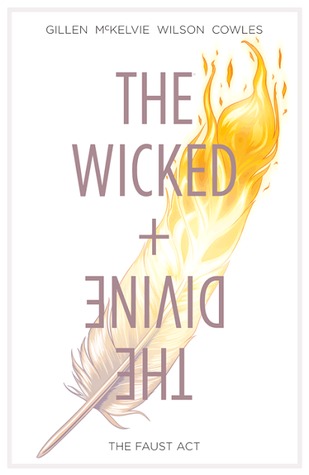
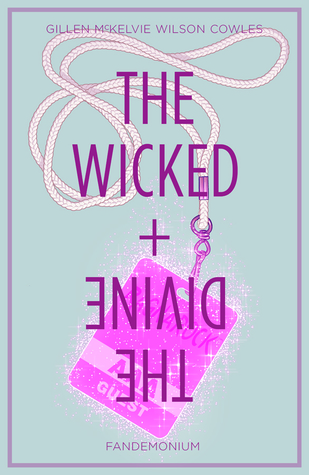
The Wicked + The Divine is pure delight for me. In an alternate modern day, every ninety or so years twelve gods are incarnated as humans, with a 2-year expiration date on life. For those two years after awakening, they are music stars with fanatic followers, zealot-y anti-fans, and skeptics as well. Are these people really gods in the flesh? Are they just crazy, deluded young people out for fame and fortune? A young woman from the “fanatic follower” category finds herself embroiled in the world of the twelve and their caretaker/advisor, and begins to see that there’s a lot more going on under the surface of the phenomenon. The art is quite stunning, with a fresh, clean-cut style, and a bit of neon-hip edge, unlike anything I’ve seen before. Some shocking moments and reveals keep me plowing through the trades.

Paper Girls comes from Brian K. Vaughan, the mind behind the immensely popular Saga (which it perhaps inevitably draws comparisons to). The short pitch: In the late ‘80s, four preteen newspaper delivery girls out running their routes stumble upon some seriously weird shit. This one was super fun for me because I went into it with no idea that it was going to veer into sci-fi at all. The whole time I was like, “What the hell is happening?!”—and I absolutely loved it. It’s strange and wonderful and weird and crazy and completely its own thing in the way that Saga is, but strangewonderfulweirdcrazy in its own brand new ways, though you can see how the same mind dreamt them up. Awesome art, with a neon suburban ‘80s vibe, and plenty of mystery to keep me looking forward to future volumes.

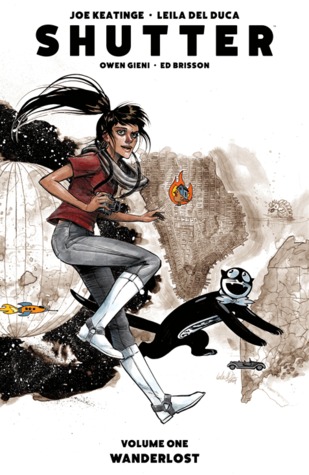
Shutter is another one that has drawn comparisons to Saga, and unfairly so, in my opinion. (The only time I thought about Saga while reading this was when the main character’s talking, helpful Felix the Cat clock was introduced. I remember thinking, “Hey, another comic I love with a cat that talks! Cool!” And that was it. The word Saga didn’t even come into my brain.) Said main character is Kate Kristopher, who lives in a wild, eclectic version of modern day Earth. As the daughter of a famous explorer, she spent her youth and teen years traveling the world with her father, until a tragedy caused her early retirement. Now, however, sinister and mysterious forces hunting her down have forced her out of retirement and back into the world of adventuring and hidden family secrets. The art didn’t do as much for me as in other comics like Paper Girls and The Wicked + The Divine, but I didn’t mind it. Beware of occasional and unsettling intrusions of gore and violence, though.

What are your latest graphic novel discoveries and obsessions? Let us know in the comments!

Limbo, by Dan Watters & Caspar Wijngaard
Published by Image Comics (June 2016)
Read in July 2016; e-ARC from NetGalley
3.5 Stars

I.D., by Emma Ríos
Published by Image Comics (June 2016)
Read in July 2016; e-ARC from NetGalley
3 Stars

The Wicked + The Divine, Vol. 1: The Faust Act, by Kieron Gillen, Jamie McKelvie, Matt Wilson, & Clayton Cowles
Published by Image Comics (2014)
Read in May 2016; Paper copy checked out from library
4 Stars

The Wicked + The Divine, Vol. 2: Fandemonium, by Kieron Gillen, Jamie McKelvie, Matt Wilson, & Clayton Cowles
Published by Image Comics (2015)
Read in June 2016; Paper copy checked out from library
4 Stars

Paper Girls, by Brian K. Vaughan, Cliff Chiang, & Matthew Wilson
Published by Image Comics (April 2016)
Read in May 2016; Paper copy checked out from library
5 Stars

Shutter, Vol. 1: Wanderlost, by Joe Keatinge, Leila del Duca, & Owen Gieni
Published by Image Comics (2014)
Read in June 2016; Paper copy checked out from library
4 Stars

*As ever, much as we are grateful for review copies, our reviews are uninfluenced by their source.

Monday, May 16, 2016

Book Review: Nobody Likes a Goblin

Title: Nobody Likes a Goblin
Author: Ben Hatke
Publisher: First Second
Publication Date: June 7th, 2016
Read: May 2016
Where It Came From: Print ARC received via Goodreads Giveaways
Genre: Fantasy-children’s-picture-book
Rating: 4.5 Honk-Honks

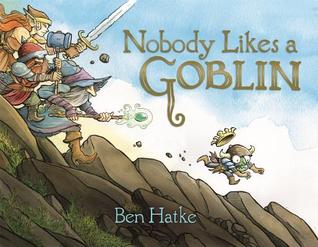
I was so happy to receive a review copy of this picture book through a Goodreads Giveaway. I’ve never read anything else by Ben Hatke (though his Zita the Spacegirl graphic novels have always looked intriguing), but the cover art and the blurb were delightful. And now that I’ve read the book, I can confirm that it is delightful as well!

In the story, cute little Goblin is minding his own business, living in his dungeon and hanging out with his friend Skeleton, when a band of mean, nasty adventurers invades and takes everything—even Skeleton! So Goblin bravely goes out into the world to rescue his friend, though he has been warned to be careful, because nobody likes a goblin. The reversal of the typical order of things in a fantasy story here is fun, with Goblin and other monsters as the heroes, and the adventurers and townsfolk as the thoughtless, greedy villains. I love the humor in both the words and the pictures, and the illustrations add richness and depth to the story, with plenty of interesting things to notice and talk about that never come up in the text. Like the woman who is on the adventurers’ cart full of looted treasure!! What happened there?!

My favorite part, though, had to be Honk-Honk. As Goblin starts off on his adventure, he asks a neighboring hill troll if he saw which way the adventurers took Skeleton, and as she points him in the right direction, she mentions that they took her Honk-Honk away with them (which of course, sweet Goblin that he his, he promises to bring back). At the time there is no other context, and I was like, “...what’s a Honk-Honk?” But later, when Goblin finds the adventurers and their cart of spoils, when you look at the illustration, there is a goose in a cage amongst the riches (and next to the random captive woman)! Honk-Honk!!! Honk-Honk plays his (or her) part in chasing off the baddies and is eventually returned to the hill troll, and they join Goblin and their other new friends for a meal at home in the dungeon at the very end of the book. Cute, funny little details like that make this story a pleasure from start to finish.

Dungeons and Dragons, RPG-loving parents (or even just parents who are fantasy fans) would probably love to share this with their children. Even grown-ups without children will find much to love in this book and could give it a nice home on their shelf. Older, elementary-age children would understand the humor in the reversal of the good guy/bad guy roles, but younger children could enjoy the story, too (though it’s probably not one I would choose for a 5-and-under storytime program—I think that a grown-up and child would get more out of it by sharing the story as a pair).

*As ever, much as we are grateful for the copy, our review is uninfluenced by its source.

Sunday, April 3, 2016

Recent Favorites: A Darker Shade of Magic & Rat Queens

Do you ever find that your luck with reading choices comes in streaks? Sometimes you’ll have a long string of less-than-awesome reads, and other times it’ll be one homerun after another? I’ve been having more of the homerun experience with a surprising number of the books I’ve read lately, and thought I’d share some of the ones that were especially fantastic.

This book is probably the best thing I’ve read so far this year. You know that feeling when you start a new book, and only a few paragraphs in you find yourself feeling like you’re sinking into a feather bed and the writing wraps around you, and you know, you just know that you are in for a damn good read? That deep certainty from just the first few sentences that the author is going to lead you through a wonderful story, wonderfully written, and your inner critic knows it’s okay to shut off? That doesn’t happen terribly often for me (my inner critic is particularly noisy), but that is exactly how I felt with this book. Just a few pages in, and I knew it was going to be a favorite.

Ah, but what is it about? Well. Kell is an Antari, a magic user from a place called Red London, with the rare ability to travel between parallel worlds. His home of Red London is a city where magic flourishes, and he travels with messages from its rulers to the rulers of the other Londons, such as White London (scary, violent magic London) and Grey London (boring, no-magic London, the London of our world during the Regency). There used to be a Black London, but…well. Not anymore. In addition to his cross-dimensional messenger duties, Kell also moonlights as a smuggler, illegally bringing artifacts from one London to another. Naturally, this smuggling (which he considers more or less benign) eventually gets him into trouble, with monarchy- and multiverse-shaking consequences, which he must deal with, with the help of a thief named Lila from Grey London…

The jacket blurb for this book is a rare one that actually accurately captures both the plot and the tone of the story it provides a preview for. Here ‘tis:

“Kell is one of the last Travelers—magicians with a rare, coveted ability to travel between parallel universes, connected by one magical city.

There's Grey London, dirty and boring, without any magic, and with one mad king—George III. Red London, where life and magic are revered—and where Kell was raised alongside Rhy Maresh, the roguish heir to a flourishing empire. White London—a place where people fight to control magic and the magic fights back, draining the city to its very bones. And once upon a time, there was Black London. But no one speaks of that now.

Officially, Kell is the Red Traveler, ambassador of the Maresh empire, carrying the monthly correspondences between the royals of each London. Unofficially, Kell is a smuggler, servicing people willing to pay for even the smallest glimpses of a world they'll never see. It's a defiant hobby with dangerous consequences, which Kell is now seeing firsthand.

Fleeing into Grey London, Kell runs into Delilah Bard, a cutpurse with lofty aspirations. She first robs him, then saves him from a deadly enemy, and finally forces Kell to spirit her to another world for a proper adventure.

Now perilous magic is afoot, and treachery lurks at every turn. To save all of the worlds, they'll first need to stay alive.”

A very unique, creative fantasy, with elements of darkness, a bit of swashbuckling attitude, well-drawn characters in a beautifully conceived world, and plenty of action and emotion. I could ask for nothing more from a book. It was the kind of book where I became visibly annoyed when people would interrupt me reading it, and I had to plot my reading cannily, lest I arrive at work too tired to function after an all-night reading bender. So much fun, and so good. READ IT.


Rat Queens has been on my radar for quite awhile, but, not willing to fork over cash for a graphic novel without previewing it first, I’ve had to wait for the library to catch up with my TBR list. Alas, the library still doesn’t have a physical copy of the book, but they do have the first volume available on their streaming service, Hoopla. And once I started reading that first book, I didn’t put it down (or, er, close out my browser window) until I was finished.

The story follows an all-female band of fantasy adventurers, but with some seriously (and hilariously) modern twists. De facto leader is Hannah, a rockabilly elf magic user; Violet is a dwarven fighter (and a hipster, because she shaved her beard before it became cool); Betty is a flower child, drug-experimenting smidgen (vaguely hobbit- or gnome-esque) thief; and Dee is an atheist cleric of a religion (cult?) that reads a little like a Lovecraft/voudou smash-up. I mean, an atheist cleric! That’s hilarious!! XD

The town where they live kind of hates them, because they get drunk and raucous and destructive when they’re not off fighting big monster-y problems. They have foul mouths, a loose interpretation of what is, strictly speaking, legal, and varied amorous pursuits. They get into fights with each other, and have secrets from each other, and love each other all the same. In short, they’re girls you’d probably want to hang out with.

The writers and illustrators subvert the tropes of the genre through a distinctly modern lens, to hilarious effect (I burst out laughing at Hannah’s arcane cell phone and the nagging from her parents), but not at the expense of the genre—it is clear that the people behind Rat Queens love fantasy-adventure, sword and sorcery stories, and honor that genre by pushing its boundaries. The second volume deepens the storylines begun in the first outing, and begins revealing some serious backstory, while not losing any of the humor that makes it such a delight.

So, while probably not for the faint of heart or those offended by the F word, I absolutely loved it. I can’t wait for the third volume to come out (later this month!). This is a series that I would actually consider buying each comic as it comes out, rather than waiting for the trade paperbacks.

Have you had any outstandingly good reads lately? Already read these, or plan on adding them to your TBR? Let us know in the comments!

A Darker Shade of Magic, by V.E. Schwab
Published by Tor Books (2015)
Read in March-April 2016; Hard copy from library

Rat Queens Volume 1: Sass & Sorcery, by Kurtis J. Wiebe & Roc Upchurch
Published by Image Comics (2014)
Read in February 2016; Digital streaming from library

Rat Queens Volume 2: The Far Reaching Tentacles of N’Rygoth, by Kurtis J. Wiebe & Roc Upchurch
Published by Image Comics (2015)
Read in February 2016; Bought it

Sunday, June 28, 2015

Book Review: Alive, by Scott Sigler

Title: Alive
Author: Scott Sigler
Publisher: Del Rey
Publication Date: July 14th, 2015
Read: June 2015
Where It Came From: ARC from author at PHXCC
Genre: YA-speculative-fiction
Rating: 3.75 Coffin-Cradles

How, oh how, to review this book without giving away any of its secrets? As the author stated on a panel at Phoenix Comicon last month, the book is pretty much secrets from page one. Those secrets drive the story, and I will try my darnedest to preserve them! (Also, I like a challenge like that.) So. Here goes.

Our narrator wakes up in a strange place with little idea of who she is, or how she got there. After fighting her way to freedom from the adverse situation she finds herself in immediately upon waking, she finds others like her. They are somewhere, in a place with many rooms. Also, many skeletons. Weird carvings on the walls that seem reminiscent of the ancient world, but also evidence of technology not of the ancient world. Where are the adults? Where are other people? The need for water and food drives them to explore and try to find a way out of there, wherever there is, as they try to unravel the mystery of their existence and the situation they find themselves in.

I’ve heard good things about Scott Sigler’s books, but this is actually the first book of his that I’ve read. My friend saw him signing ARCs at the Del Rey booth at Phoenix Comicon, and kindly grabbed one for me (I think I was probably at a panel at the time). She told me that he had said to read the first 20 pages that night, and so, dutiful recipient of free books that I am, I did so. Bad idea!!! I was hooked from the get go, and let me tell you—wandering around a convention while your brain is fixated on reading a new book is not the way to go. It was an absorbing, quick read that I tore through once the convention was over.

Now, I hesitate to say this because I really, really despise the publishing trend of describing new books as “Book A meets Book B!”, because I find the comparisons are rarely apt and mostly lead to disappointment (Harry Potter meets Men in Black! Game of Thrones for teens! Batman meets Rainbow Rowell!). But I think this book appeals to the same part of me that the TV show Lost did. Not in plot, not in voice or style or anything like that, but more in the level of mystery surrounding, well, pretty much everything. The mysteries and strangeness at every turn engage the reader (or watcher) in the story, and before you know it you’re formulating theories about what’s really going on and forging ahead for more.

One of the really cool things about this book is that the way it’s structured and told allows the reader to fill the shoes of Em, our protagonist. The first-person present narration (consider yourself warned, Susan) of course plays a big part in that, but also the fact that as soon as Em wakes up, we know just as much as she does (i.e., very little), and only learn new information when she does, as we try to understand the many mysteries along with her.

If I had any quibbles, it would be that not all of the characters truly came alive for me in this book. Part of me thinks this makes sense, though, since the characters themselves are still trying to figure out who they are and how they fit into what’s going on. I didn’t grow terribly attached to any of them, with the exception being Gaston—he was great! (And provided comic relief.) He reminded me a bit of Sevro from Pierce Brown’s Red Rising, in all the best ways. The other quibble would be that the way 12-year-olds are characterized in the story actually felt quite a bit younger than that, to me. (Apologies for vagueness, but you’ll know what I’m talking about when you read it!)

At any rate, by the end of the book, some mysteries have been solved but plenty remain, which makes sense now that I know it’s the first book in a trilogy. Overall, an intriguing premise and a fast-paced read, and I look forward to seeing how the characters continue to learn about and define themselves in future books!

*As ever, much as we are grateful for the copy, our review is uninfluenced by its source.

**I think that might be the ARC cover, and that the actual finished book might have a different one? This one is very cool, though.

Monday, March 23, 2015

Book Review: Revenge of the Witch

Title: The Last Apprentice: Revenge of the Witch
Author: Joseph Delaney
Publisher: Greenwillow Books
Publication Year: 2005
Read: March 2015
Where It Came From: Library
Genre: Middle-grade-to-YA-historical-fantasy-horror
Rating: 4 Boggart Pits

I can trace my interest in these books back many years, based almost entirely on the eye-catching art. The covers for this series are creepy, atmospheric, and striking (and, as I discovered when I read this one, the art continues on the inside, too!). When I saw that it was being made into a movie with the awesome Ben Barnes (a.k.a. Prince Caspian, a.k.a. Dunstan Thorn), I finally decided I had better read the book, since the general chatter I’ve heard about the books didn’t seem to quite match up with the almost goofy quest-fantasy look of the movie trailer. I mean, I’ve heard these books are SCARY, and the movie looks anything but.

The story begins with our narrator, twelve-year-old Thomas Ward, getting sent off to try out to be the apprentice to the local Spook, or the person who roams about the countryside taking care of unwanted supernatural phenomena and creatures, such as boggarts, witches, ghouls, and the like. Thomas is the seventh son of a seventh son, making him uniquely qualified for this job. His Mam believes he is in fact even more uniquely qualified than that, but never quite explains why, which is a strong thread of mystery running through the story. The story follows Tom through his trial period (spoiler alert: he gets the job), and through the early days of his apprenticeship with the Spook. He meets a pointy-shoed local girl named Alice, and eventually ends up inadvertently releasing a big, bad witch called Mother Malkin into the world. He then tries to counteract the bad she does and has to figure out a way to recapture her to save both himself and his family.

The story is very well-written. It is a quick read, but there is a lot of complexity beneath the surface. Tom’s voice shines brightly—he is an honest, straightforward narrator. He is a good person to his core, but we see his struggles as he tries to make the right decisions, and, when he doesn’t, try to fix things. All of the main characters are similarly complex. The Spook, for instance, has a fraught relationship with his brother, a past occupation that comes to light, and qualms about burning witches (too cruel, he says), that show he is more than his gruff, beastie-hunting exterior. Tom’s Mam, too, is wonderfully complex and mysterious—she loves her son, but not in a soft way, and I look forward to finding out more about her in future books. And then there is Alice—torn between her family and wanting to maybe not be like them. She is a particularly compelling character because of her seeming powerlessness in her situation, and her struggle to make choices to gain power in her own life. I was initially a little turned off by the number of “evil” women in the story (the witches), but complex and layered characters like Alice and Mam mitigated that.

As for the creepy factor, this was another book where I found myself thinking, okay, this is a little creepy, but not actually frightening! as I was reading, but then my phone would buzz or someone would come in my room to talk to me and I’d jump about 5 feet in the air. So…not nightmare-inducing, but a little scarier than I initially gave it credit for!

I enjoyed this one, and look forward to reading the rest of the series and delving deeper into these characters. Also, I forgot to mention that there is a passive-aggressive boggart housekeeper—what could be better than that? (Also also, I hemmed and hawed and then included “historical” in the genre tags, because it could easily be a fantasy world, but there was mention of people reading Greek and Latin. So I guess it must be this world, or a version of it, after all?)

Wednesday, March 18, 2015

Book Review: Lost in Translation

Title: Lost in Translation
Author: Ella Frances Sanders
Publisher: Ten Speed Press
Publication Date: September 2014
Read: March 2015
Where It Came From: eARC via NetGalley* + purchased copy
Genre: Non-fiction-language-culture-coffee-table
Rating: 4 Tsundoku Book Piles

What a fun little book! This “illustrated compendium of untranslatable words from around the world” (as it calls itself) is a delight, gathering up words from languages the world over that have no equivalent in English, but that put a name to feelings and ideas we know and understand, but perhaps had difficulty describing before (like jayus, from Indonesian—a joke so bad you can’t help laughing at it), or ones that give insight to aspects of other cultures and places (like fika, from Swedish—getting together to sip coffee, eat snacks, and relax together).

Each word gets a two-page spread, with the name of the language it’s from and some additional explanation on the left side, and the word, definition, and a watercolor illustration on the right. The art is lovely, but then again, I am a sucker for watercolors! I will note that in my digital ARC, I thought the watercolor looked a little better than it does in the finished book—I don’t know if it’s the way it was printed or what, but it’s especially noticeable in the cursive handwritten definition for each word, which looks a little fuzzy.

I am a huge language nerd, and I love that this book celebrates how culture and language are inextricably intertwined, and how language shapes the way we think. Even if you wouldn’t consider yourself particularly language-nerdy, there’s still a lot of fun to be had with this book, like with pisan zapra (from Malay—the time it takes to eat a banana) or kummerspeck (from German—literally “grief-bacon,” or weight gain from eating one’s feelings). I was a little unsatisfied by their definition of the Japanese concept of wabi-sabi, but I learned a new Japanese word, too! Komorebi--sunlight filtering through tree leaves above you. This is something I photographed often when I was in Japan, and always noticed and enjoyed during my many walks through city, countryside, temple, and shrine. How lovely to learn that there is a word I could have used to talk about it!

A couple other favorites: Trepverter, from Yiddish, meaning that witty comeback that you think of only after the time to use it has passed. (I seem to remember that this one exists in French, too--l’esprit d’escalier, or the spirit of the stairs. Coming up with that zinger right when you’re leaving!) And this one, particularly apt for this blog: Tsundoku, from Japanese, referring to the act of buying a book and then not reading it, usually piling it up with other books bought and as yet unread.

Fun book. It would make a great gift or be a nice addition to your coffee table, providing fodder for conversation, some laughs, and thinking.

*As ever, much as we are grateful for the copy, our review is uninfluenced by its source.

Friday, March 6, 2015

Graphic Novelty: Through the Woods

Title: Through the Woods
Author: Emily Carroll
Publisher: Margaret K. McElderry Books
Publication Date: July 2014
Read: February 2015
Where It Came From: Library
Genre: Graphic-novel-horror
Rating: 4.5 Cold Hands

Let me just say: This. Was. AWESOME. I’d heard from various sources whose opinions I respect that this was an amazing and damn scary graphic novel with beautiful art, and I finally got around to checking it out from the library earlier this year. (To save money/space/irritation about having bought books that turned out to be shitty upon reading, I’m trying this new thing where I check a book out from the library instead of running out and buying it right away, and then afterwards deciding if I liked it enough to buy a copy for my personal library.) It sat in my library book tower until I went to renew it online one day and saw that—GASP!—someone else had placed a hold on it and I had to return it in two days. And that meant: Kick into high reading gear! So I curled up on a bright, sunny day-off afternoon to dive in.

The book consists of five short stories (they get increasingly longer as the book goes on), and a short intro and outro. They are seemingly unrelated, except for the common thread running through them, as hinted in the title—the woods are always involved, and strange things come from the woods. Each story is deliciously creepy…not horror in a gory, in-your-face way, but more insidiously unsettling. Spine-tingling, hair-on-the-back-of-your-neck-standing-up kind of scary. The closest comparison in tone I can make is to those Scary Stories to Tell in the Dark books that were probably the first experience many of us had with horror. The nerd in me absolutely loved the almost fairytale/folkloric slant to these stories—especially as related to the woods, that symbol of fear and the unknown from time immemorial. They’re stories that will probably leave you with questions. There are no easy answers or resolutions to be found here, which is absolutely fitting. The storytelling is deft, atmospheric—leaving you a little off-kilter, both anticipating and apprehensive of what will happen next. And the art! Beautiful. Graphic, bold, and seamlessly integrated with the text for an immersive story experience.

As I mentioned, I was reading this in the middle of the day, in broad daylight, with people home. As I made my way through the book, I thought the stories were creepy in that quiet, crawling, tingly creepy-pasta way, but I found myself thinking, “Well, perhaps I’d be as freaked out by them as everyone else if I was alone. Or it was night. Or something.” But then my dad suddenly appeared at my door to ask in his baritone if I wanted pancakes, and I jumped about 5 feet in the air. So…I guess I was subconsciously a little more freaked out than I thought. And then, when I went to bed hours after I’d finished the book, the images came creeping back and I suddenly felt very alone in the dark, wondering what might be lurking under my bed or outside my window…

Great read, and a quick one, too. You might tear through it really quickly, but I guarantee this is one that will stick with you. And that little coda at the end…so effing perfect. Love love LOVE. Highly recommended. And it definitely passed the test—I will certainly be buying a copy for my personal library.

Thursday, February 19, 2015

Book Review: This Shattered World

Title: This Shattered World
Author: Amie Kaufman & Meagan Spooner
Publisher: Disney-Hyperion
Publication Date: December 23rd, 2014
Read: January 2015
Where It Came From: BEA Galley + Purchased Copy
Genre: YA-sci-fi-space-opera
Rating: Averages out to 2.5 stars. (Which we can’t see anyway, because they’re hidden by clouds, of course.)

Alas, seduced by a pretty cover again! You’d think I would have learned my lesson with the first book in this series, which had an equally gorgeous cover that the story living beneath didn’t quite live up to. Last year, rave reviews were popping up all over the place for These Broken Stars, even from reviewers whose tastes I find often parallel my own, and all I could think was, “…really? Am I missing something here?” I found it simply…okay.

That bit of background out of the way, I can tell you that I actually enjoyed the first one more than This Shattered World. Here’s a quick plot rundown of this latest installment: Jubilee Chase is a soldier extraordinaire stationed on the planet Avon (what the military is there for in the first place was never really clear to me). The problem with Avon is that it’s not terraforming into a habitable planet at the usual rate, so it’s a cloudy swampland otherwise inhabited only by the colonists-who-are-also-considered-natives-of-the-planet. There is a sect of rebellious colonists who live out in the swamps, wanting to take the terraforming corporations to task for not fulfilling the promises of a better life and a livable planet that they used to lure the colonists to Avon. Flynn Cormac, though hoping for a peaceful resolution to Avon’s woes, is one of these rebels. Now, Jubilee hates rebels (do I smell a BACKSTORY?), and Flynn has reasons to dislike the military presence (yet MORE backstory??), but the two find themselves pushed together as they discover the conspiracy underlying Avon’s very existence.

So, same world, different protagonists, different planet in this latest outing in the Starbound trilogy. It probably didn’t help that I remembered next to nothing from These Broken Stars, and as bits and pieces of the first installment began to trickle back into my memory, I found myself thinking, “Oh! That thing that happened earlier would’ve been much more intriguing/made more sense if I had remembered plot point thus-and-such from book one!” Still, I think my issues with this one cannot simply be attributed to my own poor recall abilities regarding the previous installment.

Problems I Had With It

  1. S L O W pacing. And I mean grass-growing, paint-drying, other-clichés-of-slowness slow. The first half of the book (which was nearly 200 pages, mind you!) could probably be boiled down to just three plot points. In fact, I think at one point Jubilee lists to herself the important things that have happened to her since the first scene, and I was like yes, only three! In this many pages, only three! The opening scenes involving a kidnapping at a bar and a subsequent vision of a disappearing research facility were promising, but everything came to a screeching all-but-halt after that. So many times I kept thinking to myself, why can’t we revisit that disappearing building thing that I know is coming back later? Why can’t it come back NOW? In the second half of the book the action picked up, aided in part by the arrival of characters from the first book (yay!). It was a lot quicker reading and a lot more interesting, but it still wasn’t enough to salvage the story for me.
  2. Lack of chemistry. Flynn and Jubilee…I just didn’t feel it. Zero chemistry between these two. There were constant references to the fact that Flynn is all charming rogue-y, but being in his head for half the chapters and seeing him through Jubilee’s POV in most of the other chapters, his actions and thoughts show him to be pretty much a straightforward, sweet, boy-next-door type. Rogue level of next-to-zero. I mean, he’s a pacifist, for the love of pete! Which is fine—I quite liked Flynn, but he is not the smooth operator I felt like I was supposed to be convinced he was. Between that and the trying-to-convince-me-there’s-chemistry-between-our-leads-when-there-is-none just made me keep internally shouting STOP TRYING TO MAKE FETCH HAPPEN! I will note, however, that this was another thing that improved in the second half of the book. I’d still say I’m not fully feeling the Flynn-Jubilee love connection, but I’m more inclined to live and let live now.
  3. Vague worldbuilding. Things I am learning about myself: I value worldbuilding. A lot. My opinions of books live and die by worldbuilding. Now, to be clear, good worldbuilding does not necessarily mean a ton of background information and history and culture dropped into the text. If writing is good, it can let you know the world of the story is fully conceived, with internal logic and a depth and life like that of our own world, without having to sit and explain every single aspect of it to you. Heck, even if a ton of background information and history and culture is worked into the text, it should still feel like you’re only scratching the surface of that world, and that there are infinite depths beyond what you can see. …That is not what happened here. Vague can work in some stories, but not this one. Two books in, and I still don’t have a clear picture of the greater shape of this world. What’s the association between the planets in this overall system—what’s the government like? How have people spread across the galaxy/universe/whatever? Whose military is this, who controls them? Why the hell are all the Avon colonists still so strongly Irish this long after humanity has spread to the stars? If you want me to be invested in a story, you’ve got to make it real, and I wonder how much more I would enjoy these books if they were a little more fully fleshed out.

Overall, the first half of the book was a struggle (2 stars), but in the second half things became a little more interesting (3 stars). Though the worldbuilding is often annoyingly vague (when not outright deficient), bringing in some of the plot threads from the first book made me a little more invested in the story. I wouldn’t say Jubilee and Flynn won me over by the end, but they were tolerable. And maybe that was the problem with this one for me—it never made me do more than simply tolerate it. It was passable sci-fi—I’ve read worse, but I’ve also certainly read better. When the third volume comes out at the end of this year, I’m sure the cover will be beautiful again, so there might need to be an intervention to keep me from buying it. You know what they say—fool me once, shame on you. Fool me twice and thrice…well, you know how it goes.
*As ever, much as we are grateful for the copy, our review is based on the finished book rather than the galley, and at any rate is uninfluenced by its source.

Friday, August 29, 2014

Friday Crafternoon! Sticky Fingers: DIY Duct Tape Projects

 photo StickyFingers_9781936976546_shadow_zpsa25d05ab.jpg Title: Sticky Fingers: DIY Duct Tape Projects
Author: Sophie Maletsky
Publisher: Zest Books
Publication Year: 2014
Read: August 2014
Where It Came From: Paper review copy from publisher
Genre: Crafty How-To

The Basics

Sticky Fingers: DIY Duct Tape Projects is pretty much what’d you expect with a title like that—it’s a how-to book that covers the basics of making all sorts of accessories and doodads out of duct tape, and then provides tutorials for over 70 different projects, from simple things like bows and flowers, on up to wallets, purses, desk organizers, and all kinds of other crazy things that might make you think, “You can do that with duct tape??” From information about different brands of duct tape to consider using, to what sort of work surface works best with the material, to hints on ways to use up the last little bits of tape on the roll and then the cardboard center of the roll as well, this book pretty much covers the subject of duct taping crafting from crash course through 400-level class. Both of us decided to take ‘er for a spin before writing up our individual takes on the book, so read on for opinions and project photos!

Alyssa’s Take

I feel like I’m turning into a crochety old person when I say this, but I remember when I was in junior high and high school, and my friends would make stuff out of ye olde silver duct tape (‘twas all there was, doncha know)—mostly wallets and backpack repair patches and decorations on skateboards and stuff like that. It’s so funny to me that it has exploded into this whole new genre of crafting—funny and cool! Though I like to have at least one good craft project going in my life at all times, I had never tried my hand at duct tape artificery until this book arrived in the mail.

I found the book to be comprehensive, easy to understand, and concisely written. I liked that it started out with the basic background info—types of work surfaces to use, ones to avoid so you don’t end up damaging furniture, the different types of tape available, where to buy them, tapes that won’t work, how to set up both basic and advanced portable work stations…all kinds of stuff that it might not even occur to the duct tape noob to think about. Following that is an invaluable chapter about making the basic duct tape components you will need to craft the projects that follow, and then there are seven chapters full of those projects themselves: quick crafts, wallets, purses, wearable accessories, school supplies, room décor…wow. So much!

Feeling inspired by the bow trend, I decided to try my hand at the fan-fold bow—simple enough that I wouldn’t feel overwhelmed and ragequit, but cute enough that I might actually turn it into a hair accessory someday. In an homage to my teenage years (and my laziness about getting to a store to buy the pretty stuff), I used the classic silver duct tape I found living in my garage. Here’s how the process went, and the result:

 photo photo1_zps1807b750.jpg  photo photo2_zps380e924b.jpg  photo photo3_zpsc3c12bf0.jpg  photo photo4_zps79adedc2.jpg  photo photo11_zps2491b905.jpg  photo photo21_zpse3923f9d.jpg  photo photo31_zps5b9a5da5.jpg

My bow turned out a little bigger than I had expected, but I quite like it and think it might look extra nice if I steampunkify it with gears and such, if I feel ambitious. I found the instructions easy to understand for the most part, and the full-color photos accompanying each step were really helpful. I also appreciated that there was a skill level rating for each project and an estimate of the time needed to complete it (although I wasn’t totally clear if the time required to make the initial duct tape “fabric” needed for each project was included in that estimate).

A lot of the projects are things I probably wouldn’t use or wear (the tie and the money keeper are a little too goofy for my tastes, for instance), but some of the things like a sunglasses case or a makeup pouch for inside your purse could be fun. And some of the ideas, like using clear packing tape to make an ID holder window, or stealing the zipper from a Ziploc bag to use in constructing a pouch, are pure genius! Most of all, I like the author’s emphasis on taking the basics and her ideas to use as a jumping off point for bringing your own duct tape ideas to life. For me personally, I’d rate the book 3.5 stars, since many of the project ideas aren’t really my style, but for kids, teens, scout troop leaders looking for project ideas, those who are already into duct tape crafting, or those who are looking to start, I’d bump it up to 4 stars, since the book is comprehensive and has very diverse project offerings. I think some of my younger relatives would probably really get a kick out of this, and I’d have fun trying out some of these projects with them.

Susan’s Take

I am not a crafter. My catalogue of unfinished craft projects is far larger than my collection of completed ones, especially if you look at things produced after say middle school, when the state no longer required me to spend some 6% of my instruction time in a visual art class, the number of finished projects drops precipitously. Yet when Alyssa said she was interested in this book, there were so many exciting color photos, and it seemed like it would be so darn easy (after all, my tiny cousin-once-removed says she gets loads of duct tape for her birthday) that I said of course I'd try it out.
Ha. It's like if your friend says, "Let's run five miles," and you've gotten rides home after walking half a block. Because duct tape crafts are deceptive. They look so bright and cheery that they seem to suggest an eternal essence of good humor, when in reality they are the most irritating things in the world to piece together. To be fair, however, I am basing my assessment of duct tape crafting only on my experience in making a tote bag from the instructions in Sticky Fingers. I could be missing an entire world of angst-free duct taping.
And suuuuuuure, a good portion of my problems in duct taping stemmed from my disinterest in every project in the book except for a tote bag. I love tote bags. Out of the projects in the book, this is one of the hardest: it's 5-stars difficult. Yet, the book claims it's just a simple matter of combining some woven duct tape fabric pieces (a project rated only 3-stars of difficulty), and furthermore tells me that it should take a mere 2 hours.

Thus after finding the tote bag craft, I headed to my nearest craft stores and located their duct tape shelves. All the pretty duct tape is expensive, but some, I found, had price tags that seemed to be made in a different currency to justify the mark-up. My mother and I searched through the book for guidance on how many rolls of duct tape I needed, and decided that based on the advice to start with only three rolls, two patterned rolls and one solid roll would suffice for one project. This turned out to be the case, but it was quite a bit more confusing than I thought it needed to be for me to figure out how much tape to buy. It's relatively easy to pick through books and find things that catch your eye before you realize their size, and I would have found it helpful for author Sophie Maletsky had given some estimates of tape use for her project. This was particularly the case in the tote bag project. To make the tote bag, all you need are two pieces of 10x10 woven duct tape fabric, and three 10x5's. If you turn to the page about basic weaving method, you will find advice about the quantity and length of strips you'll need to make square pieces of woven cloth, but in this case I would have preferred a table for quick reference.

The other problem we had in the craft stores was that we just couldn't figure out which colors and designs to pair with each other. We noticed that the example of the tote bag in the book used three complementary patterns, but partially from budget and partially from an inability to find an appropriate third roll of tape, I only bought two. A few pages about how to choose colors and patterns to contrast with each other would have been very helpful in this respect, though perhaps the target audience is experienced crafters who innately understand this skill.
Once home and crafting, I had even more trouble. The instructions for basic duct tape strips (the material for the woven fabric) would have been better if they had explained that your best way to avoid bubbles and creases is to start folding the tape at the center of your strip. Several of my strips bear the scars of my attempt to start with the ends, as per the first picture in the instructions. It wasn't until later that I realized the instructional picture was showing someone smoothing the tape out to the ends. The pictures showing how to piece together the bag are even more confusing, failing to show at what step you put the tape on the interior of the base of the bag.

But by far, the most frustrating thing to me was seeing the time estimate for the beach bag as 2 hours. Nope. A solid six hours after starting, I had a bulging and kind of tattered looking duct tape bag with no handle.

I imagine that this book would be fine for many a crafter like Alyssa, but next time I'll stick to my five-mile runs. 2 stars for me, but I'll join Alyssa in estimating better enjoyment for people planning projects for scout groups, camps, and the like.

I'm heading to a wedding this weekend, but I'll come back and add photos when I finish the handles on the tote. And fix the fraying top. And support the sagging side. And...and... Oh dear. Let's just hope I finish.

*As ever, much as we are grateful for the copies, our review is uninfluenced by its source.

Related Posts Plugin for WordPress, Blogger...