Showing posts with label historical. Show all posts

Wednesday, March 22, 2017

Book Review: Cleopatra: A Life

Title: Cleopatra: A Life
Author: Stacy Schiff
Publisher: Little, Brown and Company
Publication Year: 2010
Read: March 2017
Where It Came From:Library e-Audiobook
Genre: Non-fiction-biography
Rating: 4 Strands of Pearls

I can't think of the last time a non-fiction book made me cry. Well, I'm sure there are actually lots of tear-jerking and upsetting non-fiction books out there, so let me amend that: I can't think of the last time a non-fiction book about the ancient world, with principal characters more myth than human to modern eyes, made me cry. I first tried to read this book in 2013 (thanks, Goodreads, for allowing me to compulsively keep track of my reading habits!), but I just couldn't get into it. Earlier this month I felt inspired to try again, this time with the audio version, and that did the trick (thanks as always to Susan, who turned me on to the merits of nonfiction in audiobook form). It held my ("rapt" might be an appropriate word here) attention as I listened to it while getting ready in the mornings and on my commute for the last couple weeks. I started listening on International Women's Day, which while not specifically planned, turned out to be apt.

A few thoughts. This book laid open some gaping, heretofore unknown failures in my education. Number one, and one that fits into the category of gape-mouthed shock and mind-blowing world-shifting (ask me about Marie Antoinette and the "let them eat cake" thing or coconut milk vs. coconut water someday if you're interested in more from this same odd subgenre for me)--Cleopatra VII (who was actually VI, but that's not the shocker here), was not actually Egyptian! She, and her entire Ptolemaic dynasty, was of Macedonian Greek descent. They ruled over Egypt and its people, but they and their city of Alexandria were a product of Hellenistic culture (though certainly with some merging and mingling with culturally Egyptian things). Is this common knowledge?? I have spent my entire life (with the exception of a note I remember from a Royal Diaries book I read in junior high mentioning that Cleopatra could have possibly been blonde) under the impression that Cleopatra was ethnically and culturally Egyptian in the way that Ramses and Nefertiti and all those other pharaohs that fascinated me as a child were.

Number two, the more this book went on, the more I realized how little I actually knew of the Caesar/Cleopatra/Marc Antony story. Culturally, it's something probably most everyone is aware of in some way, but I didn't realize how amorphous a blob my understanding of it was, punctuated by random markers (often erroneous, I now know) like "asp" and "love triangle" and "rolled up in a carpet." My weird, literature- and pop culture-influenced understanding of the tale involved a screwed-up timeline, confused relationships, unclear motives, and gaping holes. This book helped straighten out, clarify, and fill in, but only to a certain extent. The broad strokes are there, details too, to an extent, but a great many details are still lost.

And that is in no way the fault of the book. As an adage we all know, used near to the point of cliché, history is written by the victors. And the victors in this case were Octavian, Rome, and a culture supremely uncomfortable with powerful women. The book discusses the fact that there are no contemporaneous accounts of Cleopatra, nothing that remains of her own voice, so we are left to piece together a picture of her based on the accounts of the men telling her story after the fact, and to examine their bias for hints as to how their version of events may be skewed. It’s hard for anyone to get a picture of Cleopatra as she actually was, as throughout history and the many versions of her story, it is easier for the writers (the patriarchy?) to attribute her success to beauty rather than intelligence, to feminine wiles rather than cleverness, to subterfuge rather than strategy, to reduce her power to exoticism and sex. As the author notes in the book, when men do it, it's called strategizing, but when women do it, it's called scheming. It's frustrating, like looking at her through the surface of a pond, able to make out the general shape, but with the details obscured by the shifting surface. In the end, we're left with a picture of Cleopatra as an imperfect, fallible human, but certainly an intelligent, driven, and strong woman, making a stand for her country, her people, and herself, in a masculine world.

I put off finishing this book for a day or two, because I was overcome with that feeling when you know the original story well enough (even considering my aforementioned flawed and incomplete knowledge of said original story) to know that the shit is about to irreparably hit the fan. In the end my tears weren't as much for the tragic end to the Antony/Cleopatra relationship (moving without being overly sentimental here), as they were for the underdogs who had lost, and the woman who had clashed with all Roman expectations of females, and tried to prevent the sun from setting on her land, people, and dynasty. I am left with a hunger for details and questions that can never be answered about these people and their time, and so for the ravages of passing centuries and of those who write the histories, I had some tears, too.

Add this one to the "required feminist reading" list.

*As ever, wherever our copies of the books we read come from, our reviews remain uninfluenced by the source of said copies, or by anyone else, for that matter.

Monday, February 27, 2017

Whatchoo reading?

Hello, bookworms and moths! I can’t believe February is almost over. Though I don’t think I’ll be going full-blown review on any of the books I’ve been reading in January and February, I thought I’d share a few thoughts about them, the ones I’m in the middle of right now, and a couple I’m looking forward to verrrrrry soon. Allons-y!

Things I’ve Been Reading

  • Gemina, by Jay Kristoff and Amie Kaufman. This second entry in the Illuminae Files series did not disappoint. In fact, I think I liked this one even more than the first one! I love the way the format of these books continues to push boundaries—it often reminds me of Guillaume Apollinaire's calligrammes (thanks, college French!). These books are action-packed like the best summer movies, but with characterization and a sort of overarching mythology that those summer tentpoles often lack. Romance is a component thread of these books, but it is definitely secondary to the rollicking plot. For these books, I find that that is the perfect balance. There was also a perfect balance of plot twists that I figured out, and ones that I didn't see coming—enough to make you feel smart, but still have the fun of being surprised. Can't wait for book three.
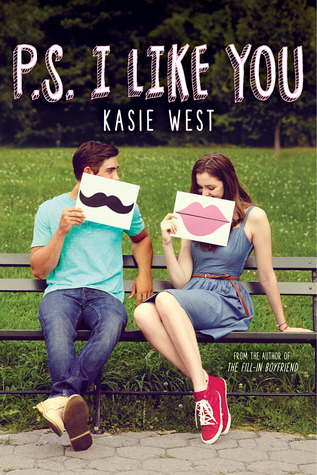
  • P.S. I Like You, by Kasie West. I got this book for S for Christmas because I thought it sounded cute, and then decided I had probably better read it myself to be sure. And how often do you a find a YA that takes place in Phoenix?? After a rough, choppy start (think oddly disjointed sentence flow, stilted dialogue, me thinking, "Grrr, I was an Arizona high schooler and my experience was nothing like this!"), some sort of unseen transition occurred and the dialogue became funny, the characters became real, the romance gave me butterflies, and I was utterly charmed. Enough so that I passed that late night reading point of no return and had to finish the book before finally going to bed around 2 a.m. A quick, cute, fun read! I’ll definitely be looking for more Kasie West novels.
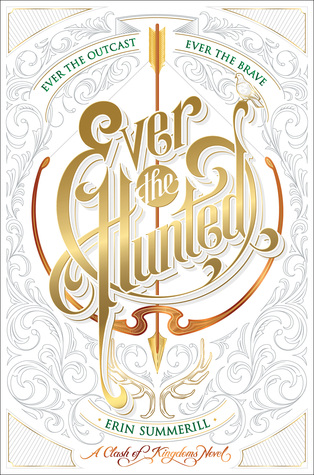
  • Ever the Hunted, by Erin Summerill. Though this book has an absolutely stunning cover design (and I am a sucker for cover design!), my overall feeling about the story inside the covers was a resounding “meh.” I was tentatively interested and engaged in the beginning (world-building concerns were primarily what kept me from being fully interested and engaged), and then halfway through I got bored. The romance, which had an interesting hook and tension to start with, was resolved too quickly for me. Though the plot kept a tidy pace, it still somehow managed to feel mired and slow to me. The plot development on the last page was intriguing, but probably not enough to motivate me to pick up the next book when it comes out.
  • Snow White: A Graphic Novel, by Matt Phelan. I loved the aesthetic and storytelling of this graphic novel. Easy to read in one sitting, it situates the traditional Snow White story in New York in the 1920s and the Great Depression. Samantha White (her mother calls her “Snow”) lives in NYC, and after her mother dies when she is young, her businessman father remarries a star performer of the Follies—enter evil stepmother! You know how the story goes from there. I love the twists that evoke the original fairytale while adjusting it to fit in the new time period. A ticker tape stands in for the magic mirror, seven street urchins remind the reader of dwarves in a forest, and a detective investigating the case of a mysteriously sleeping girl found in the display window of a department store makes for a modern prince charming. There are few words in the graphic novel, but the expressive art clearly tells the tale.
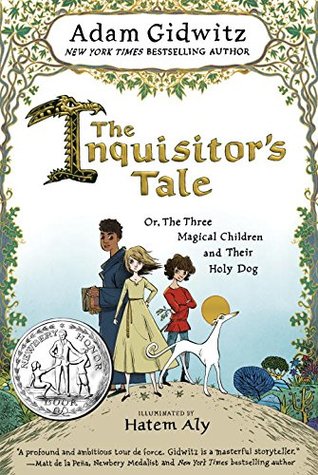
  • The Inquisitor’s Tale, by Adam Gidwitz. This Canterbury Tales-esque story follows three unique young people and one very special dog in France in the 1240s—Jeanne, a peasant girl on the run from the authorities who experiences prophetic visions; Jacob, a Jewish boy with mysterious healing powers who has escaped the hate-fueled burning of his village; William, an unusual oblate endowed with colossal strength; and Gwenforte, Jeanne’s beloved greyhound, long dead and yet somehow returned to her. Though the storytelling is fast-paced, it somehow still manages to be a slow burner, with a powerful payoff. Also, it's really funny. I mean, there’s a farting dragon! The humor is definitely a hallmark of the story, but it also depicts people in all their complexity, and its ruminations on prejudice and tolerance are especially important. It could also serve as a master class on how to use modern speech in a historical (or fantasy) setting without it sounding jarring, inappropriate, or false. Highly recommended!


Things I’m Currently Reading

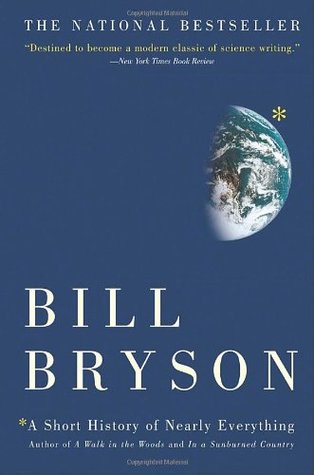
  • A Short History of Nearly Everything, by Bill Bryson. As I continue my incursions into the Bill Bryson audiobook realm, I recently started this one, wherein BB takes on science, the universe, and everything! Completely fascinating, and makes me want to learn more about all the topics he covers. His wit and his knack for finding and relating bizarre footnotes to history delight, as ever.
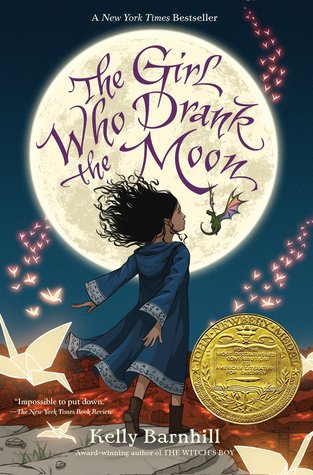
  • The Girl Who Drank the Moon, by Kelly Barnhill. This one is hitting all the right fairytale buttons for me. I adore Fyrian the Perfectly Tiny Dragon (he’s prone to crying), and I’m not even 100 pages in. But, I had to take a break from this one so I could starting reading…
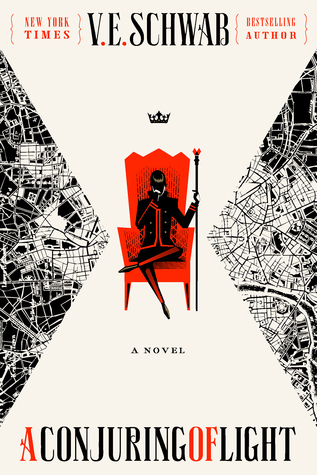
  • A Conjuring of Light, by V.E. Schwab. AHHHHHHHAGHAIOHGALIFBHALKHGHLGIagahgipuahg’gauug GO AWAY I’M READING


Things I’m Looking Forward to Reading

  • Rat Queens #1, by Kurtis Wiebe and Owen Gieni. Rat Queens is back with Image Comics and a new artist (astute blog readers and comics fans might recognize his name from Manifest Destiny)! It looks like they’ll be doing a kind of reboot of the series, which honestly I’m down with since, storywise, the last issues before all the artist kerfuffle and hiatus went down were kind of going in a weird direction. I’m hoping it’s fun and awesome and helps me forget all the strangeness that went on with the artists and story. Out on March 1st, 2017.
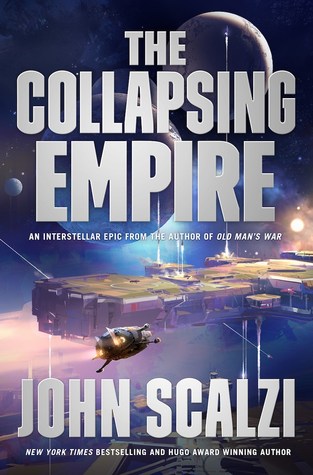
  • The Collapsing Empire, by John Scalzi. You can click on the picture to read the blurb—it sounds amazing, and has been getting some great reviews. I don’t think I’ve read a Scalzi novel I didn’t like, and this one sounds especially cool. Can’t wait to get my hands on it! Too much to hope he’ll be promoting it at Phoenix Comicon this year? Out on March 21st, 2017.


Well, that’s it from me this month. What’s been on your TBR? What are you looking forward to reading next? Let us know in the comments!

**All books purchased or borrowed from the library. An e-ARC of Ever the Hunted was received from the publisher via NetGalley, but this short review is based on my reading of a finished copy. As ever, much as we are grateful for review copies, our reviews are uninfluenced by the source of said copies, or by anyone else, for that matter.

Sunday, May 18, 2014

Romancing the Rubric: Georgians vs. Vikings

Though it may turn out to be futile, I am dogged in my pursuit of a 2014 Reading Bingo blackout. The square I most recently had in my sights was “a book you could bring up at a bachelorette party,” which led me to some fantastic (read: not fantastic) romance novels found in the truly gargantuan collection of such at my local digital library. (It also occurs to me that my co-blogger and I are possibly the only weirdos in the world who think that book discussion at a bachelorette party is a thing that actually happens.) I found many that were enticing, but settled on these two for starters (and also because they had copies available for immediate download):

“Reynaud St. Aubyn has spent the last seven years in hellish captivity. Now half mad with fever he bursts into his ancestral home and demands his due. Can this wild-looking man truly be the last earl's heir, thought murdered by Indians years ago?

Beatrice Corning, the niece of the present earl, is a proper English miss. But she has a secret: No real man has ever excited her more than the handsome youth in the portrait in her uncle's home. Suddenly, that very man is here, in the flesh—and luring her into his bed.

Only Beatrice can see past Reynaud's savagery to the noble man inside. For his part, Reynaud is drawn to this lovely lady, even as he is suspicious of her loyalty to her uncle. But can Beatrice's love tame a man who will stop at nothing to regain his title—even if it means sacrificing her innocence?”

(Note: This book is the final volume in a quartet, but I was able to follow everything just fine without having read the previous three.)

So…let’s talk about this. Aside from some deplorable French in the early pages, it had a really promising start. Beatrice seemed like a heroine with a good head on her shoulders—level-headed, not afraid to stand up for herself, has a cool book-binding hobby, and affection for her family. Reynaud was also interesting—after years of captivity by Indians in the colonies, he has returned home ready to claim his place as Earl of Something-or-Other, while dealing with some understandable PTSD issues. He may be rough and quick to temper, but he is also loyal to his friends and takes up the mantle of responsibility for those he considers in his care.

The writing is smooth and engaging, pulling you along into the story, and I really enjoyed it for the first half of the book. Beatrice’s awkward position between her uncle the current earl and Reynaud the should-be earl created good tension—she feels Reynaud deserves the earldom, but is worried how her uncle will take having their current lifestyle revoked, and is torn between her loyalty to him and her attraction to Reynaud. Reynaud, for his part, is simultaneously trying to solve the mystery of who betrayed his military unit 7 years prior that resulted in his capture by Indians, and trying to prove he is sane enough to retake the earldom (he thinks marriage will help his cause, and that Beatrice would be a convenient match). The side characters and plots were also engaging, with Beatrice’s friend Lottie dealing with marital strife in what had originally been a love match, and her childhood friend Jeremy, crippled in war and in poor health.

Then things took a turn for the worse. Reynaud’s hardened, though still-mostly-respectful character morphed into a coerce-y, take-advantage-y blob, which I’m sure you can imagine did stellar things for the romance. Beatrice’s best friend from childhood has just died and she’s inconsolable with grief? I know JUST the thing to cheer her up—roughly divesting her of her virginity while she’s grief-stricken and in no state to be making important life decisions! That’s romantic, right? Or at least sexy? Jeez. I mean, I know most people don’t read bodice-rippers because they actually want to have their clothes literally torn off their bodies during their own intimate encounters, but there is a line between titillating and distasteful, and that scene was firmly in the latter category. Ugh.

It was mostly downhill after that. Everything that made Beatrice cool to begin with sort of faded away until she was mostly, “Oh! I love him, but he doesn’t love me!” without much of her original personality intact. Reynaud continued on his path of domineering selfishness and disrespect, largely dismissive of Beatrice’s concerns and opinions both in and out of the bedroom. I think there was only one sex scene that showed genuine, mutual tenderness.

The two get married well before the climax of the story, but don’t realize how the other person feels about them (in Beatrice’s case) or that what they’re feeling is indeed love (in Reynaud’s case) until the end of the book. I guess that was supposed to be the emotional payoff, but I didn’t really buy it. Everything else gets tied up, too—the earldom situation is handled to everyone’s benefit, the mystery of the betrayal in the colonies is solved, and the subplot involving Lottie and her husband is resolved without much actually happening. Even the writing, which was quite good to begin with, became less so as the book went on, with inconsistencies and convenient resolutions to many of the conflicts. All in all, I was disappointed that a story that had started off so strongly devolved into something less compelling with an often uncomfortable relationship at its heart.

Clearly, a romance rubric was in order.

 photo photo1_zps9517ae5b.jpg


“Dangerous warrior Ivar Gunnarson is a man of deeds, not words. With little time for the ideals of love, Ivar seizes what he wants--and Princess Thyre will not become the exception to his rule! Mysterious and enchanting, Thyre rouses Ivar's desire the moment he lays eyes on her. With Viking factions engaged in a bloody feud, Thyre is yet another captive this hardened warrior conquers--but to be king of Thyre's ‘heart’ will entail a battle he has never engaged in before…”

This book kind of ended up being the inverse of the previous one—largely bad writing, but the relationship at the heart of it was actually kind of sweet. The tender moments between Thyre and Ivar were really the only times I was able to get caught up in the reading—the rest of the time the writing was so flawed that I found it difficult to take the book seriously.

That plot blurb from GoodReads does a pretty crappy job of explaining the (admittedly somewhat convoluted) plot, so I’ll try to sum it up with a bit more detail. Thyre lives with her stepdad and half-sister in a viking kingdom called Ranriken. Her mother, Sainsfrida, is dead, but was actually a princess of Ranriken once upon a time. Back then, something happened and the king (Sainsfrida’s brother, I believe) sent her as a hostage to the ruler of a nearby viking kingdom called Viken. The princess eventually got knocked up while at the Viken court, and was rescued by her friend Ragnfast and taken back to Ranriken. The Viken ruler supposedly told her to kill the baby if it was a girl and send it back to him if it was a boy, and the princess’ brother/king was upset that she got knocked up by an enemy and exiled her to live in the boonies with Ragnfast and illegitimate baby Thyre, whom she did not kill. AND THAT’S JUST THE BACKGROUND INFORMATION.

So Thyre’s mom is dead, and she’s living with Ragnfast and her dopey half-sister. Thyre pretty much runs the steading, and then one day some Viken trader/warriors wash up on her shores after a storm. They’re supposed to show the sailors hospitality while they fix up their ship, and shenanigans ensue, with the result being that their leader, Ivar, claims Thyre as his concubine and takes her back to Viken with him. This part is not actually as creepy as it could be—after Ragnfast commands the sister to sleep with Ivar (which is apparently part of the whole hospitality thing), Thyre tricksily plots with her to switch places to a) protect her sis, who has sworn herself to another man, and b) have a say in who she herself sleeps with before she’s married off to the abusive neighbor. Ivar, for his part, realizes it’s not the sister, preferred Thyre anyway, and was set to just sleep. Like I said, convoluted, but it actually kinda made sense in the context of the story.

So Ivar and Thyre continue to alternately vex and beguile each other as they head back to Viken together with the rest of the crew. There’s a plot involving people from Ranriken trying to rob the Viken on the high seas, and another with Thyre deciding whether or not to reveal her true identity to both Ivar and her father, the ruler of Viken, and yet another with Thyre being antagonized by the Viken ruler’s current wife. Thyre and Ivar are forced to marry, though neither of them really minds, even if they haven’t confessed their true feelings to each other yet. Somehow the high seas attack has endangered Thyre’s family and the steading, and she sneaks on Ivar’s ship when he sails back to help them. All plots points swirl in convergence as Ivar and Thyre realize they love each other, save Ranriken from her uncle’s evil rule, and ease tensions between the two kingdoms!

Whew. This one clearly had a lot of other-plot going on in addition to the romance, which became problematic for me due to the shoddy writing. The writing issues were distracting to the point that I lost a lot of interest in even trying to follow the story and the conversations people were having (seriously, most of the time characters spoke to one another it felt like an exchange entirely of non-sequiturs). Dialogue that didn’t flow, research into the time period not smoothly incorporated, side characters who were flat or whose motivations were difficult to follow…there was a lot that made my inner editor’s fingers twitch toward the red pen.

And yet, I will give credit where it’s due—the majority of interactions and moments shared by Thyre and Ivar were sweet. Thyre is fiery and doesn’t take crap from anyone, and Ivar is alpha-male without being a dick about it. He is respectful of her and appreciates her for who she is, and Thyre feels/treats him in the same way. There were some moments when one or both of them would have a less-respectful thought about the other after some clash of their personalities or wills, but these seemed out-of-character from everything else we knew about them and I ignored them as writing wonk.

One thing that would hit me every so often while reading was how much I would rather be reading the story of Thyre’s mom, Ragnfast, and what went down at the Viken court all those years ago. Did Sainsfrida and the Viken king love each other? What about her friendship with Ragnfast, which was strong enough to compel him to rescue her alone? And then the two friends ended up married (forced by the Ranriken king, but married nonetheless) and exiled, so did they come to love each other eventually? This sounds like a much more absorbing story. I need answers!

Overall, I can’t really say I recommend it, but I felt surprisingly less twitchy about the writing problems than usual, thanks to the central relationship that managed to develop with tenderness and respect, as well a bit of fire and personality conflict. This one’s romance rubric, for comparison purposes:

 photo photo2_zps597b0a5f.jpg
(Apparently I was so irritated by rubricking these less-than-awesome books that I forgot how to spell “healthy.”)

So which book comes out on top in a battle between good writing/uncomfortable relationship and bad writing/better relationship? Per the incontrovertible rubric, it looks like in this case it’s too close to proclaim either a definitive winner. To Desire a Devil gets a nod for (mostly) smooth writing, while The Viking’s Captive Princess takes the cake (well, maybe just a bite of it) for a relationship that was (mostly) more pleasant to read about, but neither gets my full endorsement.

To Desire a Devil, by Elizabeth Hoyt
Published by Vision (2009)
Read in May 2014; from the library

The Viking’s Captive Princess, by Michelle Styles
Published by Harlequin Historical (2009)
Read in May 2014; from the library

Tuesday, May 13, 2014

Genre-ally Speaking: Manifest Destiny, Vol. 1

Title: Manifest Destiny
Author: Matthew Roberts, Owen Gieni, & Chris Dingess
Publisher: Image Comics
Publication Date: May 27th, 2014
Read: May 2014
Where It Came From: eARC from publisher via NetGalley*
Genre: Historical-supernatural-graphic-novel
Rating: 3.5 Sad Dead Herons

The Quick and Dirty:


Lewis and Clark lead an exploration of the United States’ new territory at the behest of President Jefferson, and encounter all sorts of supernatural monsters and other entities. Also, Sacagawea kicks some major ass.

The Wordy Version:


Lewis and Clark are on a mission from Jefferson to explore and document the Louisiana Purchase. At least, that’s the public face of the mission—Jefferson has actually tasked the two with leading the expedition to destroy the monsters inhabiting the interior of the continent and make way for westward expansion. L and C are naturally a little skeptical about this less-public aspect of the assignment, but carry on as their president has ordered. They've got a bunch of military men in the party, supplemented with freed criminals—expendable manpower for what horrors might be ahead. Their first stop is La Charette, the westernmost bastion of civilization.

It soon becomes clear that Prez Tommy J is not, in fact, losing his marbles, when they are attacked by a bison/minotaur/centaur creature while investigating a structure that looks mysteriously like the plant version of the St. Louis arch. Things go downhill from there—more murderous bison creatures, a naked lady with scary green eyes jumping off a cliff but leaving no body behind, an abandoned fort, moss zombies… They make it to La Charette and eventually find some of the village’s survivors. The original plan was to hook up with an Indian girl at the fort (wonder who that could be?), but they’re forced to make plans to leave without her. Said plans are derailed by various malevolent flora and fauna, and the awaited Indian girl swoops in to save their asses. More than once.

Lewis is a kind of happy-go-lucky-ish, scholarly type of individual, while Clark seems to be the harder, less forgiving military man. Their bromance could get pretty epic. Other prominent characters include a particularly slimy convict named Jensen, who suspects the real reason the criminals were brought along on the trip and has no qualms about the measures he may have to take to escape. Sacagawea is the strong, silent (and pregnant) type, and her husband/baby-daddy Toussaint Charbonneau seems a little creepy, especially when we find out he’s being paid by L and C for delivering her to them, with more money to come when the baby is born…

I didn’t have especially strong feelings about the art in general, but there were some really cool full-page panels. It’s actually a pretty gruesome graphic novel at times (bison creature dissection, anyone?), and the slime ball Jensen says some pretty offensive things (cannot WAIT until some creature gets him. Or Sacagawea!), but it didn’t make me squeamish enough to stop reading. Overall, I was feeling kind of in the middle about it—it was interesting enough, but maybe not so much that I would seek out the next installment. But some set up at the very end involving plant prophecies and demons from Clark’s past, as well as some loose ends, such as Sacagawea’s undisclosed role (both from L and C’s perspective and from her own) and the green-eyed cliff-jumper, convinced me the next volume is worth a place on my TBR. I’m looking forward to further development of some characters we only got a glimpse of, like Mrs. Boniface from La Charette, and York, Clark’s African-American companion (slave, freedman, servant—we don’t know yet).

Have you been reading this one in its comic book form, or do you plan to check out this graphic novel collection of issues #1-6? What other graphic novels have caught your eye lately?

*As ever, much as we are grateful for the copy, our review is uninfluenced by its source.

Wednesday, March 12, 2014

Book Review: The Spymistress

Title: The Spymistress
Author: Jennifer Chiaverini
Publisher: Dutton Adult
Publication Date: October 1st, 2013
Read: March 2014
Where It Came From: eARC from publisher via NetGalley*
Genre: Historical-fiction-based-on-a-true-story
Rating: 2.75 Secret Messages Hidden in Eggs

The Quick and Dirty:


After her home state of Virginia secedes from the Union and joins the Confederacy, aristocratic Richmondite Elizabeth Van Lew is torn between her love for her home and her love for the United States. She puts herself in danger by hiding her Unionist sentiments and remaining in the capital of the Confederacy, and this unique position allows her to aid Union prisoners of war, form a network of spies, and smuggle information to the Union forces throughout the course of the Civil War. The story perspective of Southern Unionists who remained living amongst their largely Confederate neighbors is a compelling one, but flat characters and a strange sort of detachment in the writing made it difficult for me to connect with the characters or really get a sense of the horrors of the War Between the States. There was something that kept me turning the pages, especially as the end of the war drew near, but overall I was a bit disappointed with the treatment of the material.

The Wordy Version:


As I was perusing NetGalley one day, I was immediately drawn to this book by the gorgeous cover. Just look at it! Pensive woman in a pretty purple Civil War-era dress holding what appears to be some sort of code, with old-time-y looking fonts, parchment, and flourish-y things. Lovely. Reading the plot blurb about the exciting-sounding escapades of a genteel Southern lady spymistress for the Union (based on a true story!) sealed the deal. However, while it did indeed have some exciting moments, overall I didn’t love it, and I’m not sure it completely does justice to the real Elizabeth Van Lew who inspired it.

But let’s start with the positive. One of the things I found to be extremely compelling about this book was its subject matter of people living in the South who did not agree with secession or slavery, and during the war were forced to either hide their true loyalties or leave their homes to live in the North. It was an idea I’d never really stopped to consider before. In pop culture/media/schooling, I think it’s easy to reduce the conflict of the Civil War to simply “South = All Bad, North = All Good,” and the stories of the people who didn’t really fit into that dichotomy get somewhat lost in the middle. It hadn’t really occurred to me that there were people in the South who were harassed and persecuted for not supporting, and actually working against, the cause of the Confederacy, and so I found it very interesting to read of the bravery, dedication, and sheer boldness of this woman of the upper echelons of Richmond society, her family, other townsmen, slaves, and freedmen all secretly working for the cause of the Union in the Confederate capital.

Thursday, March 6, 2014

Book Review: Longbourn, by Jo Baker

Title: Longbourn
Author: Jo Baker
Publisher: Knopf
Published: October 2013
Read: March 2014
Where It Came From: Library
Genre: Historical Fiction
Rating: 2 Stars


The Quick and Dirty:


A young house servant in late Georgian England falls in love with a servant, whose mysterious past could leave both of them broken-hearted at the least. The book excels in making housework as dreary as it really is, and in making me appreciate the soap-opera plots of Downton Abbey. In short, it is dull though technically respectable.

The Wordy Version:


Despite my utter disappointment in Death Comes to Pemberley, I was excited about Longbourn. As Pride and Prejudice fanfiction goes, the concept behind Longbourn is actually unique: it’s a retelling of the story from the point of view of the servants in the shadows of the original novel. But a unique premise does not guarantee a uniquely enjoyable reading experience, and this book has fallen into many of the same pitfalls of writing as Death Comes to Pemberley.

The problem at its very center is that there is far too much realism. It’s like reading Strindberg’s Miss Julie without the psychological stuff. Pages go by of the servants washing laundry, slaughtering a pig, mucking the outhouse, making soap, sewing hems, trudging through the cold rain to purchase ribbons, etc. It gives the impression that the author has done a great deal of research on the day-to-day responsibilities of servants in early 19th century Britain, but that she hasn’t been able to concoct a plot worthy of pulling the characters away from the drudgery of their work.

There is some plot, of course. Longbourn’s maid-of-all-work, Sarah, is a pragmatic Belle from Beauty and the Beast: she goes about her daily chores practically singing about how there must be more than this provincial life, has her nose stuck in a book, and is so beautiful that from the moment that they meet her and see her, the footmen practically say she’s gorgeous (and make plans to woo and/or marry her). Sarah prickles at James, the new manservant at Longbourn, who has appeared in circumstances that convince her of his shady character. She is drawn to Netherfield’s footman, Ptolemy Bingley, who comes from the Bingley sugar plantations, and has dreams of owning his own tobacco shop in London. When the Bingleys head to London in accordance with the plot of Pride and Prejudice, Sarah wonders what is tying her to the Bennet household. (Spoiler—it’s the mysterious footman.)

Were this plot taking up the entire book, the love triangle might function to keep things moving. Instead Sarah becomes happily settled into her life for the next third of the book, and we have to cling to the vague plot possibility that Wickham is going to rape the child servant, Polly. And when that next part of the plot dissolves into the natural departure of Wickham from Longbourn, a further tenth of the book is spent developing a backstory to the mysterious James. Followed by some ennui in housework. And some moping about romantic separation.

I am floored that there are reviews on Goodreads saying Longbourn is a better or more complete book than Pride and Prejudice, or that it is a way to interest men in Austen. Nothing could be farther from the truth. Longbourn’s unfocused plot and overreliance on period detail mean that it is a plodding piece of prose. Generally the writing is formal and detached, with occasionally jarring mentions of shit when the style would be better suited to feces. The detachment here is entirely unlike Austen’s style, lacking humor and the appreciation of human absurdity (all of which I mention not as criticism of the book, but of reviews that make the mistaken comparison). I observed some interesting diction and the sentences were fine, but without much of a story to tell, the only thing compelling me to finish was the desire to knock off another reading Bingo square for the year (“a published fanfic”).

As for any suggestion that Pride and Prejudice is incomplete without looking at the servants responsible for everyone’s food and laundry? The reason Pride and Prejudice doesn’t talk about the lives of Longbourn’s servants is precisely the reason this book is boring to read: nobody cares about dishwashing, and chores are irrelevant to the plot of Elizabeth maturing in her judgment and falling in love with Darcy. Unless Pride and Prejudice had a major moment of Darcy looking at some tarnished piece of silver in Longbourn, and insulting Elizabeth for her servants’ neglect, the individual lives of the servants do not affect the plot of Austen’s book. To a large extent, the opposite is naturally true as well. The servants do not care all that much about Mr. Wickham’s unscrupulousness or the Bingleys’ abrupt departure from Netherfield.

With little important convergence in the plots of Longbourn and Pride and Prejudice, it’s probably unfair to judge Longbourn for not bringing much new understanding to its source material. In essence, Longbourn would have been the same if the “upstairs” family were any other family: illuminative about the lives of a largely marginalized class of people, but overly concerned with housework, and entirely too long.

Friday, February 21, 2014

The Haul: VNSA Book Sale, Part the Second

Ah, used books. Having already gleefully shown off my myriad discoveries in the Children’s Books section of Ye Olde VNSA Book Sale, it may surprise you to find out that that wasn’t even half of my overall take. Or maybe not. You may know me, and know I have a book problem.

 photo photo_1_zps0a513a13.jpg
A very big problem indeed.

After a thorough combing of the kids' section, I headed a couple tables over to the science fiction and fantasy area, where I scrounged up most of the contents of that there box. I think some old-school SFF geek must’ve cleaned out their stash this year, because there was a lot of really cool stuff—WAY more than I remember from my brief perusal of the section last year. Among all the books and authors I was unfamiliar with, I found quite a few keepers, such as this lovely collection of Douglas Adams books:

Tuesday, October 29, 2013

Genre-ally Speaking: The Madman’s Daughter

Title: The Madman’s Daughter
Author: Megan Shepherd
Publisher: Balzer + Bray
Publication Date: January 29th, 2013
Read: October 2013
Where It Came From: Library
Genre: YA-horror-science-fiction-historical
Rating: 4 H.G. Wellses

The Quick and Dirty:


Juliet Moreau has been living on her own in Victorian London, trying to scrape together a living in the shadow of her father’s disgrace. Once a prominent surgeon, Henri Moreau’s mysterious experiments led to scandal for his family, exile for him, and poverty and hardship for his daughter. As Juliet struggles on her own, she is left wondering whether her father is the warm man she remembers, or the monster that everyone says he is. So when she comes across Montgomery, her father’s old assistant, and discovers that he is still working for her father on an island in the Pacific, she convinces him to take her along on the ship back in order to finally get some answers. On the way they pick up a mysterious shipwreck survivor named Edward, who has no choice but to travel to the remote island with them. Things escalate after their arrival and less-than-welcome from her father when Juliet discovers that he has been experimenting on animals to make them more human-like, and that a killer is on the loose. Juliet knows she needs to escape the island, but doesn’t know if she will be able to escape the madness of her father’s blood in her veins. This novel, inspired by H.G. Wells’ The Island of Dr. Moreau, while probably not for the squeamish, is an absorbing gothic thriller that I quite enjoyed.

The Wordy Version:


When this book started off with a vivisection and a wrist-tendon-cutting in the first 50 or so pages, I wasn’t sure it was the book for me. Vivisection reminds me of a traumatic experience with a Mark Twain short story, and y’know, I just like animals too much to not get upset when I read about them being tortured. (You might judge me for finding that more upsetting than someone getting the tendons in their wrist severed, but that tendon-cuttee totally deserved it, so there.) I was feeling a little nauseous, but decided to stick with the book a bit longer because despite the grossness, there was something undeniably enticing about the writing. And I’m glad I did. When I tear through a 400+ page book in less than 36 hours, that says something! (Mostly that I should probably put more of a premium on sleep and social interaction, but hey, it happens.)

The amount of horror was just right for me, since I don’t like hardcore horror very much. If you’ve inhabited society and pop culture in the past century, you probably know what The Island of Dr. Moreau is about and thus have some idea of what Juliet’s dad is up to, but there is an air of mystery and suspense in Juliet getting around to discovering the extent of her father’s nuttiness and finding out how the other characters are involved that pulls you through the story. And then of course there’s the question of how she’s going to extricate herself from this remote island incubator of crazy, AND THEN how she might manage to reintegrate into society after experiencing all of that (although that second question might be best left for the next book). Juliet herself is very concerned with the possibility of having inherited a little bit of her father’s crazy, which adds an interesting psychological slant to the story, although from the reader’s perspective it’s pretty clear that Juliet isn’t as much like her father as she fears.

And yes, this book does have THE DREADED LOVE TRIANGLE. I’m not one of those knee-jerk reaction love-triangle-haters—it can be done well, and I try to give each a fair chance before passing judgment. The Montgomery-Juliet-Edward love triangle falls firmly in the middle of the spectrum. It’s definitely not an equilateral—maybe more of an isosceles? By which I mean that 2 sides of the triangle are well-developed, but one leg is less developed and left sort of flapping in the wind (although if any triangle had a leg flapping in the wind, I guess it wouldn’t really be a triangle, so there goes my metaphor). The attraction and romance between Juliet and Montgomery was convincing and made sense—they had a history, there was chemistry, and there was appropriate conflict. How would you feel if this nice-seeming guy suddenly reveals that he’s been complicit, if not an active participant, in horrifying medical experimentation with your nutso father? There was good internal conflict for both Montgomery and Juliet, and it built into realistic obstacles to their relationship. Now, castaway Edward on the other hand… I mostly just felt he was useless. Not really offensively so. I just…didn’t know what he was doing there. Juliet kept talking about being so drawn to him, and I just didn’t feel it. It didn’t feel real. There wasn’t much chemistry, neither the readers nor she knew much about him, and perhaps most importantly, he didn’t really have much personality. We are told that he is clever and educated, but it is never really shown to us in what he says or does. It wasn’t rage-inducing; I was more like Why are you here? Why aren’t you interesting? And why do you keep distracting Juliet from Montgomery? And yes, yes, Edward has a somewhat important part to play at the end of the story, but even that development failed to impress me with regards to his character. So, Montgomery and Juliet—fun to read about. Edward and Juliet? Less so.

Aside from my confusion about why Edward needed to be in the story, the only other thing that I had qualms about was the amount of time characters spent running around the jungle. And like with Edward, it was less, “This is stupid, I am angry at this writing!” and more, “Why are we doing this…? Oh, okay…” It may have bewildered me for a moment, but it didn’t disrupt my reading of the story and it was easy to forget about it and keep turning pages.

And that ending!! Oh man. Action right up until the last page, and then that cliffhanger. It was pretty awesome, and set up some promising conflict for the next book in the trilogy. (Yes, another YA trilogy. I thought with being inspired by The Island of Dr. Moreau it would be a standalone, but it looks like the next entry will take inspiration from Robert Louis Stevenson’s The Strange Case of Dr. Jekyll and Mr. Hyde.) Overall, I enjoyed this one a lot. More upfront, moderate horror than truly frightening, creep-down-into-your-bones, insidiously chilling horror, it drew me in and kept me reading, even with my worries about squeamishness and a limp-legged love triangle. I plan to read the sequel come January 2014, and would think about purchasing a copy of this for my shelf.

It turned out this was a good unplanned Halloween read! Have you read anything spooky this October? What’s next on your TBR?

Related Posts Plugin for WordPress, Blogger...