Thursday, May 26, 2016

Phoenix Comicon 2016 is Coming!

It’s that time of year again…comicon time! Though neither S nor I made it to BEA this year, I will be making the summerly sojourn to Phoenix Comicon in about a week to partake of their lovely books and authors programming track. (I tried to entice S into joining me, craftily using her love of the Animaniacs against her—voice actors from the show will be there this year—but alas, it was to no avail.) It seems like this year there won’t quite as many big name SFF author guests at the con as there have been in previous years, but there will still be plenty to see and do and experience. I could seriously probably attend booksy-authory panels back-to-back the entire convention and still miss out on half the programming on that track. Two very big names will be attending again—Pat Rothfuss and Brandon Sanderson. I’m not a superfan of Sanderson’s work (I know, I know…unpopular opinion), but I am a big Rothfuss fan, and I think it will be especially cool to hear what he has to say coming off the recent and highly successful Tak kickstarter.

But anyway—who and what am I most looking forward to about this year’s PHXCC? Let’s see…

  1. OH MY GOD V.E. SCHWAB IS GOING TO BE THERE AHHHHHHAHAHGDHGOHZDGIHDPIUVH{OIDHOI
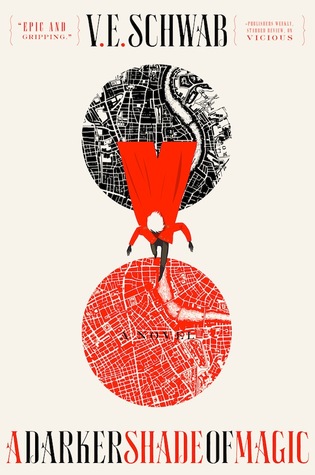
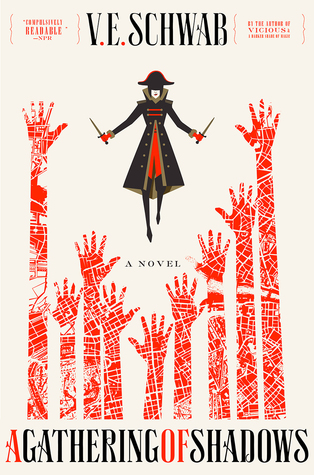
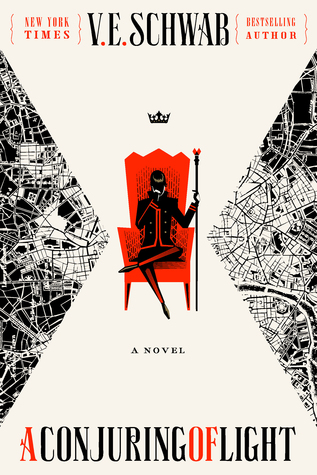
    So, if you’ve seen me on the blog or social media lately, you have probably witnessed my recent obsession with her books, A Darker Shade of Magic and A Gathering of Shadows. Ummmmm I may have just actually bought her entire bibliography (well, almost) on Amazon because I was so in love with those two books. DON’T JUDGE ME. Anyway, shortly after reading A Darker Shade of Magic, I found out she was doing a signing in my city…the previous week. In a fit of despair at missing out, I randomly checked on the Phoenix Comicon page and, lo and behold, she was listed as a guest! I am super excited to hear what she has to say about the writing life and any tidbits about the upcoming A Conjuring of Light and This Savage Song. Woot!

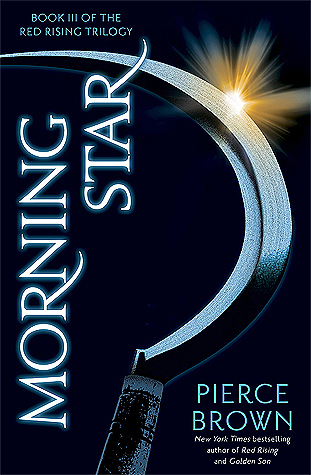
  2. Hooray, I’ll be able to get the last book in the Red Rising trilogy signed!
    Pierce Brown will be back at PHXCC this year. Red Rising was awesome, Golden Son was the best thing I read last year, and I’m currently prolonging my reading of Morning Star because I don’t want the series to end. (I suppose I should finish it by next week, though, so I don’t get inadvertently spoiled at panels.) At any rate, Pierce Brown is a fantastic storyteller and writer, and I’m eager to see what’s in store for him next. (And also deathly afraid of what might happen by the end of Morning Star.)

    There will be lots of old favorites and new faces as well as far as the author lineup goes, but if you really twisted my arm for a top two list of authors I’m looking forward to, thar it be. Now, what panels look intriguing, you ask? Well, let me tell you! Beyond the spotlight panels on various superfan-squee-inducing authors, I am looking forward to…

  3. Adventuring Parties, Still Cool? (featuring Patrick Rothfuss, Sam Sykes, Sarah Remy, and Todd Lockwood). “The world of fantasy has long been defined by the Fellowship but in a post Dragonlance world, does the adventuring party still have a place in epic fantasy?”

    Points for best panel name ever. I was sold on that alone. Also, I bet you a dollar Rat Queens comes up during the panel discussion.

  4. Del Rey Superfight (featuring Kevin Hearne, Michael J. Sullivan, Pierce Brown, and Scott Sigler). “Superfight! 3 authors enter, 1 author leaves…join Del Rey in our new favorite gaming tradition.”

    Watching favorite authors go all cutthroat on each other in pursuit of a win at the tabletop game Superfight was a blast last year—just as hilarious as Author Batsu, if not more so. Can’t wait to see what’s in store this year. BSing has never been so fun!

  5. Would You Lie to Me (featuring Beth Cato, Brandon Sanderson, Jason Hough, Mary Robinette Kowal, Sam Sykes, Scott Sigler, and V.E. Schwab). “Authors lie for a living, but are they any good at knowing when they are being lied to? Hosted by Jason Hough, our two teams of authors will try to outwit each other and discern fact from fiction.”

    Apparently I really, really like panels that run a little bit like game shows.

  6. Mythology and Folklore (featuring Alyssa Wong, Joseph Nassise, Mary Robinette Kowal, and Todd Lockwood). “Fantasy has always borrowed heavily from the myths and legends around the globe. As the genre expands, so too do the myths we draw upon. Our panelists discuss their favorite legends throughout history and how they use them in their work.”

    As a lifelong mythnerd, this is immensely appealing to me. I mean, one of my life ambitions is to join the Mythopoeic Society. In what world would I not be attending this panel?

  7. Guilty Pleasure Tropes (featuring Christina Henry, Gini Koch, Patrick Rothfuss, and Tom Leveen). “Weird magic, awkward relationships, witty banter; everyone’s got a favorite trope, even if it’s sometimes a dirty word. Our authors talk about the tropes we’re most embarrassed about but just can’t quit.”

    Serendipitous, because as S and I have been recently plotting a ridiculous romance novel (seriously ridiculous—it was inspired by word scrambles that sound like fancy names), it has come to my attention that I have a talent for generating tropes. S assures me this is perfectly acceptable—nay, required—for the romance genre, and I bow to her expertise on the subject.

  8. Fantasy Draft League (featuring Alexandra Oliva, Austin Aslan, Beth Cato, Lexie Dunne, Ryan Dalton, and Scott Sigler). “Fantasy football. Hold the football. Our authors assemble an adventuring party from fantasy characters and duke it out to determine the one bracket to rule them all.”

    What fun!! This sounds similar to something S was telling me about earlier this year that happened at her local library (she was hunting for a good cleric—she came up with Melisandre, and I came up with Lirael).

  9. Embarrassing Author Con Stories (featuring Kevin Hearne, Leanna Renee Hieber, Mary Robinette Kowal, Patrick Rothfuss, Pierce Brown, Sam Sykes, and Shannon Messenger). “Everyone’s got one. Sometimes they witnessed it. Sometimes they were a part of it. Sometimes they caused it. Our authors relive hilariously awkward and light-heartedly embarrassing experiences at conventions.”

    Ah, looks like more comedy gold. Who doesn’t love a little schadenfreude?


So much to see and do, and it all starts next Thursday! I can’t help but feel woefully unprepared, but it’s looking to be a busy, crazy, awesome weekend-after-Memorial-Day-weekend. Who are you most excited about at the con? Which panels sound the most intriguing? Hit up the comments and let us know!

Monday, May 16, 2016

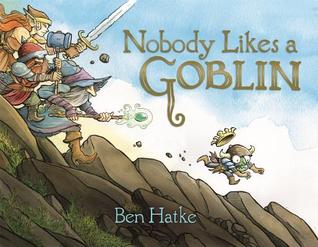
Book Review: Nobody Likes a Goblin

Title: Nobody Likes a Goblin
Author: Ben Hatke
Publisher: First Second
Publication Date: June 7th, 2016
Read: May 2016
Where It Came From: Print ARC received via Goodreads Giveaways
Genre: Fantasy-children’s-picture-book
Rating: 4.5 Honk-Honks

I was so happy to receive a review copy of this picture book through a Goodreads Giveaway. I’ve never read anything else by Ben Hatke (though his Zita the Spacegirl graphic novels have always looked intriguing), but the cover art and the blurb were delightful. And now that I’ve read the book, I can confirm that it is delightful as well!

In the story, cute little Goblin is minding his own business, living in his dungeon and hanging out with his friend Skeleton, when a band of mean, nasty adventurers invades and takes everything—even Skeleton! So Goblin bravely goes out into the world to rescue his friend, though he has been warned to be careful, because nobody likes a goblin. The reversal of the typical order of things in a fantasy story here is fun, with Goblin and other monsters as the heroes, and the adventurers and townsfolk as the thoughtless, greedy villains. I love the humor in both the words and the pictures, and the illustrations add richness and depth to the story, with plenty of interesting things to notice and talk about that never come up in the text. Like the woman who is on the adventurers’ cart full of looted treasure!! What happened there?!

My favorite part, though, had to be Honk-Honk. As Goblin starts off on his adventure, he asks a neighboring hill troll if he saw which way the adventurers took Skeleton, and as she points him in the right direction, she mentions that they took her Honk-Honk away with them (which of course, sweet Goblin that he his, he promises to bring back). At the time there is no other context, and I was like, “...what’s a Honk-Honk?” But later, when Goblin finds the adventurers and their cart of spoils, when you look at the illustration, there is a goose in a cage amongst the riches (and next to the random captive woman)! Honk-Honk!!! Honk-Honk plays his (or her) part in chasing off the baddies and is eventually returned to the hill troll, and they join Goblin and their other new friends for a meal at home in the dungeon at the very end of the book. Cute, funny little details like that make this story a pleasure from start to finish.

Dungeons and Dragons, RPG-loving parents (or even just parents who are fantasy fans) would probably love to share this with their children. Even grown-ups without children will find much to love in this book and could give it a nice home on their shelf. Older, elementary-age children would understand the humor in the reversal of the good guy/bad guy roles, but younger children could enjoy the story, too (though it’s probably not one I would choose for a 5-and-under storytime program—I think that a grown-up and child would get more out of it by sharing the story as a pair).

*As ever, much as we are grateful for the copy, our review is uninfluenced by its source.

Sunday, May 15, 2016

Cool Stuff: Tak on Kickstarter

In the past couple weeks, I have come across lots of really, really cool book-related stuff in my wanderings around the interwebs. Stuff that made me think, “This is a thing?? This is amazing! How did I not know about this?!” And then I would frantically text Susan or whichever friend I thought would most appreciate it to share the awesomeness I had stumbled upon. And that got me thinking—with all the really nifty, book-related stuff out there for one to come across mostly randomly and fortuitously (one might say like meeting a tinker upon the road?), why not have a new blog feature for sharing the very, very coolest of things like that that I come across? And thus, the creatively titled “Cool Stuff” genre of posts was born.

First up: The game Tak, from Pat Rothfuss’ Kingkiller Chronicle books, is becoming a real thing on Kickstarter. In fact, it already is a thing, with rules and instructions for creating your own game to start playing before the Kickstarter is even over.

If you are at all into fantasy novels, you’ve probably heard of these books, if not nommed them like a voracious reading beast. I’m sure I’ve written little blurbs about them here on RTET in the past, but it’s Sunday and I’m feeling too lazy to link to those past posts—suffice to say, they are very, very good (the books, not the posts). They’re the kind of books with a whole wonderful world that you could just crawl into. Good world-building, man. I am powerless to resist it. And it is so, SO cool when things from a beloved, so-well-crafted-as-to-feel-real fictional world make the jump and become real things in our world. (See also this article by Elizabeth Wein on the Book Smugglers site for further treatment of this topic.)

So. Tak. It was introduced in The Wise Man’s Fear, the second book of Rothfuss’ series, and is described by protagonist Kvothe as being “simple it its rules, complex in its strategy.” And now Rothfuss and game designer extraordinaire James Ernest of Cheapass Games have actually created it! It is an abstract strategy game for two players (ahem, I am learning so much about different genres of games and what they’re called these days), and it looks awesome. Fun for book fans, and also fun for people who like games and maybe know nothing about the books. I will be backing this Kickstarter for sure.

Sunday, April 3, 2016

Recent Favorites: A Darker Shade of Magic & Rat Queens

Do you ever find that your luck with reading choices comes in streaks? Sometimes you’ll have a long string of less-than-awesome reads, and other times it’ll be one homerun after another? I’ve been having more of the homerun experience with a surprising number of the books I’ve read lately, and thought I’d share some of the ones that were especially fantastic.

This book is probably the best thing I’ve read so far this year. You know that feeling when you start a new book, and only a few paragraphs in you find yourself feeling like you’re sinking into a feather bed and the writing wraps around you, and you know, you just know that you are in for a damn good read? That deep certainty from just the first few sentences that the author is going to lead you through a wonderful story, wonderfully written, and your inner critic knows it’s okay to shut off? That doesn’t happen terribly often for me (my inner critic is particularly noisy), but that is exactly how I felt with this book. Just a few pages in, and I knew it was going to be a favorite.

Ah, but what is it about? Well. Kell is an Antari, a magic user from a place called Red London, with the rare ability to travel between parallel worlds. His home of Red London is a city where magic flourishes, and he travels with messages from its rulers to the rulers of the other Londons, such as White London (scary, violent magic London) and Grey London (boring, no-magic London, the London of our world during the Regency). There used to be a Black London, but…well. Not anymore. In addition to his cross-dimensional messenger duties, Kell also moonlights as a smuggler, illegally bringing artifacts from one London to another. Naturally, this smuggling (which he considers more or less benign) eventually gets him into trouble, with monarchy- and multiverse-shaking consequences, which he must deal with, with the help of a thief named Lila from Grey London…

The jacket blurb for this book is a rare one that actually accurately captures both the plot and the tone of the story it provides a preview for. Here ‘tis:

“Kell is one of the last Travelers—magicians with a rare, coveted ability to travel between parallel universes, connected by one magical city.

There's Grey London, dirty and boring, without any magic, and with one mad king—George III. Red London, where life and magic are revered—and where Kell was raised alongside Rhy Maresh, the roguish heir to a flourishing empire. White London—a place where people fight to control magic and the magic fights back, draining the city to its very bones. And once upon a time, there was Black London. But no one speaks of that now.

Officially, Kell is the Red Traveler, ambassador of the Maresh empire, carrying the monthly correspondences between the royals of each London. Unofficially, Kell is a smuggler, servicing people willing to pay for even the smallest glimpses of a world they'll never see. It's a defiant hobby with dangerous consequences, which Kell is now seeing firsthand.

Fleeing into Grey London, Kell runs into Delilah Bard, a cutpurse with lofty aspirations. She first robs him, then saves him from a deadly enemy, and finally forces Kell to spirit her to another world for a proper adventure.

Now perilous magic is afoot, and treachery lurks at every turn. To save all of the worlds, they'll first need to stay alive.”

A very unique, creative fantasy, with elements of darkness, a bit of swashbuckling attitude, well-drawn characters in a beautifully conceived world, and plenty of action and emotion. I could ask for nothing more from a book. It was the kind of book where I became visibly annoyed when people would interrupt me reading it, and I had to plot my reading cannily, lest I arrive at work too tired to function after an all-night reading bender. So much fun, and so good. READ IT.


Rat Queens has been on my radar for quite awhile, but, not willing to fork over cash for a graphic novel without previewing it first, I’ve had to wait for the library to catch up with my TBR list. Alas, the library still doesn’t have a physical copy of the book, but they do have the first volume available on their streaming service, Hoopla. And once I started reading that first book, I didn’t put it down (or, er, close out my browser window) until I was finished.

The story follows an all-female band of fantasy adventurers, but with some seriously (and hilariously) modern twists. De facto leader is Hannah, a rockabilly elf magic user; Violet is a dwarven fighter (and a hipster, because she shaved her beard before it became cool); Betty is a flower child, drug-experimenting smidgen (vaguely hobbit- or gnome-esque) thief; and Dee is an atheist cleric of a religion (cult?) that reads a little like a Lovecraft/voudou smash-up. I mean, an atheist cleric! That’s hilarious!! XD

The town where they live kind of hates them, because they get drunk and raucous and destructive when they’re not off fighting big monster-y problems. They have foul mouths, a loose interpretation of what is, strictly speaking, legal, and varied amorous pursuits. They get into fights with each other, and have secrets from each other, and love each other all the same. In short, they’re girls you’d probably want to hang out with.

The writers and illustrators subvert the tropes of the genre through a distinctly modern lens, to hilarious effect (I burst out laughing at Hannah’s arcane cell phone and the nagging from her parents), but not at the expense of the genre—it is clear that the people behind Rat Queens love fantasy-adventure, sword and sorcery stories, and honor that genre by pushing its boundaries. The second volume deepens the storylines begun in the first outing, and begins revealing some serious backstory, while not losing any of the humor that makes it such a delight.

So, while probably not for the faint of heart or those offended by the F word, I absolutely loved it. I can’t wait for the third volume to come out (later this month!). This is a series that I would actually consider buying each comic as it comes out, rather than waiting for the trade paperbacks.

Have you had any outstandingly good reads lately? Already read these, or plan on adding them to your TBR? Let us know in the comments!

A Darker Shade of Magic, by V.E. Schwab
Published by Tor Books (2015)
Read in March-April 2016; Hard copy from library

Rat Queens Volume 1: Sass & Sorcery, by Kurtis J. Wiebe & Roc Upchurch
Published by Image Comics (2014)
Read in February 2016; Digital streaming from library

Rat Queens Volume 2: The Far Reaching Tentacles of N’Rygoth, by Kurtis J. Wiebe & Roc Upchurch
Published by Image Comics (2015)
Read in February 2016; Bought it

Monday, August 10, 2015

PHXCC 2015: Ann Leckie Spotlight Panel

 photo IMG_2186 copy_zpsvi4dwdpv.jpg

At last, some of my coverage from Phoenix Comicon 2015 appears on the blog! It was great fun this year, with lots of amazing author panels and signings, and some time left over for people watching and exploring the dealer’s hall. I was super, super psyched to go to Ann Leckie’s spotlight panel, as I had recently started her Imperial Radch series. I hadn’t yet finished the first book, Ancillary Justice, at the time, but it was a calculated risk between going there and possibly perhaps maybe getting a little spoiled, and going there and learning all kinds of neat things about the books and her writing. In the end (as if there had ever been any question!), the chance to hear all the cool stuff she had to say won out. We were a fairly small group at the panel, which made it nice and cozy, and pretty much everyone who wanted to ask a question had a chance to do so (even me!). As usual, I did my best with transcription of the audio, and hope you enjoy this taste of what went down at the panel!

A random smattering of interesting topics, tidbits, and happenings during the panel:

  • A story (that no one could state with certainty was true) that C.J. Cherryh’s publishers made her put an “h” on the end of her name because they thought no one would buy a sci-fi novel from a woman named Cherry
  • Lots of interesting information about what a rodman does on a surveying crew, which was a previous job of Ms. Leckie’s
  • The lesson that one should make sure they’re not holding a machete in the hand that they’re using to swat a horsefly that has landed on their body
  • Discussion of Breq as an unreliable narrator when it comes to herself
  • Jack Vance as a writer of gorgeous visual stuff—Ms. Leckie read a lot of Vance because she wanted to learn how to create good visuals in her work
  • Historical smuggling of tea out of China
  • Learning that it took her almost 10 years to write Ancillary Justice

And now for some of the questions she fielded during the panel that I found particularly interesting (and spoiler-free, for anyone who hasn’t read the books yet!).

Audience Member: Can you talk about the origins of the Ancillary series?

Ann Leckie: Basically, it was me putting shiny stuff together. I was one of those people who always wanted to be a writer from when I was quite young, but I never felt like any of my ideas were any good, or any of what I was doing was any good. Shortly after college I actually sold a story to True Confessions—which does not give you a byline, so that doesn’t count—not because I liked True Confessions—and this was an important lesson. I said, “Well, I want to write, but I don’t know what to write,” so I went to the drugstore and I got six dozen—the company had like 40 million different versions—there was True Love, and True Romance, and True Confessions, and True This and True That. I bought armfuls of these, and I read them until my eyes bled. And just whatever I flopped down on the paper was the story and I sent it in and they bought it. And I said, “Oh my gosh, I can actually do this. So, now write another one.” And I was like, “…no. It would not be worth it.” Even if they bought it. Because I really hated doing that. I hated reading them. I hated writing it. I’m never going to do that again. So then I didn’t write anything for a very long time.

Then in about 2002, I had smallish kids and I was home, because I had discovered very quickly after having kids that with the low paying jobs I was working—rodmen do not make a lot of money—I would be paying to go to work, what with childcare. So I was home, but I was just incredibly bored. I love my kids, they’re marvelous, and I would not trade them for anything. When they were one and a half they were not very intellectually stimulating. And so I said I need to do something. I’d heard about NaNoWriMo, and I said, “I’ll do NaNoWriMo, and I’ve got all these shiny things!” Because that’s what you do when you don’t have much else to think about—you put these shiny things together. So I sat down, and by then I already had the basic idea for Ancillary Justice, but I didn’t think I could write it because writing from the point of view of that particular character seemed impossible. I didn’t think I could do it. So, I wrote around the edges of that novel. I finished it and I said, “Well, this isn’t half bad. I’m going to revise it and send it out.” I sent it around to a number of different places, sent it around to some agents, and of course nobody took it. I am now eternally grateful that nobody bought it. Looking back on it now, it really wasn’t very good, which was another important lesson. I wrote a sequel to that novel just because next year’s NaNoWriMo came around. And then I said no, I’m going to do short fiction. So I did short fiction for 7, 8 years, I think. Then finally, I said okay, I’m going to sit down and I’m going to try and write the point of view from this particular character and just see what happens. What’s the worst that could happen? I waste the time and it goes in the drawer with the other two novels. That didn’t kill me. So that’s pretty much where that came from.


Audience Member: What was it like to win the Hugo?

Ann Leckie: Really surreal. Very strange. I strongly suspect that most science fiction and fantasy writers have a secret grandiose fantasy of winning the Hugo, and I suspect that most of us then say to ourselves, “Yeah, right. Now back to work.” Because, no. Lightning will strike first, right? So you always have that—you’re all alone, fantasizing being up on the stage giving a speech or whatever, and then you’re like, no. It’s not going to happen. So when it actually happened, I was lucky not to faint on the way up to the stage. I was pretty sure it wasn’t going to happen, in fact. I was pretty sure Wheel of Time was going to win. […] It still seems weird. But I can look at my mantle at home and there they are, so they must’ve really happened!


Audience Member: There was something in Ancillary Justice that I really enjoyed, and I was wondering if it was influenced by some of the Golden Age science fiction. In the beginning there’s a lot of mind wipe that was often used extensively within the Golden Age of science fiction to indicate that someone had their mind taken away, but they were still alive, still a person. I liked how in Ancillary Justice that you dealt with the overlay—what it does to what was there before, and the fact that even though physically they look the same, basically it’s a death of the personality.

Ann Leckie: Once I had the thought of the character with multiple bodies, then I said, “Well, what are the implications of that? What is there to play with there?” I started to look into the neurological basis of identity, which is really creepy when you read too much about it. If you have the right kind of brain damage, you will think you do not exist. If you have the right kind of brain damage, you can think you’re dead. Walking around—no, I’m dead, I’m not actually here. There was—I don’t remember her name, but she wrote a book, and she had what was probably a stroke. She died fairly young of a stroke, probably a series of strokes I suspect—where first she suddenly one day felt that she had been displaced out of her body and was following herself around. Eventually that came to a point where she believed she did not exist. She was like, “I know this body’s walking around, but there is no ‘me’ inside here. I’m talking to you, but there’s no ‘I.’” It was really distressing to her, and eventually she came to a settlement with herself about it by framing it as the sort of enlightenment of Buddhism, where the goal is to lose yourself. She felt more comfortable with the situation she was in after that.

That was really an interesting thing to read. It was pretty clear that she was having some neurological things and having to deal with them, and I’m like—you know, we kind of feel like “I’m me” is common sense, like I stop at my body and I am who I am. But it’s so fragile. It’s so subject to these tiny little physical changes that maybe we don’t have any control over. We don’t have any control over whether we’re going to have a stroke, or a particular kind of head injury.

The other one that I already sort of knew about, but read some more about was the two hemispheres of the brain. Most of the communication between them is handled by the corpus callosum between the two halves. In people who have really severe epilepsy, sometimes the only thing you can do to keep that from killing them is to actually sever that connection between the two hemispheres of the brain. Most of the time they do pretty well afterwards and it saves their lives. But if you do a thing where you put headphones on them and, say, goggles, and you show a picture to one eye and say something in the one ear, and then say, “Pick up whatever I’m showing you,” each hand will do a different thing, depending. And it’s very clear that the two halves of the brain aren’t communicating with each other and are responding to different things. It’s almost as though you’re talking to two different people. But if you talk to the person, they don’t experience themself as two different people. And so the more I looked into these things, the more kind of creepy it was, the idea that we know who we are, but do we really know who we are, or is that just a function of how our brains are working, and how fragile all of that is? So that was a lot of what I was thinking about when I was thinking, you know you kill that person—it’s actually very easy to do that, if you hit the right spot in somebody’s brain.


Audience Member: Can you talk about how you came up with the treatment of gender in the Radch? It felt very unique, something I hadn’t seen before.

Ann Leckie: That was something that, very naively, very early on, I said to myself, “I want to write a society that really does not care about gender. Genuinely does not.” And in that first novel that I wrote for NaNoWriMo I tried to do that. I assigned genders to people and I used the pronouns that seemed appropriate for those genders, and was really unhappy with the result because what I could see happening was that I was slotting people into particular kinds of roles based on gender. And I was like, “This is not really getting across the idea of not caring about gender.” There was a short story I wrote that thankfully has never sold, where I used “he” for everybody, and I was really unhappy with the result of that. And so I kind of began to poke around at ways to do that.

At this point I had not read The Left Hand of Darkness, which I probably should have read earlier in my science fiction career, but I did know that Le Guin had used “he” for everybody in that book, and that later on, years later, she had kind of regretted that. Although I suspect, as is often the case, in hindsight you think you could’ve made another choice, but I don’t doubt that she made what was the best choice possible at the time. That she genuinely felt at the time that that was the way to go. And so I said, what if I use “she?” I briefly considered using “they,” but when you’ve got characters who have thousands of bodies, using “they” introduces an ambiguity—normally, there’s nothing wrong with singular they, right? But we only have one body each and there’s no question about the plural thing. I also considered a number of the newer genderless pronouns, which are really cool and I really kind of hope that some of them get used more often because I think there is really a need for that. I felt like that was not going to work for the project, that it would be even more distancing than playing with the pronouns to begin with. Whether that was the best choice possible I don’t know. I made the choice that seemed most appropriate to me. So I said, well, what if I just use “she,” and what if I treat it like it’s being translated out of this language with no gendered pronouns? The confusing thing for some folks is then when they’re speaking another language, to use the gendered pronouns. So it was really just a matter of trying to get that first idea, and then playing around with ways to get it.

Same Audience Member: And then treating the characters—they don’t care about gender, not giving them attributes or forcing them into certain roles.

Ann Leckie: Yeah, and that was tricky. In fact, in the first draft of the first chapters of Ancillary Justice, I did assign genders to some of the characters. And then I found when I went back and just overlaid “she,” that it had a really interesting effect because it did kind of change the way that I was looking at those characters. So I thought that was really kind of interesting.


Audience Member: Can you speak about the religious system [in the Radch books]?

Ann Leckie: I am an atheist myself, but I find religion really fascinating as a human activity. I am not one of the folks who—occasionally I’ll run across somebody who’ll say, “Of course, once we’re all sufficiently educated, we’ll evolve beyond religion.” I don’t think that’s happening. I don’t think it’s going to happen. So I wanted to treat religion seriously, and I wanted it to have a place in the cultures I was making up. But I also didn’t want for whatever I was designing to be basically thinly-veiled Christianity, which happens very frequently. There are reasons why that happens, and that’s perfectly promulent. That’s cool. But I didn’t want that. And I said, well, it would be interesting to have a polytheistic, multi-god situation going on. I think because Christianity and Judaism and Islam, which are all very closely related religions, are so popular and so dominant in this country and in our culture, we tend to think of religion as working the way that particular kind of monotheism works. But in fact the actual variety of existing religions, existing now and historically, is much wider.

Well, okay, what if I look seriously at polytheism—how would that maybe work? And that’s one of the areas actually where I did pretty explicitly look at the Romans. Who, not alone in this, were in the habit of saying, “Oh, this is your local god, well obviously—because we know our gods are real, so obviously this is just Minerva in another guise. This is obviously Jove with a different name.” And so I said, “Well, that could kind of work.” And it worked well for the Romans, politically as well as religiously. I was also kind of interested in the contracts between [people and their gods]. We tend to think of religion as something that’s about faith, that’s about “you believe a particular fixed doctrine.” With the Romans…not so much. Some things were just obviously true, and if you behaved properly, then the gods would behave properly in their turn. If you did the right thing…if you didn’t do the right thing, you were in trouble, and then you would try and figure out what you’d done that was wrong. Some of that religious stuff was very contractual—it was kind of interesting, saying, “Well, if I give you exactly this thing, then you will give me this thing back, right? That’s our deal, right?” And so I was sort of intrigued by that. I was modeling it on that style of polytheism. And I said, well, realistically also, it worked for a large empire. It worked very well for a large empire for quite a long time. So yeah, that was kind of what I was thinking about with that. I was trying to take that idea seriously.

Same Audience Member: But it seems like the main character is not a believer.

Ann Leckie: No, she’s not. She isn’t. And not everybody is. Sometimes I get frustrated with the way that we often sort of reflexively talk about, in particular Greek and Roman religion, as though it was obviously just superstition and meaningless, and Christianity came in and obviously superseded it because it was so much better. It wasn’t “superstition, and now religious people have real faith and a real god”—no, that system meant a lot to the people who lived it. It was deeply important to them. Serious thinkers thought seriously about what the implications of the beliefs were. There were of course people who were superstitious, and there are people who are superstitious now. There had to have been, because people are people, as wide a variety of attitudes towards religion 2000 years ago as there is now. So you’re going to get people who are like, yeah, I don’t really believe any of it, but I’m not going to say anything because otherwise I’ll really get in trouble. You’re going to have people who fervently have mystical experiences and feel like they have some kind of personal relationship with God or with gods, and everything in between. You’re going to have that because people are people.


Awesome, right? Those were some of the panel questions that I found to be really interesting, and all in all it was a very thought-provoking panel! I also got my copy of Ancillary Justice signed by Ms. Leckie during the con, yay! She was so kind when I was talking to her, and gave me a fantastic Awn Elming pin! I love things like that that bring the fictional reality into our reality. I took the opportunity to ask her if she was a big language/linguistics nerd, because I’d gotten that impression from the book (for the record, she said she was more of a dabbler!). Lots of fun, and I found myself finishing Ancillary Justice a couple days later. Now on to Ancillary Sword!

 photo IMG_3671_zpsxnnjlggl.jpg

Sunday, June 28, 2015

Book Review: Alive, by Scott Sigler

Title: Alive
Author: Scott Sigler
Publisher: Del Rey
Publication Date: July 14th, 2015
Read: June 2015
Where It Came From: ARC from author at PHXCC
Genre: YA-speculative-fiction
Rating: 3.75 Coffin-Cradles

How, oh how, to review this book without giving away any of its secrets? As the author stated on a panel at Phoenix Comicon last month, the book is pretty much secrets from page one. Those secrets drive the story, and I will try my darnedest to preserve them! (Also, I like a challenge like that.) So. Here goes.

Our narrator wakes up in a strange place with little idea of who she is, or how she got there. After fighting her way to freedom from the adverse situation she finds herself in immediately upon waking, she finds others like her. They are somewhere, in a place with many rooms. Also, many skeletons. Weird carvings on the walls that seem reminiscent of the ancient world, but also evidence of technology not of the ancient world. Where are the adults? Where are other people? The need for water and food drives them to explore and try to find a way out of there, wherever there is, as they try to unravel the mystery of their existence and the situation they find themselves in.

I’ve heard good things about Scott Sigler’s books, but this is actually the first book of his that I’ve read. My friend saw him signing ARCs at the Del Rey booth at Phoenix Comicon, and kindly grabbed one for me (I think I was probably at a panel at the time). She told me that he had said to read the first 20 pages that night, and so, dutiful recipient of free books that I am, I did so. Bad idea!!! I was hooked from the get go, and let me tell you—wandering around a convention while your brain is fixated on reading a new book is not the way to go. It was an absorbing, quick read that I tore through once the convention was over.

Now, I hesitate to say this because I really, really despise the publishing trend of describing new books as “Book A meets Book B!”, because I find the comparisons are rarely apt and mostly lead to disappointment (Harry Potter meets Men in Black! Game of Thrones for teens! Batman meets Rainbow Rowell!). But I think this book appeals to the same part of me that the TV show Lost did. Not in plot, not in voice or style or anything like that, but more in the level of mystery surrounding, well, pretty much everything. The mysteries and strangeness at every turn engage the reader (or watcher) in the story, and before you know it you’re formulating theories about what’s really going on and forging ahead for more.

One of the really cool things about this book is that the way it’s structured and told allows the reader to fill the shoes of Em, our protagonist. The first-person present narration (consider yourself warned, Susan) of course plays a big part in that, but also the fact that as soon as Em wakes up, we know just as much as she does (i.e., very little), and only learn new information when she does, as we try to understand the many mysteries along with her.

If I had any quibbles, it would be that not all of the characters truly came alive for me in this book. Part of me thinks this makes sense, though, since the characters themselves are still trying to figure out who they are and how they fit into what’s going on. I didn’t grow terribly attached to any of them, with the exception being Gaston—he was great! (And provided comic relief.) He reminded me a bit of Sevro from Pierce Brown’s Red Rising, in all the best ways. The other quibble would be that the way 12-year-olds are characterized in the story actually felt quite a bit younger than that, to me. (Apologies for vagueness, but you’ll know what I’m talking about when you read it!)

At any rate, by the end of the book, some mysteries have been solved but plenty remain, which makes sense now that I know it’s the first book in a trilogy. Overall, an intriguing premise and a fast-paced read, and I look forward to seeing how the characters continue to learn about and define themselves in future books!

*As ever, much as we are grateful for the copy, our review is uninfluenced by its source.

**I think that might be the ARC cover, and that the actual finished book might have a different one? This one is very cool, though.

Sunday, May 24, 2015

Coming soon: BEA and PHXCC!!!

Well, it’s that time of year again! The sun is starting to beat down in earnest in my fair city, and soon S will be heading off to Book Expo America in New York, and I to Phoenix Comicon. So much excitement on the horizon!

I’ve perused the programming for PHXCC this year and I’ve made my tentative list of panels to see. I’ve pored over the convention center maps. I’ve dug out the books I want to get signed by attending authors. I am READY! Let’s have a look at some of the fun stuff scheduled to go down this year…

While there don’t look to be as many traditional fantasy authors as there were last year, there are still many authors I love whom I’m excited to see, and plenty more I’ve heard of but haven’t yet read their books. Richard Kadrey, who writes the Sandman Slim novels, Max Brooks of World War Z fame, Michael A. Stackpole, prolific author whom I most often associate with Star Wars books…the list goes on, with many familiar faces from years past, as well as new-to-PHXCC authors joining the fun. Here’s a smattering of some I’m really looking forward to seeing on panels/getting my books signed by them…


  • Ann Leckie!!! Hugo and Nebula award-winning Ann Leckie!!! I’m reading Ancillary Justice right now, and it is sooooo good. It’s not the kind of book I’m tearing through, but I’m taking my time and savoring it (and, to be honest, trying to make sure I keep everything straight in my head). So excited to meet this lady!


  • Max Gladstone!! I haven’t picked up any of his books yet, but people really, really love him. I’ve been trying something new this year, where I download a Kindle sample of books from all the authors at the con I’m interested in but mostly unfamiliar with, to get a feel for their writing and try to decide if I should pick up a copy of their book at the con to get signed, or just wait and check it out at the library. Last night I read a sample of Three Parts Dead, and I liked it—it felt fresh and complex, and even though the sample wasn’t really long enough for me to get a full grasp of the world, it was enough to make me want to read more. Very intrigued!


  • So, Cherie Priest—I already know I like her writing, right? So why haven’t I already bought and read Maplecroft?!? Good question. This is another one I decided to read a sample of to aid me in my purchasing decisions, and those were the questions I was asking myself when I’d finished. I remember her talking about this Lizzie-Borden-fights-Cthulhu-with-an-ax story the first time I saw her at PHXCC in 2013, but I never got around to picking it up when it came out last fall. The sample, however, hooked me—it ended and I wanted moooore! Will probably be picking this one up.


  • Naomi Novik! I have a pile of her Temeraire books at home that friends have recommended to me but I just haven’t started yet. Last year at PHXCC, though, I was given a sample of her forthcoming standalone novel, Uprooted. Fast forward to now—here’s what the back of the book looks like:
     photo IMG_3642_zps7jtzbhau.jpg

    ALL OF THE BEST PEOPLE HAVE GREAT THINGS TO SAY ABOUT THIS BOOK. Seriously, the only endorsements that could’ve bumped it up even higher on my insta-buy list are Holly Black, Megan Whalen Turner, and Elizabeth C. Bunce. So…I bought it. Of course, right? Can’t wait to dive it!


  • Pierce Brown! He was at PHXCC last year, but I hadn’t yet read Red Rising. Quite soon after the con, I dove into the free copy of it that I got at the Del Rey booth, and though I wasn’t that into it for the first 150 pages, the rest of the book was so good that I loved it even with the beginning that had been blah for me. And then when Golden Son came out this year…man, that was a phenomenal book. None of the things that I hadn’t liked about the first book were present in this book, and everything that I loved about it was there and made even more awesome! It was relentlessly paced (so much so that I couldn’t allow myself to read it on nights when I had to be at work early the next day), and just plain riveting. It’s sci-fi, but in my head it’s more like historical-fantasy-sci-fi…I love all the Rome-ish stuff, and the political maneuverings are reminiscent of some of my favorite historical fantasies. Would it be too much to hope for a sneak peek of Morning Star at PHXCC…?

That’s just a smattering of the authors I’m most excited to see on panels, but there are sooo many more! As for the panels themselves, there aren’t as many on my absolute-must-list as there were last year, so I’d been hoping my schedule might be a little less jam-packed this year, but as I look over it again, I’m realizing there will be more than enough to see and do, and a few tough decisions when panels conflict. Here are my top 5 panels I’m looking forward to as of now (not counting author spotlight panels), with the descriptions from the PHXCC website. Any of them sound intriguing to you?

  1. Historical and Fantastical and Maybe a Little Magical (featuring Cherie Priest, Django Wexler, Joseph Nassise, Michael Martinez, and Viola Carr). “What happens to history when reality is breached by more than just a person or 2 that never really existed? How does it stand up when strange, mystical, and/or magical occurrences take hold? Spice up history, make it more enjoyable with un-reality.”

    Yay for historical fantasy! Or at least, fantasy taking place in a time in history…?

  2. Here on Earth (featuring Ann Leckie, Chuck Wendig, Jason Hough, Jay Posey, Myke Cole, and Pierce Brown). “Science Fiction doesn't always have to take place in unknown space on unknown worlds. This panel celebrates Science Fiction on our planet Earth. Discussions and comparisons on how Earth-centric Science Fictions compare to the typical space opera.”

    I like Science Fiction. I like Earth. I like Science Fictions involving Earth. I’m not sure how I feel about this capitalization. Should “science fiction” really be “Science Fiction?” I’m not sure, and now I’m way off topic.

  3. Author Batsu with Sam Sykes (featuring Cherie Priest, Delilah S. Dawson, Myke Cole, Peter V. Brett, Pierce Brown, Scott Sigler, and Sam Sykes). “Our hapless authors join Sam Sykes for another batsu game! (Batsu: the Japanese word for 'punishment,') Each panelist is charged with performing a task under pressure. If they fail, they will be subjected to a 'horrible' punishment. Sounds fun! Right?”

    Who doesn’t like a little schadenfreude? (Yeah, try to tackle that one, spell check!) The Sam Sykes panels are always amusing.

  4. Unashamed Full Frontal Nerdity (featuring Django Wexler, Jason Hough, Michael Martinez, and Naomi Novik). “A panel for authors to gush about the facets of their research that surprised and delighted them.”

    I love supernerding, and especially supernerding about research!!

  5. Del Rey Superfight (featuring Jason Hough, Naomi Novik, Peter V. Brett, Pierce Brown, and Scott Sigler). “Who would win: Starlord with machine guns as legs or an ocelot that's really really emotional? How about Iron Man who hasn't slept in three days or Godzilla with an endless supply of trampolines? The Del Rey authors battle it out in a game of Superfight.”

    Um, what? This sounds amazing. And hilarious. Count me in.


And that’s it from me tonight! Any authors not on my shortlist that you’re super-psyched about? Any awesome panels you think I should check out and report back on? Hit up the comments and let me know! Only a few more days to go…

Related Posts Plugin for WordPress, Blogger...